
Reviewed · GLACIER & ICEFIELD TOURS
Abraham Ice Bubble/Sunwapta Falls,Snowshoeing,Icefield, Bow&Peyto
Abraham Lake’s frozen methane bubbles are the star here, but the drive to reach them is nearly as memorable. You’ll spend a full day moving through Banff National Park and along the Icefields Parkway, stopping at turquoise lakes, glacier viewpoints, and powerful waterfalls. In winter, crampons and hot drinks make the cold more manageable.
I like the sheer amount of scenery packed into one day, especially Peyto Lake and Abraham Lake, which give you two very different views of glacial water. I also like the human touch: guides such as Kenneth, Lam, and Ray help with photos, share local facts, offer bathroom breaks, and keep the group together on slippery paths.
The catch is simple: this is a long day, lasting about 10 to 12 hours from Banff, with no meal stop. You need to bring lunch, accept a fairly quick pace at some stops, and understand that winter weather can change the route.
In This Review
- Key points to know before booking
- Why Abraham Lake is worth the long drive
- The 7:00 am start and the road north
- Cascade Mountain and Vermilion Lakes near Banff
- Castle Mountain and the Icefields Parkway
- Bow Lake, Crowfoot Glacier, and the first turquoise water
- Peyto Lake and the short walk to the viewpoint
- Waterfowl Lakes and the changing winter route
- When Abraham Lake is replaced
- Sunwapta Falls, Goats and Glacier, and Athabasca Falls
- What the $68.34 price delivers
- Who should book this Banff day trip?
- Should you book the Abraham Lake and Icefields Parkway tour?
- FAQ
- What time does the tour start?
- How long does the experience last?
- Is Abraham Lake available all year?
- When is the best time to see Abraham Lake’s ice bubbles?
- What happens if Abraham Lake cannot be reached?
- Is lunch included?
- Are winter crampons provided?
- Is the Columbia Icefield Adventure included?
Key points to know before booking
- Abraham Lake’s ice bubbles are seasonal: The frozen bubbles are generally available from mid-December to early March, with the best chance of seeing them often falling between mid-January and early February.
- The Icefields Parkway is the main event: You spend much of the day on one of the world’s great scenic roads, with stops at lakes, glaciers, and waterfalls.
- Winter gear is supplied: Crampons are provided in winter, along with hot drinks and bottled water.
- You must pack lunch: There is no lunch stop, so bring food that is easy to eat outdoors or in the vehicle.
- The group can reach 24 people: This is a shared minibus-style experience, not a private outing.
- Weather can change the plan: Abraham Lake may be replaced by sights such as the Weeping Wall, Athabasca Glacier, or Sunwapta Falls.
Why Abraham Lake is worth the long drive
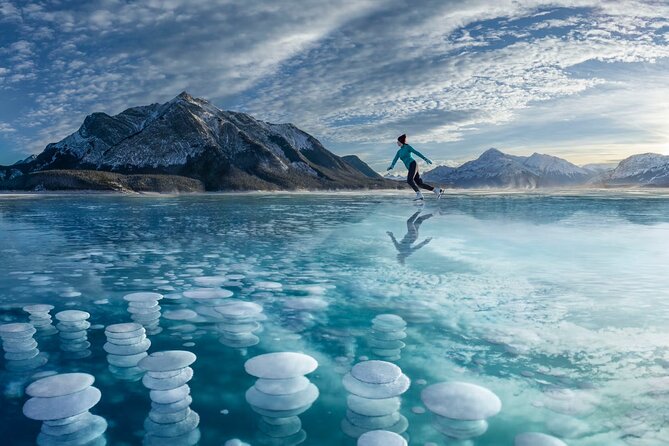
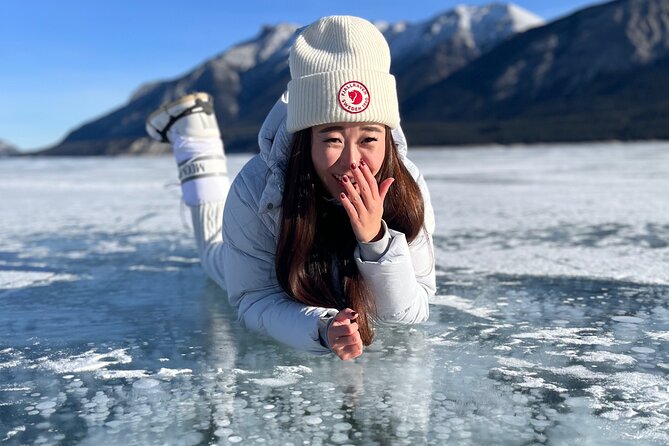
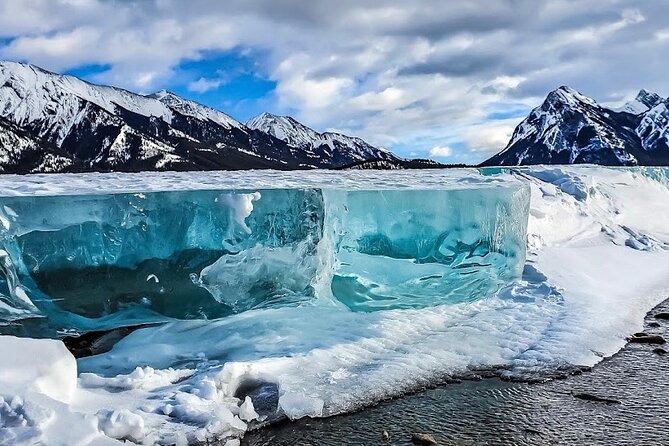
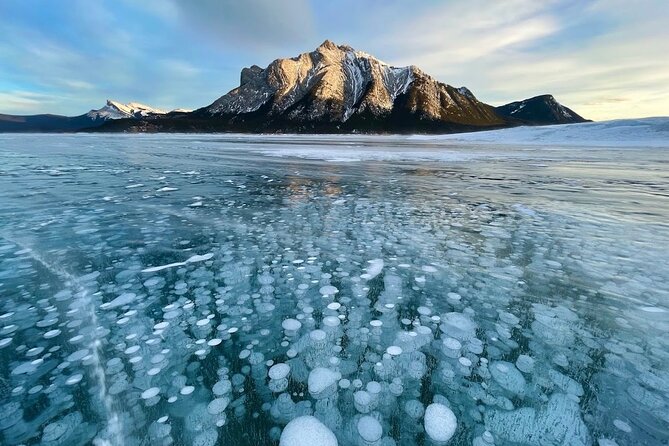
Abraham Lake is a man-made reservoir in Alberta, but in winter it produces one of the Rockies’ most unusual sights. As the turquoise water freezes, methane bubbles trapped beneath the ice form pale circles and columns under the surface. The result looks almost like a frozen storm of white bubbles.
You usually see the lake from above first, then get closer to the ice with the group. The supplied crampons matter here. Frozen surfaces can be slick, and a short walk that looks easy from the vehicle may feel less friendly in ordinary boots.
The timing matters. The lake typically freezes around mid-December, and the clearest bubble formations are often seen in mid-January or early February. The season can run into early March, but ice, snow, and visibility depend on the weather. If Abraham Lake is the main reason you want to book, choose a date in the heart of winter and keep your expectations flexible.
I especially like this stop for photographers. The white bubbles, blue-green ice, and surrounding peaks give you something different from the standard mountain-lake view. Guides Kenneth and Lam have been praised for pointing out good photo spots and taking pictures for people, which is useful when you are trying to fit the whole group into a frame.
More Glacier & Icefield Tours in Banff
- Columbia Icefield Tour with Glacier Skywalk
★ 4.5 · 1,860 reviews - Columbia Icefield Tour with Glacier Skywalk from Banff
★ 5.0 · 649 reviews - Columbia Icefield, Skywalk, Crowfoot Glacier, and Lakes Tour
★ 4.8 · 475 reviews
The 7:00 am start and the road north
The day begins in Banff at 7:00 am and ends back at the meeting point. The total time from Banff is described as about 10 hours, though the full duration can reach 11 or 12 hours once driving, stops, and road conditions are counted.
That early start is not a flaw. It is the price of reaching distant sights and returning to Banff in one day. The Icefields Parkway stretches between Banff and Jasper through protected mountain country, and this tour lets you see a large section without renting a car or handling winter driving yourself.
The vehicle is air-conditioned, and bottled water is included. In winter, hot tea or chocolate is offered during the day. Several people have appreciated these small comforts, especially before the long ride back to town. Guides have also provided snacks on some departures, but you should not rely on snacks as a substitute for lunch.
The group size can reach 24 people. That keeps the price low, but it also means the day has a shared rhythm. You will wait while others take pictures, and you may have only a short time at certain stops. In return, you avoid the cost and stress of driving the Parkway yourself.
Cascade Mountain and Vermilion Lakes near Banff
The first views help set the tone. Cascade Mountain is one of Banff’s best-known peaks, rising above the Bow River Valley near town. Its broad profile is easy to recognize, and it gives you an immediate sense of the scale of the Rockies.
Vermilion Lakes offer a different kind of view. Three lakes sit near Banff, with Mount Rundle reflected in the water when conditions cooperate. This is a stop for broad mountain scenery and photographs rather than a long walk.
You may also see Castle Mountain from the road. Its name comes from its fortress-like shape, formed by erosion along the rock layers. These early sights are often viewed as part of the drive rather than as long scheduled stops, so do not expect a quiet hour at each one.
That is typical of a packed day like this. The value comes from the range of places you can see, not from having lots of unhurried time at every location.
Castle Mountain and the Icefields Parkway
Once the route reaches the Icefields Parkway, the scenery becomes the main attraction. Highway 93 North connects Banff and Jasper and passes through the heart of the Canadian Rockies. Peaks, forests, icefields, lakes, and river valleys appear in quick succession.
I like this part because it gives you a sense of how the region fits together. You are not simply visiting isolated viewpoints. You are following a road through a large protected area, watching the terrain change as the route climbs and bends through the mountains.
Keep your camera ready, but do not spend the entire ride looking through it. Some of the best views may appear between formal stops. The road itself is part of the experience, and winter conditions can make the journey slower or require changes to the schedule.
The guide adds real value here. Kenneth has been praised for keeping the ride lively with jokes and stories, while Lam and Ray are described as calm, helpful, and attentive. The quality of the day depends partly on your guide, since you spend many hours together in the vehicle.
Same province, a completely different day out:
- Banff: Banff Gondola Admission Ticket
★ 4.7 · 3,698 reviews - Banff Gondola Ride Admission
★ 4.5 · 2,688 reviews - Emerald Lake, Moraine, Louise, Johnston Canyon & Banff Town
★ 4.9 · 1,554 reviews - Lakes Moraine, Louise, Emerald, Johnston Canyon & Yoho Tour
★ 4.8 · 1,023 reviews
Bow Lake, Crowfoot Glacier, and the first turquoise water
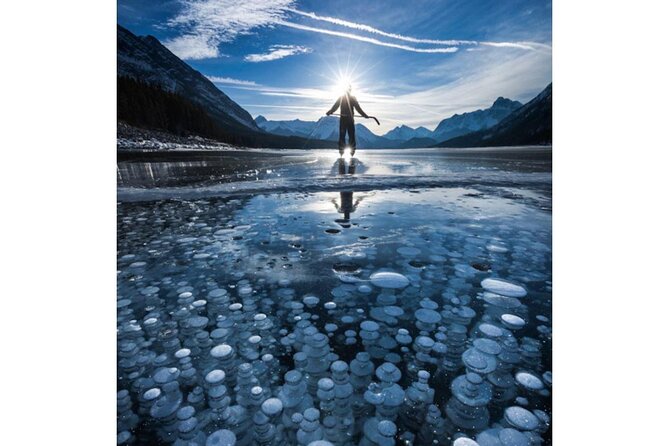
Bow Lake is one of Banff National Park’s largest glacier-fed lakes. Its blue-green color comes from glacial rock flour, fine sediment carried into the lake by melting ice.
The planned stop is about 15 minutes, which is enough for a quick look, photographs, and a breath of mountain air. In winter, the lake may be frozen and snow covered, but it still gives you a strong view of the surrounding peaks.
Crowfoot Glacier can be seen above Bow Lake, resting on the rocky slopes of Crowfoot Mountain. From the Parkway, it appears as a high field of ice tucked into the mountainside. You are looking at a glacier shaped by both snowfall and warmer seasonal melt.
This is not the place to expect a long hike. The stop works as a compact viewpoint and a useful contrast with Abraham Lake. Bow Lake shows you glacial water in a classic mountain setting, while Abraham Lake offers the strange frozen bubbles that make winter special.
Peyto Lake and the short walk to the viewpoint
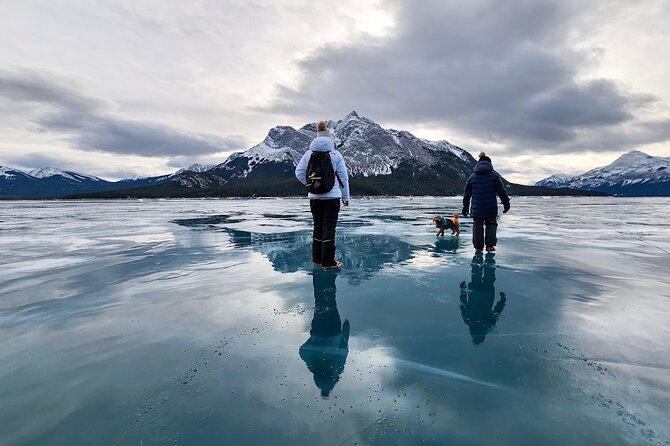
Peyto Lake is one of the most famous stops on the route. Its intense blue color comes from rock flour carried by glacial water. The lake is framed by mountain slopes, making it one of the most immediately striking views of the day.
You get about 30 minutes here, including the walk to the viewpoint. That is usually enough for photographs and a short look around, but not enough for a long trail walk or a relaxed picnic.
Winter conditions can make the path slippery. Crampons are provided in winter, and guides have walked with the group to help people reach the viewpoint safely. Bring warm layers and shoes that you can comfortably use with traction gear.
Peyto Lake is popular for good reason, but popularity also means you may share the viewpoint with other groups. The short stop keeps the larger day moving, though some people may wish for more time here.
Waterfowl Lakes and the changing winter route
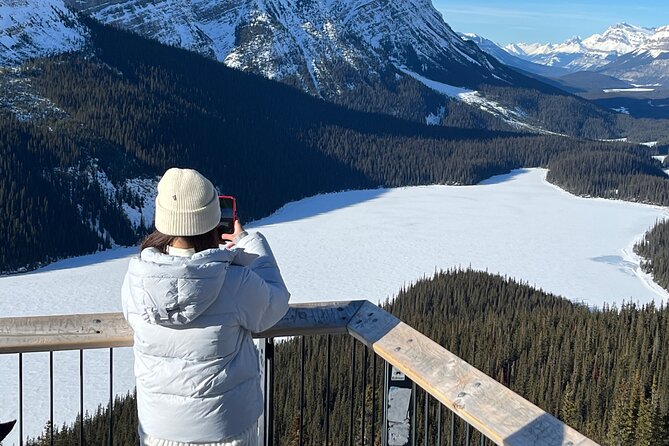
Waterfowl Lakes are glacier-fed lakes surrounded by mountain peaks. They offer a quieter pause along the Parkway, with clear water, reflections, and good conditions for photographs when the weather is calm.
In warmer months, the area is associated with paddling, hiking, and stargazing. On a winter departure, you are more likely to see snow, ice, and a still mountain setting. The stop may be brief, but it breaks up the drive and gives you another view of the region’s frozen lakes.
The exact sequence and selection of stops can change. Snow, road conditions, and visibility may make Abraham Lake inaccessible or require the guide to replace another planned sight. This is not a minor detail. The tour covers a great deal of exposed mountain road, so flexibility is part of the deal.
When Abraham Lake is replaced
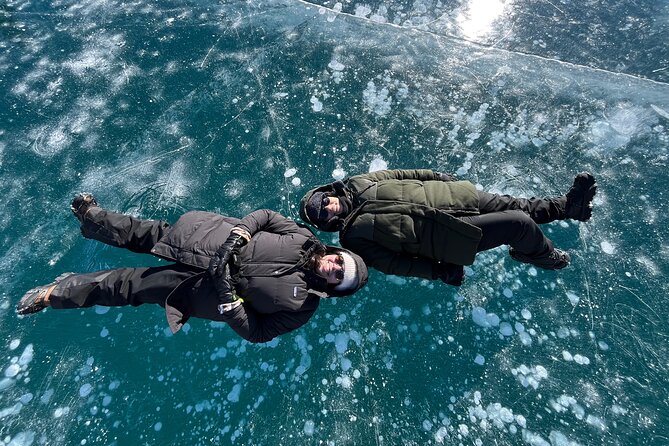
If winter conditions prevent the group from reaching Abraham Lake, the route may include other major sights instead. The Weeping Wall is a tall rock face on Cirrus Mountain where waterfalls run down the cliff like trails of water. The main cascade, Teardrop Falls, is especially noticeable.
Athabasca Glacier is part of the Columbia Icefield, one of North America’s largest icefields. The stop gives you a chance to see the glacier up close from the designated area, with about 30 minutes included. This does not include the separate Columbia Icefield Adventure, which costs extra and is not part of this tour.
Stutfield Glacier offers another view of the icefield, while Tangle Creek Falls drops over rocky ledges in a compact, photogenic series of cascades. These stops help make a rerouted day worthwhile, even if they cannot fully replace the unusual sight of Abraham Lake’s bubbles.
Sunwapta Falls, Goats and Glacier, and Athabasca Falls
Sunwapta Falls drops about 18 meters and is fed by water from the Athabasca Glacier. Its flow is strongest in late spring and early summer, when melting snow adds force to the river. A winter visit can look very different, with ice and snow shaping the scene.
The Goats and Glacier Lookout offers views of snow-covered peaks and the Athabasca River. Mountain goats may be seen on the hills, and bears can sometimes be near the picnic area, though wildlife is never guaranteed. Keep your distance and follow the guide’s instructions if animals appear.
Athabasca Falls is not among the Rockies’ tallest waterfalls, but its power makes it memorable. A large volume of water squeezes through the rock and crashes into the river below. The planned stop is about 45 minutes, giving you more time to walk the viewing paths and see the falls from different angles.
These waterfalls are useful additions to the day because they provide movement after so many still lake views. You get rushing water, narrow rock channels, and a stronger sense of the force shaping the mountains.
What the $68.34 price delivers
At $68.34 per person, this is priced as an efficient sightseeing day rather than a premium small-group expedition. The cost includes transportation in an air-conditioned vehicle, bottled water, GST, a multilingual English guide, and winter crampons.
The strongest value comes from the driving. Reaching Abraham Lake, the Icefields Parkway, Peyto Lake, and the glacier and waterfall areas on your own takes careful planning and a full day behind the wheel. In winter, the guided vehicle also removes the burden of watching road conditions while trying to enjoy the views.
The price does not include meals, insurance, personal expenses, gratuities, or the Columbia Icefield Adventure. A suggested guide gratuity is CAD 15 per person. You also need to bring lunch because there is no restaurant stop built into the day.
For me, the tour is good value if you do not have a car and want maximum scenery in one day. It is less appealing if you prefer long walks, a slow pace, or the freedom to stay at one viewpoint until the light is perfect.
Who should book this Banff day trip?
I would choose this tour for a first visit to Banff, especially in winter, when driving the Parkway may feel demanding. It suits solo visitors, couples, and friends who want to cover a lot of ground without organizing every stop themselves.
It also works well for photographers who want several types of scenery: reflections at Vermilion Lakes, blue glacial water at Peyto Lake, ice formations at Abraham Lake, and moving water at Athabasca or Sunwapta Falls. Ask the guide for help with photographs. Kenneth and Lam have made that part of the day easier for many people.
You should think twice if you need an accessible, relaxed schedule. The day includes walking on icy paths, standing outdoors in cold weather, and moving between the vehicle and viewpoints. Most people can participate, but you should be comfortable with a full day outside and some uneven or slippery surfaces.
Free cancellation is available if you cancel at least 24 hours before the start time. Cancellations or changes within 24 hours are not refunded, and the operator may offer a new date or full refund if the minimum group size is not met.
Should you book the Abraham Lake and Icefields Parkway tour?
Book it if you want a big day of Rocky Mountain scenery at a modest price, especially if you are visiting in the best Abraham Lake bubble season and do not have your own vehicle. The combination of Peyto Lake, Bow Lake, the Icefields Parkway, and the frozen bubbles gives the day a clear reason to exist.
Go in with realistic expectations. You will spend many hours in the vehicle, pack your own lunch, and accept weather-based changes. But with a good guide such as Kenneth, Lam, or Ray, the long drive becomes easier, and the included gear and photo help add practical value.
For a winter visit to Banff, I would book this when Abraham Lake is your priority and you are happy to let mountain weather shape the final route.
FAQ
What time does the tour start?
The tour starts at 7:00 am in Banff and returns to the meeting point at the end of the day.
How long does the experience last?
The tour lasts approximately 11 to 12 hours. The total time from Banff is also described as around 10 hours, including travel time.
Is Abraham Lake available all year?
No. Abraham Lake is included only in winter, generally from mid-December to early March, and only when weather and road conditions allow.
When is the best time to see Abraham Lake’s ice bubbles?
The lake usually freezes in mid-December. The best chance to see the bubbles is often from mid-January to early February.
What happens if Abraham Lake cannot be reached?
The route may be changed because of weather or road conditions. Possible alternatives include the Weeping Wall, Athabasca Glacier, Stutfield Glacier, Tangle Creek Falls, Sunwapta Falls, Goats and Glacier Lookout, and Athabasca Falls.
Is lunch included?
No. Meals are not included, and there is no lunch stop. You should prepare and bring your own lunch.
Are winter crampons provided?
Yes. Crampons are included in winter, along with bottled water and hot drinks.
Is the Columbia Icefield Adventure included?
No. The Columbia Icefield Adventure is not included in the tour price.
Just added around Banff
- Sunset at Moraine Lake & Stargazing Tour from Canmore/Banff★ 5.0 · 95 reviews
- 2 Day Banff Lake Louise Johnston Canyon Gondola Cave Basin tour★ 4.5 · 8 reviews
- Rocky mountain – VIP Experience – Private Boat★ 5.0 · 6 reviews
- Private Guided Tour to Banff Lake Louise|Moraine|Icefields &More!★ 5.0 · 5 reviews
- Experience Golden Hour at Moraine and Lake Louise★ 5.0 · 18 reviews
- Shared Tour: Lake Louise & Emerald Lake from Canmore/Banff★ 4.5 · 5 reviews
- Full Day Private Tour Banff/Yoho Customized Sightseeing★ 4.5 · 31 reviews
- Banff/Canmore Moraine Lake & Lake Louise– Hike, Canoe or Sightsee★ 5.0 · 104 reviews
Glacier & Icefield Tours, compared.
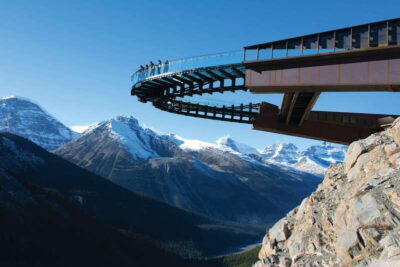
Columbia Icefield Skywalk and Ice Explorer Ticket
Read our review →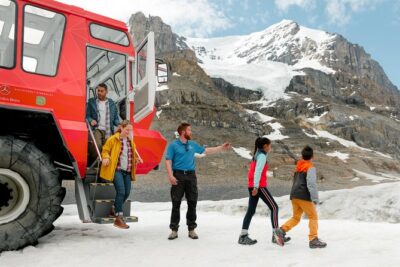
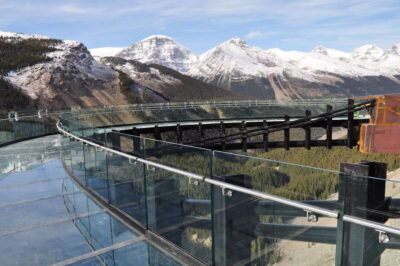
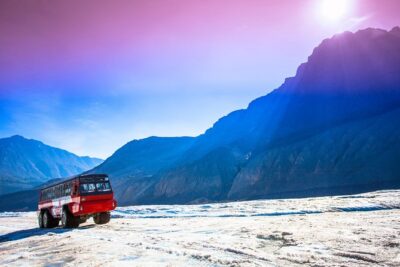
Columbia Icefield Tour with Glacier Skywalk from Banff
Read our review →
Columbia Icefield, Skywalk, Crowfoot Glacier, and Lakes Tour
Read our review →
Athabasca Glacier and Columbia Icefield Day Trip
Read our review →
Guided Glacier Hike on The Athabasca with IceWalks
Read our review →Browse the lists this tour appears in