
Reviewed · BANFF & LAKE LOUISE TOURS
Banff: Introduction to Ice Climbing for Beginners
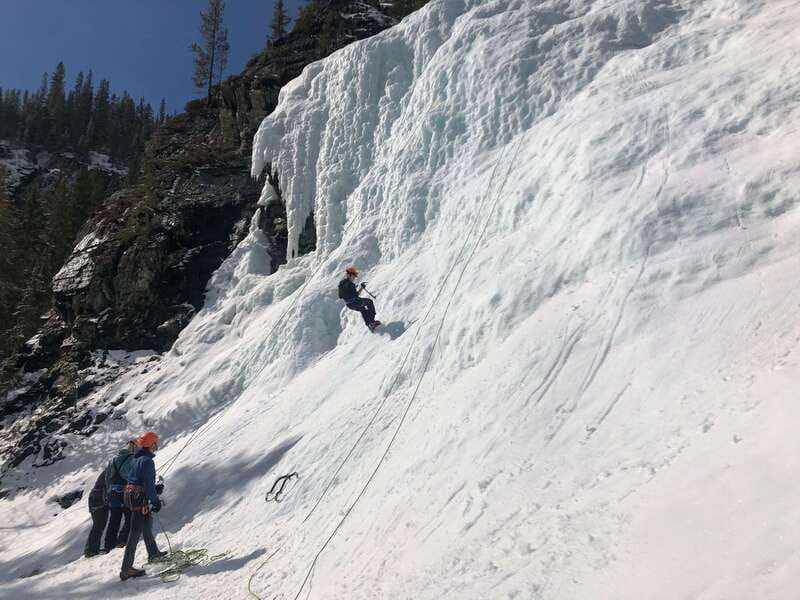
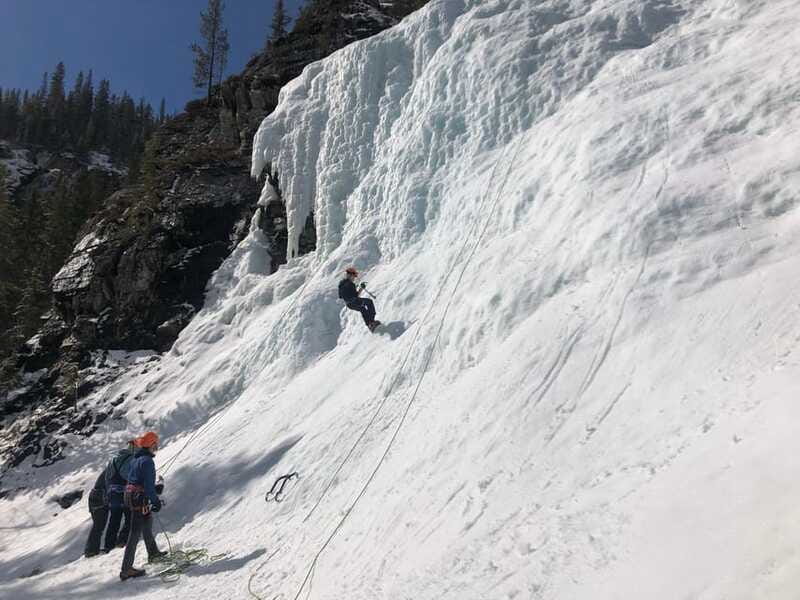
A frozen waterfall is an unusual classroom. On this seven-hour beginner course, you learn to walk in crampons, swing ice axes, tie into a top rope, and climb under the watch of an ACMG-certified mountain guide. It is a proper outdoor lesson, not a quick photo stop.
I like the safety-first pace and the chance to practice on more than one level of climbing. I also like that all technical gear is supplied, including boots, crampons, helmet, harness, and ice axe. The main drawback is the cold: one recorded course day reached -20 C, so weak gloves or poor layers could spoil an otherwise fine outing.
In This Review
- Key points to know before booking
- What this Banff ice climbing day is really like
- A winter setting that becomes part of the lesson
- Learning to walk before you climb
- Top-rope practice on a frozen waterfall
- The guide makes a real difference
- Timing, transport, and the price
- Who should book this course
- What to pack for a better day on the ice
- Cancellation and planning flexibility
- My recommendation for the Banff beginner course
- FAQ
- How long does the ice climbing course last?
- Where does the climbing take place?
- Where do I meet the guide?
- Do I need to drive to the climbing site?
- Is climbing equipment included?
- What should I bring?
- What age is required to join?
- Is the course suitable for wheelchair users or people with mobility impairments?
- Can I cancel the booking?
Key points to know before booking
- You climb a real frozen waterfall: This is an active introduction to ice climbing, not simply a scenic winter walk.
- The day runs about seven hours: Plan to meet around 8 or 9 a.m. and finish around 3 or 4 p.m.
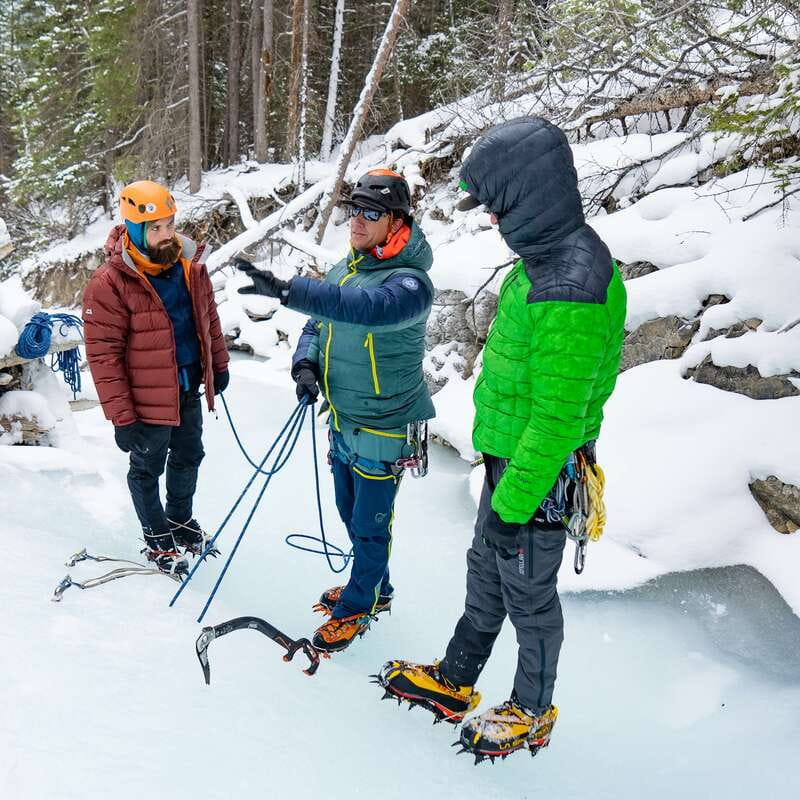
- Shea has guided the course: He used two rope setups, one easier and one more challenging, on a very cold day.
- Technical equipment is included: You receive a helmet, harness, climbing boots, crampons, and ice axe.
- You drive yourself to the site: The meeting point is in Banff, but the actual climbing area may be in Banff, Lake Louise, or Field, BC.
- The minimum age is 14: This suits teens and adults who can manage a full day outdoors in winter.
What this Banff ice climbing day is really like
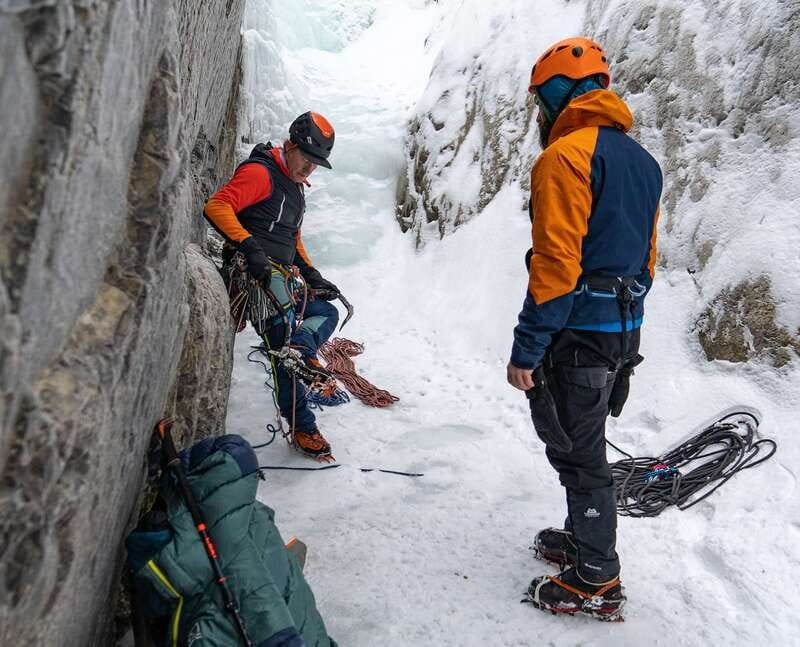
This experience gives you a first taste of ice climbing without asking you to own a wall of specialist equipment. The day is built around instruction, repeated practice, and controlled climbing on a top rope. You are not sent up a frozen waterfall after a five-minute safety talk.
The course begins with the basics. Your guide explains how the equipment works, how to move safely on ice, and how to position your body while climbing. You learn the art of walking in crampons, a skill that feels simple on paper but takes attention in practice. Your feet need to stay placed with care, and your body position affects how hard every move feels.
You also learn how to belay on top rope. That matters because ice climbing is not just about hauling yourself upward with two tools. It is a partner activity built around communication, rope handling, and safe systems. The course uses the day to teach the habits that make future climbing more manageable.
The exact site depends on conditions. You may climb in the Banff region, around Lake Louise, or near Field in British Columbia. That flexibility helps the guide choose a suitable area, but it means you should not expect one fixed waterfall or a guaranteed meeting point at the climbing site.
More Banff & Lake Louise Tours in Banff
- Banff: Banff Gondola Admission Ticket
★ 4.7 · 3,698 reviews - Banff Gondola Ride Admission
★ 4.5 · 2,688 reviews - Emerald Lake, Moraine, Louise, Johnston Canyon & Banff Town
★ 4.9 · 1,554 reviews
A winter setting that becomes part of the lesson
The setting is one of the best reasons to choose this course. You spend the day outside among frozen water and snow rather than in an indoor climbing gym. The cold, ice, and mountain surroundings are not decoration. They shape every part of the activity.
You will need to stay alert to your feet, hands, tools, and body position at the same time. That makes the first successful upward movement feel earned. Ice climbing has a different rhythm from rock climbing, and a beginner course lets you work out that rhythm with a guide nearby.
Do not confuse the scenic setting with an easy outing. A full day in winter can be tiring even when you are not climbing continuously. You will spend time learning, waiting your turn, handling equipment, and making repeated attempts. The day is active, but it is also instructional.
The provider’s own guidance is sensible: bring warm clothing, snow clothing, a jacket, gloves, and food and drinks. You should treat the clothing list as essential rather than optional. On one course day, the temperature fell to -20 C, and guide Shea worked hard to keep the group moving and warm. That detail tells you something important about the experience: the weather can become the biggest challenge.
Learning to walk before you climb
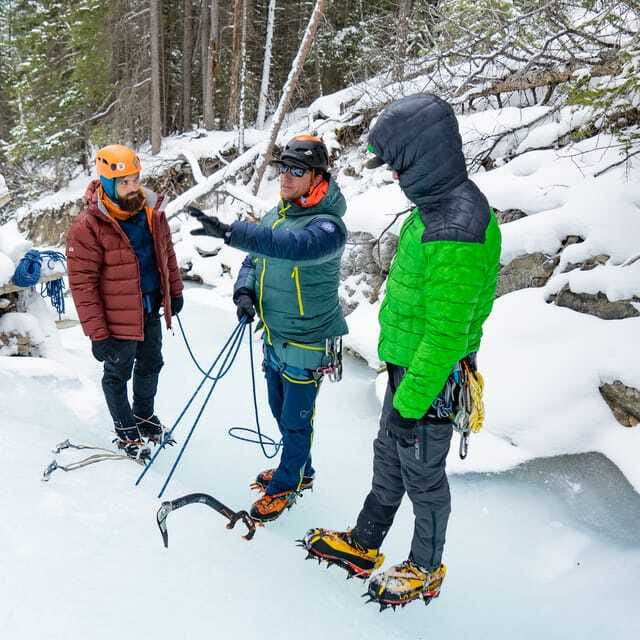
Crampons are among the first pieces of equipment that change the way you move. These metal spikes attach to your climbing boots and help you grip the ice. They also demand care. You cannot stroll in them as if you were wearing ordinary winter boots.
Your guide shows you how to place your feet and how to keep your body balanced. You learn to pay attention to where your weight sits and how your legs work with the ice tools. This focus on body awareness is useful beyond the day itself. It gives you a feel for why small movement changes can make a climb easier or harder.
The course also introduces ice axes. You learn how they help you gain purchase and how movement with two tools differs from ordinary hiking. The goal is not to make you look like an experienced climber. The goal is to give you basic control, enough to make deliberate movements rather than simply pull upward.
I like this part of the course because it makes the activity less mysterious. You begin to understand that ice climbing is a technical sport with its own footwork and posture. You also see why a certified guide matters, particularly when conditions are cold and the surface is unfamiliar.
Top-rope practice on a frozen waterfall
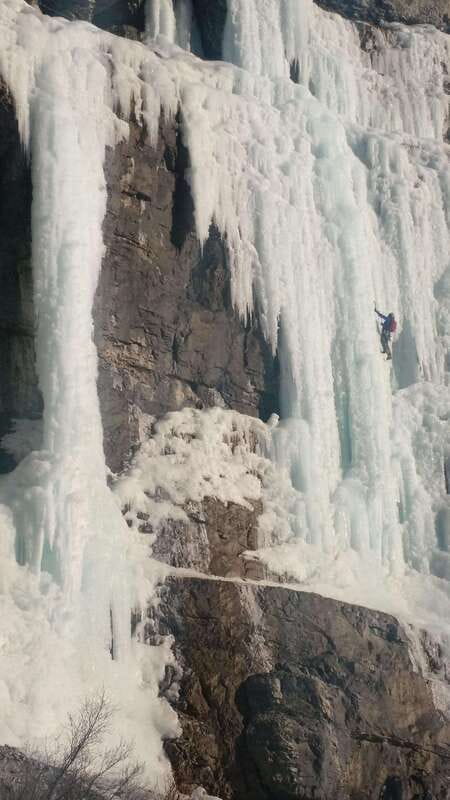
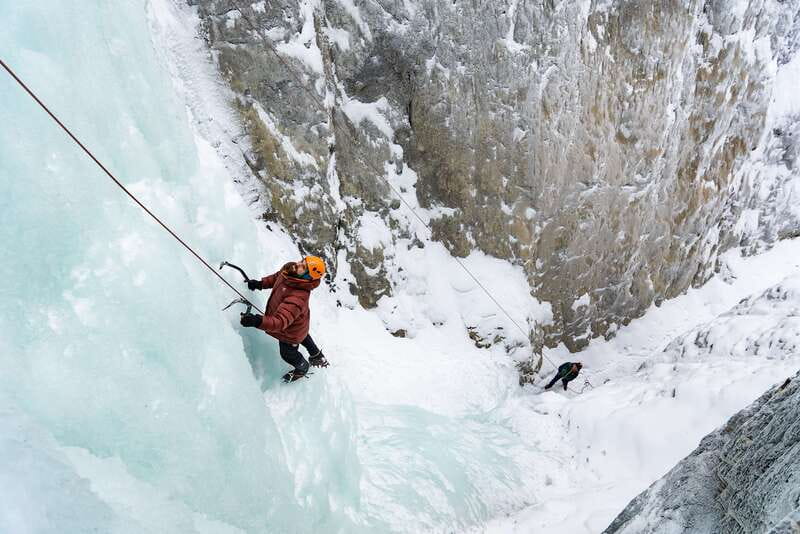
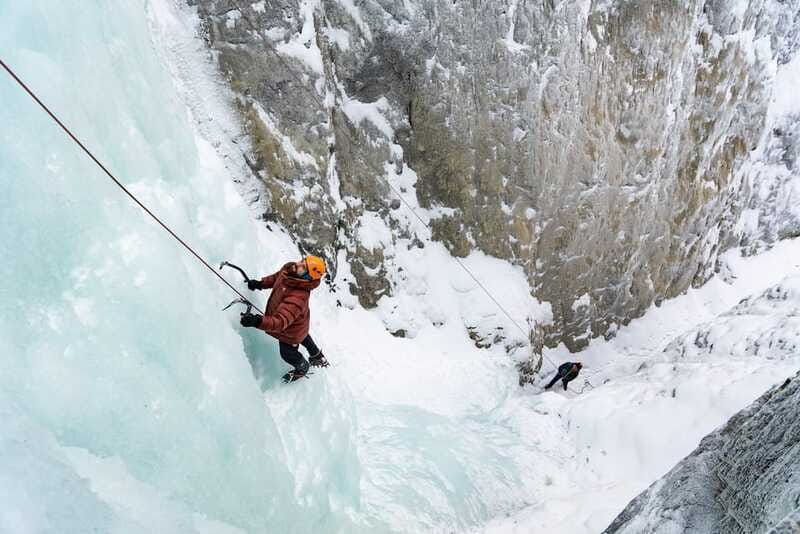
The climbing itself takes place on a top-rope system. The rope is arranged above you, so you can focus on movement while the belay system provides protection. This is a useful format for first-time climbers because it lets you practice several times without needing to manage the full demands of leading a climb.
Guide Shea used two different rope levels on one particularly cold day. One route was easier, and the other offered more challenge. That setup gave the group a choice and allowed people to make more attempts while staying active. It also meant that a climber could move from the gentler option to something harder once the basic technique began to click.
You should not assume that every day will include two routes. The available climbing depends on conditions and the site your guide selects. Still, the example shows how the course can be adjusted to suit different abilities within one booking.
Repeated attempts are valuable here. Your first climb may feel awkward as you coordinate crampons, ice tools, rope movement, and body position. With clear tips from the guide, you can correct one habit at a time. One attempt might focus on your feet, another on using your tools, and another on conserving energy.
That teaching style is more useful than simply being hauled up a wall. You leave with a better sense of how your body works on ice and what you would need to practice next.
Same province, a completely different day out:
- Columbia Icefield Tour with Glacier Skywalk
★ 4.5 · 1,860 reviews - Lakes Moraine, Louise, Emerald, Johnston Canyon & Yoho Tour
★ 4.8 · 1,023 reviews - Lake Louise, Moraine Lake and the Icefields Parkway Full-Day Tour
★ 5.0 · 836 reviews - Banff: Lake Louise, Moraine, Emerald Lake & Johnston Canyon
★ 4.9 · 808 reviews
The guide makes a real difference
All guides for this activity are ACMG and/or IFMGA certified, and they also hold Canadian Avalanche Association certification. Those credentials matter in a winter mountain setting. They indicate training in guiding, climbing systems, and avalanche awareness, though they do not remove the need for you to listen closely and dress properly.
Your guide handles the safety briefing and instruction, provides the technical equipment, and manages the climbing setup. You remain responsible for following directions, communicating clearly, and taking the cold seriously.
Shea received especially useful mention for his work on a -20 C day. He offered climbing tips throughout the course, set up two levels of ropes, and kept the group moving so the cold did not take over. That is exactly the kind of practical guiding you want on a beginner day. A good guide does not only explain technique. The guide also watches energy, temperature, and confidence.
The course is offered in English. A detailed course package is sent by email three days before the start, so read it carefully. It should help you understand the final meeting plan, clothing advice, and any site change caused by conditions.
Timing, transport, and the price
The price is $179 per person for about seven hours. I see reasonable value in that cost because it includes a full instructional day and the main technical gear. Buying or renting climbing boots, crampons, an ice axe, helmet, harness, and related equipment separately could make a first attempt much less convenient.
You are also paying for a certified guide and a properly organized introduction rather than simply access to a frozen wall. For someone testing a new winter hobby, that reduces the cost and risk of getting started.
Still, the price does not cover everything. You need to arrange your own transportation to the Alpine Air Adventures office at 229 Bear Street, on the lower level beneath the movie theatre, and then drive to the climbing site. Food and drinks are also your responsibility.
The day usually starts around 8 or 9 a.m. and ends around 3 or 4 p.m. Since the actual location can be in Banff, Lake Louise, or Field, BC, check the final logistics email before setting your driving plan. A site change may happen because of conditions.
There is one important booking condition: the group needs at least four bookings to proceed. The course cannot be guaranteed until that minimum is reached. If your schedule is tight, contact the Alpine Air Adventures team to confirm that the day is going ahead before making other firm plans.
Who should book this course
This is a good choice for a first ice climbing experience, especially if you enjoy learning physical skills outdoors. You do not need to arrive with technical climbing equipment because the main gear is supplied. You do need a willingness to work in cold weather and follow instruction for most of a day.
It also suits families with children aged 14 and older, and groups of friends looking for a winter activity with more substance than a short sightseeing stop. The age rule is firm: children under 14 cannot take part.
The course is not suitable for pregnant women, people with mobility impairments, or wheelchair users. The combination of snow, crampons, climbing equipment, and uneven frozen surfaces requires a level of mobility that the activity cannot accommodate.
I would also think carefully before booking if you dislike cold, strenuous outdoor days. The course is beginner-friendly, but that does not mean it is effortless. Your legs, hands, and attention will all get a workout.
What to pack for a better day on the ice
Bring warm clothing in layers, a jacket, gloves, and snow clothing. You also need food and drinks because they are not provided. The exact clothing system is not listed, so use the course package sent three days before the start for final advice.
Your gloves deserve special attention. You need warmth, but you also need enough control to handle climbing equipment. Since the day may reach very low temperatures, bring clothing that can cope with a long period outside rather than a short walk from a car to a viewpoint.
Wear suitable winter clothing for the approach and climbing area. The provider supplies technical climbing boots, but you still need to arrive dressed for snow and cold. Keep your food and drinks easy to access, since a full day outdoors can make poor planning noticeable fast.
Cancellation and planning flexibility
You can cancel up to 24 hours before the activity for a full refund. You can also reserve now and pay later, which is helpful if you are still arranging a winter trip around weather and driving plans.
The flexible payment option does not change the minimum booking requirement. Confirm that the course has enough bookings if you are relying on a particular date.
The final location may also change because of conditions. That is normal for a winter climbing program, but it makes the final email important. Check it three days before the course, then allow enough time to drive to the selected site.
My recommendation for the Banff beginner course
I would book this if you want a serious first step into ice climbing and are happy to give the activity a full winter day. The strongest reasons are the certified instruction, included technical gear, top-rope format, and room to work on movement rather than rush through a single climb.
I would skip it if you want a short, low-effort attraction or if you do not have suitable warm clothing. The $179 price is fair for an equipment-supported lesson, but you still pay with your time, transport, and tolerance for cold.
For the best chance of enjoying it, confirm the minimum group requirement, read the course package, pack generously for winter, and keep your schedule flexible about the exact climbing site. If you do that, this course offers a practical way to find out if ice climbing belongs in your winter plans.
FAQ
How long does the ice climbing course last?
The activity lasts about seven hours. The usual meeting time is around 8 or 9 a.m., with an expected finish around 3 or 4 p.m.
Where does the climbing take place?
The field day may be held in the Banff, Lake Louise, or Field, British Columbia regions. The location can change because of conditions, and the final plan is discussed in the logistics email.
Where do I meet the guide?
You meet the guide at the Alpine Air Adventures office at 229 Bear Street in Banff. The office is on the lower level beneath the movie theatre.
Do I need to drive to the climbing site?
Yes. You need to arrange your own transportation to the meeting point and to the climbing site.
Is climbing equipment included?
Yes. The activity includes a helmet, harness, climbing boots, crampons, and ice axe, along with the climbing experience and safety instruction.
What should I bring?
Bring warm clothing, snow clothing, a jacket, gloves, food, and drinks. A detailed course package is emailed three days before the course begins.
What age is required to join?
The course is for participants aged 14 and older. Children under 14 cannot take part.
Is the course suitable for wheelchair users or people with mobility impairments?
No. The activity is not suitable for wheelchair users or people with mobility impairments. It is also not suitable for pregnant women.
Can I cancel the booking?
Yes. You can cancel up to 24 hours in advance for a full refund. You can also reserve now and pay later.
Just added around Banff
- 2 Hour Banff Horseback Riding Adventure★ 4.0 · 145 reviews
- 1 Hour Spray River Ride★ 4.5 · 204 reviews
- Lake Minnewanka, Peyto Lake, Bow Lake , Icefields★ 4.5 · 63 reviews
- Along Icefields Parkway: Peyto Lake, Bow Lake & Columbia Icefield★ 4.0 · 19 reviews
- Moraine Lake Lake Louise Johnston Canyon Emerald Lake Day tour★ 5.0 · 4 reviews
- The Local Banff Explorer – E-Bike Tour★ 4.8 · 54 reviews
- The Canmore HISTORY TOUR – Cowboys and Coal Miners 2H Walk★ 4.7 · 17 reviews
- Sunshine Meadows Daily Guided Hike with Gondola★ 4.9 · 6 reviews
Banff & Lake Louise Tours, compared.
Lake Louise, Moraine Lake, Banff Tour from Calgary/Canmore/Banff
Read our review →
Emerald Lake, Moraine, Louise, Johnston Canyon & Banff Town
Read our review →
Lake Louise, Moraine Lake and the Icefields Parkway Full-Day Tour
Read our review →
Lake Louise, Moraine, Emerald Lake & Johnston Canyon
Read our review →
Explore Banff National Park with Our Premium Day Tour
Read our review →Browse the lists this tour appears in