

Reviewed · AUDIO TOURS
Icefields Parkway Self-Guided Driving Audio Tour
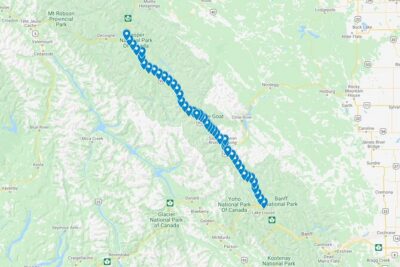
The Icefields Parkway is one of Canada’s great road trips, and this self-guided tour turns a long mountain drive into a moving storybook. You’ll hear about glaciers, waterfalls, explorers, Indigenous guides, and the people who gave the peaks their names while driving from Jasper toward Lake Louise. I especially like the location-based audio, which starts stories as you approach each sight, and the per-car price, which covers up to four people.
The main catch is the app setup. You must download a separate Action Tour Guide app, enter a password sent by email and text, and download the tour over strong Wi-Fi or cellular service. Once running, it is simple. Getting it running may take patience, so set it up before your driving day.
In This Review
- Key things to know before you book
- A narrated drive through two national parks
- Getting the Action Tour Guide app ready
- From Jasper to the first waterfalls
- Peaks, goats, and mountain names
- Beauty Creek and the Columbia Icefield
- Glacier viewpoints and worthwhile hikes
- Crossing into Banff near Saskatchewan River Crossing
- Peyto Lake and the final stretch to Lake Louise
- What the $16.99 price really gets you
- Who will like this tour most
- Final call: book it if you want control
- FAQ
- Where does the Icefields Parkway audio tour begin?
- How long does the tour take?
- How many people can use one booking?
- Does the price include attraction admission?
- Does the tour work without cell service?
- How does the audio start?
- What devices are recommended?
- Can I cancel for a refund?
Key things to know before you book
- The route begins in Jasper: This version runs south toward Lake Louise. Choose the Lake Louise version if you plan to drive north.
- More than 76 audio stories cover over 140 miles: The drive itself takes about three to four hours without long stops.
- You pay by car, not by person: At $16.99 for a group of up to four, the cost is low compared with a conventional guided excursion.
- The tour works offline: Download everything before entering areas with weak or absent service.
- You set the pace: Pause for lunch, hikes, photos, or side trips, then continue when ready.
- The best stops range from five-minute lookouts to moderate hikes: Athabasca Falls, Peyto Lake, the Athabasca Glacier, and Mistaya Canyon deserve extra time.
A narrated drive through two national parks
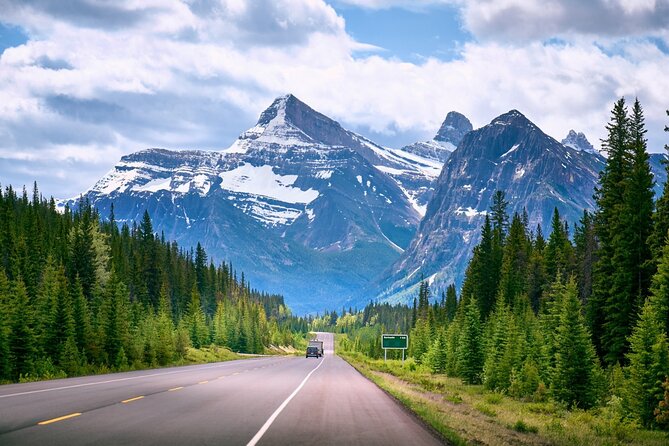
The Icefields Parkway connects Jasper National Park and Banff National Park along a route of huge peaks, glacial lakes, icefields, and river valleys. The tour is not transportation, and no guide meets you at the starting point. You drive your own car while the app supplies the commentary.
That arrangement matters here. The road is too long and scenic for a rigid schedule to make much sense. You may want five minutes at a lookout, an hour at a waterfall, or several hours for a hike. The app lets you make those choices without losing the thread of the route.
The narration covers more than 76 points of interest. Some stories are short, about five minutes, and work well while you drive past a viewpoint. Others point you toward a trailhead or side road so you can decide if the stop fits your day.
The route takes roughly three to four hours if you keep moving. That is a driving estimate, not a full sightseeing schedule. Add time for Athabasca Falls, the Columbia Icefield area, Peyto Lake, or any hike, and your day becomes much longer.
A few more Jasper trips to weigh up
- Private Self-guided River Rafting Tour in Calgary
★ 5.0 · 182 reviews - Vancouver Bike or Ebike Rental – Self Guided Map provided
★ 5.0 · 149 reviews - Mont-Tremblant: Treetop Observatory and Self-Guided Walk
★ 4.7 · 130 reviews
Getting the Action Tour Guide app ready
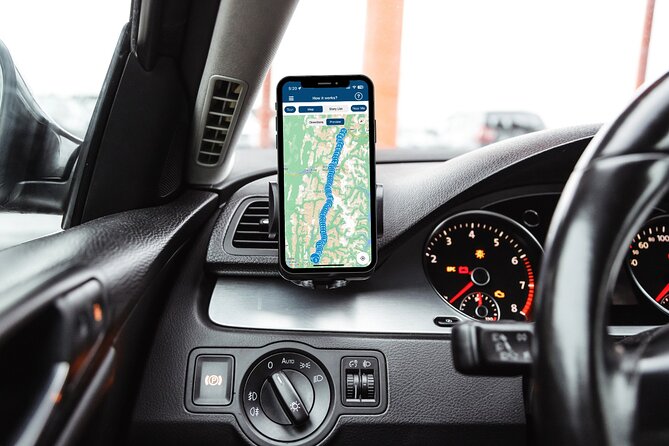
After booking, you receive setup instructions and a password by email and text. Search for audio tour if the message is hard to find. Download the separate Action Tour Guide app, enter the password, and download the route while you have a strong connection.
Connect your phone to the car by Bluetooth, USB, or AUX. Playback works with Apple CarPlay. Android Auto support is described as coming soon, so Android users should plan on using another connection method if needed.
The app uses GPS rather than mobile data during the drive. Stories play automatically when you reach their points, giving you hands-free commentary. You can also choose a different starting point within the tour, which is useful if you join the route late or need to skip a section.
Do a test run before leaving town. One practical backup is to print the itinerary or save the stop list on your phone. That way, you can still follow the route if the app takes time to launch.
Use an iPhone running iOS 15 or later, an Android device running version 9 or later, or an iPad or tablet with GPS and cellular capability. The app is designed for one private group in one vehicle.
From Jasper to the first waterfalls
The Jasper version begins in Jasper and heads south. The opening stories introduce the parkway and clarify an important choice: the route is directional, so selecting the wrong version can put you at the wrong end.
Near the start, you hear about the Jasper SkyTram and Whistlers Mountain. The story explains how early skiers faced a difficult climb back up after racing down the slopes. It is a small human detail that helps you see the mountain as more than a wall of rock.
The first major stop is the Valley of the Five Lakes Trailhead. The three-mile hike takes about an hour and a half and passes five lakes known for startling blue and turquoise water. The audio connects those colors to glacial meltwater, giving you a reason for the color rather than simply pointing out a pretty view.
Athabasca Pass Lookout offers views toward the South Jasper Mountain Range and Mount Edith Cavell, which rises to 11,033 feet. This is a quick viewpoint stop, useful if you want to stretch your legs without committing to a hike.
At Horseshoe Lake, the commentary turns more dramatic. The U-shaped lake is surrounded by rock faces, and the 75-foot drop has attracted people who leap into the cold water below. The story adds a little edge to an otherwise peaceful stop, though you should treat the place as a viewpoint, not a suggestion to copy the stunt.
Athabasca Falls follows. The 75-foot waterfall cuts into a canyon formed as glacial ice receded during the last Ice Age. This is one of the route’s strongest early stops because the water, rock, and geological explanation come together in a short visit.
Peaks, goats, and mountain names
The road continues past Mount Kerkeslin, the highest peak in the Maligne Range at 9,790 feet. You then reach the Goats and Glacier Lookout, where the Athabasca River and Fryatt Mountain Range fill the view.
The goats in the name are not decorative. Mountain goats are drawn to minerals, including salt, in the cliff rock. You might see them licking the stone around the overlook. Wildlife is never guaranteed, but the explanation gives you something specific to watch for.
Mount Christie rises just over 10,180 feet. The narration explains that explorer James Hector named it for William Joseph Christie, who hosted him during his Rockies expedition. These short naming stories help make the route easier to remember.
Honeymoon Lake offers a calmer stop, with mountain reflections and the possibility of seeing canoes on the water. Sunwapta Falls then brings back the rushing water. The easy, two-mile trail takes a little over an hour and leads to a 60-foot waterfall fed by the Athabasca Glacier. The name Sunwapta comes from the Stoney-Nakoda term for turbulent water.
The audio also covers Endless Chain Ridge, a series of craggy peaks formed from ancient rock and pushed upward by volcanic pressure. At Poboktan Creek, you hear about a 24-mile trail that usually takes four days. That is useful context for deciding what not to attempt on a short driving day.
Same province, a completely different day out:
- Jasper: Columbia Icefield Skywalk and Ice Explorer Ticket
★ 4.6 · 2,444 reviews - Jasper National Park: Maligne Lake Cruise With Guide
★ 4.7 · 896 reviews - Jasper Evening Wildlife Tour
★ 4.5 · 710 reviews - Jasper National Park: Evening or Morning Wildlife Watch Tour
★ 4.6 · 691 reviews
Beauty Creek and the Columbia Icefield
Beauty Creek runs beside the road, carrying clear meltwater toward Stanley Falls. The narration points out that the cascades can freeze into sheets of ice in cold months. That detail makes this section worth noticing even when the main waterfall is not directly beside the highway.
At Stutfield Glacier Viewpoint, you can see a large glacier from the parkway. The audio explains double icefalls, where the glacier bed steepens and the ice speeds up, creating crevasses. This is a good example of the tour’s value: you get a simple explanation of what you are looking at without needing a guide standing beside the car.
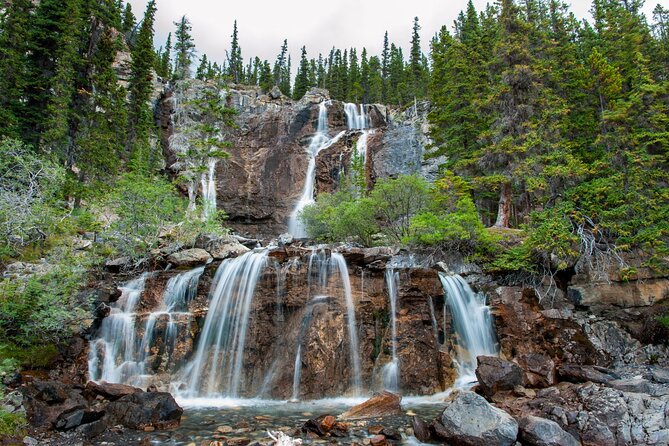
Tangle Creek Falls is hard to miss, with a 90-foot cascade beside the road. Its spray can reach the pavement. The story also introduces Mary Schäffer Warren, who named Tangle Creek and Endless Chain Ridge, along with Samson Beaver, a Stoney-Nakoda man who guided many of her journeys.
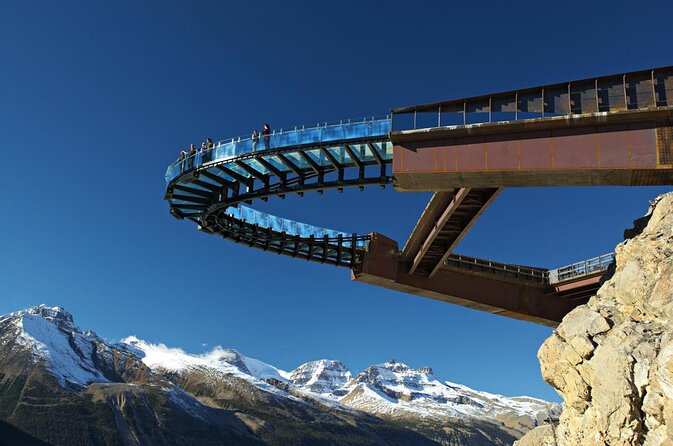
The Columbia Icefield Skywalk is another optional attraction. Its glass-floored walkway extends 100 feet over the Sunwapta Valley, with the valley floor more than 900 feet below. Admission is not included, and you need to decide separately if you want to add it.
Mount Kitchener reaches 11,499 feet, the highest peak highlighted in this section. The story connects its name to Horatio Kitchener, a British officer who died in 1916 when his ship hit a mine.
Glacier viewpoints and worthwhile hikes
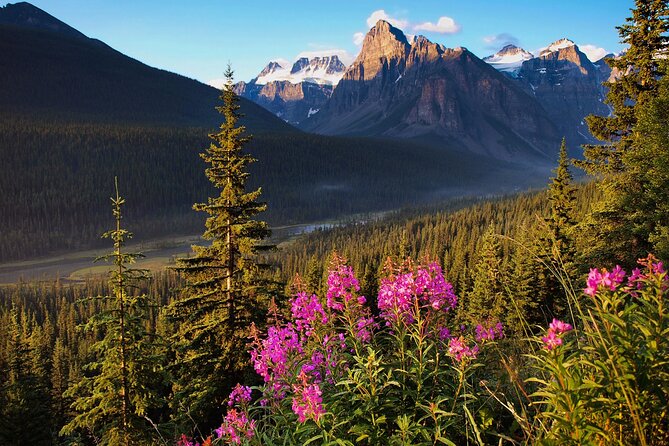
The Toe of the Athabasca Glacier Trailhead is one of the key stops on the entire drive. The trail is a little over one mile and moderately difficult, bringing you close to the Athabasca Glacier. You get a direct look at the ice rather than only seeing it from the highway.
At Wilcox Pass, a full hike covers seven miles and is challenging. You do not need to complete the entire route. Many people walk a little over a mile to a viewpoint facing Mount Snow Dome, then return.
Parker Ridge offers another four-mile hike, taking a little more than two hours. The trail passes alpine meadows and gives views toward the Columbia Icefield and the blue lakes below. The tour is helpful here because it tells you the rough time and effort before you leave the car.
Panther Falls requires an easy 1.5-mile walk through the forest and takes about 30 minutes. If you continue another mile, you can reach Bridal Veil Falls, which is much larger. This is a strong two-for-one stop if you want a short walk with a clear reward.
The Weeping Wall is a series of 900-foot cliffs that may leak water from springs near the top. The flow depends on conditions and season, so you might see only damp rock rather than an active waterfall. Mount Coleman, at 10,285 feet, is another imposing peak along the route.
Crossing into Banff near Saskatchewan River Crossing
The HI Rampart Creek Wilderness Hostel appears along the road, with a story about the changes in tourism that began nearly a century ago. It adds a human sense of time to a route otherwise dominated by ice and stone.
At Saskatchewan River Crossing, the narration looks back to 1882, when John Walter operated a plank-like river crossing for horses and carriages. It is a brief but memorable reminder that this corridor was once far more difficult to travel.
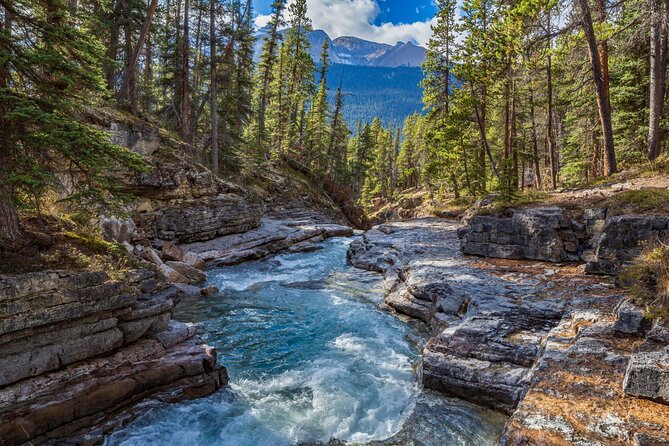
Howse Pass Viewpoint offers river and mountain views. Mistaya Canyon follows, with a moderate 1.5-mile trail that takes about 40 minutes and leads toward a deep gorge carved by rushing water.
Mount Chephren rises 10,715 feet. Its angular shape once inspired the name Pyramid Mountain, but another summit already had that name. The eventual name honors an Egyptian pharaoh associated with the second-largest pyramid at Giza.
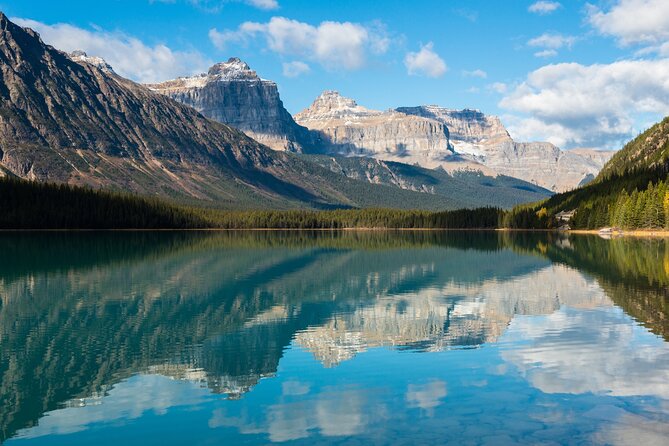
Waterfowl Lake is especially easy to appreciate because the viewpoint sits close to the road. You may see the emerald water without a long walk. The audio also places the lake in the context of the 1960s counterculture movement, when scenic Canadian lakes drew young people seeking a different way of life.
Peyto Lake and the final stretch to Lake Louise
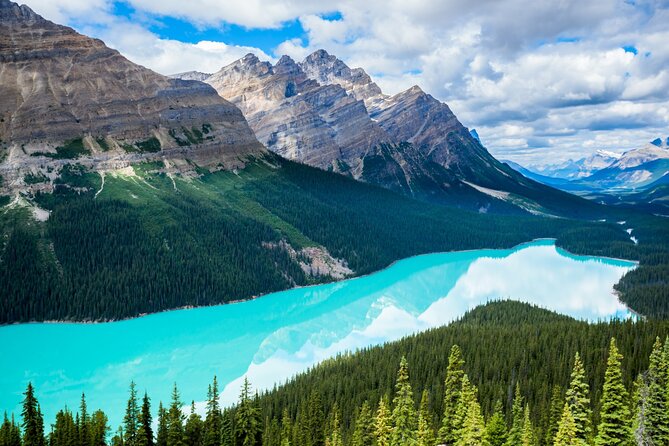
At Mount Patterson, look for Snowbird Glacier, whose shape resembles outstretched wings as it flows down the mountain. Peyto Lake comes next, with bright turquoise water beneath the Waputik Range.
A side road leads to the Peyto Lake overlook and a two-mile trail around the lake. The tour gives you enough information to decide if the stop deserves time, which is important because you cannot visit every viewpoint and complete every walk in one day.
Bow Lake reflects Mount Jimmy Simpson and offers another broad glacial-water view. Crowfoot Glacier shows the effects of long-term retreat. It once had three ice lobes shaped like a crow’s foot, but one has disappeared.
The Wapta Icefield gets its name from a Stoney-Nakoda word meaning running water. Hector Lake then provides one final glacial lake viewpoint beneath Lilliput Mountain and Mount Balfour. It is a natural closing chapter before Lake Louise.
The tour ends at Lake Louise after you continue straight for about five to ten minutes. Double-check your route before starting, since the supplied meeting-point information also displays a Lake Louise address. The clearest practical instruction is this: use the Jasper-start version when driving south, and the Lake Louise version when driving north.
What the $16.99 price really gets you
At $16.99 per group of up to four, this is inexpensive if you have a full car. A couple pays less than $9 each, and four people pay about $4.25 each. You are paying for narration and route guidance, not entrance tickets, attraction reservations, or transportation.
The price is especially good if you prefer to stop often. A bus excursion may give you a fixed schedule and a human guide, but this audio tour lets you linger at Horseshoe Lake, skip a trail, or pause for food without asking anyone else.
The tradeoff is that the tour cannot answer questions in real time. It also cannot handle driving, parking, weather, or trail decisions for you. You remain responsible for safe driving and for staying within park rules.
The purchase includes lifetime access with no expiry, so you can use it on future trips. That makes the cost easier to justify if you expect to return to the parkway.
Who will like this tour most
I would choose this for independent drivers who want more than silent scenery but do not want a scheduled group excursion. It also suits families and couples sharing one car, since the fee is not charged per person.
The flexible format works well for older adults and for anyone who wants to limit walking. Several stops are short viewpoints, while the longer hikes are clearly described so you can choose your level of activity.
It is less suitable if you want a live guide, a social group, or a fully planned day with attractions arranged in advance. You also need to be comfortable setting up an app and connecting your phone to the car.
The narration received particular praise for its pacing, tone, and coverage of geography and history. One useful criticism was the lack of music between points. If you prefer a constant soundtrack, play your own music at low volume, but do not let it cover the spoken directions.
Final call: book it if you want control
Book this tour if you are driving the Icefields Parkway and want a low-cost layer of stories, names, and geological context. The strongest reasons are the automatic GPS-triggered narration, offline operation, broad stop coverage, and freedom to use it over several days.
Skip it if app setup frustrates you or if you want a person beside you to guide the day. Download the tour early, test it before leaving reliable service, and keep a printed stop list as backup.
For most self-driving groups, the $16.99 price is easy to defend. Just remember that the route is a long scenic drive, not a three-hour total visit. Give the major waterfalls, glacier viewpoints, and hikes the time they deserve.
FAQ
Where does the Icefields Parkway audio tour begin?
This version begins in Jasper and travels toward Lake Louise. A separate version is available for starting near Lake Louise and driving in the opposite direction.
How long does the tour take?
The audio route covers more than 140 miles and takes about three to four hours of driving time. Stops, hikes, meals, photos, and optional attractions will make the day longer.
How many people can use one booking?
One booking covers a private group of up to four people in the same car.
Does the price include attraction admission?
No. Attraction passes, entry tickets, and reservations are not included in the $16.99 price.
Does the tour work without cell service?
Yes. You must download the tour while you have strong Wi-Fi or cellular service. Afterward, the audio and offline maps work without a connection.
How does the audio start?
Open the Action Tour Guide app at the starting point. The first story should begin automatically, and later stories play as you reach their GPS points.
What devices are recommended?
The tour recommends an iPhone with iOS 15 or later, an Android device with version 9 or later, or an iPad or tablet with GPS and cellular connectivity.
Can I cancel for a refund?
Yes. You can receive a full refund if you cancel at least 24 hours before the scheduled start time. Cancellations or changes made within 24 hours are not refunded.
Just added around Jasper
- Whitewater Rafting on Jasper’s Fraser River★ 5.0 · 59 reviews
- Wildfire Peak Nic★ 5.0 · 5 reviews
- Sunwapta Challenge Whitewater Rafting: Class III Rapids★ 5.0 · 139 reviews
- Ultimate Jasper Nature Walk★ 4.5 · 9 reviews
- Planetarium and Telescope Combo Tour★ 4.0 · 144 reviews
- Winter Wildlife Discovery Tour★ 4.5 · 68 reviews
- Wild Current Canoe Adventure Join a small group★ 5.0 · 177 reviews
- Jasper to Lake Louise One-Way Tour★ 5.0 · 19 reviews
Audio Tours, compared.
Niagara: Behind The Falls, Skylon Tower Ticket & Tesla Audio Tour
Read our review →
A 7th-Gen Local’s View of Downtown Charlottetown: An Audio Tour
Read our review →

Halifax Churches, Gardens & Graveyards: a Smartphone Audio Walking Tour
Read our review →
Browse the lists this tour appears in