
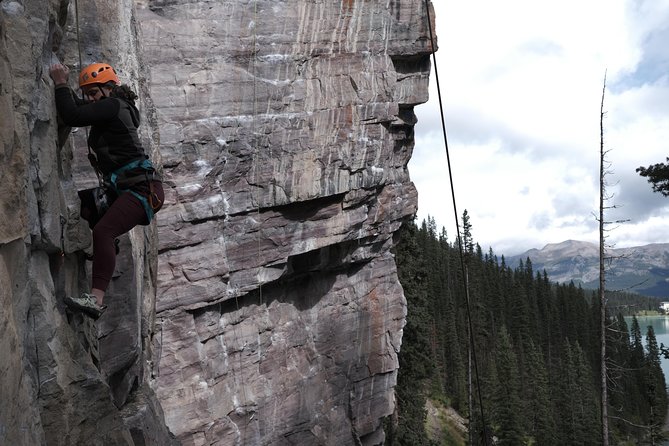
Reviewed · BANFF & LAKE LOUISE TOURS
Rock Climbing Adventure in Banff: Beginner
The best part of this Banff outing is that you do not need climbing experience to get off the ground. Guides begin with safety and simple technique, then match routes to your ability. Small groups of up to eight let instructors give real attention, not just a quick briefing before sending you to the wall.
I like the mix of beautiful outdoor climbing and patient teaching, especially for families and first-timers. I also like that the day can grow with you: beginners learn the basics, while people with indoor experience can work on outdoor skills such as belaying, anchor building, mock leads, or rappelling. The main consideration is shoe fit. One family had trouble with limited sizes, so ask about climbing shoes before departure.
In This Review
- Key points at a glance
- Starting at 7:45 am on Bear Street
- Your first climbs in Banff National Park
- Why the small group matters
- The skills you take beyond the first route
- Trying several routes instead of chasing one summit
- A good choice for families, with one age note
- The climbing shoes are the one practical weak spot
- What the $112.39 price includes
- Guides who make the difference
- Weather, cancellation, and timing
- Who should book this climbing day?
- Should you book Rock Climbing Adventure in Banff?
- FAQ
- Where does the rock climbing activity begin and end?
- How long does the activity last?
- Is the activity suitable for complete beginners?
- What equipment is included?
- Is lunch provided?
- How many people can join the group?
- What happens if the weather is poor?
Key points at a glance
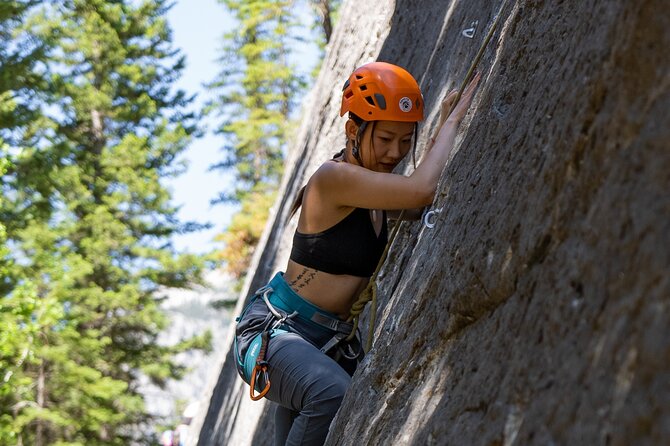
- Six climbing spots may be possible in one day, depending on conditions, group pace, and what you can handle.
- Guides tailor the routes to your group, helping nervous beginners while offering harder climbs to stronger participants.
- Children and adults can climb together, though families with children under 10 should ask about the half-day option.
- All core climbing gear is included, including helmet, harness, climbing shoes, ropes, and belay devices.
- The seven-hour format gives you time to learn and practice, rather than rushing through a short introductory session.
- Weather matters, and poor conditions can lead to a new date or a full refund.
Starting at 7:45 am on Bear Street
Your day begins at 7:45 am at 229 Bear Street in Banff. The activity also ends there, which keeps the meeting plan simple, but you need to arrange your own way to and from Banff. Private transportation is not included, and lunch is your responsibility.
The early start makes sense for a full day outside. You have time to reach the local climbing area, learn the safety systems, climb several routes, and take breaks without turning the outing into a frantic sprint. I would arrive ready to move, with food and water packed for the day.
The exact climbing area can depend on local conditions and the group. The program takes place in Banff National Park, at a nearby outdoor climbing site selected by the guides. That means your day is not built around a single indoor wall or fixed circuit. You go where the conditions and the group make the most sense.
More Banff & Lake Louise Tours in Banff
- Banff: Banff Gondola Admission Ticket
★ 4.7 · 3,698 reviews - Banff Gondola Ride Admission
★ 4.5 · 2,688 reviews - Emerald Lake, Moraine, Louise, Johnston Canyon & Banff Town
★ 4.9 · 1,554 reviews
Your first climbs in Banff National Park
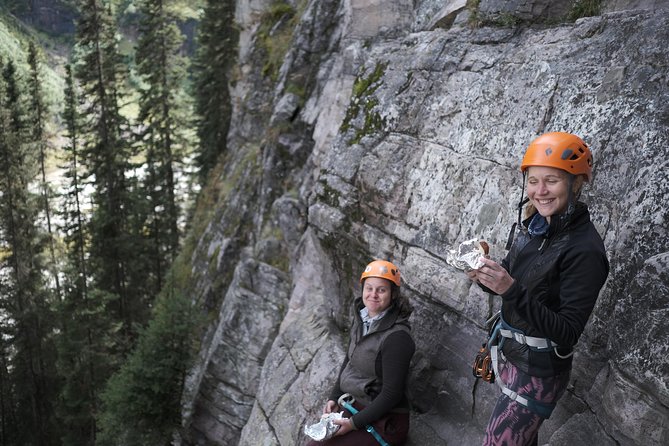
The day starts at the beginner level, even if you have never worn a harness. You learn how to use the equipment, understand the climbing site, and recognize hazards above and around you. That last point matters outdoors, where loose rock and overhead hazards require more awareness than a controlled indoor gym.
The guides then introduce top-rope climbing and belaying. In simple terms, the rope runs through an anchor above the route, and the belayer manages the rope from below. You still do the climbing, but the setup gives beginners a controlled way to learn movement, balance, and trust in the system.
You can expect repeated attempts rather than a single climb and a quick handoff to the next person. The stated aim is to give you as much climbing as you can handle during the day. That is valuable for beginners because the first climb often feels awkward, while the second or third gives you a chance to use what you just learned.
The teaching is not limited to pulling yourself upward. You work on climbing technique, including how to place your feet and use your body efficiently. When you feel stuck, a guide can offer an idea for the next move. Austin, for example, was praised for helping a climber find a way through a difficult section without taking over the climb.
Why the small group matters
The maximum group size is eight. That is not a private lesson, but it is small enough for a guide to keep track of safety, watch technique, and adjust the day to the people in front of them.
This matters most when abilities vary. One family included children aged 9 and 12, as well as adults. Guides Dustin and Janet adjusted the routes so the younger children could have a positive start, while a 13-year-old eventually tried a 10a climb. You should not read that grade as a promise of what you will climb, but it shows how the day can offer more challenge as confidence grows.
The same flexibility helps mixed-experience groups. A person new to climbing can learn the basics beside someone who climbs indoors but has never climbed outside. Jacob was specifically praised for making the day approachable for a complete beginner while still giving an indoor climber useful outdoor guidance.
That balance is one of the strongest reasons to choose this program instead of a fixed beginner lesson. You are not locked into one level for seven hours. The guide can keep things simple, add harder routes, or discuss more technical subjects when the group is ready.
The skills you take beyond the first route
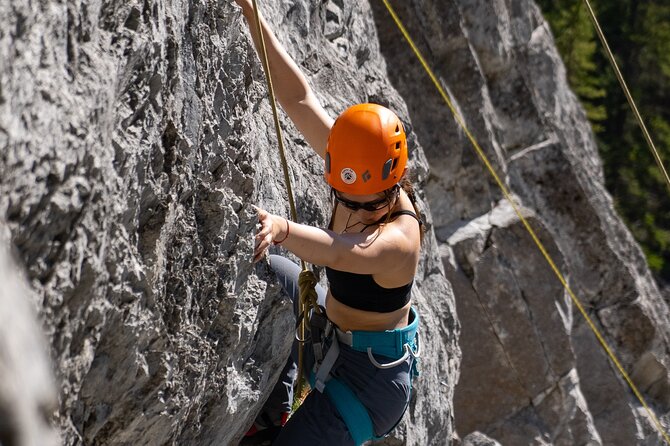
The core lessons cover site safety, overhead hazard recognition, top-rope belaying, lead-climber belaying, and climbing technique. This gives the outing more substance than a scenic tryout where you simply clip in and climb under supervision.
You may also cover steeper-rock techniques, using quick draws on bolted routes, building top-rope anchors, mock leads, and rappelling. These subjects are not guaranteed for every group, since the day is shaped around ability, interest, and conditions. Still, they make the program useful for people who want a proper introduction to outdoor climbing rather than a one-time novelty.
I would think of the course in two parts. The first is learning to climb safely under a top-rope system. The second is understanding how outdoor climbing works as a wider activity, including rope management, anchors, belaying, and route choices.
That distinction is important. A first climb may give you a thrill, but safety habits are what let you climb again. The guides place safety first, and the technical lessons give you a foundation you can continue developing after Banff.
Same province, a completely different day out:
- Columbia Icefield Tour with Glacier Skywalk
★ 4.5 · 1,860 reviews - Lakes Moraine, Louise, Emerald, Johnston Canyon & Yoho Tour
★ 4.8 · 1,023 reviews - Lake Louise, Moraine Lake and the Icefields Parkway Full-Day Tour
★ 5.0 · 836 reviews - Banff: Lake Louise, Moraine, Emerald Lake & Johnston Canyon
★ 4.9 · 808 reviews
Trying several routes instead of chasing one summit

The day is built around a variety of climbs at a local climbing area. One account described trying six different climbing spots, which gives you an idea of the variety that may be possible in good conditions and at a suitable pace.
A variety of routes lets you discover what kind of climbing suits you. One route may feel comfortable and straightforward. Another may be steeper, require better footwork, or ask you to pause and plan instead of simply reaching for the next hold.
This format also takes pressure off the idea of success. You do not need to complete one difficult route to justify the day. You can learn on an easy climb, try something more technical, then return to a style that suits you. For families, that variety helps keep different ages and confidence levels involved.
The setting is part of the appeal. You are climbing outdoors in Banff National Park, with the rock and mountain scenery around you rather than four walls and artificial holds. The surroundings do not replace good instruction, but they make the learning feel tied to the place.
A good choice for families, with one age note
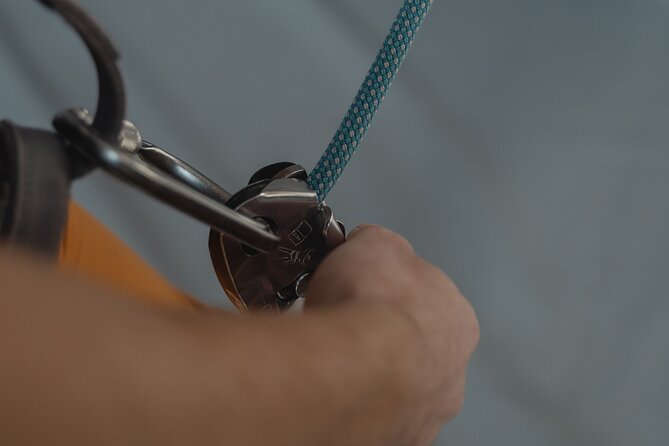
The program is designed for families with children and for friends trying something new together. Most people can participate, and service animals are allowed. The day is suitable for all experience levels, but families with children under 10 should ask about the half-day program.
That shorter option may be a better fit for younger children who are new to harnesses, heights, or a full day of outdoor instruction. The seven-hour program is a substantial commitment, especially if your child is not sure about climbing yet. Ask about the half-day format before booking if that applies to your family.
For older children, the program can offer a satisfying mix of support and challenge. Guides Dustin and Janet were praised for their patience with 9-year-olds, while older children could move to harder routes once they had the basics. That ability to adjust is more useful than a generic promise that the program is family-friendly.
You should also remember that climbing is active. The available information says most people can participate, but it does not provide a detailed medical or fitness checklist. If you have a concern about taking part, ask the provider before booking.
The climbing shoes are the one practical weak spot
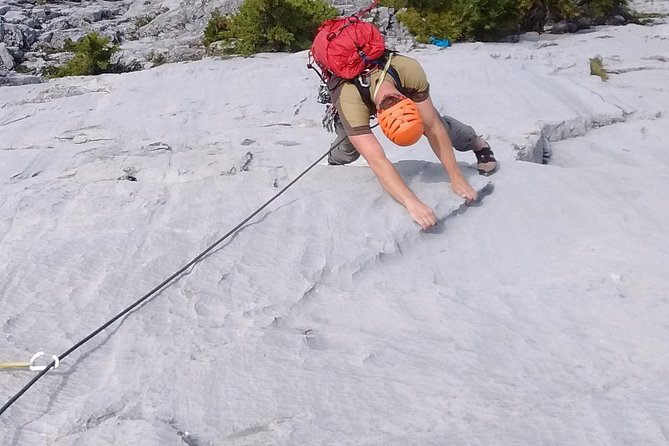
The program supplies helmet, harness, climbing shoes, ropes, and belay devices. That is a strong value for anyone who does not already own equipment, and it keeps a first outdoor climbing day from becoming an expensive gear-buying project.
The shoe situation deserves a question before you go. One family found that some sizes were limited at the climbing area. An adult who normally wears size 8 had to choose between 7.5 and 8.5, while another climber chose a larger pair that made precise toe placement harder.
Climbing shoes should fit snugly, but painful shoes can distract you from learning. The provider explained that replacement shoes had been ordered and that fitting at the climbing area helps avoid traffic and parking problems in town. Still, I would contact Alpine Air Adventures in advance with every climber’s shoe size, especially for a family or group with several participants.
This is not a reason to reject the activity. It is simply the clearest preparation point. Good shoe fit can make a noticeable difference when you are learning to trust your feet on small holds.
What the $112.39 price includes
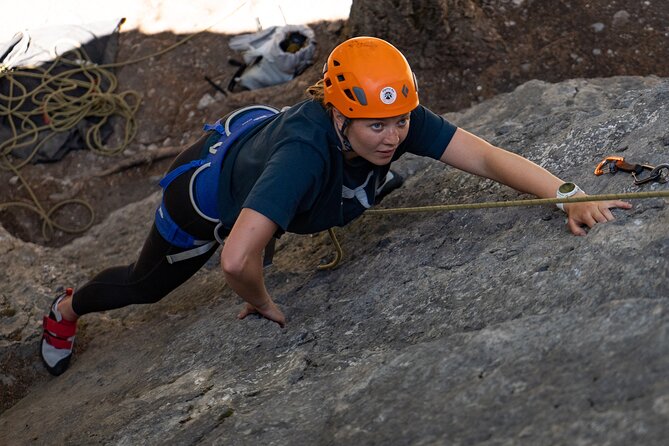
At $112.39 per person, the value depends on what you want from the day. You receive about seven hours of instruction and guided climbing, a small group capped at eight, and the essential equipment. If you were to rent a helmet, harness, shoes, rope system, and belay device separately, the included gear would matter even before you count the guide’s time.
The price also buys room to progress. A short introductory session might let you try one or two climbs, but this program gives you a full day to repeat techniques, ask questions, and attempt different routes. That longer format is especially useful if your group includes people who need time to feel comfortable.
The cost does not include private transportation or lunch. You should budget for both in your day plan. Since the meeting point and end point are at 229 Bear Street, you need to make your own arrangements around the climbing portion.
For a first outdoor climbing day in Banff, I consider the price fair if you value instruction and actual practice. It is less compelling if you only want a brief photo opportunity or a short introduction. The seven-hour schedule is the point: you are paying for time on the rock, not just access to a scenic location.
Guides who make the difference
The guide is central to this kind of activity. Jacob was praised for his calm manner, stories, and ability to make the day enjoyable. Dustin was singled out for being encouraging, careful, and willing to teach more technical skills. Austin helped a climber work through a stuck moment, while Sebastien helped nervous beginners move from basic routes to harder challenges.
Those details point to a useful quality in the instruction: the guides do not treat beginner status as a problem. They can start with the basics, but they can also respond when you are ready for more.
You should still expect the guide to make safety decisions. The group’s route choices and technical content may change based on weather, ability, and site conditions. That is part of responsible outdoor climbing, even if it means you do not cover every advanced topic listed in the program.
The guide’s job is also to help you set a sensible personal goal. For one person, reaching the top of an easy route may be the day’s victory. For another, it may be trying a steeper climb or learning to belay. A good guide can make both goals feel worthwhile.
Weather, cancellation, and timing
The activity requires good weather. If poor conditions force a cancellation, you can choose another date or receive a full refund. The same choice applies if the minimum number of participants is not met.
You can cancel for a full refund if you do so at least 24 hours before the start time. Cancellations or changes made inside that window are not accepted for a refund, and the cut-off uses local time.
Because climbing is weather dependent, I would avoid placing this outing on the final morning of your Banff stay. Give yourself another day if possible. That way, a weather change does not remove your only chance to climb.
The experience is booked an average of 50 days in advance, so popular dates may need planning. Confirmation arrives when you book, and the activity is offered in English.
Who should book this climbing day?
I would recommend it to families with older children, friends looking for a shared challenge, and indoor climbers who want to learn outdoor systems. It also fits solo participants who are comfortable joining a small group and learning alongside people at different levels.
This is especially suitable if you want to:
- Try outdoor rock climbing without buying equipment
- Learn belaying and basic site safety
- Spend most of a day actively climbing
- Give children a structured challenge in Banff
- Build on indoor climbing experience
- Work toward harder routes with a guide nearby
I would be more cautious if your group wants a very short outing, dislikes active instruction, or needs guaranteed shoe sizes without arranging them ahead of time. Families with children under 10 should ask about the half-day program rather than assuming a seven-hour day will be the best fit.
Should you book Rock Climbing Adventure in Banff?
Yes, if you want a hands-on outdoor activity with time to improve. The 4.9 rating from 19 reviews and 100 percent recommendation rate match the strongest practical points: patient guides, careful safety instruction, flexible route choices, and a welcoming approach to complete beginners.
The best booking strategy is simple. Contact Alpine Air Adventures about shoe sizing, pack lunch and water, allow for your own transportation, and leave room in your schedule for weather changes. If you want more than a quick taste of climbing, this is a well-priced way to learn in Banff and leave with skills you can use again.
FAQ
Where does the rock climbing activity begin and end?
It begins at 229 Bear Street, Banff, Alberta, at 7:45 am. The activity ends back at the same meeting point.
How long does the activity last?
The program lasts approximately seven hours.
Is the activity suitable for complete beginners?
Yes. The guides begin with basic safety and climbing instruction, and the program is designed for people with no previous experience as well as those with more climbing background.
What equipment is included?
The activity includes a helmet, harness, climbing shoes, ropes, and belay devices.
Is lunch provided?
No. Lunch is not included, so you need to make your own arrangements.
How many people can join the group?
The maximum group size is eight participants.
What happens if the weather is poor?
If poor weather causes a cancellation, you can choose a different date or receive a full refund. The same options apply if the minimum number of participants is not met.
Just added around Banff
- Sunset at Moraine Lake & Stargazing Tour from Canmore/Banff★ 5.0 · 95 reviews
- 2 Day Banff Lake Louise Johnston Canyon Gondola Cave Basin tour★ 4.5 · 8 reviews
- Rocky mountain – VIP Experience – Private Boat★ 5.0 · 6 reviews
- Private Guided Tour to Banff Lake Louise|Moraine|Icefields &More!★ 5.0 · 5 reviews
- Experience Golden Hour at Moraine and Lake Louise★ 5.0 · 18 reviews
- Shared Tour: Lake Louise & Emerald Lake from Canmore/Banff★ 4.5 · 5 reviews
- Full Day Private Tour Banff/Yoho Customized Sightseeing★ 4.5 · 31 reviews
- Banff/Canmore Moraine Lake & Lake Louise– Hike, Canoe or Sightsee★ 5.0 · 104 reviews
Banff & Lake Louise Tours, compared.
Lake Louise, Moraine Lake, Banff Tour from Calgary/Canmore/Banff
Read our review →
Emerald Lake, Moraine, Louise, Johnston Canyon & Banff Town
Read our review →
Lake Louise, Moraine Lake and the Icefields Parkway Full-Day Tour
Read our review →
Lake Louise, Moraine, Emerald Lake & Johnston Canyon
Read our review →
Explore Banff National Park with Our Premium Day Tour
Read our review →Browse the lists this tour appears in