
Reviewed · BANFF & LAKE LOUISE TOURS
The Sights of Banff: a Smartphone Audio Walking Tour
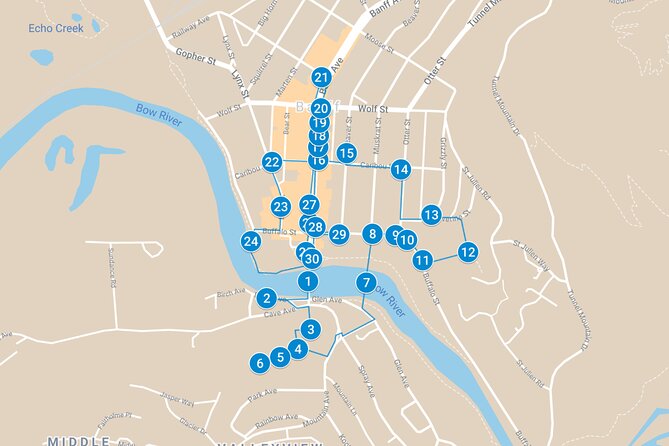
Banff’s story comes together one sidewalk at a time on this GPS-guided audio walk, which links grand park buildings, early cabins, museums, sculptures, gardens, and the Bow River. The route covers about 5 kilometres round trip and takes roughly an hour to 90 minutes before you add museum visits or photo stops.
I like the freedom to start whenever you wish and keep the tour for later use. I also like the mix of famous sights and small details, such as the sidewalk elevation marker, the old power station, and a cabin built largely from local materials. The main caution is the app: some users found the directions and interface confusing, and one reported outdated information.
In This Review
- Key points to know before you go
- Banff in an hour, with room to linger
- Start at Buffalo Nations Museum and Cascade Gardens
- The Bow River, Banff’s elevation, and early cabins
- A scenic path and the story of Mary Schaffer Warren
- Luxton Home Museum and Banff’s commercial beginnings
- Churches, monuments, and the old Cascade Lodge
- Central Park, the Banff Park Museum, and Banff Avenue
- Rundle United and Banff’s civic memory
- What the app does well, and where it needs patience
- Who should book this Banff walk?
- Should you book The Sights of Banff?
- FAQ
- How long does The Sights of Banff tour take?
- How far is the walking route?
- Can I start the tour at any time?
- Does the tour work without phone reception?
- Do I need to bring my own smartphone?
- Are museum admissions included?
- Is the tour offered in languages other than English?
- Can I cancel for a refund?
Key points to know before you go

- A 5-kilometre route through central Banff: The walk connects major sights on and near Banff Avenue, with plenty of stops along the way.
- Audio plays by GPS: Commentary begins as you approach each point, so you can keep your phone in hand rather than constantly searching a written guide.
- Download it before leaving Wi-Fi: The tour works offline, with no signal or mobile data needed during the walk.
- Guide Don supplies the voice: His commentary covers local characters, buildings, climate, Indigenous imagery, and Banff’s development.
- You pay for the walking guide, not museum entry: Admission to the Luxton Home Museum, Whyte Museum, Banff Park Museum, and Buffalo Nations Museum is not included.
- Winter needs care: The route is outdoors, and temperatures of -19 can make a long walking tour unpleasant or cause you to skip sections.
Banff in an hour, with room to linger

This is not a bus tour or a formal group outing. You use your own smartphone, follow the live map, and listen as the app triggers commentary near each stop. You can pause, restart, or finish the route on another day, which is useful in Banff, where weather and wildlife plans often change.
The tour begins at 12 Banff Avenue, near the center of town, and returns there. Its published hours run all day and night, so your practical start time is limited more by daylight, weather, and attraction opening hours than by the tour itself.
At $8.22 per person, the price is low for a private experience. The important detail is that the number of people booked equals the number of devices allowed to download the tour. If two people want to listen separately, book two devices. You can also play the audio from the phone speaker, though headphones are optional and may be more comfortable on busy streets.
I would download everything on Wi-Fi before setting out. The offline function saves data and protects you from weak reception, but it does not solve every navigation problem. The app has a live GPS map, yet the route display may not always make the next street or stop obvious. Take a quick look at the route before you begin, and keep your phone charged.
More Banff & Lake Louise Tours in Banff
- Banff: Banff Gondola Admission Ticket
★ 4.7 · 3,698 reviews - Banff Gondola Ride Admission
★ 4.5 · 2,688 reviews - Emerald Lake, Moraine, Louise, Johnston Canyon & Banff Town
★ 4.9 · 1,554 reviews
Start at Buffalo Nations Museum and Cascade Gardens
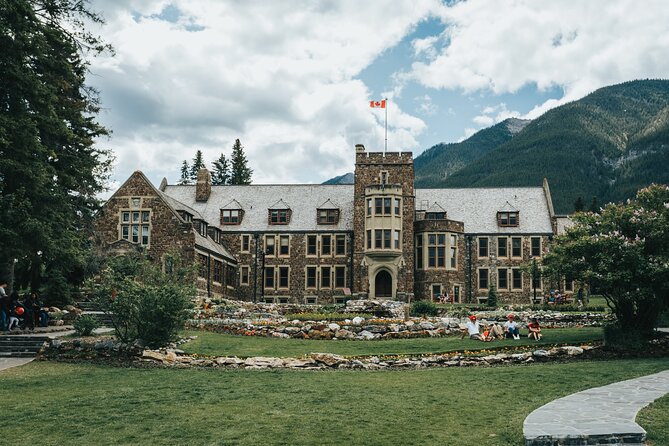
The opening section gives you the strongest visual setting of the walk. From the Buffalo Nations Museum area, the route moves toward the Banff National Park Administration Building and Cascade Gardens.
The first stop introduces the tour format and Banff’s past and present. The Buffalo Nations Museum itself requires a separate ticket, so decide in advance if you want to add an indoor visit. The audio walk can point you toward the museum, but admission is not part of the $8.22 fee.
The Banff National Park Administration Building is a fine early stop because the building itself does much of the work. You get a short explanation while looking closely at its design. This is one of the tour’s recurring strengths: you are not only told a fact, you are directed toward something visible.
Cascade Gardens deserves more time than the five-minute audio prompt suggests. This four-acre hillside garden was built in the 1930s and is arranged in terraces, with the Cambrian and Devonian pavilions among its features. The route description allows about 15 minutes here, but you can stay longer if the gardens are open and the season is suitable.
This may be the most satisfying part for anyone who wants a calm start. It is also the section most likely to work even if the app’s directions take a little practice. One practical point: gardens and other recommended attractions can be closed or inaccessible because of the season or other conditions beyond the operator’s control.
The Bow River, Banff’s elevation, and early cabins
The walk then heads to the Banff Pedestrian Bridge, where you look across the Bow River and hear about the person known as Mr. Banff. The stop is brief, but the river gives the route a change of pace after the buildings and gardens.
At Buffalo Street and Muskrat Street, look down for an elevation marker set into the sidewalk. It resembles a coin. This is exactly the sort of small feature you could miss while hurrying along Banff Avenue, and the audio gives you a reason to search for it.
At 514 Buffalo Street, the route points out the Crandell Peck Cabin. Edward Henry Crandell built it in 1907, using almost entirely materials sourced locally. The cabin helps you picture a more practical, workaday Banff, rather than the polished resort town you see around the main shopping streets.
The next stop, at Buffalo and Otter streets, introduces the inukshuk. The route does not ask you to make a long detour, but it does encourage you to notice a form with cultural meaning that might otherwise pass without explanation.
At 525 Buffalo Street, you pass the Banff Powerstation. The commentary explains how it supplied power for the town’s streetlights and homes in 1905. Again, the value is in the connection between an ordinary-looking building and the basic systems that helped Banff grow.
A scenic path and the story of Mary Schaffer Warren
The Ken Madsen Path provides another short break from town streets. As you walk, the narration turns to Banff’s broader past. The route is still urban and compact, but this section gives you a little more breathing room.
At 117 Grizzly Street, you see Tarry-a-while, one of Canada’s historic places. It was the residence of Mary Schaffer Warren, known for early exploration, writing, and painting in the Canadian Rockies.
This is a useful stop for readers who want more than architecture. The audio links a specific house with a person who recorded the region through words and images. You should not expect a long house tour here, however. The listed commentary at each point is generally about five minutes, so the route offers an introduction rather than a full biography.
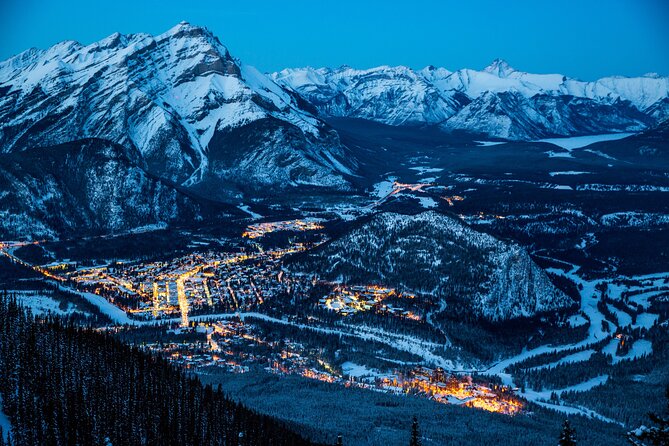
As you continue between Otter and Caribou streets, the guide talks about Banff’s climate. That might sound like a filler stop, but it has practical value. Banff’s weather can change sharply, and the cold-weather experience reported at -19 shows why you should treat this as an outdoor activity, not simply an audio download.
More Walking & Ghost Tours in Banff
- The Banff Stargazing Tour – 2hr Walking Tour
★ 5.0 · 189 reviews - Banff: 4-Hour E-Bike and Walking Tour in Johnston Canyon
★ 4.7 · 67 reviews - Banff: Paranormal History Walking Ghost Tour
★ 4.7 · 46 reviews - Canmore: Stargazing and Nature by Nightfall Walking Tour – 2hr
★ 5.0 · 31 reviews
Luxton Home Museum and Banff’s commercial beginnings
The Luxton Home Museum offers one of the clearest chances to step inside Banff’s past. The home presents the life of a pioneer family and the town’s changes over nine decades. Admission is extra, and you should allow more time if you plan to go inside.
The route then reaches Caribou Corner, where you hear about the Brewster family’s arrival in Banff in 1886 and the business they established. The stop helps explain how the town developed through families and local enterprises, not just through national park administration and grand hotels.
At 204 Banff Avenue, the Four Sentries sculpture gives you a public-art stop in the middle of the commercial district. The route next points out a mural showing the Cave and Basin site. This is a good place to learn about one of Banff’s key attractions even if you do not visit it during this walk.
The Banff Visitor Information Centre follows. It is not an included attraction in the ticketed sense, but it is a useful practical stop for current information about the wider area. The audio tour is fixed, while conditions and opening times can change, so this is where you can fill in the gaps.
Churches, monuments, and the old Cascade Lodge
St. Paul’s Presbyterian Church is a short but worthwhile stop. The current building dates from 1930, while the congregation was established in 1887. The two dates give you a quick lesson in how Banff’s institutions often reach further back than the buildings you see today.
At Banff Avenue and Elk Street, the guide points out a stone fire monument. You can sit near it, but the point is the story rather than an actual fire. The route keeps its tone light here, with Don occasionally adding humor to the narration.
At Caribou and Bear streets, you see the old Cascade Lodge, now associated with the Banff Freemasons. It is another example of the route’s approach: short explanations, visible buildings, and a steady walk through town.
The Whyte Museum of the Canadian Rockies is one of the most important optional indoor stops. Its purpose is to preserve and make accessible the history and culture of the Rocky Mountains. Admission is not included, so the audio tour works best as a way to identify places you may want to visit separately.
Central Park, the Banff Park Museum, and Banff Avenue

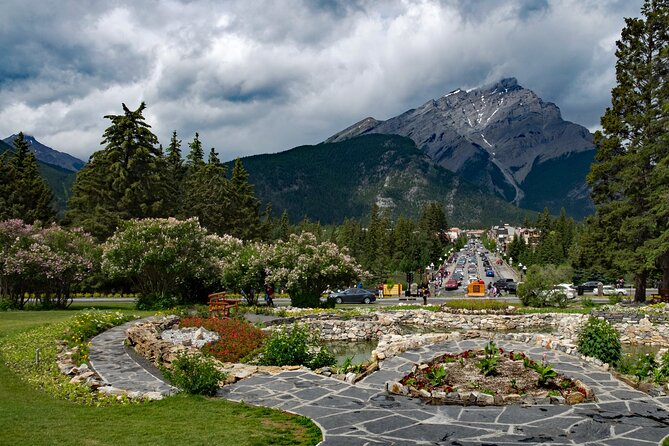
Central Park gives you a green pause near the center of town. The commentary draws attention to a large pile of rocks in the middle of the park, an amusing detail that shows the guide is not only interested in grand buildings.
The Banff Park Museum, a National Historic Site of Canada, dates back to 1895. It was established to house mounted specimens of animals, plants, and minerals connected with the park. The museum requires its own admission, but even a short look at the building can add context to Banff’s early approach to interpreting nature.
At Banff Avenue and Buffalo Street, you see the Dave Whyte Block, one of Banff’s oldest largely intact commercial buildings. At 107 Banff Avenue, Harmony Lane brings another architectural detail, including river-stone pillars and the rustic National Park style.
This section is useful if you are already shopping or walking along Banff Avenue. The drawback is that the main avenue can make audio harder to follow, and the app’s map may not provide enough street-level clarity for everyone. One user specifically wanted a map showing the streets more clearly, and I think that is fair advice. Slow down at intersections and check the next stop before moving on.
Rundle United and Banff’s civic memory
Rundle United, also called Ralph Connor Memorial United Church, supplies a story about the man behind the church’s name. Don presents part of the explanation in a playful Mr. Rundle impersonation, which gives the audio a more human voice than a plain museum label.
At Beaver and Buffalo streets, the route points out the Superintendent’s Residence. The commentary explains the responsibilities of the park superintendent who lived there. It is a small but useful reminder that Banff was shaped by administration as well as tourism.
The final principal stop is the Royal Canadian Legion Col. Moore Branch 26. Outside, you see the cenotaph built in 1920. This ending turns toward remembrance and public memory, giving the walk a more serious close before you return to the starting point.
The published route contains many short stops, most around five minutes. That makes the walk easy to break into pieces, but it can also make the narration feel repetitive if you listen to every segment without pausing. You will get more from it if you stop to look, take a photograph, or enter an attraction rather than treating it as a race to the next audio trigger.
What the app does well, and where it needs patience
The GPS-triggered commentary is the tour’s best idea. When it works properly, you approach a point, the relevant narration begins, and you can keep your attention on the building or object in front of you.
The trivia game adds a small interactive element. After the commentary, you tap your answer on the device. It will not replace a live guide, but it gives children and curious adults a reason to listen closely.
The app has also had practical weaknesses. Some users found the interface awkward, with the map occasionally jumping to a slogan page. Another person found the second part of the route outdated and difficult to follow. The operator said a software bug had been fixed, but I would still download the current version and test it before leaving your accommodation.
The audio itself has been praised for worthwhile information, while one complaint described it as too long and repetitive. Both points can be true. The content gives you useful local context, but the format works best when you use the pause button freely.
This is a private activity because only your group uses the tour. That means no waiting for a guide or matching another group’s pace. It also means you must manage your own navigation, volume, timing, and attention at crossings.
Who should book this Banff walk?
I would choose this tour if you want a low-cost introduction to Banff’s town center, prefer independent sightseeing, or have an uneven schedule. It suits solo visitors, couples, and families who do not want a fixed departure time.
It is also a good first walk before choosing which museums to enter. The route passes the Buffalo Nations Museum, Luxton Home Museum, Whyte Museum, and Banff Park Museum, but admission is separate. You can use the audio to decide which one deserves your limited time and budget.
I would be more cautious if you want polished, detailed navigation or a lively conversation with a human guide. The content is in English only, and the app may take time to learn. It is also a poor match for severe winter weather unless you are prepared to shorten the route.
Bring a charged smartphone, download the tour on Wi-Fi, and use headphones if street noise bothers you. Plan extra time for Cascade Gardens and any museum you enter. You can cancel for a full refund up to 24 hours before the local start time, but changes or cancellations within 24 hours are not refundable.
Should you book The Sights of Banff?
Book it if you want Banff’s buildings and small landmarks explained without paying for a private guide. At $8.22, the cost is modest, and the flexible schedule is genuinely useful. The best parts are the gardens, river crossing, old homes, power station, public art, and the stories tied to Mary Schaffer Warren and the Brewster family.
Skip it if you need flawless app performance, precise street-by-street directions, or a fully guided museum experience. For most people, the smart approach is to treat it as an inexpensive framework for exploring town, not as a substitute for every attraction or a live local guide.
FAQ
How long does The Sights of Banff tour take?
The tour takes approximately one hour to one hour and 30 minutes. You can take longer because the tour has no time limit and you may pause at stops or visit attractions along the route.
How far is the walking route?
The route covers about 5 kilometres round trip and begins and ends at 12 Banff Avenue in Banff.
Can I start the tour at any time?
Yes. The tour has flexible start times and is available throughout the stated operating period, from 12:00 AM to 11:30 PM daily.
Does the tour work without phone reception?
Yes. You should download it over Wi-Fi before starting. Once downloaded, no signal or mobile data is required during the walk.
Do I need to bring my own smartphone?
Yes. A smartphone or tablet is not included. Headphones are optional because the commentary can play through your device speaker.
Are museum admissions included?
No. Admission is not included for the Buffalo Nations Museum, Luxton Home Museum, Whyte Museum of the Canadian Rockies, or Banff Park Museum.
Is the tour offered in languages other than English?
No. The tour is offered in English.
Can I cancel for a refund?
Yes. You can receive a full refund if you cancel at least 24 hours before the experience start time. Cancellations and changes made within 24 hours are not accepted for a refund.
More Self-Guided Tours in Banff
- Smartphone Audio Driving Tour between Banff and Calgary
★ 4.0 · 25 reviews - Self-Guided Audio Tours for the Canadian Rockies
★ 5.0 · 18 reviews - Discover the Rockies: 6 Self-Guided Smartphone Audio Tour Bundle
★ 4.0 · 10 reviews - Banff Cave & Hot Springs Audio Walking Tour (Not a Ticket)
★ 3.0 · 6 reviews
More Walking Tours in Banff
- Yamnuska Wolfdog Sanctuary Walk Ticket in Canada
★ 5.0 · 37 reviews - Canmore: Wilderness & Wildlife Tour – 2hr Walk
★ 5.0 · 29 reviews - Banff Town Walking Tour Includes Refreshment and Sweet Treat
★ 5.0 · 29 reviews - Canmore Town Walking Tour with Refreshment and Sweet Treat
★ 5.0 · 27 reviews
Just added around Banff
- Sunset at Moraine Lake & Stargazing Tour from Canmore/Banff★ 5.0 · 95 reviews
- 2 Day Banff Lake Louise Johnston Canyon Gondola Cave Basin tour★ 4.5 · 8 reviews
- Rocky mountain – VIP Experience – Private Boat★ 5.0 · 6 reviews
- Private Guided Tour to Banff Lake Louise|Moraine|Icefields &More!★ 5.0 · 5 reviews
- Experience Golden Hour at Moraine and Lake Louise★ 5.0 · 18 reviews
- Shared Tour: Lake Louise & Emerald Lake from Canmore/Banff★ 4.5 · 5 reviews
- Full Day Private Tour Banff/Yoho Customized Sightseeing★ 4.5 · 31 reviews
- Banff/Canmore Moraine Lake & Lake Louise– Hike, Canoe or Sightsee★ 5.0 · 104 reviews
Banff & Lake Louise Tours, compared.

Lake Louise, Moraine Lake, Banff Tour from Calgary/Canmore/Banff
Read our review →
Emerald Lake, Moraine, Louise, Johnston Canyon & Banff Town
Read our review →
Lake Louise, Moraine Lake and the Icefields Parkway Full-Day Tour
Read our review →
Lake Louise, Moraine, Emerald Lake & Johnston Canyon
Read our review →
Explore Banff National Park with Our Premium Day Tour
Read our review →Browse the lists this tour appears in