
Reviewed · TORONTO TOURS
Toronto Essentials Tour: Old Town & Downtown Highlights (PWYC)
Toronto’s downtown story is told in a remarkably short walk. In about 90 minutes to two hours, you move from the grand train hall at Union Station through the underground PATH, past cathedral-like bank buildings, and into the open civic space of Nathan Phillips Square. Along the way, the CN Tower keeps appearing above the streets like a giant compass point.
I like the excellent city orientation and the way the guide links Toronto’s past to its present. I also like the price: at $4.50 per person, this is an unusually cheap way to get a first look at the core. The main drawback is the brisk schedule. You will see many places, but you will not tour every interior, and the PATH can be confusing if the group gets spread out.
In This Review
- Key things to know before you book
- Why this short Toronto walk works
- Finding the guide inside Union Station
- Union Station, the Royal York, and the CN Tower
- Brookfield Place and the PATH below downtown
- Hockey, the market, and Toronto’s local character
- Berczy Park’s dog fountain
- St. James Cathedral and Old Toronto
- The Financial District and Toronto’s banking power
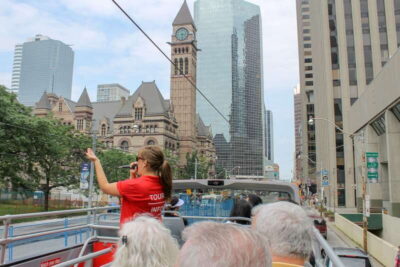
- Old City Hall, new City Hall, and the final square
- Timing, walking pace, and group size
- Is $4.50 a good value?
- Who should book this walk?
- Should you book Toronto Essentials Tour?
- FAQ
- Where does the tour start?
- How do I identify the Great Hall?
- Where does the tour end?
- What time does the tour start?
- How long does the tour last?
- Is the tour offered in English?
- How much does the tour cost?
- Does the tour include admission to attractions?
- Is the tour suitable for most people?
- What happens if I arrive late?
Key things to know before you book
- Start inside Union Station: Meet in the Great Hall near the information booth and clock, not outside, in the food court, or at the separate tourist information centre.
- Follow the CN Tower from street level: Several stops give you useful sight lines to Toronto’s best-known landmark.
- Walk part of the PATH: Your guide explains the underground network, but you need to stay close because its corridors are easy to mix up.
- Compare old and new Toronto: St. James Cathedral, the financial district, Old City Hall, and modern City Hall show how the city changed.
- Finish at Nathan Phillips Square: The tour ends beside the famous TORONTO sign, with public washrooms nearby.
- Expect an on-time departure: The group can include up to 30 people, and the guide cannot wait for late arrivals.
Why this short Toronto walk works
This is an orientation tour rather than a deep visit to one attraction. That is its strength. You get the basic shape of downtown Toronto quickly, with enough history to make the buildings and streets more meaningful when you explore on your own later.
The route also mixes places that feel very different. Union Station and the Royal York Hotel reflect the age of rail travel. Brookfield Place and the PATH show a modern business district built for indoor movement. St. James Cathedral connects the city to religion and 19th-century civic power, while Nathan Phillips Square presents Toronto as a modern, public-minded capital.
The guides bring different strengths. Past tours have been led by David, Michael, Aaron, and Ulysses. Michael, a recently retired history teacher, was especially good at mixing history, architecture, and humor. Ulysses focused on architectural details that are easy to miss. That variety matters because the route can be presented as a dry list of buildings or as a connected story about how Toronto grew. This tour aims for the latter.
Other Toronto days worth putting on the list:
- Toronto: Niagara Falls Day Tour with Optional Boat Cruise
★ 4.6 · 3,178 reviews - Niagara Falls Day Tour from Toronto
★ 5.0 · 2,889 reviews - Toronto: Casa Loma Entry Ticket
★ 4.7 · 2,705 reviews
Finding the guide inside Union Station
The meeting point is the Great Hall inside Toronto Union Station. This detail matters. Union Station contains several large spaces, including a food court, another tourist information area, and the outdoor sidewalk near a prominent clock. None of those is the correct meeting place.
Enter the Great Hall from Front Street and look for the large room with a high ceiling and tall windows. Flags hang along one side, an information booth sits under a clock in the centre, and the names of cities served by the railway circle the upper interior. Your guide will be near that information booth.
Plan to arrive early enough to identify the room without rushing. The tour leaves on time, and the guide cannot hold the group for late arrivals. Since the start is inside a major rail station, a few extra minutes here are well spent.
Union Station, the Royal York, and the CN Tower
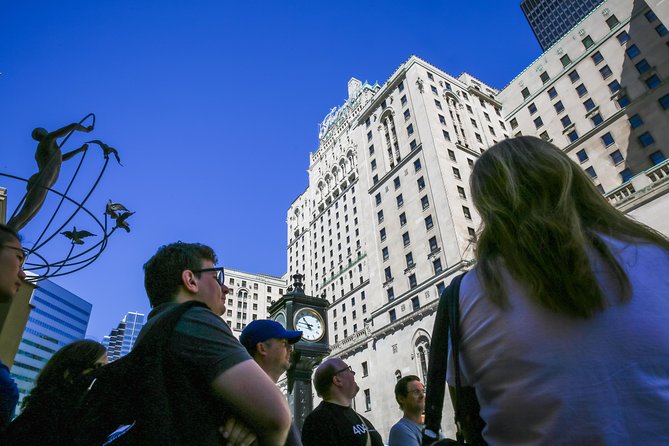
The first part of the walk introduces Toronto through its rail connection. Building a railway across Canada required huge sums of money and years of work. To make the journey attractive to wealthy passengers, railway companies built grand hotels beside major stations.
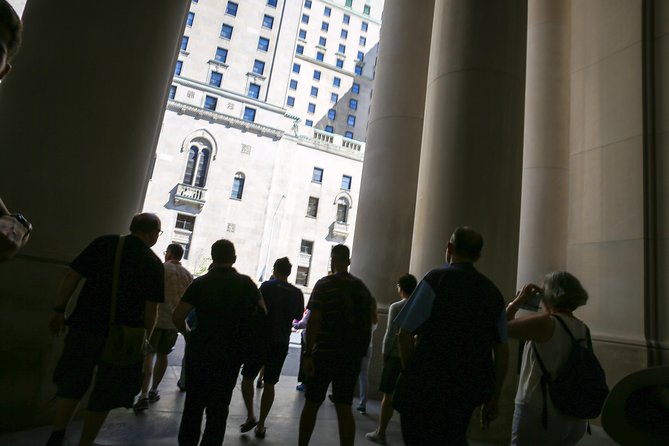
Toronto’s answer was the Royal York Hotel, opened in 1929. Its timing was unfortunate, since the global economy soon collapsed, but the hotel survived the Depression and competition from newer properties. Today, the Fairmont Royal York remains one of Toronto’s best-known landmarks.
You view the hotel from outside. Tour groups are not welcomed into its lobby, so do not expect an interior visit. That is a minor limitation because the exterior still makes the railway era easy to picture, especially when paired with the station itself.
The CN Tower supplies the route’s most obvious visual anchor. It was once the tallest free-standing structure in the world, and its original purpose included improving television and radio reception in the area during the 1970s. Today, it is mainly a symbol of Toronto, but the practical reason for its construction gives the landmark extra interest.
The guide uses several downtown viewpoints to help you understand where you are. If you have only a short time in the city, that repeated connection between the street and the skyline is useful. You are not simply told that the tower is famous. You learn why it was built and how it helped shape Toronto’s public image.
Brookfield Place and the PATH below downtown
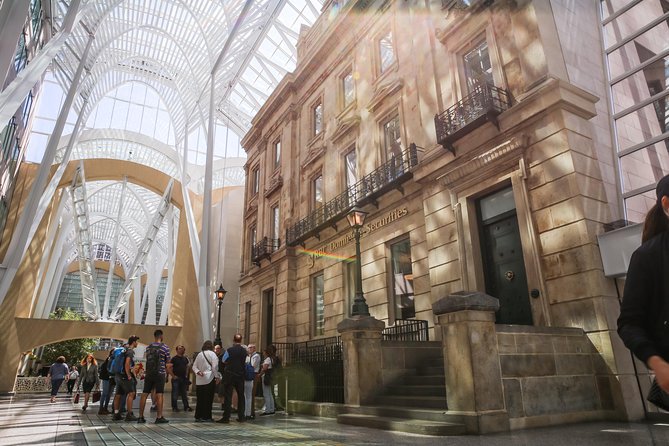
Brookfield Place is one of the route’s most striking architectural stops. Designed by Santiago Calatrava, it has tall white steel ribs and glass overhead that create a bright, curved public interior. Even if modern architecture is not your main interest, this is the sort of place that rewards a few minutes of looking up.
The stop also introduces Toronto’s PATH network, a vast set of underground corridors, food courts, shops, and connections linking downtown buildings with nearby subway stations. The route walks part of the system and explains how it developed.
The PATH is practical, especially in severe weather, but it is not simple. Different corridors can feel alike, entrances are easy to miss, and the network does not always behave like a straightforward road map. Stay close to the guide and do not drift away for photographs. The tour uses the PATH as a short introduction, not as a full underground exploration.
This is an important distinction. You will learn how the network works and get a taste of its unusual city-below-the-city character. You will not master every corridor in one pass. The guide’s explanation can save you time later, but you should still ask for directions if you return alone.
Same province, a completely different day out:
- Niagara Falls Canada Day Tour From Toronto + Boat Cruise Option
★ 5.0 · 2,576 reviews - Toronto: Harbor and Islands Sightseeing Cruise
★ 4.7 · 2,566 reviews - Toronto: City Sightseeing Hop-On Hop-Off Bus Tour
★ 4.3 · 2,544 reviews - Niagara Falls from Toronto: Skip-the-Line Boat & Skylon Tower
★ 5.0 · 2,406 reviews
Hockey, the market, and Toronto’s local character
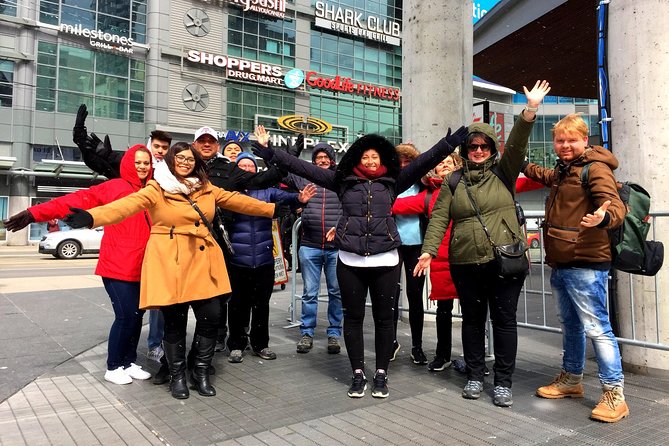
The route includes pointers toward hockey attractions and the market area, although the tour does not make a full visit to every one of them. The guide explains where to find the hockey attraction entrance, which can be surprisingly difficult to locate, and shares background on Canada’s official national winter sport.
There may also be some playful discussion of why the Toronto Maple Leafs are unlikely to win another Stanley Cup. That kind of local humor keeps the history from becoming too solemn.
You also receive advice for visiting the market after the walk, along with an explanation of its role in Toronto’s growth. Since the information is delivered as guidance rather than a full stop, you should treat it as a useful extension to the tour. If you want more time there, return after the group ends.
The value here is practical. A first walk through downtown can leave you with a pile of disconnected landmarks. A few tips about where to go next turn the tour into a starting point for the rest of your day.
Berczy Park’s dog fountain
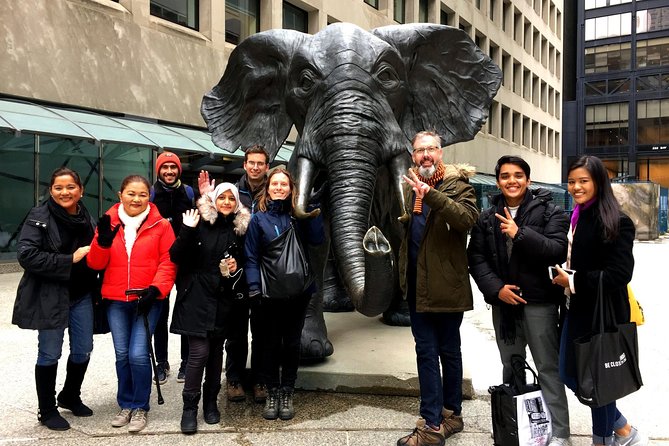
Berczy Park provides a lighter pause between the larger historical stops. Its famous dog fountain features playful canine sculptures and gives the guide a chance to explain why cities create public art that is meant to make people smile.
The stop lasts about five minutes, so do not expect a long discussion of the park. Instead, it breaks up the harder architectural and financial material. It is also a good place for a quick photograph.
This small stop shows one of the tour’s better qualities: the walk is not only about government offices and banks. Toronto’s downtown includes public art, small civic gestures, and places designed for pleasure as well as work.
St. James Cathedral and Old Toronto
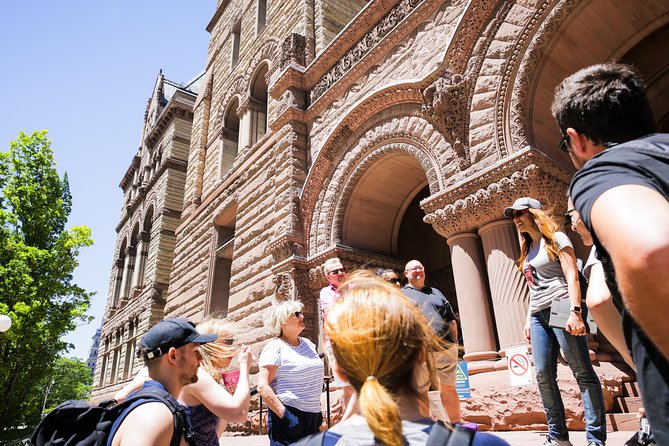
The Cathedral Church of St. James represents a much older Toronto. It was the spiritual centre of Old Toronto and an important seat of power during the 19th century. Here, the guide explains how religion and politics shaped the city once known as Muddy York.
The focus is on the outside and on the cathedral’s place in civic life. You should not expect a long interior visit or a full religious art tour. Still, the Gothic Revival architecture gives the walking route a strong sense of time. After the train station, hotel, and glass-and-steel spaces, St. James offers a very different picture of the city.
I especially like this part for the contrast it creates. Toronto is often introduced through its skyline and financial strength, but St. James reminds you that the city’s authority once gathered around churches, older civic institutions, and local political networks.
The Financial District and Toronto’s banking power
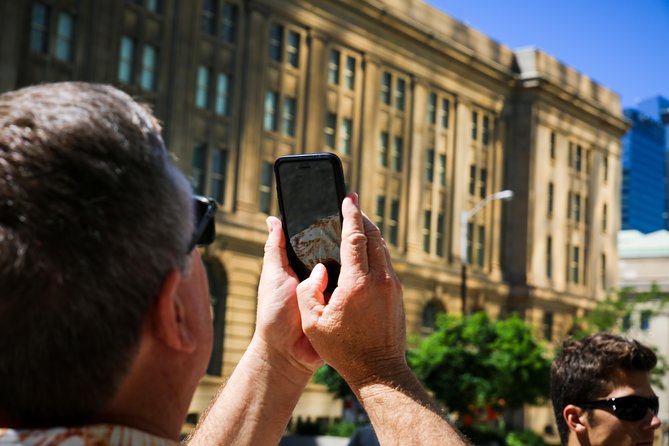
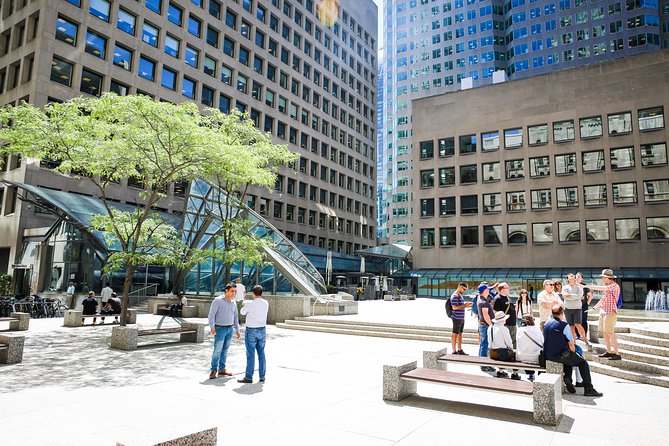
The Financial District is where the city’s modern economic identity becomes most visible. You walk between some of Canada’s largest skyscrapers and hear about the major Canadian banks, the Great Fire of 1904, and the daily rhythm of people working to buy and sell financial assets.
The tour’s description of the banks as cathedrals is apt. Their scale, stonework, and grand entrances can feel more ceremonial than commercial. One past guide, David, was praised for making those old bank buildings especially clear and interesting. That is the kind of detail I want on a city walk: not just the name of a company, but an explanation of why a bank would look like a monument.
The Great Fire of 1904 adds a human story to the district. The fire was devastating for people caught in it, including John Croft, and the guide uses the event to explain how the downtown core changed.
This section can feel less personal than the park or cathedral. It is a working business district, and some buildings are easier to appreciate from a distance than at street level. Still, the contrast between historic financial architecture and current office towers makes the stop worthwhile.
Old City Hall, new City Hall, and the final square
The tour ends at Toronto City Hall in Nathan Phillips Square. The modern building, completed in 1965, looks futuristic beside the older parts of the city. Its sweeping concrete forms represented Toronto’s hopes for greatness as a modern metropolis and a national centre for culture and finance.
The comparison with Old City Hall is one of the tour’s useful themes. Old City Hall reflects an earlier age of civic confidence, while the newer building presents Toronto as forward-looking and modern. The two buildings help you see that city identity is not fixed. It changes with technology, money, politics, and public taste.
Nathan Phillips Square gives the walk a fitting finish. It is a large public gathering space with art, markets, celebrations, and protests. New Year’s Eve events and farmers markets take place here, and the square also serves as a setting for public demonstrations. That range of uses gives the space a democratic feel.
The TORONTO sign is in front of City Hall, so you can take a group photo or a selfie at the end. Public washrooms are nearby, another small but useful detail after a city walk.
Timing, walking pace, and group size
The experience is listed at about two hours, while parts of the tour information describe it as a 90-minute downtown walk. Plan for a compact outing that may run somewhere in that range, rather than building a tight connection immediately afterward.
The maximum group size is 30 people. That is not an intimate private walk, but it is still small enough for a guide to move through city streets and explain major sights without becoming a large parade. The exact feel will depend on the number booked that day.
You will walk outdoors and also use part of the underground PATH. Wear comfortable shoes and keep your attention on the guide in the underground section. The route is designed for most people to participate, and it is near public transportation. Service animals are allowed.
The tour is offered in English and uses a mobile ticket. Confirmation arrives when you book. Free cancellation is available up to 24 hours before the start time, but changes or cancellations inside that window are not accepted for a refund.
Is $4.50 a good value?
At $4.50 per person, this is a strong value if you want orientation, local stories, and a sensible route through central Toronto. The low price makes it easy to pair with a museum, market visit, CN Tower admission, or another paid attraction.
The price does not buy entry to major attractions. You do not tour the Royal York lobby, make a full visit to the hockey attraction, or spend extended time inside every landmark. What you are buying is the guide’s route, context, and local pointers.
That distinction helps set the right expectation. If you want a detailed architectural tour or a long historical lecture, choose something more specialized. If you want to understand how the downtown pieces fit together before exploring on your own, the price is hard to argue with.
Who should book this walk?
I would choose this tour for a first visit to Toronto, a short stop in the city, or a morning when you want to get your bearings before making later plans. It suits anyone who likes architecture, urban history, public spaces, or the practical story of how a city functions.
It is also a good fit for families and small groups who want a light mix of facts and humor. Michael’s style, in particular, was described as entertaining and enthusiastic, while Ulysses brought close attention to architecture. You may receive a different guide, but the route supports both approaches.
I would be more cautious if you dislike brisk walks, group tours, or outdoor sightseeing in changing weather. The tour covers a lot of ground quickly, and the PATH section requires attention. It also does not include admission to Toronto’s major paid sights.
Should you book Toronto Essentials Tour?
Book it if you want a low-cost introduction to Toronto’s centre, especially if you have only a few hours. The route gives you the CN Tower, Union Station, Royal York, Brookfield Place, PATH, Berczy Park, St. James Cathedral, the Financial District, and City Hall without wasting time on confusing downtown navigation.
Skip it if you already know central Toronto well or want to spend serious time inside individual attractions. For a newcomer, though, the combination of clear orientation, lively stories, local humor, and a $4.50 price makes this a practical first step.
FAQ
Where does the tour start?
It starts inside Toronto Union Station at 55 Front Street West, in the Great Hall.
How do I identify the Great Hall?
Look for the large above-ground room with a high ceiling, tall windows, flags, an information booth under a clock, and the names of railway cities around the interior.
Where does the tour end?
The tour ends at Nathan Phillips Square, 100 Queen Street West, in front of Toronto City Hall near the TORONTO sign.
What time does the tour start?
The stated start time is 10:00 am.
How long does the tour last?
The experience is listed at approximately two hours, while some tour details describe the downtown walk as 90 minutes. Plan for a short walking tour within that general range.
Is the tour offered in English?
Yes. The tour includes an English-speaking guide.
How much does the tour cost?
The listed price is $4.50 per person.
Does the tour include admission to attractions?
No paid attraction admission is listed. The stops are viewed as part of the walking route, and the guide provides information and directions for places you may want to visit separately.
Is the tour suitable for most people?
Most people can participate, and the tour is near public transportation. Service animals are allowed.
What happens if I arrive late?
The tour leaves on time, and the guide cannot wait. Arrive at the Great Hall before 10:00 am so you can find the correct meeting point.
Just added around Toronto
- Toronto Craft Brewery Tour★ 5.0 · 97 reviews
- Canada eSIM | 3-30 days | Daily data | QR code★ 4.0 · 12 reviews
- Underground Toronto PATH Tour★ 4.5 · 6 reviews
- Handcrafted Donuts of Toronto: A Sweet City Walking Tour★ 5.0 · 141 reviews
- Customizable Walking Tour of Toronto’s Hidden Gems★ 5.0 · 15 reviews
- Pottery wheel class in Toronto Bay&Dundas★ 4.5 · 5 reviews
- Toronto’s Longest Running Improv Theatre – Marquee Show★ 5.0 · 5 reviews
- Toronto Airport Private Transfer to Downtown★ 4.5 · 10 reviews
Toronto Tours, compared.
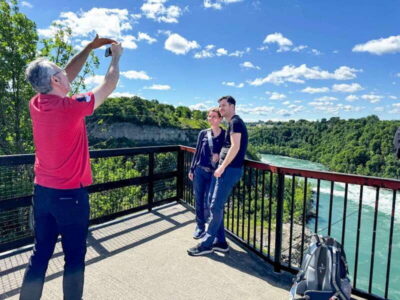
Niagara Falls Day Tour with Optional Boat Cruise
Read our review →


Niagara Falls Canada Day Tour From Toronto + Boat Cruise Option
Read our review →

Niagara Falls from Toronto: Skip-the-Line Boat & Skylon Tower
Read our review →
Niagara Falls Tour + Boat Ride and/or Journey
Read our review →Browse the lists this tour appears in