
Reviewed · CYCLING TOURS
Toronto: Heart of Downtown 3.5-Hour Bike Tour
Toronto comes into focus quickly when you ride it instead of simply looking at it through a car window. This 3.5-hour loop links the CN Tower, Kensington Market, Harbourfront, St. Lawrence Market, and Sugar Beach, while using bike lanes, park paths, back streets, and a few busier roads.
I like the relaxed pace and the way guides such as Carlos, Ryan, Oscar, and Consuela keep groups together and adjust to different riding abilities. I also like the practical orientation: you cover about 15 kilometers, hear useful city stories, and finish with a better sense of where you want to return. The drawback is that downtown cycling still means traffic, intersections, and some busy road sections, so this is not a completely traffic-free ride.
In This Review
- Key details before you pedal off
- Why a bicycle is the right way to see downtown Toronto
- Starting near Dundas and finding the bikes
- From the CN Tower to Union Station and the stadium district
- Chinatown, Kensington Market, and Queen Street West
- City Hall, Dundas Square, and the city center
- St. Lawrence Market and the Flatiron Building
- Harbourfront, Lake Ontario, and Sugar Beach
- Safety, traffic, and the actual riding effort
- The guide makes the difference
- Is $90 a fair price?
- Who should book this Toronto bike tour?
- My verdict: book early in your Toronto stay
- FAQ
- How long is the Toronto Heart of Downtown bike tour?
- How far do you ride?
- What sights are included?
- Is the tour suitable for beginners?
- Are helmets and bicycles included?
- Are water and snacks provided?
- What languages are available?
- Where does the tour meet?
- Can children join the tour?
Key details before you pedal off
- About 15 kilometers in 3.5 hours: The distance is spread across frequent stops, so you are not racing between sights.
- A broad downtown route: You pass cultural districts, financial streets, waterfront parks, markets, stadiums, and major public buildings.
- Built for mixed abilities: Beginners and experienced riders travel together at an easy pace, with safety instructions before departure.
- Good city orientation: Take this early in your stay to mark places such as St. Lawrence Market, Chinatown, Queen Street West, and the waterfront for later visits.
- Useful extras included: Your bike, helmet, water, snack, guide, and a bottle holder are included.
- Several language choices: Tours are offered in English, Spanish, and French.
Why a bicycle is the right way to see downtown Toronto
Toronto covers a surprising amount of ground. On foot, you can explore one district well, but connecting the Financial District, Kensington Market, Queen Street West, the waterfront, and St. Lawrence Market in one outing takes time. A car or bus gets you around faster in theory, but it misses the small turns and close-up views that give the city its character.
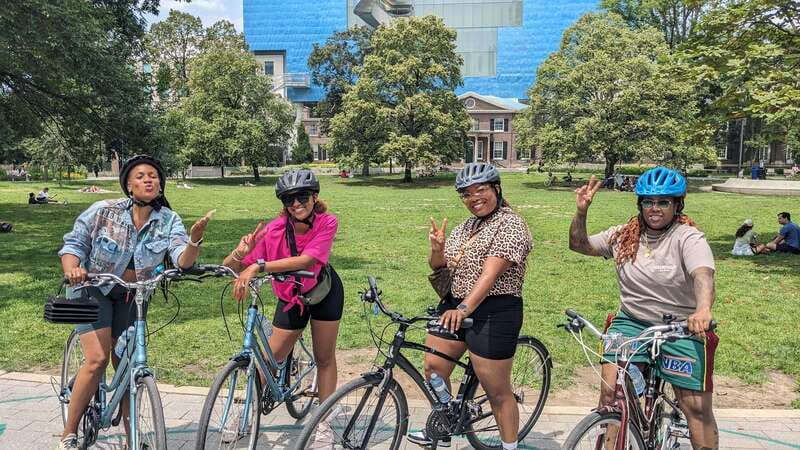
A bicycle solves much of that problem. You can move through narrow streets, park paths, and areas that do not work well for larger vehicles. You also get street-level views of the architecture, public art, storefronts, stadiums, and changing neighborhoods.
The route is not a workout disguised as sightseeing. The distance is about 15 kilometers, but the three and a half hours include many stops to hear stories, take photos, and regroup. That makes the tour useful for beginners and for anyone who has not ridden in a large city recently.
I would book it near the start of your Toronto visit. You get a large-scale map in your head, then you can decide which places deserve a longer visit. St. Lawrence Market, Kensington Market, Queen Street West, and the waterfront all work well as follow-up stops.
A few more Toronto trips to weigh up
- Downtown Toronto Bike Tour
★ 5.0 · 336 reviews - Toronto Islands: Morning or Twilight 3.5-Hour Bike Tour
★ 4.8 · 304 reviews - E-bike through Toronto’s Dynamic Neighbourhoods
★ 4.6 · 12 reviews
Starting near Dundas and finding the bikes
The meeting point is inside a parking garage about 50 meters south of Dundas on the west side of the street. Enter the garage, follow the yellow signs down to level P2, and look for section H.
This is the one part of the experience that deserves extra attention. The garage setting is not an obvious street-side meeting point, and one rider needed several minutes to find it after arriving. Read the signs before heading down and allow time to locate the correct section.
Lockers are available for items you do not want to carry. Still, bring as little as possible. Your bike has a water bottle holder, but it is not a place for a large bag.
Before setting off, the guide provides safety instructions and fits you with a helmet. Helmets are mandatory. The bikes have been described as comfortable and well maintained, and water plus a snack bar are included.
Wear practical clothing for the weather. Sunglasses, sunscreen, and a camera are sensible additions. Dress shoes and fancy clothing are poor choices for a long ride, even at an easy pace.
From the CN Tower to Union Station and the stadium district
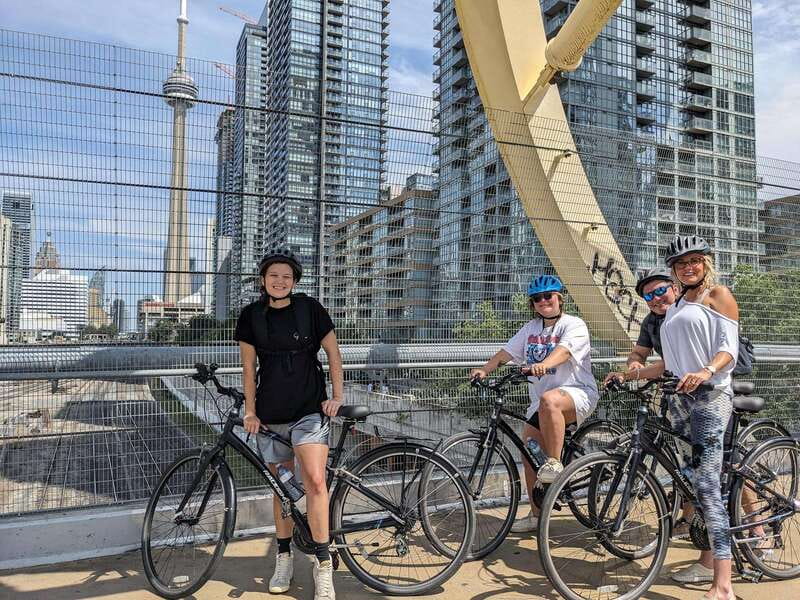
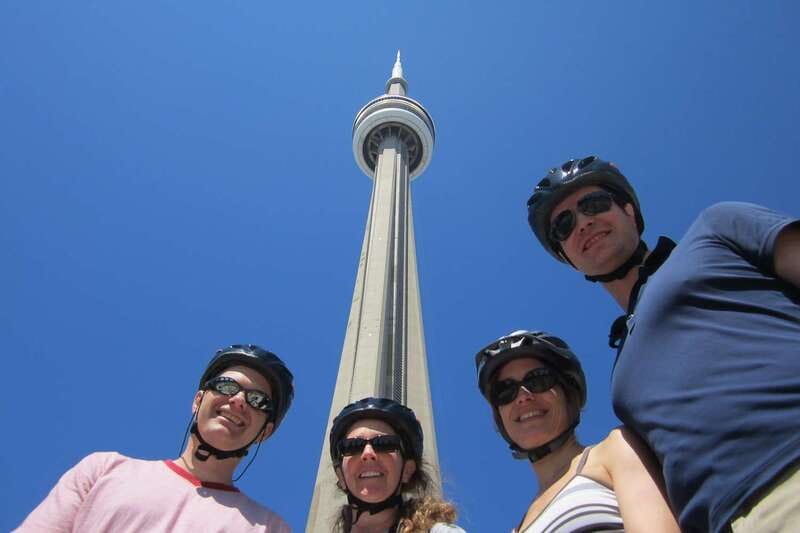
The early part of the route gives you the big Toronto picture. The CN Tower is the obvious landmark, but seeing it from ground level helps you understand how it relates to the downtown core, the railway corridor, the stadium district, and the lake.
The Royal York Hotel and Union Station add another layer. They are reminders that Toronto grew as a major rail and business center, not just as a modern skyline. Your guide can explain the role these buildings played in the city’s growth while you take in the scale of the surrounding streets.
The tour also passes Rogers Centre and Round House Park. These stops help connect Toronto’s sports culture with its former railway lands and newer waterfront development. You will not have time for an in-depth visit inside each attraction, but you get enough context to decide where to spend more time later.
The route includes the Financial District and the Hockey Hall of Fame as well. This combination gives you two very different views of downtown: the towers and offices that drive the city’s business life, and the hockey culture that is woven into Canadian identity.
Expect short talks rather than long lectures. That suits a bike tour. You hear a useful story, look around, take a photo, and continue.
Chinatown, Kensington Market, and Queen Street West
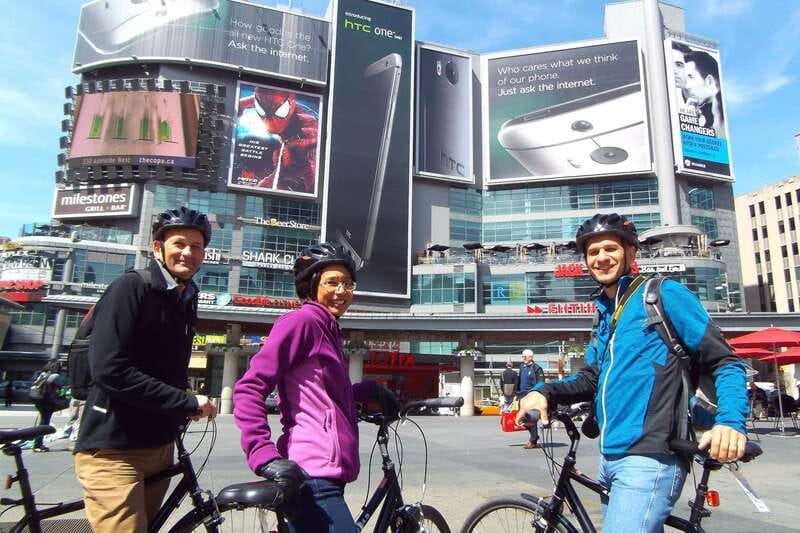
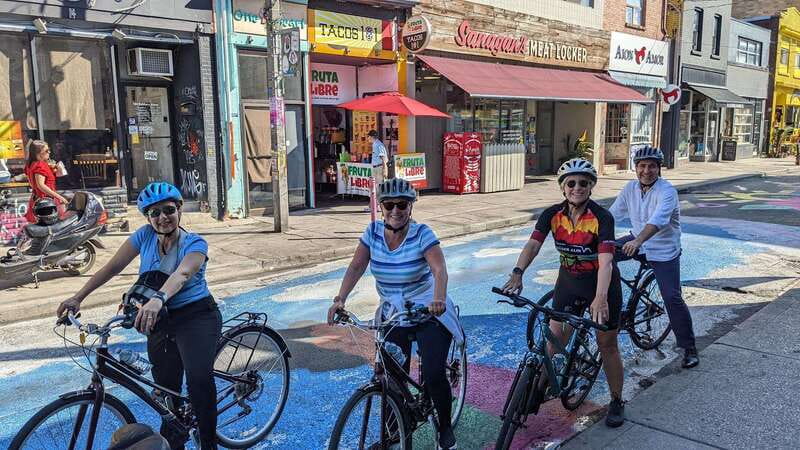
The move into Chinatown and Kensington Market is one of the best changes of mood on the route. The tall office blocks give way to more compact streets, independent shops, food stops, and a mix of cultural influences.
Kensington Market is best treated as an introduction rather than a full market visit. You will see why the area is worth returning to, but the bike tour needs to keep moving. One sensible improvement would be a short 10 to 15 minute break at a market area for a drink or quick snack, but the included snack is designed to keep the ride on schedule.
Queen Street West and the Entertainment District add more city variety. The route shows how close Toronto’s shopping, theater, nightlife, art, and business areas are to one another. You may pass places that look worth a second visit, so keep a mental note of them.
The Art Gallery of Ontario and the Ontario College of Art and Design bring a cultural edge to this part of the ride. The tour does not replace a museum visit, but it helps you place these institutions within the city rather than treating them as isolated stops.
This section is especially helpful if you have limited time. You see several distinct areas without losing half a day to subway transfers and walking between stations.
Same province, a completely different day out:
- Toronto: Niagara Falls Day Tour with Optional Boat Cruise
★ 4.6 · 3,178 reviews - Niagara Falls Day Tour from Toronto
★ 5.0 · 2,889 reviews - Toronto: Casa Loma Entry Ticket
★ 4.7 · 2,705 reviews - Niagara Falls Canada Day Tour From Toronto + Boat Cruise Option
★ 5.0 · 2,576 reviews
City Hall, Dundas Square, and the city center
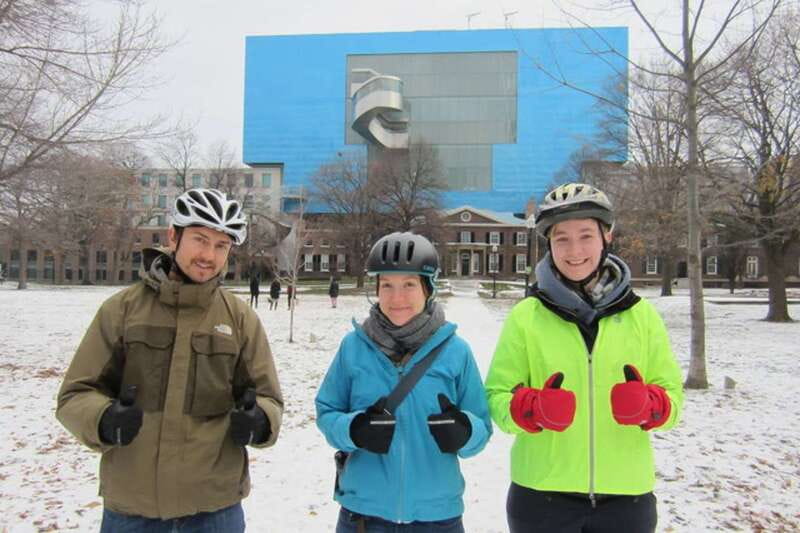
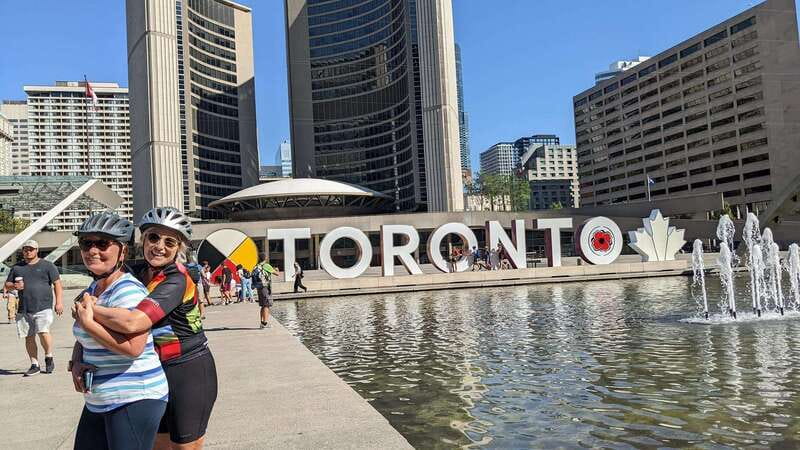
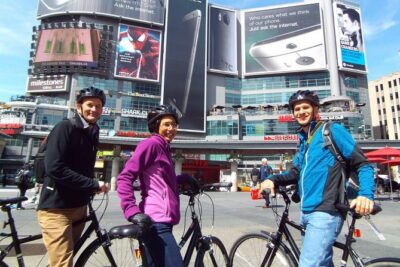
City Hall and Dundas Square show two different faces of central Toronto. City Hall offers a major civic landmark and a recognizable public space, while Dundas Square is a louder commercial crossroads surrounded by shopping and entertainment.
The Eaton Centre fits naturally into this stretch. It is less about a scenic stop and more about understanding how the central shopping district connects with the rest of downtown. If you are planning to shop, the guide can help you locate it without spending your first day wandering around large blocks and underground connections.
Massey Hall and St. James Cathedral and Square add older landmarks to the city-center mix. This contrast is one of the tour’s strengths. Toronto can look like a wall of modern towers until you notice the older buildings, churches, hotels, and public spaces tucked between them.
The guides are a major part of the experience here. Carlos is repeatedly described as friendly, careful, and well informed, while Ryan is praised for humor, local advice, and attention to group safety. Oscar has been noted for keeping the ride relaxed and adding useful facts. Guide assignments can change, but the consistent pattern is a guide who explains the city while also watching the road.
St. Lawrence Market and the Flatiron Building
St. Lawrence Market is one of the most useful stops for a first visit to Toronto. It is a good place to return for food and a closer look, even if the bike tour only gives you a short orientation.
Nearby, the Flatiron Building provides a memorable architectural stop. Its unusual shape makes for an easy photo and gives the guide a chance to explain how Toronto’s older commercial core differs from the newer towers around it.
This is also where the route can help you plan the rest of your visit. You might decide to come back for a market breakfast, explore nearby streets, or continue toward the Distillery District on your own. The tour does not promise a long market break, so plan a separate visit if food is a priority.
The value here is not just checking off another famous building. You are learning how several parts of downtown fit together, which saves time later.
Harbourfront, Lake Ontario, and Sugar Beach
The ride toward Harbourfront changes the scenery again. The open water and park paths offer a welcome break from traffic and tall buildings. You get views toward Lake Ontario and a different sense of Toronto’s size.
Sherbourne Common and Corus Quay show newer waterfront planning. These areas are useful examples of how former industrial and port land has been reshaped for public use, offices, paths, and recreation.
Sugar Beach is a particularly photogenic stop. The bright public beach area, lake views, and city skyline create one of the tour’s clearest contrasts: downtown towers behind you, open water ahead. It is not a traditional swimming beach, so think of it as a place for views and a short pause.
The waterfront section may be the most relaxing part of the ride. It also demonstrates why a bicycle works well here. You can connect waterfront paths and public spaces without dealing with parking or walking long blocks from the core.
Keep in mind that weather matters more near the lake. Wind, sun, and changing temperatures can make this section feel different from the sheltered streets inland. Dress in layers if conditions are uncertain.
Safety, traffic, and the actual riding effort
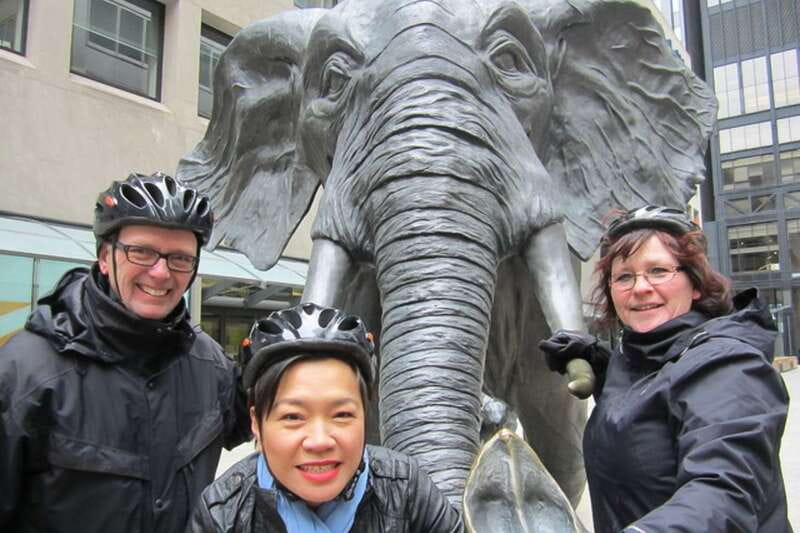
Safety receives serious attention before and during the tour. The route favors quiet streets, park paths, and bike lanes, and the guide checks that the group stays together. Helmets are provided and required.
That does not mean every meter is separated from cars. One practical account describes some busy roadways, and that is worth taking seriously if you are nervous about city cycling. You will need to follow directions, watch intersections, and stay alert.
The pace is designed for comfort, not speed. Guides have worked with groups containing different levels of bike confidence, and the route includes regular stops. Several riders specifically appreciated the careful support given to less confident cyclists.
I would choose this tour if you can ride a standard bicycle comfortably and are willing to follow urban cycling instructions. It is not the best match if you want a completely protected cycle path, a high-speed ride, or a long stop at every attraction.
The bikes have earned strong marks for comfort and maintenance. Water, a snack bar, and the bottle holder remove a few small hassles. Some guides also take photos during the ride, and in at least one case those photos were sent afterward. That depends on the guide, so do not treat it as a guaranteed feature.
The guide makes the difference
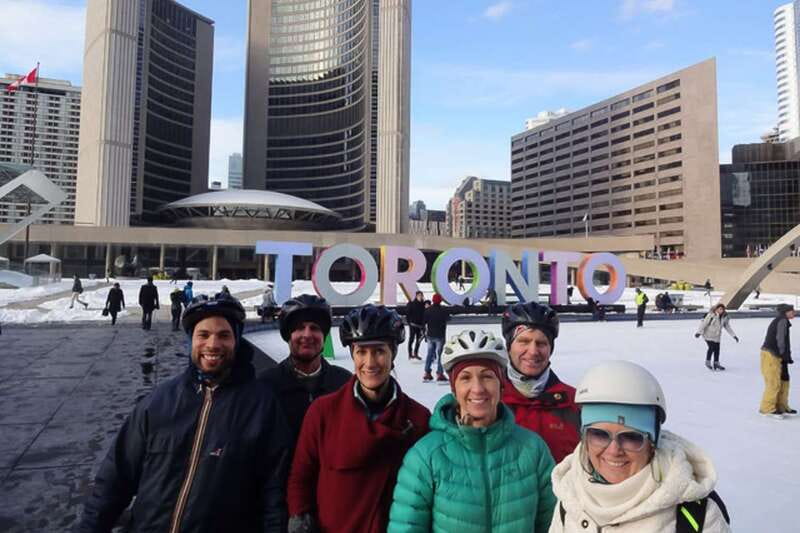
A city bike route is only as good as the person leading it. Here, the strongest part of the experience is the mix of local stories and careful riding control.
Carlos is praised for keeping explanations at the right level and looking after the group. Ryan is described as funny, considerate, and helpful with wider Toronto planning, including advice about a day trip to Niagara. Oscar is noted for clear preparation and a relaxed pace. Consuela has been praised for helping nervous riders feel safe while keeping the group together.
Other guides named in the feedback include Sydney, Cass, Isaac, Mariana, Liam, Jeff, Keedon, Terence, and Jonny. The language options are English, Spanish, and French. One French-speaking guide was difficult for a rider to understand at times because of a strong accent, so communication can vary slightly by guide and group.
The best guides do more than recite dates. They answer questions, point out places you might otherwise miss, take care with road positioning, and offer ideas for the rest of your stay. That personal contact is a large part of what you are paying for.
Is $90 a fair price?
At $90 per person, this is not the cheapest way to see Toronto. You could walk through one district for free or use public transit for much less. The comparison changes once you count the bicycle, helmet, guide, water, snack, and the amount of ground covered.
In 210 minutes, you connect a long list of major sights and districts without arranging bike rental, planning a route, or worrying about navigation. You also get live explanation and safety support. For a first day in Toronto, that can be good value because it prevents you from wasting time figuring out the downtown layout.
The tour is less valuable if you already know central Toronto well or mainly want long visits inside attractions. You are seeing many places from the outside, with brief stops rather than admission and extended exploration.
I see the price as reasonable for a guided orientation, especially for first-time visitors with only a few days. It works best when you use it as a foundation for independent exploring later.
Who should book this Toronto bike tour?
You should consider it if you want:
- A quick sense of how downtown neighborhoods connect
- A gentle ride rather than an athletic cycling session
- A guide who combines local stories with practical city advice
- Waterfront views and major landmarks in one outing
- A way to see more than you could comfortably walk in half a day
- Help building a sightseeing plan for the rest of your visit
Families can bring children when accompanied by a parent or guardian. The tour suits couples, solo visitors, and mixed-ability groups, provided everyone can ride and is comfortable following city cycling instructions.
I would skip it if you dislike riding near traffic, need a fully private itinerary, or want substantial free time at Kensington Market or St. Lawrence Market. In those cases, use the route as a guide for your own walking and food visits instead.
Cancellation is free up to 24 hours before departure, and you can reserve now and pay later. That gives you some flexibility when weather or plans are still uncertain.
My verdict: book early in your Toronto stay
I would book the Heart of Downtown tour at the start of a Toronto visit, ideally when the weather looks suitable and you still have time to revisit the places that catch your eye.
Its greatest strength is range. In one calm ride, you move from railways and skyscrapers to markets, cultural buildings, stadiums, historic sites, and the lakefront. The guides receive especially strong marks for safety, friendliness, city knowledge, and the ability to keep mixed groups comfortable.
The main caution is simple: downtown roads are still downtown roads. You will meet traffic and busy sections, even though much of the route uses bike lanes, paths, and quieter streets.
For most first-time visitors who can ride a bicycle, the $90 price buys a useful city introduction, not just a list of photo stops. If you want to get your bearings fast and see Toronto at street level, this is a smart choice.
FAQ
How long is the Toronto Heart of Downtown bike tour?
The tour lasts 210 minutes, or three and a half hours.
How far do you ride?
The route covers about 15 kilometers, spread across the full tour with frequent stops for stories, photos, and sightseeing.
What sights are included?
The route includes the CN Tower, Royal York Hotel, Union Station, Chinatown, Kensington Market, Eaton Centre, Dundas Square, Harbourfront, Lake Ontario, the Financial District, Queen Street West, the Art Gallery of Ontario, Hockey Hall of Fame, Massey Hall, Rogers Centre, Round House Park, City Hall, St. Lawrence Market, the Flatiron Building, St. James Cathedral and Square, Sherbourne Common, Corus Quay, Sugar Beach, and the Entertainment District.
Is the tour suitable for beginners?
Yes. The tour moves at an easy pace and is suitable for beginner and advanced riders. Guides provide safety instructions and make regular stops.
Are helmets and bicycles included?
Yes. A bicycle and helmet are included, and helmets are mandatory.
Are water and snacks provided?
Yes. Water and a snack are included. Each bicycle has a water bottle holder.
What languages are available?
The tour is offered in English, Spanish, and French.
Where does the tour meet?
The meeting point is in a parking garage about 50 meters south of Dundas on the west side of the street. Enter the garage, follow the yellow signs to the P2 level, and go to section H.
Can children join the tour?
Children are welcome when accompanied by a parent or guardian.
Just added around Toronto
- Toronto: Winter Niagara Falls Tour with Attractions Package★ 4.7 · 43 reviews
- Toronto Waterfront and Islands Guided Bicycle Tour★ 4.9 · 80 reviews
- Toronto: Toronto Zoo Entry Ticket★ 4.1 · 68 reviews
- Toronto: Toronto Raptors NBA Game Ticket at Scotiabank Arena★ 4.6 · 88 reviews
- Toronto: Toronto Maple Leafs Game Ticket at Scotiabank Arena★ 4.6 · 43 reviews
- Toronto: Craft Brewery Tour★ 5.0 · 8 reviews
- Toronto: Must Do NonTouristy Street Art Tour by local Artist★ 4.9 · 30 reviews
- Toronto: Splendours of Niagara Falls Small Group Tour w/Boat★ 4.8 · 5 reviews
Cycling Tours, compared.

The Stanley Park Bicycle Tour by Cycle City Tours
Read our review →


Browse the lists this tour appears in