Reviewed · TICKETS
Vancouver Science World Ticket
Vancouver’s Science World is less a quiet museum than a hands-on science playground. You can test your body, build contraptions, tackle optical puzzles, and catch a live demonstration at Centre Stage. I especially like the wide mix of activities and the way the exhibits encourage you to learn by doing.
I also like that the building works for several ages at once. Young children have a dedicated Wonder Gallery, while older kids and teenagers can spend time with video games, engineering challenges, and science shows. The main drawback is clear: adults without children may find much of it too basic, and the OMNIMAX Theatre is currently closed.
In This Review
- Key points to know before you go
- What Science World is really like
- BodyWorks: science you can feel
- Centre Stage and the value of live demonstrations
- Creative Technology Gallery for digital-minded kids
- Eureka! turns play into experiments
- Puzzles and Illusions test patience and perception
- Tinkering Space and the WorkSafeBC Gallery
- Sara Stern Gallery connects nature with science
- Earth Matters adds a changing reason to return
- Wonder Gallery is designed for children under five
- Ken Spencer Science Park is seasonal
- The OMNIMAX closure changes the value
- Age range: best for families, with some room for teenagers
- Timing, crowds, and a practical visit plan
- Is CA$26.70 a fair price?
- Entry, access, and cancellation
- Who should book Science World?
- FAQ
- How long should I spend at Science World?
- How much does admission cost?
- Is OMNIMAX open?
- Is Science World suitable for young children?
- Is Science World suitable for teenagers?
- Is Ken Spencer Science Park open all year?
- Can I use a mobile ticket?
- Can I cancel for a refund?
- Should you book it?
Key points to know before you go

- Plan for 2 to 3 hours: That gives most families time to sample the main galleries without rushing.
- Centre Stage offers hourly live science demonstrations: Check the daily timing when you arrive so you do not miss one.
- The best age range is roughly preschool through early teens: Older children can still enjoy the technology, puzzles, and engineering areas.
- OMNIMAX is closed for renovation: Do not count on a giant-screen film during this visit.
- The ticket is mobile: You can show your pass on your phone, though allow time at the entrance if the line is long.
- Expect CA$26.70 plus about CA$1.79 GST per person: The value is strongest when you stay long enough to use several galleries.
What Science World is really like
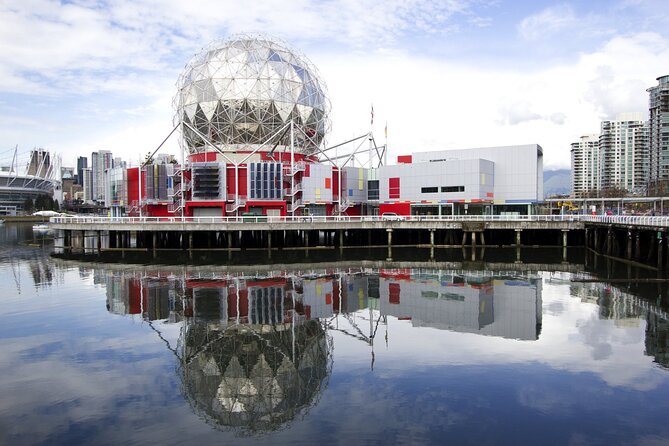
Science World sits in the large geodesic dome near False Creek, but the building’s shape is not the main attraction. Inside, you get a collection of activity zones rather than a traditional museum route. You touch, pull, build, watch, compete, and try again.
That format matters because it keeps children moving. A child who would lose interest in a case filled with objects may spend several minutes testing a machine or solving a puzzle. It also makes the visit easy to customize. You can skip a gallery that feels too young and linger where your family finds the most fun.
I would set aside about two to three hours. You can make a shorter visit, but you may feel you paid for more than you used. Families with children who want to try every station should allow extra time, especially if the center is busy.
A few more Vancouver trips to weigh up
- Capilano Suspension Bridge Park Ticket
★ 4.5 · 1,814 reviews - Vancouver: Entry Ticket for the Vancouver Lookout
★ 4.6 · 636 reviews - Vancouver: City+Lookout+Capilano Suspension Bridge Ticket
★ 4.8 · 583 reviews
BodyWorks: science you can feel
The BodyWorks Gallery focuses on how your body works. Its strength is its direct approach. Instead of treating biology as a list of facts, it gives you a chance to connect the subject with your own movement and senses.
This is a good starting point for families because children do not need much background knowledge. They can test, observe, and ask questions as they go. Younger children may enjoy the physical activities, while older kids can use the exhibits as a simple introduction to anatomy and human biology.
Do not expect a full medical museum. BodyWorks is designed for participation and quick understanding, not long text panels or specialist detail. That makes it accessible, but it may not hold the attention of adults who want advanced science.
Centre Stage and the value of live demonstrations
Centre Stage presents live science demonstrations on an hourly schedule. This is one of the most useful parts of the visit because it breaks up the self-guided galleries with a shared event.
I recommend checking the schedule soon after entering. If you wait until the end, you may find that the next presentation does not fit your plans. The demonstrations also give children a clear reason to pause and watch rather than race from one activity to the next.
Live science works well here because it turns a concept into something you can see happen. The exact content can vary, so you should treat Centre Stage as a scheduled highlight rather than plan around one specific experiment.
Creative Technology Gallery for digital-minded kids

The Creative Technology Gallery looks at video game development through an interactive digital setup. This is a smart stop for children and teenagers who might not be drawn to a conventional science display.
The subject connects science, design, computing, and problem-solving. It can also give older children more to do than the preschool-focused areas. One family found the activities interesting for a 14-year-old, which is useful context: Science World is not only for toddlers, though its appeal changes with age.
The limitation is that the gallery may work best for children already curious about games and digital creation. If your child prefers animals, the human body, or physical construction, other sections may hold attention longer.
Same province, a completely different day out:
- Vancouver Half-Day Whale Watching Adventure with Free Photos
★ 5.0 · 5,000 reviews - Big Bus Vancouver Hop-On Hop-Off Sightseeing Tour
★ 3.5 · 3,028 reviews - Victoria & Butchart Gardens Tour with Ferry from Vancouver
★ 4.5 · 2,703 reviews - Vancouver: Covered Whale Watching Adventure with Free Photos
★ 4.8 · 2,260 reviews
Eureka! turns play into experiments

Eureka! is a high-energy gallery built around learning through play. You can expect movement, hands-on challenges, and activities that reward curiosity more than careful reading.
This is the kind of space where you should let your child take the lead. Give them time to repeat an activity and work out what changes when they try a different approach. That trial-and-error style is the real lesson.
The gallery can feel noisy and active, especially when many families arrive together. If your child becomes overwhelmed by crowds or constant motion, move to a quieter area and return later.
Puzzles and Illusions test patience and perception

Puzzles and Illusions offers games and visual challenges. It is a good choice when you want an exhibit that adults can attempt alongside children.
These activities have an advantage over displays with one correct answer: you can compete as a family. A parent may solve one puzzle quickly while a child spots the answer to another. The exhibit also encourages patience, since the first attempt does not always work.
I would not rush through this section. The activities are small but can take time, particularly when other children are waiting. It is one of the places where a few minutes can become half an hour.
Tinkering Space and the WorkSafeBC Gallery

Tinkering Space focuses on experimental construction and problem-solving. Children can practice building and changing their designs, which makes this more than a simple play table.
The value here is in the process. You do not need to give your child the answer. Let them make a structure that fails, adjust it, and try again. That hands-on cycle is often more memorable than a polished demonstration.
This gallery may be especially useful for children who like making things with their hands. It also gives parents a chance to participate without taking over. The space can become crowded, so patience helps when a popular activity is in use.
Sara Stern Gallery connects nature with science

The Sara Stern Gallery explores nature from the large scale down to the microscopic. It provides a change of pace from the movement-heavy galleries and gives you a chance to look more closely at the natural world.
This section should appeal to children who like animals, plants, patterns, and observation. The subject also helps connect the separate parts of Science World. Science is not only machines and experiments. It is also the study of living systems and the details you might miss at first glance.
Because the gallery covers a broad subject, the amount of time you spend here will depend on your interests. Families in a hurry can make a quick stop. Children who like nature may want to stay longer.
Earth Matters adds a changing reason to return
The Feature Gallery is home to Earth Matters until January 9, 2025. Feature exhibitions matter because they give repeat visitors something new to see, rather than making every visit feel identical.
You should check the current exhibition dates before booking if this temporary gallery is a major reason for your visit. The listed date is specific, and temporary displays change.
A feature gallery can also be a good place to focus older children. It may offer a more organized theme than the open-ended play areas, though the appeal will depend on the exhibition running during your visit.
Wonder Gallery is designed for children under five
Wonder Gallery is aimed at the youngest visitors. It includes soft crawling spaces, a water table, a mess pit, and rope climbing.
This is a real advantage for families with babies, toddlers, and preschoolers. Very young children have a place designed for their size and abilities, rather than being expected to keep up with older siblings.
Parents should expect active play and possible mess. That is the point of this gallery, but it may not be a useful stop if your children are beyond the early-childhood stage. One family particularly enjoyed this area alongside the science shows, which gives you a good plan for a mixed-age visit: pair a young child’s play time with a scheduled demonstration.
Ken Spencer Science Park is seasonal
Ken Spencer Science Park connects science with the living world. It is listed as having a seasonal closure from October through March, so you should not assume it will be open during a cooler-month visit.
When operating, the park adds outdoor space and a useful contrast to the indoor galleries. It gives children a way to connect what they see inside with the world outside. If you are visiting between October and March, treat it as unavailable unless Science World confirms otherwise.
The OMNIMAX closure changes the value
The OMNIMAX Theatre is closed for renovation. This is the most important current limitation, especially if you remember Science World as a place to watch giant-screen films.
The closure does not remove the main gallery experience, but it reduces the amount you can do in the building. Check the official Plan Your Visit information before you go, since reopening updates will be posted when a date is confirmed.
For a first-time family visit, the closure may not matter much because the interactive galleries are the main draw. For adults or repeat visitors who want a film as part of the outing, it matters a great deal.
Age range: best for families, with some room for teenagers
Science World is primarily geared toward preschool children through about age 10. The Wonder Gallery clearly serves the youngest group, and several other galleries use active play that works best for children who like to move and experiment.
That does not mean older children have nothing to do. Creative Technology, Puzzles and Illusions, Tinkering Space, BodyWorks, and the live demonstrations can interest teenagers, particularly those who like games, engineering, or practical challenges. One 14-year-old found several exhibitions worthwhile.
Still, I would set expectations carefully. A teenager looking for advanced science, long-form explanations, or a formal museum collection may find the experience too simple. Couples and adults can enjoy the playful approach, but the ticket is easier to justify when you are actively joining in with children.
Timing, crowds, and a practical visit plan
The center closes at 5 p.m., according to one useful firsthand tip, so check the day’s hours and avoid arriving late. A two to three hour visit works best when you enter with a rough plan.
I would begin by checking Centre Stage times. Then choose one or two galleries that match your children’s ages, rather than trying to cover every corner immediately. Save Puzzles and Illusions or Tinkering Space for a point when you want a shared family activity.
Crowds can affect the experience. Children may run between stations, and some exhibits may have a wait. Go slowly, take turns, and do not judge the whole center by one busy room. A few exhibits have also needed maintenance, so an activity may not be working perfectly on the day you visit.
The building is near public transportation, which makes it practical to reach without a car. Mobile tickets are accepted, and the pass can be scanned from the app at entry. Still, allow time for the admission line. A digital ticket does not always mean you walk straight inside, and an earlier ticketing problem was resolved only because staff allowed entry when a reservation could not be found.
Is CA$26.70 a fair price?
General admission is CA$26.70 per person, with about CA$1.79 GST listed separately. That puts the basic cost at roughly CA$28.49 per person before any other spending.
I consider that fair when you have children who will use the galleries for several hours. The strongest value comes from the variety: you get body science, live demonstrations, technology, puzzles, construction, nature, and early-childhood play in one visit.
The value is weaker for adults traveling without children, especially while OMNIMAX is closed. It is also weaker if you plan to stay only an hour or if your child is too young or too old for most of the activities.
Food is available in a court with a good assortment, and the food was described as hot and satisfactory. That can help families stay longer, though your total cost will rise once you add meals.
Entry, access, and cancellation
Confirmation is provided at booking, and the experience uses a mobile ticket. Service animals are allowed, the attraction is near public transportation, and most people can participate.
You can cancel for a full refund up to 24 hours before the local start time. Inside that 24-hour window, the payment is not refunded, and changes are not accepted.
Who should book Science World?
I would book this for families with children from preschool through early teens, especially if the children enjoy touching, building, competing, and testing ideas. It is also a good rainy-day choice when you want several kinds of activity under one roof.
I would think twice if your group is made up only of adults, or if you are choosing Science World mainly for OMNIMAX. The playful exhibits can still be enjoyable, but the current theatre closure and child-focused design make the price harder to defend.
FAQ
How long should I spend at Science World?
Plan for about 2 to 3 hours. Families with children who want to try many activities may need longer.
How much does admission cost?
General admission costs CA$26.70 per person. About CA$1.79 GST is listed separately per person.
Is OMNIMAX open?
No. The OMNIMAX Theatre is currently closed for renovation. Reopening updates will be posted when a confirmed date is available.
Is Science World suitable for young children?
Yes. The Wonder Gallery is designed for children under five and includes soft crawling spaces, a water table, a mess pit, and rope climbing. Other galleries provide activities for older children.
Is Science World suitable for teenagers?
Some sections can interest teenagers, especially Creative Technology, Puzzles and Illusions, Tinkering Space, BodyWorks, and the live science demonstrations. The overall center is still aimed mainly at children.
Is Ken Spencer Science Park open all year?
No. The park has a seasonal closure from October through March. Check its operating status before your visit.
Can I use a mobile ticket?
Yes. The experience includes a mobile ticket, and passes can be scanned from the app at entry. You should still allow time for the admission line.
Can I cancel for a refund?
Yes. You can cancel at least 24 hours before the experience start time for a full refund. Cancellations and changes made within 24 hours are not accepted for a refund.
Should you book it?
Book Science World if you want a lively, hands-on family outing and your group will use several galleries. Centre Stage, Tinkering Space, Puzzles and Illusions, and Creative Technology give older children more purpose, while Wonder Gallery serves the under-five crowd.
Skip it, or wait, if your main goal is OMNIMAX, advanced science, or a quiet museum visit. At roughly CA$28.49 including the listed tax, the ticket earns its keep through time spent playing and experimenting. Go early enough to use the galleries, check the live demonstration schedule, and confirm current closures before you pay.
Just added around Vancouver
- Private Transfer From Vancouver Airport to Vancouver Downtown★ 5.0 · 7 reviews
- YVR Layover – Vancouver City Sightseeing Private Tour★ 5.0 · 7 reviews
- Wild Whale Watching Experience – Open Air Vessel★ 5.0 · 158 reviews
- Whistler and Sea to Sky Gondola, a Fire and Ice Discovery Tour★ 5.0 · 153 reviews
- Whistler 1-Day Tour from Vancouver (Chn&Eng)★ 4.0 · 6 reviews
- Whale Watching Adventure from Vancouver BC★ 5.0 · 59 reviews
- Western Trails – One Way Vancouver To Calgary Rockies Bus Tour★ 5.0 · 31 reviews
- Rockies Western Canada Iconic Sites Tour★ 5.0 · 54 reviews
Tickets, compared.


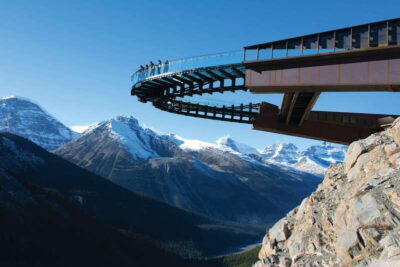
Columbia Icefield Skywalk and Ice Explorer Ticket
Read our review →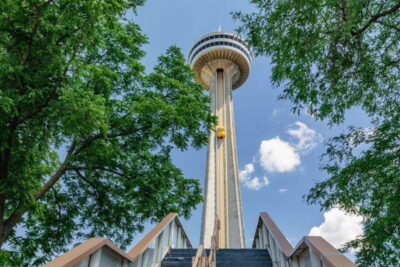
Niagara Falls, Canada: Skylon Tower Observation Deck Ticket
Read our review →