
Reviewed · MONTREAL TOURS
Discover Montreal’s Underground City – Reso
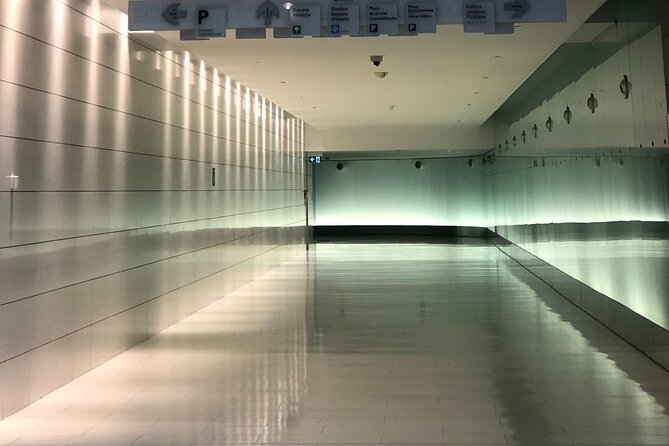
Montreal’s Underground City is less a single attraction than a second downtown, and that is the clever part of this two-hour walk. With Misha leading, you pass public art, the Berlin Wall, the Statue of Amphitrite, Lipstick Forest, an indoor skating rink, the main train station, and several links through the RESO.
I like this tour for two clear reasons: it teaches you how to navigate, not just what you are looking at, and the group is capped at 10 people. Misha also mixes practical Metro advice with local stories, restaurant tips, and cultural background.
The main drawback is the amount of walking. You may use stairs, escalators, and the subway, so this is not a sit-down sightseeing stop. At $30.04 per person, the value is strongest if you are staying downtown, visiting in winter or rain, or want to use the underground network on your own afterward.
In This Review
- Key points at a glance
- Why Montreal’s RESO is worth your time
- Starting outside Cathcart in central downtown
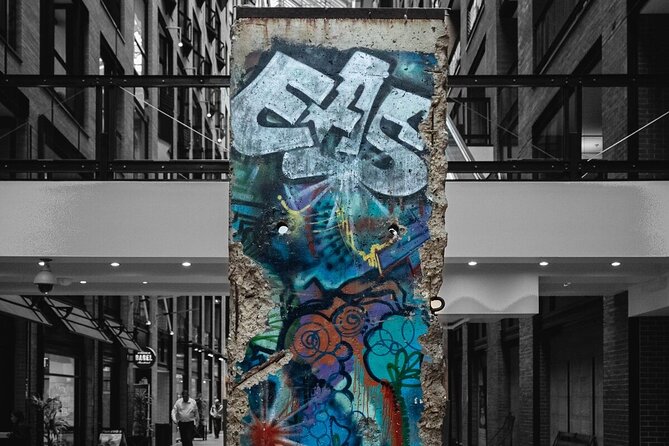
- Berlin Wall and Amphitrite: public art below the pavement
- Marché Saint Laurent and Lipstick Forest
- The indoor skating rink and the cruise-ship feeling
- Montreal’s main train station and the RESO connections
- What Misha adds to the experience
- The walking pace, weather, and comfort level
- Is $30.04 a fair price?
- Who should book this RESO walk?
- Booking details and cancellation
- Should you book Discover Montreal’s Underground City?
- FAQ
- Where does the tour start?
- Where does the tour end?
- How long does the tour last?
- How much does the experience cost?
- How many people can join the tour?
- Does the tour include public transportation?
- Is the tour suitable for all fitness levels?
- Can I cancel for a refund?
Key points at a glance
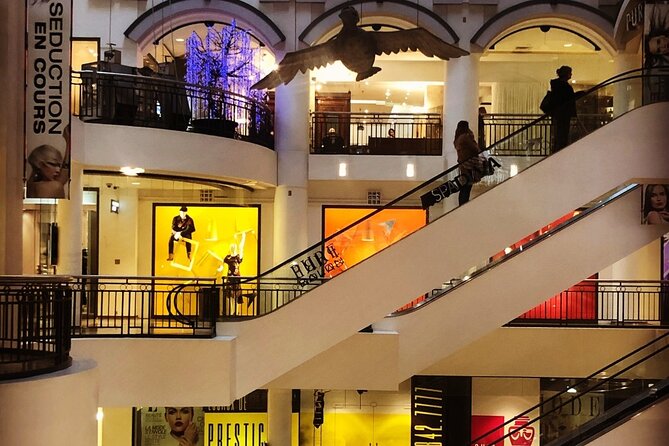
- A working city below street level: The RESO connects shops, malls, Metro stations, food areas, public art, offices, and transport hubs.
- Misha’s practical guidance: Expect clear help with directions, Metro connections, meeting points, and ways to continue exploring after the tour.
- A small group of up to 10: The size makes it easier to ask questions and stay together through busy corridors and changes in level.
- A varied route: The walk includes the Berlin Wall, Amphitrite, Lipstick Forest, an indoor rink, Montreal’s main train station, and other RESO landmarks.
- Useful in difficult weather: You can learn the system without spending the whole tour in winter cold or rain.
- A two-hour orientation: The route gives you a working map of central Montreal rather than trying to cover every underground corridor.
Why Montreal’s RESO is worth your time
Montreal’s RESO can sound simple on paper: an underground pedestrian network linking downtown buildings. In practice, it is easy to enter one passage, follow a mall corridor, emerge beside an unfamiliar street, and lose track of where you are.
That is why this experience has real value. You are not simply walking past shops. You are learning how the pieces connect, including the Metro, shopping areas, public spaces, transport links, and major downtown landmarks.
I find the best use of this tour is early in your Montreal stay. Once you understand the basic pattern, the RESO becomes a useful tool. You can use it to move around central Montreal in bad weather, reach food and shopping areas, and connect with public transportation without stopping every few minutes to study a map.
The tour also gives you a different view of the city. Above ground, Montreal’s streets can feel distinctly urban, with traffic, construction, and large downtown buildings. Below ground, the experience can take on the cruise-ship feeling described by the operator: long interior corridors, signs, shops, food stops, public areas, and many people moving between destinations.
That comparison is not meant to suggest that the RESO is a polished resort. It is a functioning part of city life. That is what makes it interesting. You are seeing where Montreal residents shop, commute, eat, transfer, and take shelter from the weather.
A few more Montreal trips to weigh up
- From Montreal: Quebec City and Montmorency Falls Day Trip
★ 4.5 · 2,669 reviews - Quebec City and Montmorency Falls Day Trip from Montreal
★ 4.0 · 2,437 reviews - Montreal City Sightseeing Tour with Live Commentary
★ 4.0 · 1,953 reviews
Starting outside Cathcart in central downtown
The meeting point is at 175 Boulevard René-Lévesque Ouest, outside the Cathcart in central downtown. Time Out Market is right beside the meeting area, which gives you a useful landmark while you get organized.
The start is near public transportation, so arriving by Metro or another downtown connection is practical. I would still allow extra time. In a city with a large underground system, the challenge can be finding the correct exit, not reaching the general neighborhood.
The tour ends at The Ring, at 1048, Montreal. The stated end point is outside the Cathcart area in central downtown, with Time Out Market nearby. Since the walk uses the RESO and related connections, you finish in a useful part of the city rather than at an isolated roadside stop.
You receive a mobile ticket, and confirmation is provided when you book. A day-before message from Misha has also been useful for some participants, particularly when clarifying the meeting details. Keep your phone charged, since your ticket and directions may be on it.
Berlin Wall and Amphitrite: public art below the pavement
One of the first unusual details on the route is the Berlin Wall. Seeing a section of the wall in Montreal is a reminder that the RESO is not only about retail and transport. Its corridors also provide space for art and historical objects that you might miss during an ordinary downtown walk.
The Statue of Amphitrite, wife of Poseidon, adds another unexpected stop. It helps break the idea that underground Montreal is just a practical tunnel system. The route includes visual details that give you reasons to pause, look around, and ask questions.
These stops matter because the RESO can otherwise feel like a sequence of hallways. Misha’s role is to connect the sights to the larger story of how the network developed and how people use it now. You get a little history, a little art, and a clear explanation of where you are.
Do not expect a museum tour with long periods at each object. The route keeps moving, and the sights are part of a broader walk. If you want every artwork explained at length, this may feel brisk. If you want a useful orientation with memorable markers, the pace makes sense.
Marché Saint Laurent and Lipstick Forest
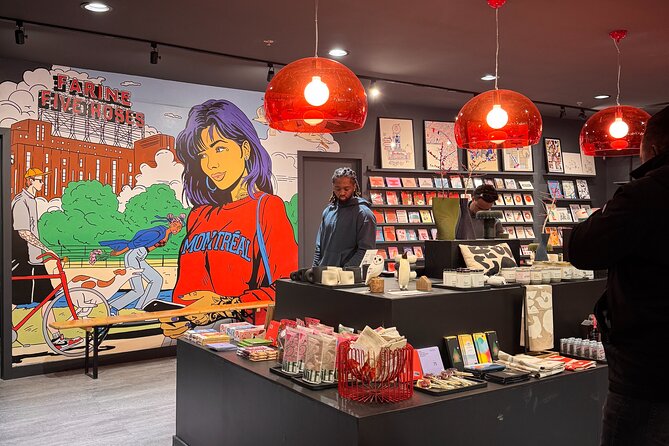
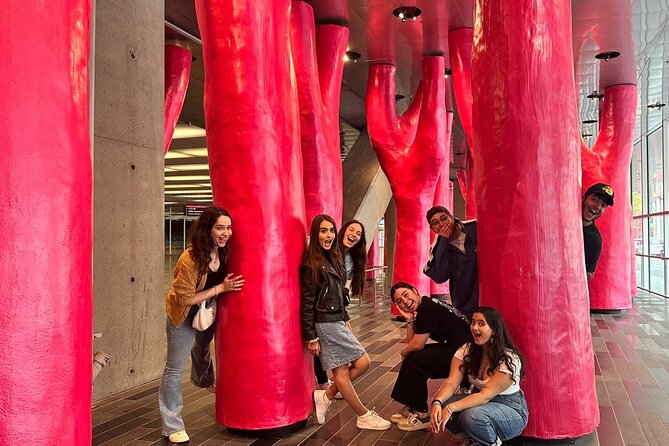
The route also includes Marché Saint Laurent and Lipstick Forest. These stops add color to a tour that could otherwise be heavy on directions and underground architecture.
Lipstick Forest is especially useful as a visual landmark. In a large connected network, unusual installations help you remember where you have been. After the tour, you may not recall every corridor name, but a distinctive art display can help you rebuild your route.
Marché Saint Laurent adds another change of mood. The tour does not keep you in one type of underground space. You move between commercial areas, public art, transport connections, and places with their own identity.
Misha also answers questions about Montreal culture and the city beyond the passageways. That is a strength if you want more than a technical explanation of the RESO. You can ask about the city as you walk, and the small group makes that conversation easier than it would be on a large coach-style excursion.
Same province, a completely different day out:
- Montreal: Guided Bus Tour
★ 4.4 · 3,064 reviews - Montreal: Hop-On Hop-Off Double-Decker Bus Tour
★ 4.1 · 2,760 reviews - Montreal Mile End Authentic Food Tour with 7 Delicacies Tastings
★ 5.0 · 2,598 reviews - The Original Old Montréal Walking Tour by Guidatour
★ 4.5 · 2,217 reviews
The indoor skating rink and the cruise-ship feeling
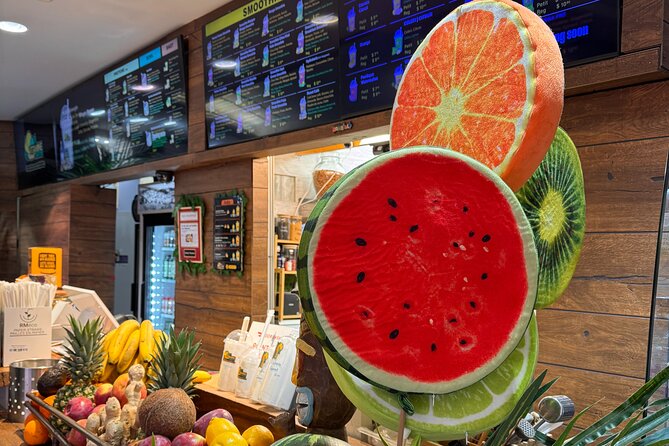
The indoor skating rink is one of the route’s more surprising features. It shows how much activity is packed into the downtown network and why the Underground City can feel like a self-contained district.
This is also where the cruise-ship comparison begins to make sense. The feeling comes from the concentration of shops, food, leisure spaces, corridors, signs, and people inside a large connected environment. You can move from one kind of place to another without returning to the street.
That does not mean every section is visually exciting. Some corridors are functional and commercial. The appeal is in the scale and in the way ordinary city tasks continue below ground.
The rink is a good example of why a guide helps. On your own, you might pass through quickly or fail to find it. With Misha, the route gives these spaces a place in the larger picture. You see not just an attraction, but part of the system’s daily use.
Montreal’s main train station and the RESO connections
Montreal’s main train station is another important stop because it shows how the underground network connects downtown life with transportation. The walk explains how key sights, the Metro, shopping areas, and the station fit together.
This practical information is one of the tour’s strongest features. You are likely to remember a train station or Metro connection more easily than an abstract map. Once you understand a few major anchors, the RESO becomes less confusing.
The tour can include stairs, escalators, and subway travel. That variety is useful, but it also means you should wear comfortable shoes and expect to stay on your feet. The stated fitness requirement is moderate, and that is a fair description.
You should also pay attention to the route rather than treating it as a passive walk. Misha explains how to continue exploring after the tour, and several people have found the Metro lesson especially useful. By the end, you should have a better idea of how to move from one downtown point to another.
What Misha adds to the experience
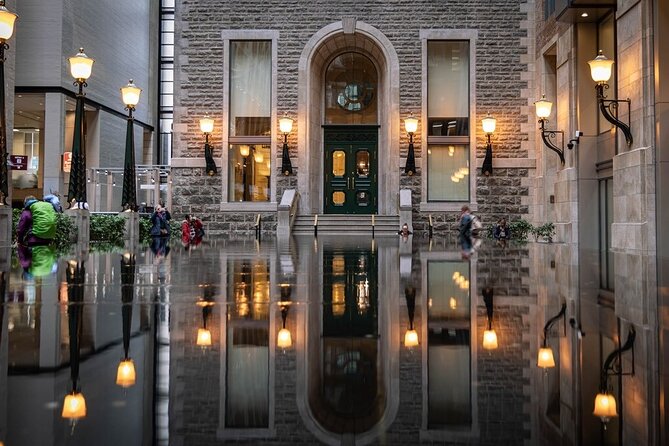
Misha is the central reason this tour feels more useful than a self-guided walk. Her approach combines clear directions, Montreal background, local recommendations, and a friendly pace.
I especially like that the tour is not limited to old facts. You get information you can use later in the day, including how the Metro and underground passages connect. Misha also offers suggestions for food and further exploration, which can turn the tour into a starting point for the rest of your visit.
Her ability to switch between English and French has also helped mixed-language groups. The information is presented in a conversational way, and she makes room for questions instead of treating the group as a line of people following a script.
The small size matters here. With no more than 10 people, you can interact with the guide and the other participants without shouting across a crowd. It also makes it easier to stay together when the route changes from a broad public area to stairs, escalators, or narrower passageways.
A small group does not guarantee a private tour, so do not book this expecting a fully custom route. Still, the size is much more personal than a large city sightseeing group, and it supports the practical teaching style.
The walking pace, weather, and comfort level

The tour lasts about two hours, but it is an active two hours. You may walk through several connected areas, use different levels, and ride or connect with the Metro. Wear shoes that can handle steady walking and bring the level of physical stamina you would use for an ordinary downtown walking tour.
The underground setting is especially useful during Montreal’s colder months. Several people have booked it to avoid winter conditions or rain, but the experience remains worthwhile in decent weather because the RESO is an unusual part of the city.
That said, you should not expect complete silence or a calm museum atmosphere. This is a working network. There are shops, food areas, transport links, and people going about their day. Some sections may feel crowded or confusing, which is part of the lesson but can be tiring.
If you prefer slow photography, tell Misha early in the tour. The route includes photo-worthy public art and landmarks, but it also has a practical purpose and keeps moving. You will see more by staying with the group and saving detailed exploration for afterward.
Is $30.04 a fair price?
At $30.04 per person, this is not the cheapest way to spend two hours in Montreal. The value depends on what you want from the experience.
If you only want to walk through a few indoor shopping areas, you can do that yourself. But finding the useful links between the RESO, Metro, train station, public art, food areas, and downtown landmarks takes time. The tour fee pays for a local guide who organizes that information and shows you how to repeat the route independently.
I think the price is fair for a first or second day in Montreal, particularly if you are visiting in winter, traveling alone, or staying downtown. Solo participants can meet other people in a small group, while couples and families get a practical introduction that may make the rest of the trip easier.
The value is lower if you have already spent several days learning the RESO on your own or if you dislike walking through commercial interiors. You should also consider that admission does not appear to include meals, shopping, or special activities. You are paying for the guided route, explanations, and orientation.
The current score is 5 from 63 ratings, with 98 percent of participants recommending the experience. Those numbers support the idea that the tour delivers well on its main promise: helping you understand a complicated part of Montreal.
Who should book this RESO walk?
I would recommend it to first-time Montreal visitors who want a practical city lesson rather than a standard monument tour. It is also a smart choice for winter trips, rainy days, and anyone who expects to use public transportation.
It suits:
- Solo visitors who want a manageable small-group activity
- Couples looking for an unusual downtown experience
- Families whose older children can handle two hours of walking
- Visitors interested in city planning, public art, and everyday urban life
- Anyone who wants to learn the Metro and underground links early in a stay
I would think twice if you have limited walking ability, strongly dislike stairs or escalators, or want a tour built around one major attraction. The route covers several kinds of places, so its appeal comes from variety and connections rather than one grand finale.
The end point near central downtown is convenient for continuing your day. You can use the new sense of direction to find food, shopping, the Metro, or another part of the city. A brunch recommendation from Misha has also helped turn the tour into a practical launch point for further exploring.
Booking details and cancellation
The experience costs $30.04 per person, lasts approximately two hours, accepts mobile tickets, and allows a maximum of 10 participants. It is booked an average of 26 days ahead, so reserve early if your dates are fixed, especially for a winter visit.
You can cancel for a full refund up to 24 hours before the local start time. Cancellations or changes made less than 24 hours before departure are not refunded or accepted.
Should you book Discover Montreal’s Underground City?
Book this tour if you want to understand Montreal’s RESO instead of merely passing through it. Misha’s guidance, small group, public art stops, train station connection, and Metro instruction make it more than an indoor stroll.
I would place it near the beginning of your visit. You will get the most from it if you use the rest of your trip to test the routes yourself. Skip it if you are looking for a relaxed, short-distance sightseeing activity, but choose it if you want local orientation, weather protection, and a useful new way to move around downtown Montreal.
FAQ
Where does the tour start?
The tour starts at 175 Boulevard René-Lévesque Ouest in Montreal, outside the Cathcart in central downtown. Time Out Market is right beside the meeting point.
Where does the tour end?
The stated end point is The Ring at 1048 in Montreal, outside the Cathcart area in central downtown. Time Out Market is nearby.
How long does the tour last?
The tour lasts approximately two hours.
How much does the experience cost?
The listed price is $30.04 per person.
How many people can join the tour?
The maximum group size is 10 participants.
Does the tour include public transportation?
The route includes passage through the RESO and provides an overview of Montreal’s Metro system. The walk may involve subway travel, stairs, and escalators.
Is the tour suitable for all fitness levels?
Participants should have a moderate level of physical fitness because the experience involves considerable walking, along with stairs and escalators.
Can I cancel for a refund?
Yes. You can cancel at least 24 hours before the local start time for a full refund. Cancellations and changes made less than 24 hours before the start are not accepted.
Just added around Montreal
- Montréal Downtown and Underground City Private Walking Tour★ 5.0 · 47 reviews
- Winter Express: Old Montreal Highlights Walking Tour★ 5.0 · 119 reviews
- Full Day Family Bike Rental★ 5.0 · 17 reviews
- Montreal Premium Driving Tour with River Cruise and Notre Dame★ 4.5 · 164 reviews
- Under the Surface of Montreal’s Chinatown: Guided Food Walking Tour★ 5.0 · 23 reviews
- Day at Mont-Tremblant National Park★ 4.0 · 5 reviews
- In the Shadow of the Mountain: Montreal Jewish History Walking Tour★ 4.5 · 33 reviews
- The Ultimate Montreal Boat Tour – Fall Colors Apéro Edition★ 4.5 · 31 reviews
Montreal Tours, compared.



Montreal Mile End Authentic Food Tour with 7 Delicacies Tastings
Read our review →
Quebec City and Montmorency Falls Day Trip from Montreal
Read our review →
The Original Old Montréal Walking Tour by Guidatour
Read our review →
Old Montreal Small-Group Walking Tour | Max 10 | by MTL Detours
Read our review →
Montreal City Sightseeing Tour with Live Commentary
Read our review →Browse the lists this tour appears in