
Reviewed · WALKING & GHOST TOURS
Old Montreal Small-Group Walking Tour | Max 10 | by MTL Detours
Old Montreal makes a poor first date with a map. Its streets twist, its lanes change character, and the best stories are easy to miss while you’re checking directions. This two-hour walk capped at 10 people gives you the backstory behind the stone façades, old banks, churches, squares, and port.
I like the lively guide style, especially the personal storytelling praised by guests who toured with Louise, Amelie, Darren, Elise, and Silvia. I also like the useful finish: a paper list of places to eat, shop, and explore, plus a small maple candy or local treat.
The main thing to consider is the weather. This is an outdoor walk in rain, snow, and cold, with cobblestones, stairs, and limited seating. A few indoor warm-up stops can help, but you still need to dress well and keep a steady walking pace.
In This Review
- Key points at a glance
- Why Old Montreal is easier with a guide
- Starting at Place d’Armes
- Marché Bonsecours and Montreal’s civic life
- Rue Saint-Paul and the feel of old Montreal
- Place Jacques-Cartier and the Old Port connection
- A grand civic building and the city’s turning points
- Notre-Dame Basilica from the outside
- Canada’s oldest bank and the old financial district
- Château Ramezay and the colonial past
- The Sailors’ Church beside the Old Port
- The birthplace of Montreal
- The final stretch near Bonsecours Market
- What $44.40 buys you
- Cold-weather planning and walking comfort
- Who should book this walk
- Cancellation and final booking advice
- Should you book the MTL Detours walk?
- FAQ
- How long is the Old Montreal walking tour?
- How many people can join the tour?
- What language is the tour conducted in?
- What is the price?
- Where does the tour start?
- Where does the tour end?
- Is entry to Notre-Dame Basilica included?
- Is hotel pickup provided?
- What should I wear?
- Is the tour suitable for people with limited mobility?
- What is the minimum age?
- Can I cancel for a refund?
Key points at a glance
- A small group of no more than 10: You can hear the guide, ask questions, and move through narrow streets without a large crowd.
- A strong first-day introduction: The route links Montreal’s founding, colonial past, civic life, churches, finance, architecture, and modern city culture.
- Major sights viewed from outside: You see the exterior of Notre-Dame Basilica, while interior entry is not part of the tour.
- Practical local advice: You receive suggestions for restaurants, cafés, shops, museums, and other places to return to later.
- Winter-friendly planning: Guides have used indoor stops and even hand warmers on bitterly cold days, but warm clothing remains essential.
- A thoughtful $44.40 purchase: For a licensed local guide, a personal group setting, a two-hour orientation, and the handout and treats, the price is reasonable if you value context.
Why Old Montreal is easier with a guide
Old Montreal is compact, but it is not simple. The district has irregular streets, old stone buildings, sloping lanes, cobblestones, and layers of French, British, religious, commercial, and civic history packed into a small area.
On your own, you can admire the handsome façades. You may not know why a square mattered, how the port shaped the city, or why a former bank helped Montreal become Canada’s financial centre. A good guide turns those details into a connected story.
That connection is the real value here. You are not just ticking off buildings. You learn how the city grew around the river, how Montreal’s original boundaries changed, how merchants and banks shaped the district, and how old institutions still affect the city today.
The guides also bring different personalities. Louise is repeatedly praised for warmth, energy, and detailed storytelling. Amelie is described as funny and personable, with a broad view of history, culture, architecture, and even film connections. Darren brings humor to the city’s more unusual and sometimes sordid tales, while Elise and Silvia are noted for clear explanations and strong command of the district.
The company uses licensed local guides with the required City of Montreal permit. That matters here because the best experience depends less on walking from one building to the next than on how well the guide explains what you are seeing.
More Walking & Ghost Tours in Montreal
- The Original Old Montréal Walking Tour by Guidatour
★ 4.5 · 2,217 reviews - Montréal: The Original Old Montréal Walking Tour
★ 4.8 · 911 reviews - Old Montreal: Traditional Ghost Walk of the Haunted City
★ 4.7 · 746 reviews
Starting at Place d’Armes
The meeting point is listed at 503 Place d’Armes, in the heart of Old Montreal. Confirm the exact spot on your mobile ticket before setting out, since the supplied meeting-point wording includes a market reference that may be confusing.
Place d’Armes is a fitting place to begin. It puts you near several of the district’s most important buildings and gives the guide room to explain how Montreal’s civic and religious centres developed around this part of town.
The tour then moves through the old district on foot. Expect most of the two hours to involve walking or standing, rather than sitting. The pace is generally described as manageable, though one person found the guide moved quickly, so tell your guide early if you need a slower rhythm.
Marché Bonsecours and Montreal’s civic life
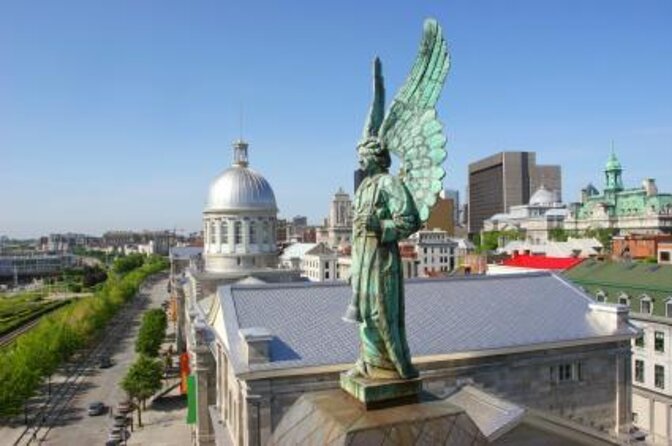
One early stop is the silver-domed Marché Bonsecours, one of Old Montreal’s most recognizable buildings. The guide explains how this grand structure shaped civic life in the district.
The value of this stop is not only the photograph. Marché Bonsecours helps you see Old Montreal as a working centre, not just a collection of pretty old buildings. Its scale and design reflect a city that wanted to present itself as important, organized, and prosperous.
You will view the building from outside as part of the walking route. If you want to explore its interior or shops later, the guide’s handout can help you plan the rest of your day.
Rue Saint-Paul and the feel of old Montreal
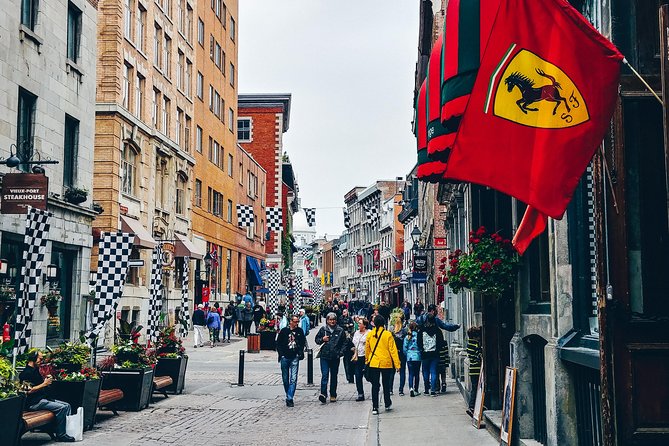
The walk follows Rue Saint-Paul, Montreal’s oldest street, with cobblestones and historic façades. This is where the district begins to feel most distinct from the modern city beyond it.
The uneven surface is part of the charm, but it is also a real practical concern. Wear shoes with good support, and take care on wet, icy, or snowy days. The tour is not suited to people with major mobility restrictions or difficulty walking at a steady pace.
Rue Saint-Paul is also a good place to notice the mix of old and new. The buildings preserve the district’s earlier form, while restaurants, shops, galleries, and cafés give the street a current purpose. The guide’s comments help you separate an original feature from a later restoration or addition.
Same province, a completely different day out:
- Montreal: Guided Bus Tour
★ 4.4 · 3,064 reviews - Montreal: Hop-On Hop-Off Double-Decker Bus Tour
★ 4.1 · 2,760 reviews - From Montreal: Quebec City and Montmorency Falls Day Trip
★ 4.5 · 2,669 reviews - Montreal Mile End Authentic Food Tour with 7 Delicacies Tastings
★ 5.0 · 2,598 reviews
Place Jacques-Cartier and the Old Port connection
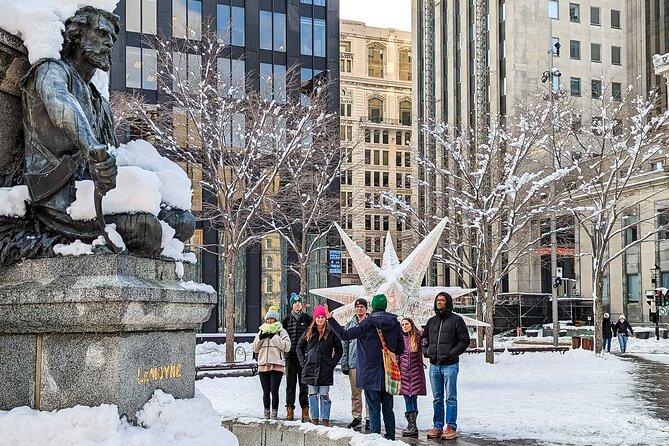
Place Jacques-Cartier is one of Old Montreal’s most animated historic squares. It opens toward the Old Port and gives you a broader view after the narrower streets.
Here, the guide can explain the relationship between the city and the river. Montreal’s growth was tied to trade, shipping, business, and movement along the St. Lawrence. The square also makes a useful orientation point, since the tour ends nearby.
If you are planning the rest of your day, remember this location. You finish in the vicinity of Place Jacques-Cartier and Bonsecours Market, so you can continue exploring without retracing the entire route.
A grand civic building and the city’s turning points
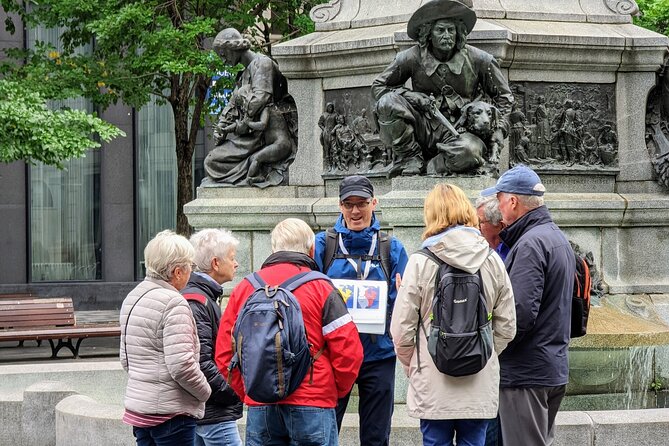
The route includes a grand Second Empire building where you hear about key moments in Montreal’s past. The description does not promise interior entry, so plan to admire this stop from the street.
This part of the walk is useful for readers who care about architecture but do not want a dry lecture. The guide connects the building’s formal style to the city’s ambitions and political life, then adds the people and events that give the façade meaning.
That storytelling approach is one of the tour’s strongest features. Guides do not simply identify a building and move on. They explain how the structure fits into the city’s development, often adding small anecdotes about the people who influenced Montreal.
Notre-Dame Basilica from the outside
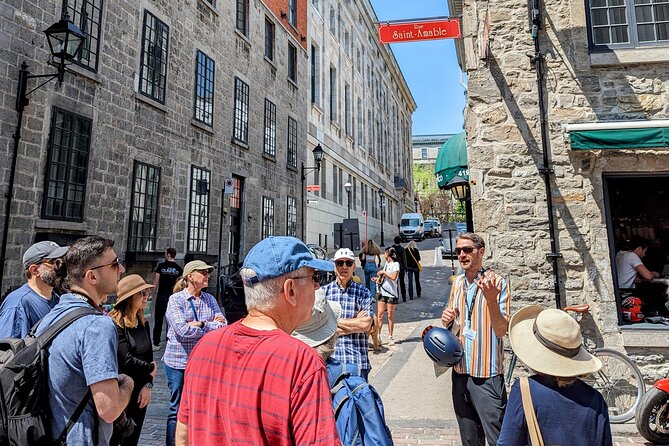
You will see the exterior of Notre-Dame Basilica, Montreal’s best-known church. The story behind its creation is included, but interior entry is not.
That distinction matters because many visitors expect a walking tour of Old Montreal to include time inside the basilica. If the interior is a priority, schedule a separate visit and check its admission rules and opening hours independently.
Even from the street, the basilica provides an important architectural anchor. It shows the scale and confidence of Montreal’s religious institutions and helps explain why this district remains one of the city’s main historic areas.
The outside-only approach also keeps the walk moving. With only two hours, the guide can cover more ground instead of using a large block of time inside one attraction.
Canada’s oldest bank and the old financial district
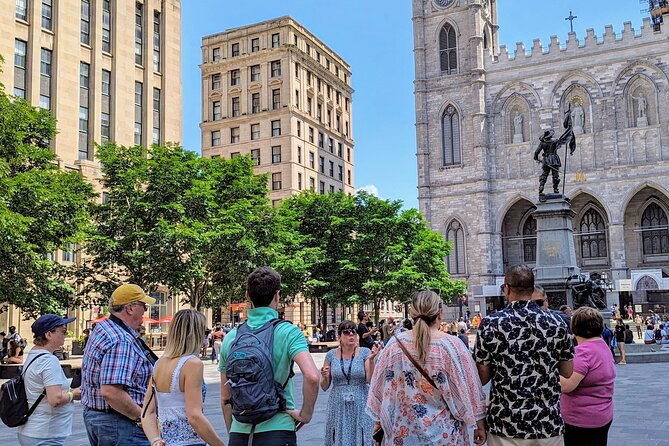
The route continues to the exterior of Canada’s oldest bank. You learn how Montreal became the country’s financial centre and then walk through the former financial district, once called Canada’s Wall Street.
This is a welcome change from the usual church-and-square route. Old Montreal was not only a religious and political centre. It was also a place of money, trade, shipping, insurance, and commercial power.
Look up as you walk. Bank buildings often use grand entrances, heavy stonework, and formal decoration to project trust and strength. The guide gives those details a purpose by showing how architecture worked as business advertising long before modern signs and glass towers.
This section should appeal to you if you like seeing how cities actually functioned. It moves the tour beyond postcard views and into the forces that built Montreal.
Château Ramezay and the colonial past
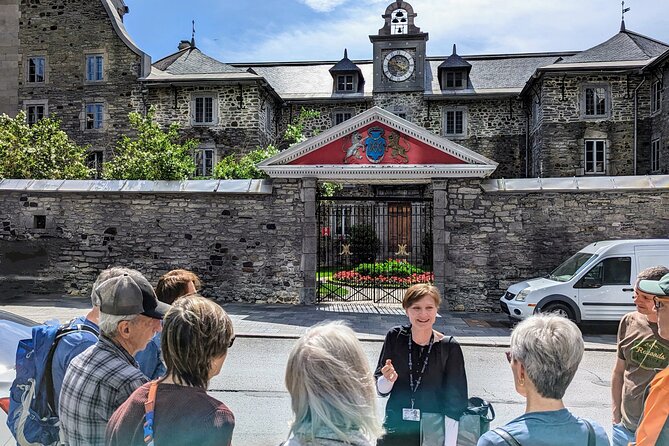
Another stop is an 18th-century former governor’s residence, now associated with Montreal’s colonial past. The building gives the guide a chance to explain how authority worked in the early city and how Montreal fit into the wider colonial system.
The stop is viewed as part of the walking tour, not presented as a full museum visit. If you want to go inside, plan that separately rather than assuming admission is included.
This is also where the city’s past becomes less tidy. The guides include stories about power, conflict, changing governments, and the less polished parts of Montreal’s growth. Darren, in particular, has been praised for making the city’s more unusual and sordid episodes interesting without turning the tour into a grim history lesson.
The Sailors’ Church beside the Old Port
The chapel known as the Sailors’ Church connects religious life with the Old Port. Its nickname points to the people who passed through Montreal by water and sought help, worship, or a place of community near the harbour.
This stop helps explain why the Old Port is not just scenic waterfront. It was a place of arrival, work, commerce, and risk. The chapel’s story adds a human side to the larger tale of ships and trade.
As with the other landmarks, the route focuses on explanation and exterior views rather than extended indoor visits. That keeps the pace practical and allows the group to cover several parts of the district.
The birthplace of Montreal
Near the city’s birthplace, the guide explains how Montreal was founded. This is one of the most important historical moments on the route because it gives the rest of the tour a starting point.
The stop is a reminder that the modern city began as a small settlement with a particular location, purpose, and set of relationships. From there, the walk shows how Montreal grew into a religious centre, port city, commercial hub, and financial power.
I especially like having this story placed within a route rather than treated as an isolated fact. You can connect the founding site with the streets, churches, banks, and civic buildings you have already seen.
The final stretch near Bonsecours Market
The tour ends near Place Jacques-Cartier and Bonsecours Market. This is a useful finish because you are left in one of the best areas for continuing your own exploration.
The guide provides a paper handout with selected suggestions for places to eat, see, and explore. You also receive a small local treat and a unique parting gift. Several guests have singled out the maple candy, while others appreciated postcards and hand warmers in winter.
These extras are modest, but they make the tour more useful after the guide leaves. You can use the recommendations to choose lunch, plan a museum visit, or find a shop without starting from scratch.
What $44.40 buys you
At $44.40 per person, this is not the cheapest way to walk around Old Montreal. You can stroll the streets for free, photograph the basilica, and read plaques without paying for a guide.
The question is what you want from your first two hours. For the price, you receive a licensed local guide, a maximum group size of 10, a planned route, historical context, practical recommendations, a handout, and small gifts.
The group limit is important. A large tour can make narrow streets awkward and questions hard to hear. With 10 people or fewer, you can interact with the guide and ask about a building, restaurant, or part of Montreal you plan to visit later.
I consider the price fair if you are new to Montreal, enjoy history, or want a clear orientation at the start of your stay. It is less compelling if you already know Old Montreal well or prefer to explore at your own pace with long interior visits.
Cold-weather planning and walking comfort
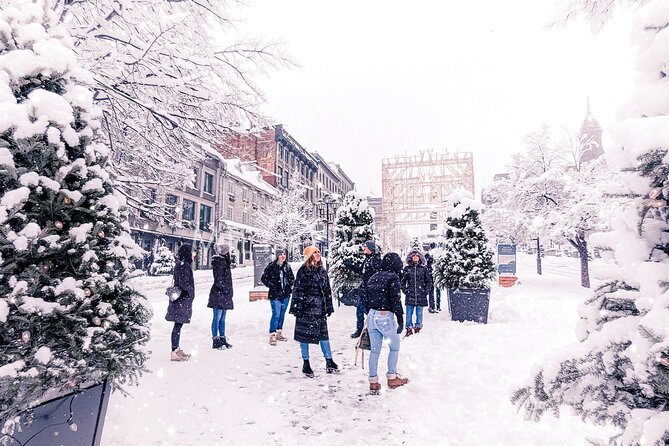
The tour operates in rain, shine, or snow and takes place mostly outdoors. Winter can be especially rewarding because snow adds atmosphere to the stone streets, but do not underestimate the cold.
Wear warm layers, waterproof footwear, gloves, and something that covers your ears. On very cold days, guides have planned extra indoor warm-up spots and distributed hand warmers. That care helps, but it does not turn the outing into an indoor tour.
The surface is uneven, and stairs may be part of the route. Seating is limited, so this suits you if you can walk and stand for most of two hours. Service animals are allowed, and the tour is near public transportation.
The minimum age is 12. Everyone needs a paid ticket, and anyone under 18 must be with an adult.
Who should book this walk
I would book this for a first visit to Montreal, especially if you want context before exploring museums, restaurants, and the Old Port on your own. It also works well for couples, families with older children, and solo visitors who prefer a small social setting.
History fans will appreciate the mix of colonial stories, architecture, religion, banking, and city growth. Food-focused visitors will value the restaurant and café suggestions at the end.
You may want a different option if you need frequent seating, cannot manage cobblestones or stairs, dislike outdoor winter walks, or want to enter several attractions during the two-hour visit. The route is an orientation walk, not an indoor attraction pass.
Book at least a few weeks ahead if your schedule is fixed. This experience averages about 28 days of advance booking, and the small cap can make popular dates less flexible.
Cancellation and final booking advice
You can cancel up to 24 hours before the start time for a full refund. Changes or cancellations within 24 hours are not refunded. If poor weather or too few participants forces a cancellation, you are offered another date or a full refund.
Should you book the MTL Detours walk?
Yes, if you want a friendly, well-paced introduction to Old Montreal rather than a self-guided look at attractive buildings. The small group, strong local guides, practical handout, and maple treat make the $44.40 price easier to justify.
Choose it early in your stay so you can use the food, museum, and shopping suggestions afterward. Dress for the forecast, expect cobblestones, and remember that Notre-Dame Basilica is viewed from outside.
If you prefer independent wandering or already know the district, save the money for lunch or museum admission. For most first-time visitors who want stories, orientation, and personal attention in a short window, this is a smart two-hour start.
FAQ
How long is the Old Montreal walking tour?
The tour lasts approximately two hours.
How many people can join the tour?
The group is limited to a maximum of 10 people.
What language is the tour conducted in?
The tour is conducted in English.
What is the price?
The listed price is $44.40 per person.
Where does the tour start?
The meeting point is listed at 503 Place d’Armes in Montreal. Check your mobile ticket for the exact meeting instructions.
Where does the tour end?
The walk ends near Place Jacques-Cartier and Bonsecours Market.
Is entry to Notre-Dame Basilica included?
No. The basilica is viewed from the outside, and interior admission is not included.
Is hotel pickup provided?
No. You must make your own way to the meeting point, and no hotel drop-off is provided.
What should I wear?
Dress for the weather because the tour operates in rain, snow, and cold and takes place mostly outdoors. Comfortable footwear is important because the route includes cobblestones, uneven ground, and stairs.
Is the tour suitable for people with limited mobility?
A moderate level of walking is required, with much of the tour spent walking or standing. It is not recommended for people with significant mobility restrictions or difficulty walking at a steady pace.
What is the minimum age?
The minimum age is 12. Every person needs a paid ticket, and minors must be accompanied by an adult.
Can I cancel for a refund?
Yes. Cancel at least 24 hours before the start time for a full refund. Cancellations or changes made within 24 hours are not refunded. If the tour is canceled because of poor weather or too few participants, you are offered another date or a full refund.
More Walking Tours in Montreal
- Old Montreal Ghost Walking Tour
★ 4.5 · 726 reviews - The Essential 101 Non-Touristy Walking Tour by Spade & Palacio
★ 5.0 · 716 reviews - Montreal: Top Rated Small Group Old Montreal Walking Tour
★ 4.9 · 611 reviews - Walking tour of Old Montreal – 16/42 Tours
★ 5.0 · 592 reviews
Just added around Montreal
- Montreal: 3-Day Toronto, Niagara Falls, Thousand Islands★ 4.7 · 5 reviews
- Old Montréal Small-Group Christmas Tour★ 4.4 · 39 reviews
- Secret Food Tours: Montreal – Jean-Talon & Little Italy★ 4.0 · 4 reviews
- Montreal: Maple Syrup Tour with Sugar Shack & Local Cuisine★ 4.1 · 25 reviews
- Port of Montreal Glass Tower Entry★ 4.4 · 129 reviews
- Outdoor mini golf in Montreal★ 4.9 · 13 reviews
- Montreal: An unforgettable guided tour in a vintage 1930s convertible car★ 5.0 · 9 reviews
- Montreal: Private 2h Walking Tour RESO and Old Montreal★ 5.0 · 20 reviews
Walking & Ghost Tours, compared.

Old Quebec City: Grand Walking Tour with Private Option
Read our review →
The Original Old Montréal Walking Tour by Guidatour
Read our review →
Old Quebec Classique Walking Tour with Funicular
Read our review →
Old Quebec City Food Tour with 10+ Autentic Local Tastings
Read our review →


Browse the lists this tour appears in