
Reviewed · CYCLING TOURS
E-bike Toronto’s Dynamic Neighbourhoods
Toronto’s best story is not confined to the CN Tower or the waterfront. This small-group e-bike ride carries you through places that show how the city actually works, from Lower Ossington’s creative makeover to St. James Town’s tightly packed mix of cultures and CAMH’s forward-looking approach to mental health. You also get street art, museums, parks, and a waterfront caught in the middle of a public debate.
I like two things right away: the route gives you a much wider look at Toronto than a standard sightseeing loop, and the e-bike makes a long urban ride manageable. Guides such as Ryan take time to help you feel comfortable before entering traffic. The main caution is practical: bikes have needed battery changes and occasional maintenance during a ride, so you should allow for small interruptions.
In This Review
- Key points to know before booking
- Why this route shows the Toronto beyond the postcard
- Lower Ossington: a former afterthought becomes a destination
- St. James Town: Toronto in a single compact district
- Bloor Street Cultural Corridor: a city’s creative spine
- Graffiti Alley: Toronto’s mood in paint
- Rosedale: polished streets with another side
- Ontario Place and Trillium Park: waterfront beauty and hard questions
- CAMH: a serious look at mental-health progress
- Trinity Bellwoods: green space with a changing role
- What riding an e-bike adds to the day
- Is $109.92 a fair price?
- Who will get the most from this ride?
- Booking, timing, and cancellation advice
- Should you book E-bike Toronto’s Dynamic Neighbourhoods?
- FAQ
- Where does the e-bike tour start and finish?
- How long does the experience last?
- How many people can join the tour?
- What is included in the price?
- Is the tour offered in English?
- What happens if bad weather cancels the tour?
Key points to know before booking
- Seven very different Toronto districts: You move from fashionable Rosedale to dense St. James Town, artistic Lower Ossington, and the open waterfront.
- A maximum of eight people: The small group suits anyone who wants room to ask questions and keep the ride personal.
- About three and a half hours on an e-bike: The scheduled stops add up to roughly two hours, with the remaining time used for riding between areas.
- A social view of the city: CAMH, food access, healthcare, housing pressure, and neighborhood change are part of the story.
- Useful extras included: You receive a bicycle, helmet, bottled water, and a granola bar.
- Good-weather planning matters: If poor weather cancels the ride, you can choose another date or receive a full refund.
Why this route shows the Toronto beyond the postcard
This is not a tour built around a single grand sight. It is a ride through contrasts. Toronto can change its tone within a few blocks, and the bicycle is a fine way to notice those shifts without spending the day underground or waiting for cars.
You begin at 124 St Patrick St, close to public transportation, and finish at the same point. The starting location is useful because you do not need to arrange a second pickup or work out how to return to your hotel from another part of town. The activity is offered in English and runs for about three hours and 30 minutes.
The group limit of eight is important. On a city ride, a huge group means long waits at crossings and less chance to speak with the guide. Here, you should have a better shot at asking about the neighborhoods as you pass through them. The route still depends on city traffic, road conditions, and weather, so do not treat the time as a precise timetable.
The guide is part of the value. Ryan led one especially well-regarded outing, and another guide, originally from Mexico City, brought strong knowledge of Toronto and careful attention to the group. The key point is not a scripted speech. It is having someone who can explain why a place is changing, then help you keep your balance and your bearings while riding.
A few more Toronto trips to weigh up
- Toronto: Heart of Downtown 3.5-Hour Bike Tour
★ 4.9 · 419 reviews - Downtown Toronto Bike Tour
★ 5.0 · 336 reviews - Toronto Islands: Morning or Twilight 3.5-Hour Bike Tour
★ 4.8 · 304 reviews
Lower Ossington: a former afterthought becomes a destination
The first neighborhood stop, Lower Ossington, gives you an early lesson in urban change. It has shifted from a mostly overlooked stretch into an internationally recognized hotspot. You spend about 20 minutes here, long enough to see the area as more than a passing street.
I like this stop because it introduces a question that returns throughout the ride: who benefits when a neighborhood becomes fashionable? You can look at the creative energy, restaurants, and new attention while also keeping in mind that change affects the people and businesses already there.
The free stop does not mean there is nothing to learn. The value is in the guide’s explanation and in the quick comparison with the other areas on your route. Lower Ossington is a good place to pay attention to the details of change rather than simply taking a few photographs.
St. James Town: Toronto in a single compact district
St. James Town is one of the most densely populated parts of Toronto and is known for its extraordinary mix of cultures. The tour describes it as a world within a block, a useful phrase for a neighborhood where many languages, backgrounds, and daily needs come together in a tight space.
You spend around 20 minutes here. That is enough for an introduction, not a full social-service field study. The guide focuses on the community’s efforts to respond to practical challenges involving food, healthcare, and social services. This gives the stop more purpose than a quick drive past apartment towers.
For you, the benefit is context. Toronto’s diversity is often presented as a cheerful slogan. St. James Town shows the work behind it: people and organizations finding ways to serve a crowded, varied community. If you want only grand buildings and famous views, this stop may feel less scenic. If you want to understand how the city functions, it is one of the more useful parts of the ride.
Bloor Street Cultural Corridor: a city’s creative spine
The Bloor Street Cultural Corridor brings together museums, cultural centers, performance spaces, and restaurants. The route treats this district as Toronto’s broadest arts and culture zone, which makes it a natural bridge between neighborhood life and the city’s major institutions.
There is no separate admission charge listed for this part of the ride, and the experience is not built around entering each museum or performance venue. Instead, you get a street-level introduction to how these places sit together and help shape the area.
This is worth understanding before you book. You are seeing the cultural district as part of a moving city tour, not buying museum tickets or attending a show. That keeps the pace lively, but anyone wanting extended indoor visits should plan those separately.
Same province, a completely different day out:
- Toronto: Niagara Falls Day Tour with Optional Boat Cruise
★ 4.6 · 3,178 reviews - Niagara Falls Day Tour from Toronto
★ 5.0 · 2,889 reviews - Toronto: Casa Loma Entry Ticket
★ 4.7 · 2,705 reviews - Niagara Falls Canada Day Tour From Toronto + Boat Cruise Option
★ 5.0 · 2,576 reviews
Graffiti Alley: Toronto’s mood in paint
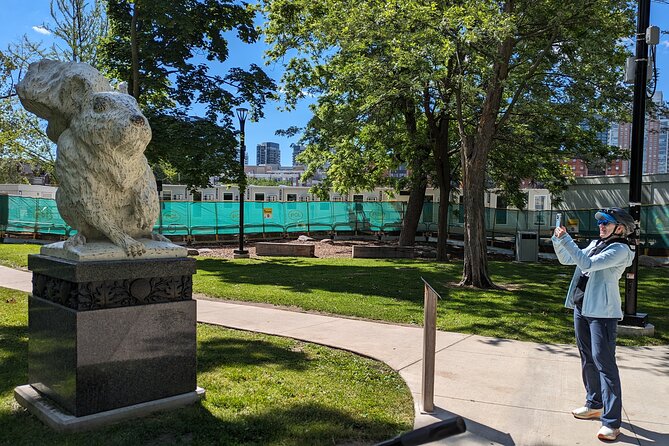
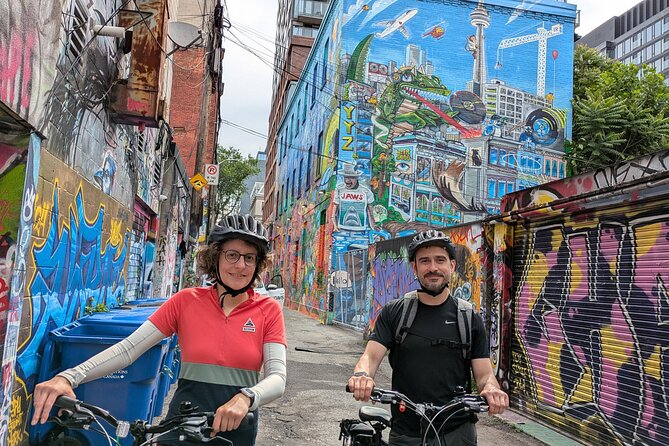
Graffiti Alley is a short stop, about 15 minutes, but it may be one of the easiest places to enjoy immediately. The changing street art captures something of Toronto’s current creative mood, and the walls give you a direct, informal look at how public space can become a gallery.
The short visit is probably enough for photographs and a quick explanation. Street art changes, so what you see depends on when you ride. That is part of the appeal, though it also means this is not a fixed attraction with a permanent display.
I appreciate that Graffiti Alley is included alongside more serious civic subjects. The route does not pretend Toronto is only about policy and urban planning. It also makes room for humor, color, protest, and spontaneous expression. Keep your phone ready, but listen to the guide before turning the stop into a photo session.
Rosedale: polished streets with another side
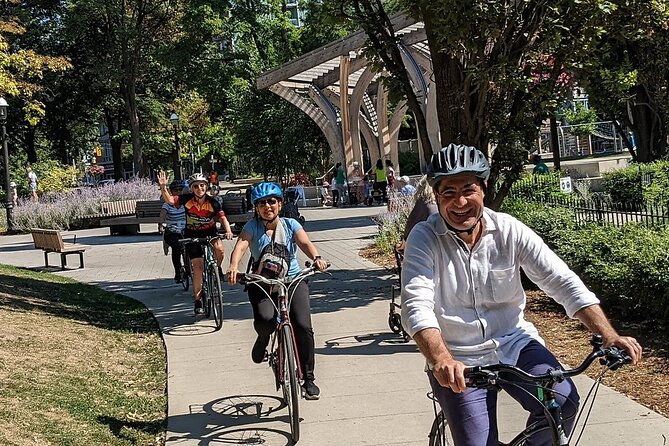
Rosedale is known as one of Toronto’s most fashionable addresses. It is affluent, quiet, and marked by attractive parkland. At first, it may seem like the simple contrast to St. James Town or Lower Ossington: calm, expensive, and carefully maintained.
The tour asks you to look again. Rosedale is undergoing its own quieter changes, and the guide points to the idea that there is more to this neighborhood than its polished surface. You spend about 20 minutes here, enough to understand its place in the city without trying to cover every street.
This stop matters because a good city tour should challenge easy labels. Toronto’s wealthy districts are part of the same city as its dense, under-pressure communities. Seeing both in one morning lets you compare how space, money, and public attention shape daily life.
Ontario Place and Trillium Park: waterfront beauty and hard questions
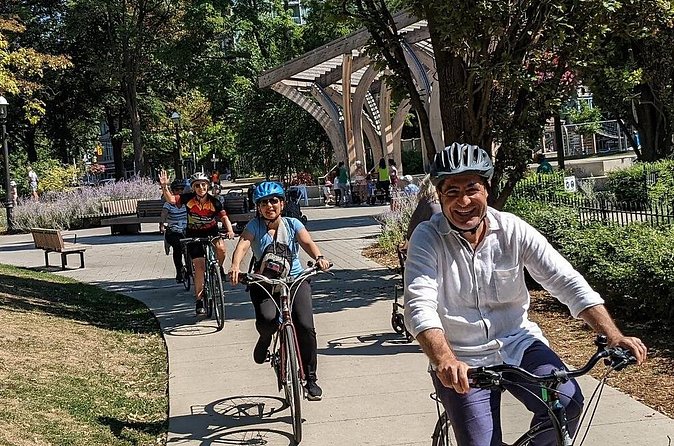
Ontario Place and Trillium Park offer a change of scale. After riding through established neighborhoods, you reach an iconic waterfront venue surrounded by major plans and public controversy. The area is in the middle of significant transformation, so this is a place where the guide’s timing and local knowledge matter.
You have about 20 minutes here. Expect a look at the waterfront as a work in progress rather than a finished attraction. Trillium Park gives you open space and a different view of the city, while Ontario Place raises questions about what should happen to a well-known public site.
The stop is valuable precisely because it is not presented as settled. Toronto’s waterfront has competing ideas behind it, and the tour gives you a chance to see the physical setting while learning why the future of the area has caused debate. Plans can change, so treat the guide’s explanation as a snapshot of an ongoing issue.
CAMH: a serious look at mental-health progress
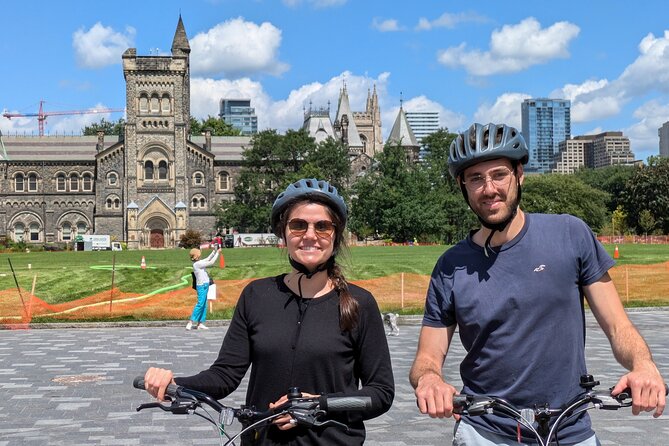
The stop at CAMH, the Centre for Addiction and Mental Health, adds a civic and human dimension to the ride. You spend about 15 minutes learning about Toronto’s changing attitude toward mental health and the work being done at the center.
This is not a light sightseeing stop, and that is exactly why it belongs on the route. Cities reveal their priorities through the services they provide and the subjects they are willing to discuss in public. CAMH shows Toronto trying to move beyond silence and stigma, while also pointing to the work still required.
You should expect a concise introduction rather than a clinical tour. The short timing keeps the overall route moving, but it also means the guide must choose the most useful points. If you prefer a trip made only of scenic stops, this section may feel more serious than expected. For me, it makes the experience more honest and more connected to real city life.
Trinity Bellwoods: green space with a changing role
Trinity Bellwoods is the final neighborhood stop and lasts about 10 minutes. It is an important green space and a cultural center of gravity for the city, yet it is also changing as Toronto’s needs change.
The brief stop works as a closing thought. Parks are not just decoration between buildings. They provide room for recreation, social life, and community use, and pressure on those spaces grows as a city grows. Trinity Bellwoods lets you see that process in a more relaxed setting after the heavier discussion at CAMH.
Ten minutes is not enough for a long park visit. Think of it as a final pause and a chance to connect the pieces of the route before returning to St Patrick Street.
What riding an e-bike adds to the day
The e-bike is more than a novelty here. Toronto is too spread out for this route to work well on foot, and a regular bicycle could make the hills, distance, and stop-start traffic tiring for some people. Electric assistance helps you cover the ground while still moving at a human pace.
Before heading onto the roads, the guide checks that you are comfortable with the bicycle. That matters if you have not used an e-bike recently. Ryan was praised for making the ride easy and enjoyable, and another guide took care to confirm that the group felt ready before entering traffic.
The equipment package is simple but useful:
- Bicycle
- Helmet
- Bottled water
- Granola bar snack
You will want sensible clothing for a three-and-a-half-hour outdoor activity, though the supplied details do not specify a dress code. Because the experience requires good weather, check the forecast and keep some flexibility in your schedule. Poor weather can lead to a new date or a full refund.
One honest note: battery swaps and maintenance have been needed during at least one ride. The guide handled those problems efficiently, but you should not expect every machine to run without a pause. That is a minor inconvenience, yet it is worth knowing when comparing this tour with a shorter, fixed-location activity.
Is $109.92 a fair price?
At $109.92 per person, this is not the cheapest way to see Toronto. You are paying for a small group, an e-bike, a helmet, a guide, water, a snack, and a route that links widely separated districts in one outing.
The value improves if you would otherwise pay for several separate activities or spend much of the day figuring out public transportation between neighborhoods. You get seven very different stops and a guide who provides social and cultural context, not just directions to the next photo spot.
The price is less attractive if your main goal is a quick view of Toronto’s famous skyline or a single museum visit. This tour spends time on community services, mental health, neighborhood change, and public-space debates. Book it for the city’s character, not for a checklist of headline attractions.
Who will get the most from this ride?
I would choose this for a first or second Toronto visit when you want an overview that reaches beyond the usual downtown circuit. It also suits returning visitors who have already seen the major sights and want to understand how different parts of the city fit together.
The small group should appeal to solo visitors, couples, and friends who prefer conversation over a large organized procession. Most people can participate, and the activity is near public transportation, but you should be comfortable taking part in a bicycle ride. The supplied information does not give a detailed mobility-accessibility description, so contact the operator before booking if you have specific needs.
This is a good match for curious riders who enjoy city planning, local culture, public issues, and street art. It is less suitable if you dislike traffic, need a fully indoor activity, or want long visits at each stop. The route covers a lot, which means each location receives an introduction rather than an exhaustive visit.
Booking, timing, and cancellation advice
The experience is often booked about 20 days ahead, so reserve early if your Toronto dates are fixed. Confirmation arrives when you book, and the mobile ticket makes it easy to keep the details on your phone.
You can cancel up to 24 hours before the start time for a full refund. Changes or cancellations inside that 24-hour window are not accepted and are not refunded. The cut-off follows Toronto local time, so check the clock carefully if you are booking from another time zone.
Because the ride depends on good weather, leave room in your itinerary for a change of date. If the operator cancels because conditions are poor, you can take another date or receive a full refund. That policy reduces the risk, but it does not remove the need for a backup plan.
Should you book E-bike Toronto’s Dynamic Neighbourhoods?
Book it if you want Toronto explained through its neighborhoods rather than reduced to its best-known landmarks. The route is unusually broad, the group is capped at eight, and the e-bike lets you connect places that would be awkward to combine on foot.
I especially like the balance between enjoyable stops such as Graffiti Alley and Trinity Bellwoods and more serious visits to St. James Town and CAMH. Add the changing waterfront at Ontario Place, the polished calm of Rosedale, and the creative identity of Lower Ossington, and you get a useful portrait of a city in motion.
Skip it if you want a slow museum day, a guaranteed uninterrupted ride, or a short sightseeing loop. For everyone else, the $109.92 cost is reasonable when you value a local guide, included equipment, and a wide view of Toronto in one small-group morning or afternoon.
FAQ
Where does the e-bike tour start and finish?
It starts at 124 St Patrick St, Toronto, Ontario, M5T 2X8, and ends back at the same meeting point.
How long does the experience last?
The tour lasts approximately three hours and 30 minutes.
How many people can join the tour?
The activity has a maximum group size of eight travelers.
What is included in the price?
The price includes use of a bicycle, a helmet, bottled water, and a granola bar snack.
Is the tour offered in English?
Yes. The experience is offered in English.
What happens if bad weather cancels the tour?
You can choose a different date or receive a full refund if the experience is canceled because of poor weather.
Just added around Toronto
- Toronto Craft Brewery Tour★ 5.0 · 97 reviews
- Canada eSIM | 3-30 days | Daily data | QR code★ 4.0 · 12 reviews
- Underground Toronto PATH Tour★ 4.5 · 6 reviews
- Handcrafted Donuts of Toronto: A Sweet City Walking Tour★ 5.0 · 141 reviews
- Pottery wheel class in Toronto Bay&Dundas★ 4.5 · 5 reviews
- Customizable Walking Tour of Toronto’s Hidden Gems★ 5.0 · 15 reviews
- Toronto’s Longest Running Improv Theatre – Marquee Show★ 5.0 · 5 reviews
- Toronto Airport Private Transfer to Downtown★ 4.5 · 10 reviews
Cycling Tours, compared.

The Stanley Park Bicycle Tour by Cycle City Tours
Read our review →


Browse the lists this tour appears in