
Reviewed · MONTREAL TOURS
Exclusive Tour of the Montreal Olympic Games by MTL76
Montreal’s 1976 Olympics were far more than a sports festival. They were shaped by political tension, major construction troubles, unforgettable performances, and a stadium that still sparks debate. This 90-minute walking tour connects those stories at the actual Olympic Park, beginning at the cauldron and rings and ending near the Maurice-Richard Arena.
I like the small group limit of 10 people, which should make it easier to hear the guide and ask questions. I also like the focus on context, especially Jean Drapeau’s campaign to bring the Games to Montreal and the political stakes surrounding the event. The main drawback is clear: because the Olympic Stadium is undergoing major renovations, you cannot go inside.
In This Review
- Key points at a glance
- Why Montreal’s 1976 Games still matter
- The athletes’ village and the political setting
- The Olympic Stadium, seen from the foot
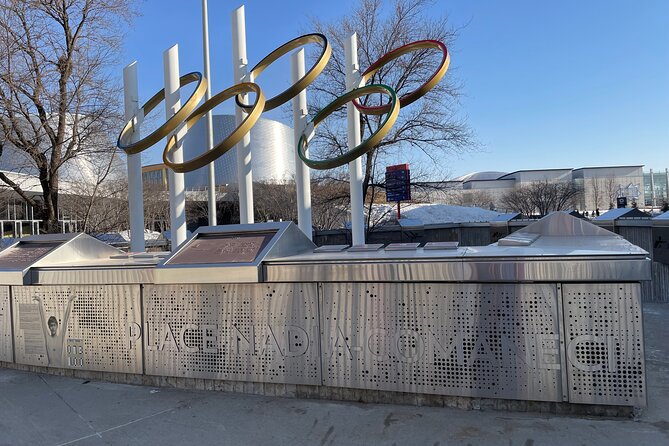
- Nadia Comaneci Square and the sporting drama
- Ending with the rings and a useful photo stop
- What the $22.41 price really buys
- Who will enjoy this Olympic Park walk
- The practical details that shape the day
- Should you book MTL76?
- FAQ
- Where does the Montreal Olympic Games tour start?
- Where does the tour finish?
- How long does the tour last?
- Is the Olympic Stadium interior included?
- What language is the tour offered in?
- How many people can join the tour?
- Is public transportation available near the tour?
- Can I cancel for a full refund?
Key points at a glance
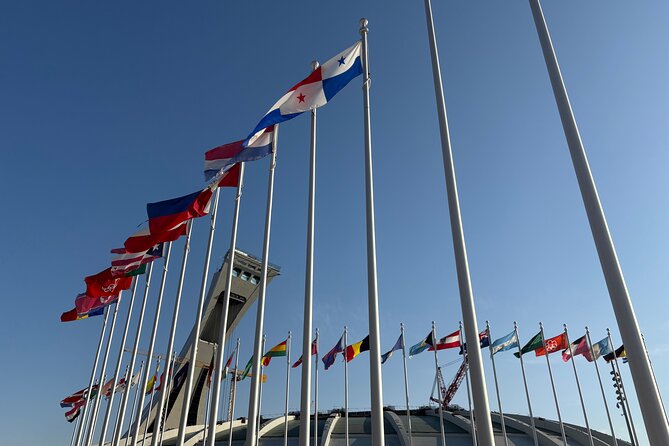
- See the Olympic cauldron and rings: Begin and end near the symbols of Montreal’s Games, with time for photos.
- Hear the story behind the bid: Learn how Montreal and mayor Jean Drapeau secured the Olympics.
- Examine the former athletes’ village: Connect the buildings and setting to the unusual political climate of 1976.
- Study the Olympic Stadium from outside: Hear about its difficult construction and long afterlife, but do not expect interior access.
- Visit Nadia Comaneci Square: Revisit the performances that made the Games unforgettable.
- Walk with an Olympic enthusiast: Marc-Élie leads the experience in English and brings a strong personal interest in Olympic history.
Why Montreal’s 1976 Games still matter
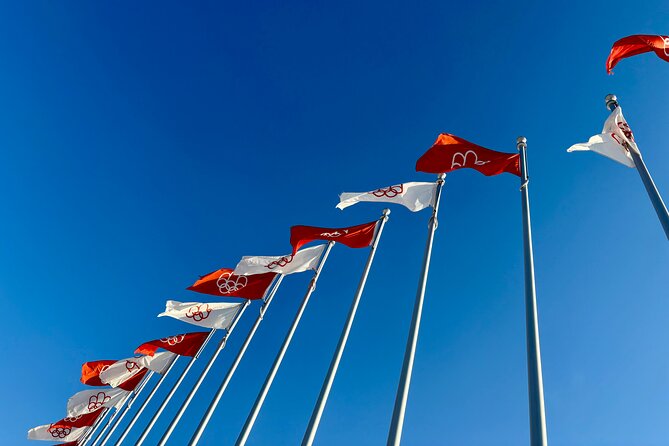
The useful thing about this tour is that it does not treat the Olympic Park as a collection of giant buildings. It uses the site to explain how the Games came together, why they became controversial, and how their effects lasted long after the closing ceremony.
You begin next to the Olympic cauldron and rings. This is a smart starting point because the symbols give you an immediate sense of place. Before moving into Montreal’s own story, the guide briefly explains how the Olympics developed from ancient origins into the modern international event you know today.
That short introduction provides a frame for the rest of the walk. You are not simply looking at old venues. You are considering why cities compete for the Games, what they hope to gain, and what they must handle once the crowds and athletes leave.
The tour then moves onto the Esplanade of the Olympic Park. Here, the focus shifts to Montreal’s campaign to host the Olympics and the role of mayor Jean Drapeau. This stop should appeal to you if you enjoy the political side of travel. The Olympic Games are often presented as pure celebration, but winning the right to host them requires ambitious planning, public support, and political skill.
The guide connects Montreal’s bid to the larger story of the city. That context matters because the park was not dropped into an empty space by accident. It was part of a major civic project, one that changed this part of Montreal and left behind buildings that remain closely tied to the city’s identity.
Other Montreal days worth putting on the list:
- Montreal: Guided Bus Tour
★ 4.4 · 3,064 reviews - Montreal: Hop-On Hop-Off Double-Decker Bus Tour
★ 4.1 · 2,760 reviews - From Montreal: Quebec City and Montmorency Falls Day Trip
★ 4.5 · 2,669 reviews
The athletes’ village and the political setting
At the former athletes’ village, you get a closer look at the human side of the Olympics. The buildings housed competitors during the event, but the story here reaches beyond accommodation. The 1976 Games took place during a period marked by political stakes and unexpected turns, and this stop places the athletes within that setting.
That is one of the stronger features of the experience. Sports fans often know the medal counts and famous names, but the political climate can explain why certain events carried such weight. The guide helps connect the athletes’ experience with the international pressures surrounding the Games.
You should expect the stop to be viewed from outside rather than as an interior architectural tour. The value comes from the explanation and the setting. If you want a detailed study of the village’s present-day design or access to private areas, this walk will not provide that.
Still, the location adds a needed change of pace. After hearing about city planning and Olympic construction, you pause at the place where thousands of competitors lived. It helps bring the event down to a human scale.
The Olympic Stadium, seen from the foot
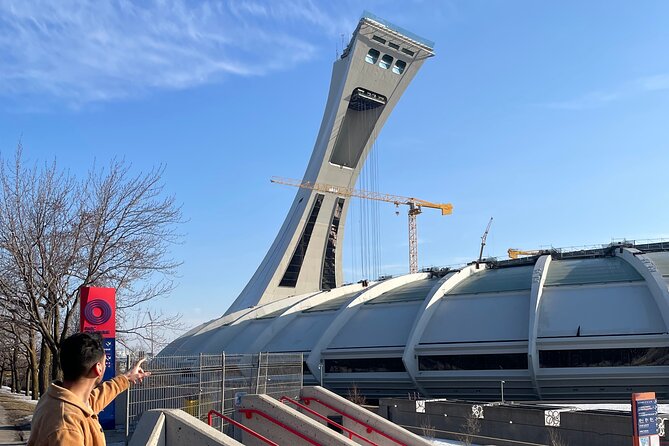
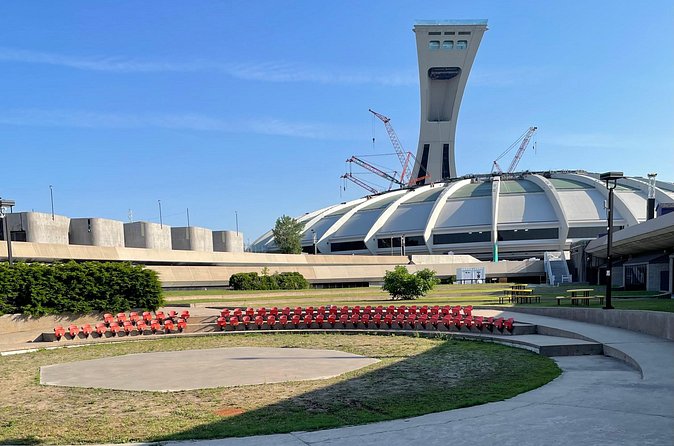
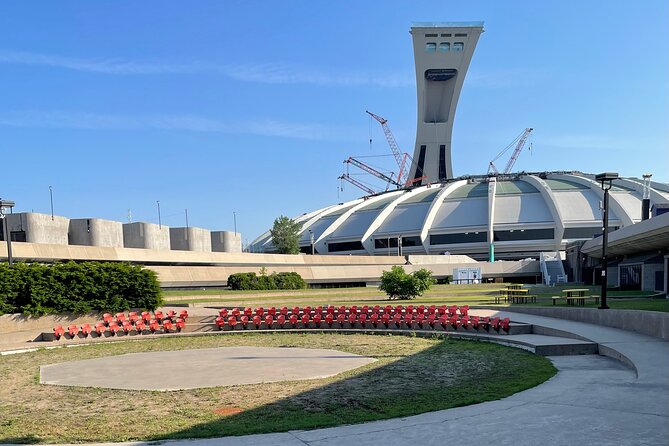
The Olympic Stadium is the visual centerpiece of the tour. From its base, the guide explains the bold design, the complex construction, and the structure’s lasting legacy. Even if you have seen photographs, the stadium makes a different impression when you are standing beneath it.
The building carries a long list of questions. How could a city deliver such an ambitious structure? Why did construction become so difficult? What happens to a stadium once the event it was built for is over? This part of the walk uses the building to address those issues.
I appreciate that the tour does not pretend the stadium is a simple success story. Its scale and design are impressive, but its construction and long-term cost have also shaped how Montrealers view it. That mix of ambition, engineering, expense, and public memory gives the stop more substance than a quick photo opportunity.
There is an important limit. The stadium interior is closed to this tour because significant renovations are underway. You should book this experience for the outside story, the architecture, and the Olympic setting, not for a guided look inside the stadium.
For many people, that will be a fair trade at $22.41. The fee is modest for a focused 90-minute experience, especially when admission and taxes are included. But if stepping inside the stadium is the main reason you want to visit Olympic Park, wait until access changes or choose another activity.
Nadia Comaneci Square and the sporting drama
The walk continues to Nadia Comaneci Square, where the guide turns to the performances that defined the Games. Nadia Comaneci is one of the names most closely tied to Montreal in 1976, and the square gives the sporting story a specific place.
This stop should work well even if you are not an expert in gymnastics. The point is not simply to list results. It is to recall why certain performances stay in public memory and how the Olympics can create moments that outlast the buildings.
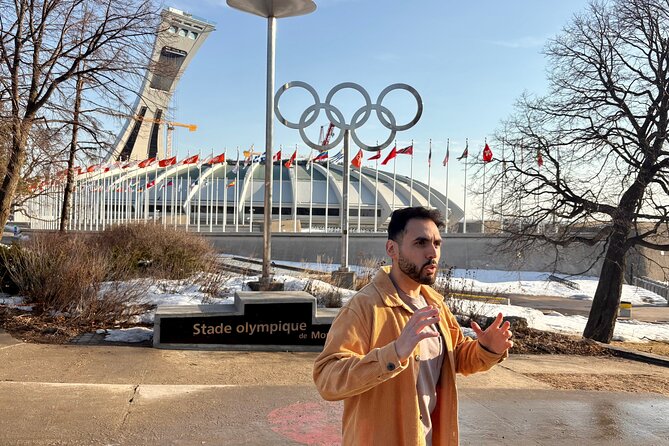
The guide’s strong interest in Olympic culture is especially useful here. Marc-Élie has been described as an Olympic enthusiast, and that enthusiasm shapes the tone of the walk. You can expect an energetic presentation with plenty of attention to the details that make the Games memorable.
The tour is offered in English. One available comment about the experience was automatically translated from another language, so some wording in the published material may not read perfectly. The practical point is simple: the activity itself is offered in English, and Marc-Élie is identified as the guide.
Same province, a completely different day out:
- Montreal Mile End Authentic Food Tour with 7 Delicacies Tastings
★ 5.0 · 2,598 reviews - Quebec City and Montmorency Falls Day Trip from Montreal
★ 4.0 · 2,437 reviews - The Original Old Montréal Walking Tour by Guidatour
★ 4.5 · 2,217 reviews - Old Montreal Small-Group Walking Tour | Max 10 | by MTL Detours
★ 5.0 · 2,088 reviews
Ending with the rings and a useful photo stop
The route finishes back in front of the Olympic rings, near where the experience began. This gives the walk a tidy shape and leaves you with one of the best-known Olympic symbols for photos.
That final stop is more useful than it may sound. You will have gathered several threads during the walk: the ancient and modern Games, Montreal’s bid, the political setting, the athletes’ village, the stadium’s construction, and the famous sporting performances. Returning to the rings gives you a simple visual marker for the whole story.
The listed end point is near Aréna Maurice-Richard at 2800 Rue Viau. The guide can escort you back toward the initial meeting point, take you to the nearest metro station, or point you toward your next activity. That flexibility matters because the stated ending is not exactly the same address as the start.
The meeting point is 2705 Boulevard Pie-IX. Plan to arrive with enough time to find it, particularly if you are unfamiliar with this part of Montreal. Since the tour uses several outdoor stops, sensible walking shoes and clothing suited to the weather will make the experience easier, though no special equipment is required.
What the $22.41 price really buys
At $22.41 per person, this is priced as an accessible introduction rather than a full museum program or private architectural study. You receive a guide-led visit, admission to the activity, and all fees and taxes in the reservation.
The strongest value comes from the interpretation. Olympic Park is easy to see on your own, but the meaning behind the cauldron, village, stadium, and square is less obvious. A guide turns a walk among large structures into a connected story about sport, politics, city planning, and public memory.
The small group cap also improves the value. With no more than 10 participants, the guide can keep the group together without making every stop feel like a large crowd scene. You have a better chance to hear the explanations clearly and ask a question when a detail catches your interest.
The price does not cover entry to the Olympic Stadium interior, and no separate indoor attraction is included. Keep that in mind when comparing it with other Montreal activities. This is a compact outdoor tour with a specialist guide, not a full day at Olympic Park.
The experience is booked, on average, 26 days ahead. That suggests you should reserve early if your Montreal dates are fixed, especially if you want a particular day. The tour has only a small number of places, so leaving it until the last minute may not work.
Who will enjoy this Olympic Park walk
I would recommend this tour to you if you enjoy architecture with a backstory, political history, or the cultural meaning of major sporting events. It also suits Olympic fans who want to connect famous names and moments with the real places where they unfolded.
Families may find the 90-minute length manageable, provided everyone is comfortable walking between outdoor stops. The subject matter can work for older children and teenagers who already have some interest in sport, city design, or unusual construction projects.
This is also a good choice for a first visit to Olympic Park. The route gives you orientation, a few strong photo stops, and enough historical background to make later independent exploring more rewarding.
I would hesitate to recommend it if you want a purely architectural tour, extensive time inside the stadium, or a broad overview of all Montreal attractions. The focus stays on the 1976 Olympics and the park’s key sites. That focus is the point, but it is not for everyone.
Most people can participate, and service animals are allowed. The tour operates near public transportation, which makes it practical to combine with other plans. Exact transit details are not provided, so check your route to Boulevard Pie-IX before setting out.
The practical details that shape the day
The experience lasts about one hour and 30 minutes. That is long enough for several stops without taking over your day, and it leaves room to visit another Montreal attraction afterward.
The tour starts at 2705 Boulevard Pie-IX and finishes at Aréna Maurice-Richard, 2800 Rue Viau. Because the guide may escort you back to the start, to the nearest metro station, or toward your next activity, you should ask at the beginning if you need to return to your original location.
The tour is offered in English and uses a mobile ticket. Confirmation arrives when you book. The maximum group size is 10, which is worth noting if you prefer a more personal walk than a large scheduled group.
Free cancellation is available if you cancel at least 24 hours before the start time. Cancelling later means you will not receive a refund, and changes made inside that 24-hour window are not accepted. The cut-off follows Montreal local time, so keep that in mind if you are booking from another time zone.
The most important planning note remains the stadium renovation. You will be outside for the stadium portion, and there is no interior visit included. If weather is poor, the outdoor nature of the experience may also affect your enjoyment, so check the forecast and dress accordingly.
Should you book MTL76?
Book this tour if you want a concise, affordable way to understand why Montreal’s Olympic Park matters. The best reasons are the focused route, the small group size, and Marc-Élie’s clear passion for Olympic culture. The walk gives you more than a set of famous buildings, while still leaving plenty of time in your Montreal schedule.
Think twice if your priority is entering the Olympic Stadium. That is not possible during the current renovations, and the tour cannot substitute for an indoor stadium visit.
For $22.41, I see this as a good-value choice for Olympic fans, history-minded visitors, and anyone curious about the cost and consequences of hosting the Games. You finish with a better sense of Montreal’s ambitions in 1976, the personalities behind them, and the structures that still define the park today.
FAQ
Where does the Montreal Olympic Games tour start?
The tour starts at 2705 Boulevard Pie-IX, Montréal, Quebec H1V 2E8, Canada.
Where does the tour finish?
The listed end point is Aréna Maurice-Richard at 2800 Rue Viau, Montréal, Quebec H1V 3V4, Canada.
How long does the tour last?
The experience lasts approximately one hour and 30 minutes.
Is the Olympic Stadium interior included?
No. The Olympic Stadium is undergoing significant renovations, so the tour does not enter the building.
What language is the tour offered in?
The tour is offered in English.
How many people can join the tour?
The activity has a maximum of 10 participants.
Is public transportation available near the tour?
Yes. The tour takes place near public transportation, and the guide can direct you to the nearest metro station at the end.
Can I cancel for a full refund?
Yes. You can cancel for a full refund up to 24 hours before the experience begins. Cancellations or changes made less than 24 hours before the start time are not accepted for a refund.
Just added around Montreal
- Montréal Downtown and Underground City Private Walking Tour★ 5.0 · 47 reviews
- Winter Express: Old Montreal Highlights Walking Tour★ 5.0 · 119 reviews
- Full Day Family Bike Rental★ 5.0 · 17 reviews
- Under the Surface of Montreal’s Chinatown: Guided Food Walking Tour★ 5.0 · 23 reviews
- Montreal Premium Driving Tour with River Cruise and Notre Dame★ 4.5 · 164 reviews
- The Ultimate Montreal Boat Tour – Fall Colors Apéro Edition★ 4.5 · 31 reviews
- Day at Mont-Tremblant National Park★ 4.0 · 5 reviews
- In the Shadow of the Mountain: Montreal Jewish History Walking Tour★ 4.5 · 33 reviews
Montreal Tours, compared.

Montreal Mile End Authentic Food Tour with 7 Delicacies Tastings
Read our review →
Quebec City and Montmorency Falls Day Trip from Montreal
Read our review →
The Original Old Montréal Walking Tour by Guidatour
Read our review →
Old Montreal Small-Group Walking Tour | Max 10 | by MTL Detours
Read our review →
Montreal City Sightseeing Tour with Live Commentary
Read our review →Browse the lists this tour appears in