
Reviewed · CANADA
Ice Climbing Initiation in Mont-Tremblant
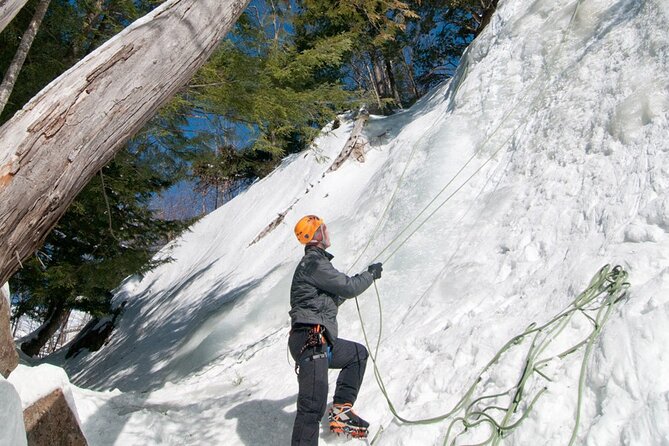
The best part of this Mont-Tremblant outing is simple: you get several turns on a real 70-foot natural ice cliff, not a quick photo stop beside a wall. A certified instructor teaches safety, climbing technique, and belaying before you head up the ice.
I like the careful safety briefing and the chance to improve with each climb. I also like the small maximum group of nine, which gives the guide room to work with beginners. The catch is the walk from the Activity Centre to the cliff, including some uphill sections, so this is not a gentle stroll in resort shoes.
In This Review
- Key points to know before you book
- Your first stop at the Tremblant Activity Centre
- The uphill walk to the 70-foot cliff
- Learning safety, technique, and belaying
- Several climbs, not just one attempt
- What the $90.53 price includes
- Group size, age rules, and physical demands
- Clothing and boot advice that can save the day
- How this compares with ordinary resort activities
- Who will get the most from this experience
- Should you book the Mont-Tremblant ice-climbing initiation?
- FAQ
- Where does the ice-climbing activity begin?
- How long does the ice-climbing lesson last?
- Are ski boots included?
- What equipment is provided?
- What is the minimum age?
- Can I cancel or change my booking?
Key points to know before you book
- You climb a natural 70-foot ice wall several times during the two-to-three-hour lesson.
- A certified instructor covers safety, technique, and belaying, making this suitable for first-time climbers.
- All climbing equipment is provided except ski boots, which you must bring yourself.
- The approach includes an uphill walk through the ski resort, so wear regular boots for the walk and change into ski boots at the cliff.
- The group is limited to nine people, with a minimum of two participants.
- Children age 8 and older can participate, but anyone under 12 needs an adult present for the full activity.
Your first stop at the Tremblant Activity Centre
You begin at Le Centre d’Activités Mont-Tremblant, at 118 Chemin de Kandahar near the foot of the resort slopes. This is where you meet the guide, complete the release form, and sort out the equipment before setting off.
The listed activity time covers roughly three hours, but the opening portion includes paperwork, fitting gear, and preparing the group. The practical timing is important: the group meets at 12:45, then departs for the cliff around 1 p.m. An earlier schedule caused confusion for one participant, so check the current meeting time on your confirmation and arrive ready for the administrative start.
You receive a harness, helmet, and ice axes. The guide also supplies the rest of the climbing equipment, with one important exception: you must bring your own ski boots. This is not a minor packing note. Your boots need to work with the climbing equipment, and the activity provider specifically tells you to bring alpine ski boots.
For the walk to the cliff, bring regular boots if you have them. You can change into your ski boots at the climbing site. This makes the approach more comfortable and avoids trudging uphill in stiff ski footwear.
Other Canada days worth putting on the list:
- Vancouver Half-Day Whale Watching Adventure with Free Photos
★ 5.0 · 5,000 reviews - Quebec City Walking Tour
★ 5.0 · 4,716 reviews - Niagara Falls: Premium Tour, Boat & Journey Behind the Falls
★ 4.8 · 4,207 reviews
The uphill walk to the 70-foot cliff
The cliff is close enough to reach on foot from the Activity Centre, but the route is not completely flat. You walk through the resort and up toward the natural ice wall, with some uphill sections along the way.
That approach adds a little work before the climbing begins. You should have a moderate level of physical fitness and be comfortable walking in winter conditions while carrying or wearing your gear. One practical clothing warning is easy to miss: crampons can tear snow pants, so wear an older pair rather than your best ski outfit.
The walk also helps explain why this feels like more than a standard resort activity. You start at a busy ski base, then move toward a natural cliff face where the lesson takes place. It is still convenient, but the climbing setting has a more rugged feel than an indoor wall.
Learning safety, technique, and belaying
At the cliff, the certified instructor explains how to use the ice axes and how to place your feet on the ice. You also learn the safety rules before making a serious attempt at the wall.
The lesson covers belaying, too. That means you are not only learning how to climb, but also how climbers support and protect one another. The instruction matters for beginners because ice climbing looks straightforward from the ground, yet body position, foot placement, and controlled movement all affect how tiring the climb becomes.
The guide keeps safety at the center of the session. That is reassuring, especially for families and first-time climbers who may arrive excited but unsure how demanding the activity will feel. The tone is not described as stiff or overly formal. Guides have room to keep the lesson light while still enforcing the rules.
Lilly is one guide specifically praised for making the experience enjoyable and well run. The instructor’s personality can shape a group activity, and the available feedback points to a friendly approach alongside firm safety standards.
Several climbs, not just one attempt
The lesson lasts about two to three hours, and you climb the ice cliff several times. That repeated practice is the main value of the experience.
Your first attempt is about getting used to the equipment and finding a workable rhythm. Later climbs give you a chance to correct your footwork, improve your use of the axes, and feel less awkward on the wall. You do not need to arrive knowing how to ice climb. The whole point is to learn the basics under supervision.
The physical challenge is real, but it is not presented as an extreme expedition. Several participants in their 50s completed the activity and enjoyed it, which suggests that age alone is not the main issue. Your comfort with cold-weather walking, basic fitness, and willingness to follow instructions matter more.
The climb can also become playful once everyone understands the basic skills. One group even timed the guide’s ascent and tried to beat it. That sort of friendly competition is not guaranteed, but it shows how the lesson can shift from nerves to fun once you are comfortable on the wall.
Same province, a completely different day out:
- Banff: Banff Gondola Admission Ticket
★ 4.7 · 3,698 reviews - Toronto: Niagara Falls Day Tour with Optional Boat Cruise
★ 4.6 · 3,178 reviews - Best of Niagara Falls Canada Premium Tour: Behind Falls and Boat
★ 5.0 · 3,139 reviews - Montreal: Guided Bus Tour
★ 4.4 · 3,064 reviews
What the $90.53 price includes
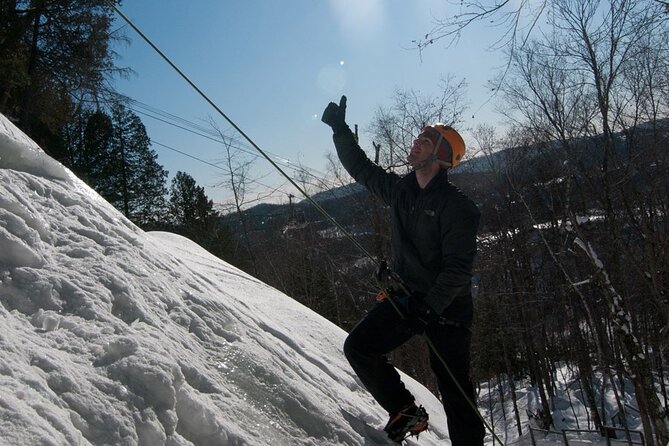
At $90.53 per person, this is a reasonable price for a guided introduction if you want a real outdoor ice-climbing lesson rather than a short equipment demonstration.
The fee includes the climbing equipment and a certified guide. You do not have to purchase or transport the harness, helmet, or ice axes. The price also covers instruction and access to several climbing attempts during the session.
The value depends on how much you want to learn. If your goal is simply to take a quick winter photo, this is probably more time and effort than you need. If you want an introduction that includes safety instruction, belaying, and repeated climbs, the three-hour format gives you much more than a one-shot activity.
Remember to budget for the equipment you must provide yourself. Ski boots are not included, and the provider does not suggest that regular winter boots can replace them for the climbing portion. This requirement may be easy for skiers staying in Mont-Tremblant, but it is a bigger consideration if you are visiting without ski gear.
The activity is often reserved about 21 days ahead. That does not guarantee that every date sells out, but it is a useful planning signal. If ice climbing is a priority during your stay, booking early is sensible.
Group size, age rules, and physical demands
The group has a maximum of nine participants, with at least two required for the activity to operate. Nine is still a group, but it is small enough for an instructor to keep track of climbers and offer individual corrections.
Children must be at least 8 years old. Anyone under 12 must have an adult remain present for the entire activity. The adult does not have to climb, but cannot simply drop off a young participant and leave.
The maximum participant weight is 250 pounds, or 113 kilograms. The listed equipment fits a waist of 23 to 42 inches, or 58 to 107 centimeters, and a thigh circumference of 17 to 28 inches, or 43 to 71 centimeters. Check these limits before booking so you do not arrive to discover that the harness will not fit safely.
Pregnant women cannot participate. The activity also calls for moderate physical fitness, mainly because of the approach to the cliff and the repeated climbing. You do not need to be an expert athlete, but you should be able to walk uphill in winter conditions and manage a physically active lesson.
Service animals are allowed, and the meeting point is near public transportation. The activity is offered in English, and you receive a mobile ticket.
Clothing and boot advice that can save the day
The most useful packing advice is to bring two types of footwear:
- Regular boots for the walk from the Activity Centre to the cliff
- Alpine ski boots for the actual ice-climbing session
Changing footwear at the cliff may sound like a small detail, but it can make the approach much easier. Ski boots are stiff and designed for skiing, not for walking uphill through a resort.
Wear old snow pants. Crampons, the metal points attached to your footwear, can catch and tear fabric. You should also dress for a cold outdoor activity, though the supplied information does not specify a full clothing list. The safest approach is to use practical winter layers and clothing you do not mind scraping against the ice or gear.
Your helmet, harness, and ice axes are provided. You should still arrive with your personal winter clothing and the required boots, since those are not part of the equipment package.
How this compares with ordinary resort activities
Mont-Tremblant offers plenty of ways to spend a winter day, but ice climbing gives you a different kind of connection with the setting. You are not simply riding a lift or watching the slopes. You walk to a natural cliff, learn a specialized skill, and use your own body to move up the ice.
That makes the activity a good choice for a repeat visitor who wants something beyond skiing. It also suits a family looking for a shared challenge, provided everyone meets the age and fitness requirements.
The experience is active and social, but it is not private. If you want a quiet, custom-paced lesson, a maximum group of nine may feel less personal than a private guide. On the other hand, a group can make the session more entertaining, especially once people begin comparing techniques or cheering one another on.
The short duration is another advantage. You can fit the lesson into a larger Mont-Tremblant visit without giving up a full day. Still, the prep time and uphill walk mean you should not schedule another activity immediately afterward unless you leave plenty of room.
Who will get the most from this experience
I would recommend this outing to you if you want a first taste of ice climbing, enjoy active winter activities, and like learning by doing. It is especially appealing if you are already comfortable around ski equipment and can bring alpine ski boots without extra trouble.
Families can consider it for children 8 and older, but parents of younger children need to remain on site. The activity also works for adults who are not expert climbers. The lesson is built around instruction, and the repeated climbs let you improve instead of being judged on a single attempt.
You may want to skip it if you dislike cold-weather exertion, have difficulty walking uphill, or are looking for a relaxed sightseeing stop. The cliff approach and climbing session require effort, and the provider gives no option to join without the physical activity.
The fixed, non-refundable booking rule also calls for care. Once booked, the amount cannot be refunded or changed for any reason. Only reserve when your plans and physical ability are clear.
Should you book the Mont-Tremblant ice-climbing initiation?
Book it if you want a genuine beginner lesson with a certified guide, full climbing equipment, and several chances to climb a natural 70-foot wall. The strong points are the safety focus, the small group limit, and the chance to learn both climbing and belaying instead of simply being pulled up for a novelty photo.
Before paying, confirm four things: you can meet the fitness requirements, your clothing can handle crampons, you have suitable ski boots, and your schedule is firm. The uphill approach is the main physical nuisance, while the missing ski boots are the main practical one.
For an active Mont-Tremblant visit, $90.53 buys a memorable three-hour challenge and a skill you are unlikely to practice at home. If you want a low-effort winter activity, choose something else. If you want to try something unusual with a careful instructor and enough time to improve, this is a smart booking.
FAQ
Where does the ice-climbing activity begin?
You meet at Le Centre d’Activités Mont-Tremblant, 118 Chemin de Kandahar, Mont-Tremblant, Quebec J8E 1T1, Canada. The activity also ends back at this meeting point.
How long does the ice-climbing lesson last?
The full activity takes about three hours. The climbing lesson itself lasts about two to three hours, with time at the start for paperwork, equipment, and preparation.
Are ski boots included?
No. You must bring your own alpine ski boots for the climbing portion. Regular boots are useful for the walk from the Activity Centre to the cliff.
What equipment is provided?
The provider supplies the climbing equipment, including a harness, helmet, and ice axes, along with a certified guide. Ski boots are not included.
What is the minimum age?
Participants must be at least 8 years old. Children under 12 must have an adult remain present during the entire activity, although that adult does not have to participate.
Can I cancel or change my booking?
No. The activity is non-refundable and cannot be changed for any reason. If you cancel or request an amendment, the amount paid is not refunded.
Just added around Canada
- Whistler Development Ski Rental Package★ 5.0 · 48 reviews
- Whistler Sky Walk★ 4.5 · 13 reviews
- Whistler Premium Ski Rental Package★ 5.0 · 55 reviews
- Whistler Half-Day Mountain Bike Tour★ 5.0 · 21 reviews
- Whistler Intro to Backcountry Skiing and Splitboarding★ 5.0 · 23 reviews
- Whistler Distillery Tour & Tasting Experience★ 5.0 · 45 reviews
- Guided Fishing Adventure in Whistler★ 5.0 · 103 reviews
- Whistler Helicopter Tour + Mountain Landing★ 5.0 · 74 reviews