
Reviewed · WALKING & GHOST TOURS
Quebec City Walking Tour
Old Québec makes sense once you understand how its Upper Town and Lower Town fit together. This two-hour walk gives you that basic map, taking you downhill from the tourist office near Château Frontenac to Place Royale and Petit-Champlain. Along the way, your guide connects stone walls, churches, military sites, and city squares to Québec’s story from 1608 to the present.
I like the small maximum of 15 people, which makes it easier to hear a guide outdoors and ask questions. I also like the route itself: you get grand views from Terrasse Dufferin, then finish among the intimate streets of Lower Town. The main drawback is weather. The tour runs in rain, snow, and bitter cold, and a very cold day can make two hours outside feel longer than expected.
In This Review
- Key points to know before you book
- Why this walk is a smart first look at Québec City
- Starting beside Château Frontenac
- Terrasse Dufferin and the city below
- The Ursulines and Québec’s religious past
- Cathedral courtyards and the civic center
- Seminary courtyards and older Québec
- The fortifications and the Citadelle
- Place Royale and the origins of French America
- Petit-Champlain and the useful finish
- What the guides do best
- Cold weather, pacing, and practical comfort
- Who will get the most from this tour
- Should you book the Québec City Walking Tour?
- FAQ
- How long is the Québec City Walking Tour?
- Where does the tour begin?
- Where does the tour end?
- Is the tour offered in English?
- How large is the group?
- Does the tour include hotel pickup?
- Does the tour operate in bad weather?
- What happens if the tour is canceled because too few people book?
Key points to know before you book
- The route is downhill: You begin in Upper Town and finish near the Old Québec Funicular in Petit-Champlain.
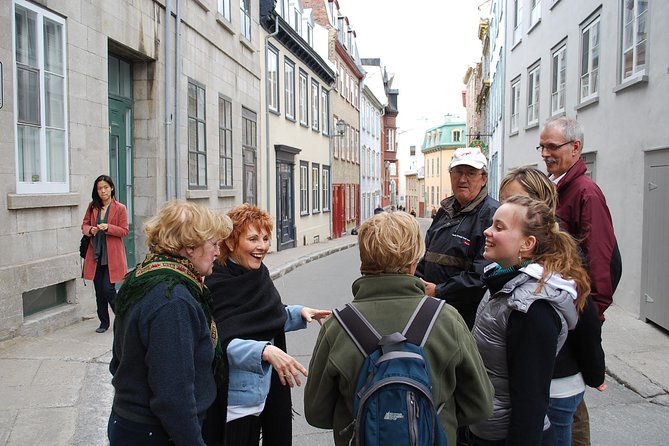
- The group is capped at 15: That is small enough for a more personal walk and clear commentary.
- The focus is history: Expect stories about French Canada, British rule, military defense, religion, architecture, and modern Québec.
- The finish is useful: The tour ends near Petit-Champlain, a good place to continue exploring or stop for food.
- Winter demands serious clothing: Warm boots, gloves, and layers matter, especially in January and February.
- Guides add practical help: Mark, Louise, Robert, Christian, Stefan, Francis, and Philippe are among the guides praised for humor, local pride, and helpful restaurant suggestions.
Why this walk is a smart first look at Québec City
At $30.29 per person, this is a fair price for a licensed, two-hour introduction to one of North America’s most historic city centers. You are paying for more than a stroll past pretty façades. A good guide explains why Québec was built where it was, why the walls mattered, and how religion, trade, warfare, and language shaped the city.
I would schedule this near the beginning of your stay. The route gives you a useful orientation, and guides often share ideas for restaurants and other activities. One guide, Louise, is especially noted for offering food and sightseeing suggestions, while Robert and Christian are praised for putting modern Québec culture into historical context.
The walk also helps you decide where to spend more time later. You may return to the fortifications, visit a church, ride the funicular, or linger in Place Royale after you know what you are looking at. That makes this a better value than a simple sightseeing circuit with no explanation.
This is not a museum-heavy tour, and it does not include hotel pickup. It is an outdoor walking experience with several brief stops, so you should choose it for context and orientation rather than for long indoor visits.
More Walking & Ghost Tours in Quebec City
- Old Quebec City: Grand Walking Tour with Private Option
★ 4.8 · 2,609 reviews - Old Quebec Classique Walking Tour with Funicular
★ 5.0 · 1,317 reviews - Old Quebec City Food Tour with 10+ Autentic Local Tastings
★ 5.0 · 1,288 reviews
Starting beside Château Frontenac
Meet at the Tours Voir Québec sales desk inside the Québec Tourist Information Centre at 12 Rue Sainte-Anne. It is across the park from the highly visible Château Frontenac, so the meeting area is easy to locate in central Old Québec.
The walk begins near the Monument Samuel de Champlain, a tall memorial to Québec City’s founder. This is a fitting opening because the entire tour keeps returning to the city’s origins, its role as the capital of French Canada, and the changes that followed over four centuries.
The first part takes place in Upper Town, where broad terraces, formal squares, religious institutions, and government buildings give the district a grand feel. You will want comfortable shoes, but the route’s downhill direction helps. The walk still requires a moderate level of fitness, and winter ice or snow may make footing less certain.
Terrasse Dufferin and the city below
Terrasse Dufferin is one of the walk’s best early stops. This broad promenade runs beside Château Frontenac and offers an open view toward the St. Lawrence River and the city below. Your guide explains what you are seeing rather than leaving you to guess at the skyline.
The setting also gives you a quick lesson in Québec’s geography. Upper Town sits high above Lower Town, which explains both the defensive strength of the old city and the steep streets connecting its districts. The route later descends toward Petit-Champlain, so this viewpoint helps you understand the physical shape of the walk.
Château Frontenac is a major visual landmark, but the tour is not centered only on the famous hotel. That is a plus. You get the photograph and the setting, then move into older religious, civic, and military stories that reveal more of the city’s character.
The Ursulines and Québec’s religious past
The route passes the Pôle culturel du Monastère des Ursulines. The Ursuline Sisters have been part of Québec City since 1639, making their presence a direct link to the early French settlement.
If the chapel is open, the tour may include a visit inside. That qualification matters. You should not book this walk expecting a guaranteed interior visit, but the possibility adds welcome variety to a route that is mainly outdoors.
This stop also broadens the story beyond battles and founders. Québec’s religious orders helped shape education, community life, and the city’s built form. A guide can make a short stop here feel useful by explaining how the monastery fit into daily life, not just pointing out an old wall.
Same province, a completely different day out:
- Quebec City: Guided Tour of Fairmont Le Château Frontenac
★ 4.7 · 3,027 reviews - Québec City: Guided Sightseeing River Cruise
★ 4.4 · 3,000 reviews - Half-Day Trip to Montmorency Falls and Ste-Anne-de-Beaupré from Quebec city
★ 4.0 · 2,718 reviews - Quebec City: Montmorency Falls with Cable Car Ride
★ 4.6 · 2,392 reviews
Cathedral courtyards and the civic center
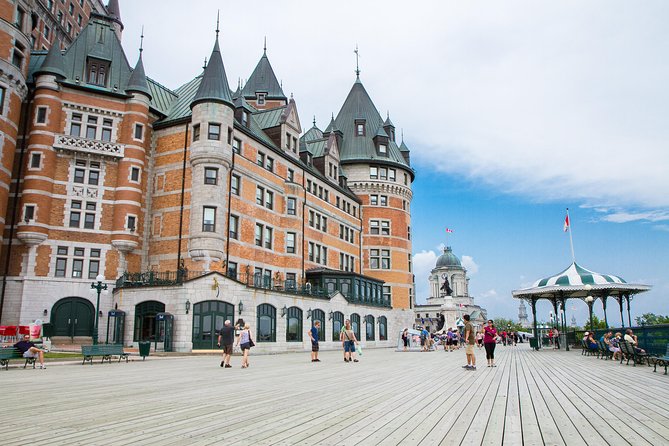
A visit to the courtyard of the Cathedral of the Holy Trinity adds another layer to Old Québec’s history. It was the first Anglican cathedral built outside the British Isles, an important reminder that Québec’s story includes both French and British influences.
The tour then moves toward Québec City Hall and the surrounding square. Here, the focus shifts to civic power and public life. Your guide presents the major landmarks in the area and helps connect the buildings to the city’s role as a provincial capital.
The stops are short, often about five minutes. That keeps the walk moving, but it also means you should expect an overview rather than a detailed architectural study. If you want extended time inside churches or government buildings, plan separate visits after the tour.
Seminary courtyards and older Québec
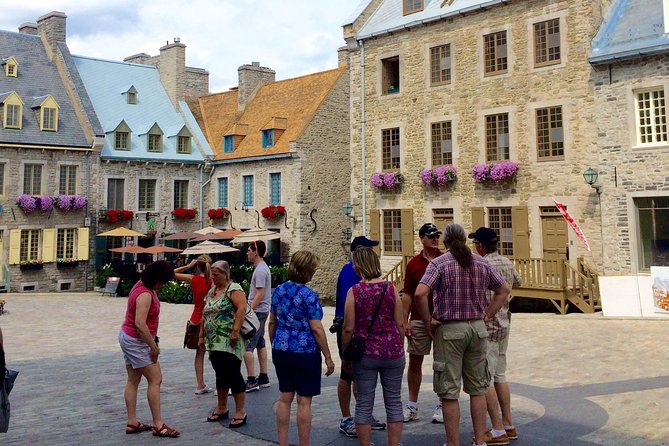
The tour enters the impressive courtyard of the Séminaire de Québec. The space can feel like a step back into the 18th century, with old masonry and a quieter mood than the main tourist streets.
This is one of the places where a guide adds real value. Without context, a courtyard can look like another attractive corner of Old Québec. With an explanation of the seminary’s role, you gain a clearer sense of how education and religious authority helped organize the early city.
The walk also includes the Basilica Notre-Dame in the broader Old Town sightseeing portion. Exact time at individual buildings can vary because the tour moves as a group, so think of the experience as a guided introduction. You will see key places and hear their stories, then choose which ones deserve a closer look.
The fortifications and the Citadelle
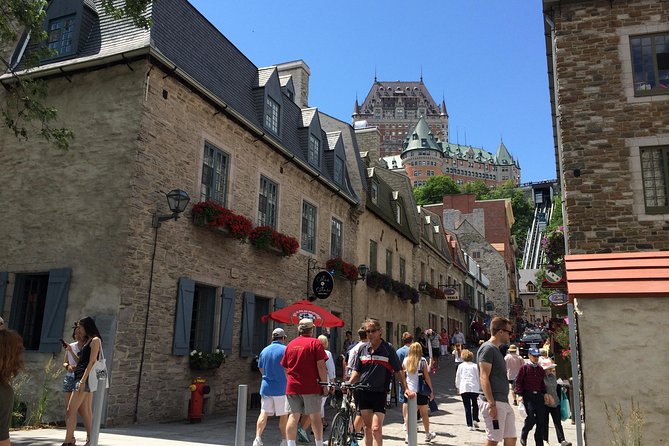
Québec City is the only walled city north of Mexico, and its fortifications are central to the tour’s value. Your guide explains how the walls formed part of a defense system and why Québec’s location made it important to control movement along the St. Lawrence River.
The fortifications are not just decorative remnants. They show how military planning shaped streets, gates, viewpoints, and the division between Upper and Lower Town. This is also where the city’s history becomes easier to picture. You can see why height mattered and why the settlement developed as a fortress rather than as an ordinary river port.
The Citadelle of Québec is another major subject. It remains an active military installation and serves as an official residence of the Canadian monarch and the Governor General of Canada. The walk gives you useful background on its purpose and status, though the supplied route does not promise a full interior visit or a separate admission to the Citadelle.
That distinction is important for planning. If the Citadelle is a top priority, you may need a separate visit designed around it. This walking tour provides context from the outside and places the military site within the larger story of Québec.
Place Royale and the origins of French America
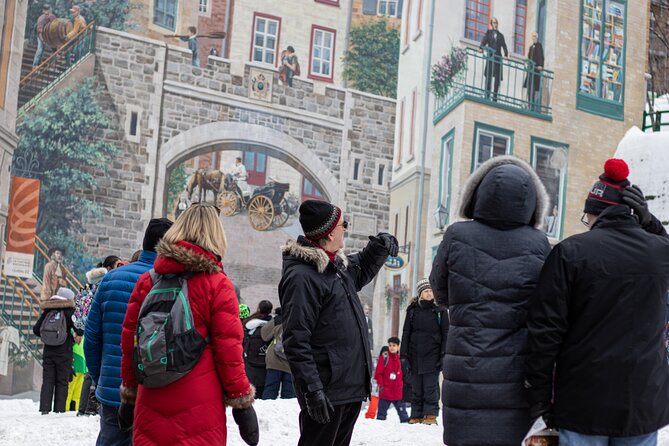
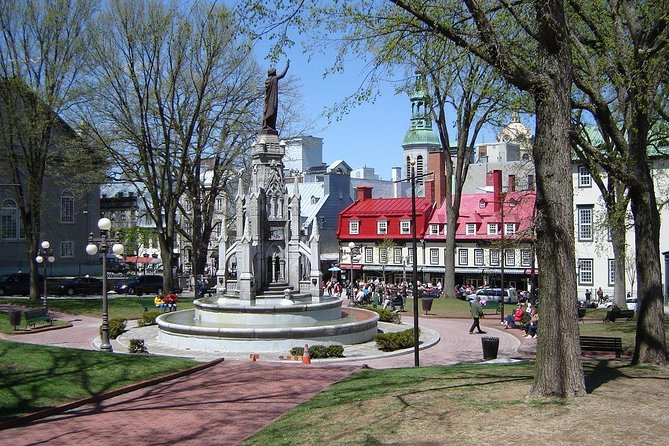
Place Royale is one of the most meaningful stops on the Lower Town portion. It is often described as the birthplace of French America, and the square gives you a strong sense of Québec’s early commercial and civic life.
The space feels different from the grand scale of Terrasse Dufferin. Here, stone buildings frame a smaller public square, and the older streets make the city feel more intimate. The guide explains how the area developed and how daily life took shape around trade, worship, and river access.
Notre-Dame-des-Victoires Church is nearby and is one of the oldest stone churches in Canada. It occupies the site associated with the beginning of Québec. The tour identifies the church and explains its importance, but you should allow extra time later if you want to go inside at length.
Petit-Champlain and the useful finish
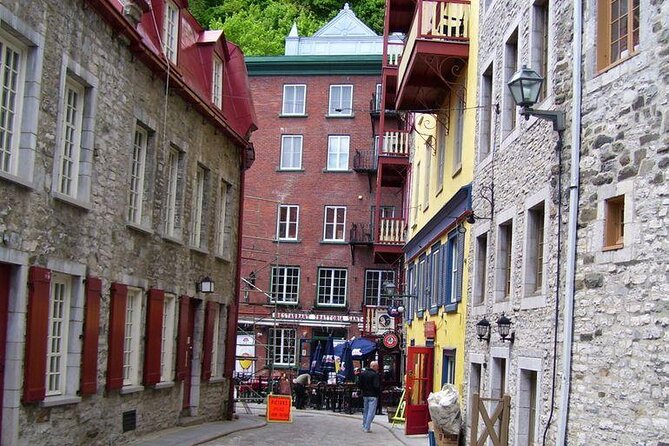
The final stretch leads through the Quartier Petit-Champlain and along Petit-Champlain Street. This is one of the most attractive parts of Old Québec, with narrow lanes, stone façades, shops, and a more intimate scale than Upper Town.
Ending here is practical. The tour finishes near the Old Québec Funicular at 16 Rue du Petit Champlain, giving you an easy point from which to continue exploring Lower Town. You can also use the funicular to return uphill, although the ride itself is not included in the tour.
The finish works well for different kinds of visitors. You may want to browse, find a meal, take photographs, or continue toward the waterfront. If your legs are tired, the nearby funicular offers a useful alternative to climbing back up the steep streets.
What the guides do best
The strongest part of this experience is the quality of the guiding. Mark is repeatedly praised for his command of Québec history, humor, and willingness to answer questions after the scheduled end. Robert is noted for enthusiasm, local recommendations, and adjusting the route to include indoor moments during severe cold.
Christian is praised for explaining how past events shaped present-day culture. Louise combines local knowledge with restaurant and activity suggestions. Stefan, Francis, Philippe, and other guides are also described as warm, energetic, funny, and proud of their city.
Guides must complete training and pass exams to receive a Québec City license. That does not mean every guide will have the same style, but it does explain why the commentary tends to go beyond basic dates and names. The best guides make architecture, politics, religion, and military history feel connected to ordinary life.
The group size helps here. With no more than 15 people, your guide can project clearly, keep the group together, and respond to questions. One important caution: stay close during transitions. A separated couple once missed four stops after losing contact with the group, so do not drift behind while taking photographs.
Cold weather, pacing, and practical comfort
The company operates in all weather, and winter conditions are the main factor that can change your enjoyment. Several tours have taken place around 10 to 12 degrees Fahrenheit, with some guides adding indoor stops or moving the group along to help people warm up.
Dress for standing outside, not just walking between buildings. Insulated boots, a warm coat, gloves, and head coverage are sensible in winter. Hand and toe warmers are available for purchase at the check-in desk, but proper clothing should be your first plan.
The pace is generally relaxed, and the downhill route is helpful. Still, two hours on old streets can be tiring, especially in snow or ice. In spring, summer, and fall, the same route should feel easier and allow you to focus more fully on the stories.
The tour is offered in English and uses a mobile ticket. Confirmation arrives when you book, and the meeting point is near public transportation. Hotel pickup and drop-off are not included, so you need to reach the tourist information centre yourself.
Who will get the most from this tour
I would recommend this walk to first-time visitors, history fans, couples, families with older children, and anyone who wants a clear introduction before exploring alone. It is also useful for people staying only a short time because it covers both Upper and Lower Town in two hours.
You will get the most from it if you enjoy stories, architecture, and historical context. The tour is heavy on history, so it may feel less suitable if you want mostly shopping, photography, or long visits inside attractions.
The route also suits visitors who value local advice. Guides may suggest restaurants and other activities, which can help you plan the rest of your stay. If you have four days or less in Québec City, this early orientation can save time and help you make better choices.
Free cancellation is available up to 24 hours before the start time. Cancellations within 24 hours are not refunded, and the tour requires a minimum number of participants. If that minimum is not met, you are offered another option or a full refund.
Should you book the Québec City Walking Tour?
Yes, if you want a compact, well-priced introduction to Old Québec with a strong emphasis on history. The route covers the city’s key districts, includes major views and squares, and finishes in Petit-Champlain, where you can keep exploring on your own.
Book it early in your stay, and choose a milder season if you dislike cold weather. In winter, book only if you are ready for serious outdoor conditions. For most visitors, the combination of a small group, licensed guides, downhill routing, and useful local advice makes this a practical first step into Québec City.
FAQ
How long is the Québec City Walking Tour?
The guided walking tour lasts approximately two hours.
Where does the tour begin?
It begins at the Tours Voir Québec sales desk inside the Québec Tourist Information Centre at 12 Rue Sainte-Anne, across the park from Château Frontenac.
Where does the tour end?
The tour ends near the Old Québec Funicular at 16 Rue du Petit Champlain in the Quartier Petit-Champlain.
Is the tour offered in English?
Yes. The experience is offered in English.
How large is the group?
The maximum group size is 15 people.
Does the tour include hotel pickup?
No. Hotel pickup and drop-off are not included.
Does the tour operate in bad weather?
Yes. It operates in all weather conditions, so you should dress appropriately for rain, snow, or cold.
What happens if the tour is canceled because too few people book?
You will be offered an alternative date or experience, or you can receive a full refund.
More Walking Tours in Quebec City
- Quebec: Crimes of New France Animated Walking Tour
★ 4.6 · 926 reviews - Quebec City: Old Quebec Classic Walking Tour with Funicular
★ 4.9 · 695 reviews - Uncover Old Quebec: Fun Walking Tour of the City with Local Guide
★ 5.0 · 667 reviews - Private Tour: Quebec City Walking Tour
★ 5.0 · 596 reviews
Just added around Quebec City
- Kingston: Skippered Sailing Charter★ 4.7 · 4 reviews
- Quebec: Private custom tour with a local guide★ 4.9 · 4 reviews
- Quebec Interactive Street Theatre: “Crimes in New France”★ 4.6 · 175 reviews
- Quebec : Old Town Walking Tour With A Local Guide★ 4.5 · 38 reviews
- Québec: Fortifications-of-Québec Guided Walking Tour★ 4.7 · 60 reviews
- Quebec: Christmas Interactive Walking Tour of New France★ 4.3 · 7 reviews
- Quebec: Cuivres A. Gilles – (Free Entry) Fee for Workshop★ 4.8 · 19 reviews
- Québec City: Weekend River Brunch Cruise★ 4.5 · 116 reviews
Walking & Ghost Tours, compared.
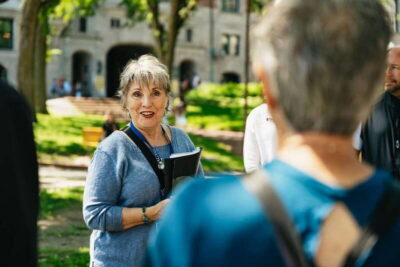
Old Quebec City: Grand Walking Tour with Private Option
Read our review →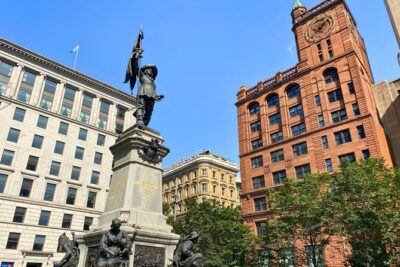
The Original Old Montréal Walking Tour by Guidatour
Read our review →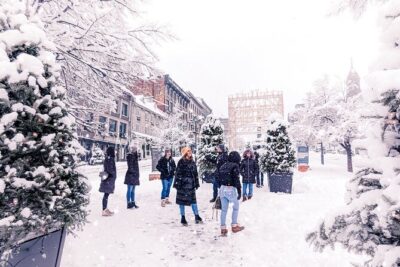
Old Montreal Small-Group Walking Tour | Max 10 | by MTL Detours
Read our review →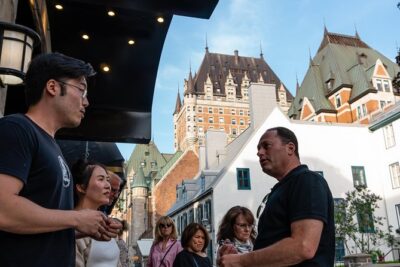
Old Quebec Classique Walking Tour with Funicular
Read our review →
Old Quebec City Food Tour with 10+ Autentic Local Tastings
Read our review →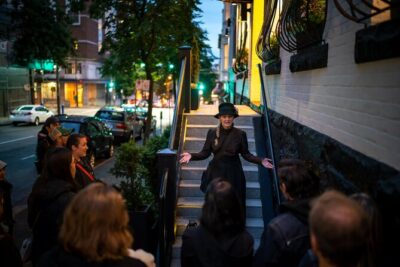

Browse the lists this tour appears in