
Reviewed · CANADA
Intro Survival Course Rockies
At 9:30 a.m., you meet your instructor at HI Nordegg Shunda Creek Wilderness Hostel, then drive about 40 kilometers into the Rocky Mountains to Kootenay Plains near Abraham Lake. The real appeal is practical training: you build fires, make shelters, practice knots, and learn how to think clearly when a backcountry trip goes wrong.
I like the private format, which lets the course adjust to your group rather than forcing everyone through a fixed script. I also like that the required course gear, meals, and one night of camping are included, so you can focus on learning instead of assembling a pile of equipment.
The main caution is that transportation to and from the program is not included, and the camping is part of the lesson. You may sleep in a shelter you help build, not in a comfortable lodge room. The course also requires at least four people per booking.
In This Review
- Key points to know before booking
- What this Rocky Mountain survival course really teaches
- Starting at Nordegg and heading toward Kootenay Plains
- Day one near Abraham Lake: safety before survival tricks
- Sleeping outside and putting the lessons to work
- Day two: morning practice at Abraham Lake
- Cline River hike: navigation, plants, and optional advanced skills
- What the $205.56 price includes
- Who will get the most from this experience
- Should you book the two-day Rocky Mountain course?
- FAQ
- Where does the survival course begin?
- How long does the course last?
- Where does the training take place?
- Is transportation included?
- What equipment is provided?
- Are meals included?
- Can children take part?
- Is the course private?
- What happens if bad weather cancels the course?
Key points to know before booking
- Build and use a survival shelter: You may spend the night in a shelter created during the first day’s training.
- Train near Abraham Lake: The course moves into Kootenay Plains and the Rocky Mountains, with a second-day hike near Cline River.
- Private and adaptable: Only your own group takes part, and the course can be shaped around your needs.
- Meals and gear are included: Camping equipment, tents, hatchets, knives, compasses, GPS units, and course meals are provided.
- Beginner-friendly instruction: The program focuses on useful bushcraft and backcountry skills rather than extreme stunts.
- Plan ahead: The experience is often booked about 103 days in advance, and poor weather can lead to a new date or refund.
What this Rocky Mountain survival course really teaches
This is not a television-style survival challenge. It is an introduction to the basic skills that can make an outdoor trip safer: assessing danger, setting priorities, making fire, building shelter, tying knots, navigating, and recognizing useful plants.
That distinction matters. You are not signing up to prove how tough you are. You are learning what to do when the plan changes, the weather turns, or you need to spend a night outside with limited resources.
The private setup is particularly useful for beginners. You can ask direct questions without feeling lost in a large class, and the instructor can adjust the pace to suit your group. The course is also suitable for people who already camp but want more confidence before heading farther into the backcountry.
The teaching team is described as approachable and experienced. Names in the supplied information vary between Marc and Mark, with Joel also mentioned as an instructor. The owner identifies himself as having more than 20 years of guiding and outdoor instruction experience. That background is worth noting, though the course still appears to be an introductory program rather than an advanced professional qualification.
Other Alberta days worth putting on the list:
- Wild Water Adventures
★ 5.0 · 581 reviews - Moraine Lake, Lake Louise Johnston Canyon Banff National Park
★ 4.5 · 243 reviews - Icefields Parkway: a Smartphone Audio Driving Tour
★ 4.0 · 118 reviews
Starting at Nordegg and heading toward Kootenay Plains
Your meeting point is HI Nordegg Shunda Creek Wilderness Hostel at 321 Shunda Creek Road. The day begins at 9:30 a.m. with introductions and a short orientation before the group drives roughly 40 kilometers to the training site.
You need to arrange your own way to the hostel and your own transportation connected with the program. This is the most important logistical point to settle before paying. Transportation to and from the activity is not included, so ask the provider for clear instructions about the drive to the training area and the return to the meeting point.
The route into the Rocky Mountains is part of the setting, but the value is not simply scenic. Moving away from the hostel gives the group a more useful place to practice camp skills. You are not making fires or shelters in a classroom yard. You are working in the sort of outdoor setting where those skills might actually matter.
The course is private, but a minimum of four people is required per booking. That makes it a natural choice for a family, a group of friends, or several pairs booking together. If you are alone or traveling as a couple, confirm the group requirement before making plans.
Day one near Abraham Lake: safety before survival tricks
At about 10:30 a.m., the group sets up base camp around Kootenay Plains near Abraham Lake. The first teaching block covers precautions, hazards, proper equipment, and priorities during emergencies.
I consider this the most useful part of the course, even if it sounds less exciting than making a fire. Good outdoor safety starts before the emergency. Knowing what to carry, what risks to avoid, and what to do first can prevent a small problem from becoming a serious one.
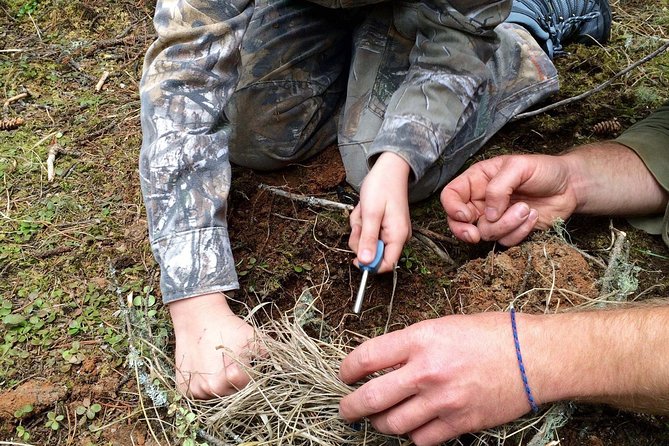
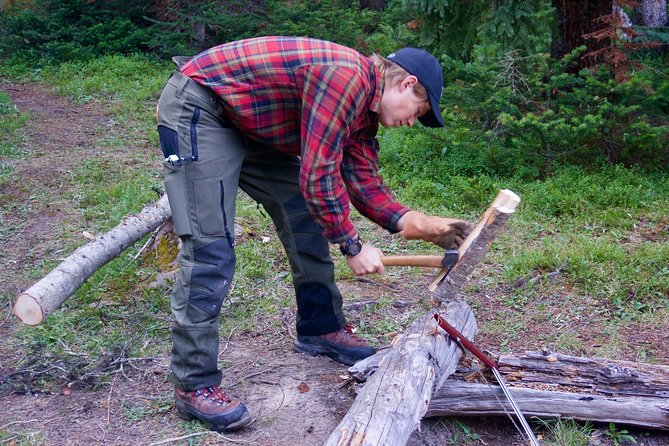
The course then turns to hands-on work. You learn how to make survival fires and shelters under difficult conditions, with an emphasis on practical bushcraft. Useful knots are also included, which may sound basic but can help with shelters, securing equipment, and improvised cord systems.
The wording about adverse conditions is important. You should expect to practice skills that require effort and patience, rather than simply watching an instructor demonstrate them. The course aims to help you apply the lessons in real time.
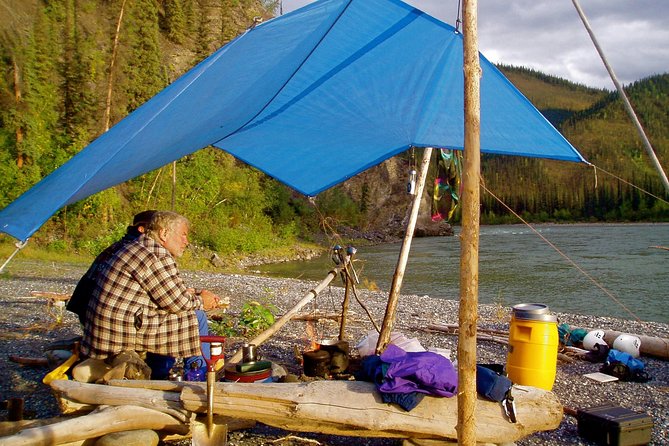
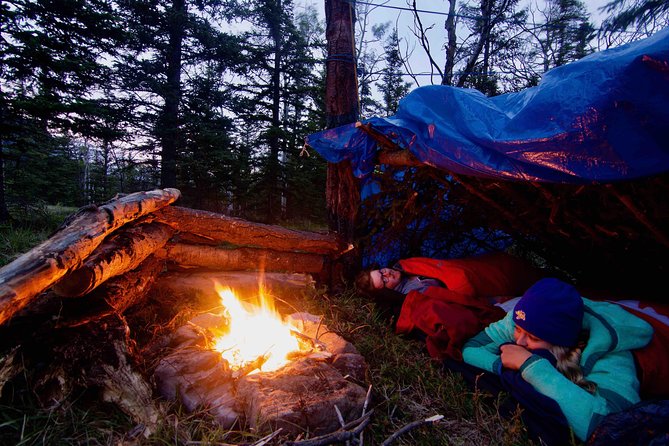
One of the most memorable elements is the chance to sleep in your own survival shelter. This gives the shelter lesson a clear purpose. You are not just tying branches together for an afternoon exercise. You may spend the night finding out how well your work functions.
That said, this is also where expectations matter most. One night of camping is included, but the experience should not be confused with a standard campground stay. The shelter is part of the training, and comfort is not the main goal. If you need a bed, walls, and a predictable evening indoors, this is the wrong kind of overnight trip.
Dinner is included. Food feedback has been mixed in the available material, with praise for meals such as honey garlic sausages and one complaint about wet sandwiches and pasta during a period of public health restrictions. I would tell you to share dietary needs when booking, especially since vegetarian meals are available with advance notice.
Sleeping outside and putting the lessons to work
The overnight stay tests more than your ability to stay awake outdoors. It gives you a chance to notice how preparation affects comfort and confidence. You may find that a well-planned shelter matters more than owning a large collection of gadgets.
All necessary course equipment is provided. The listed gear includes tents, hatchets, knives, compasses, GPS units, and other equipment needed for the training. This keeps the entry cost reasonable for someone who does not already own backcountry tools.
You should still ask what personal clothing and overnight items to bring. The supplied information confirms that course equipment is included, but it does not provide a complete personal packing list. Good outdoor clothing, suitable footwear, and personal necessities remain your responsibility unless the provider says otherwise.
The overnight format also helps families learn together. One parent attended with a young son and found the course suitable for different ages. Children must be accompanied by an adult, and the child rate applies only when sharing with paying adults.
Same province, a completely different day out:
- Lake Louise Summer Gondola Experience
★ 4.0 · 65 reviews - Calgary Airport Shuttle to Banff & Lake Louise
★ 4.5 · 54 reviews - Adrenaline Canyoning Tour
★ 5.0 · 39 reviews - Self-Guided Audio Driving Tour in Icefields Parkway
★ 5.0 · 24 reviews
Day two: morning practice at Abraham Lake
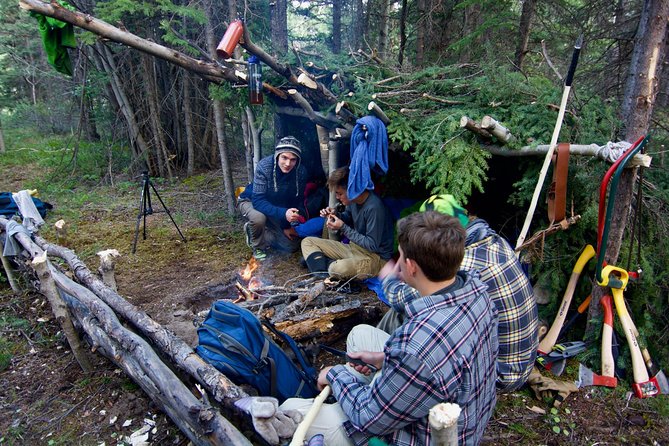
Breakfast is included, and the second day begins around 9 a.m. with two more hours on the topics introduced the day before. This follow-up matters because outdoor skills rarely stick after one demonstration.
You get a chance to revisit fire, shelter, safety, and other basic subjects before moving into navigation and field identification. The pace is fairly full, with the morning session running until about 11 a.m.
The schedule gives you a useful rhythm: instruction on the first day, an overnight application, then a morning review. I prefer this structure to a single long lecture because you have time to see which parts make sense and which need another explanation.
The course lasts approximately two days, but the finish can stretch into late afternoon or early evening. Keep that in mind when planning your next stop. A relaxed dinner reservation or fixed evening departure may not fit neatly with the final hike and outdoor exercises.
Cline River hike: navigation, plants, and optional advanced skills
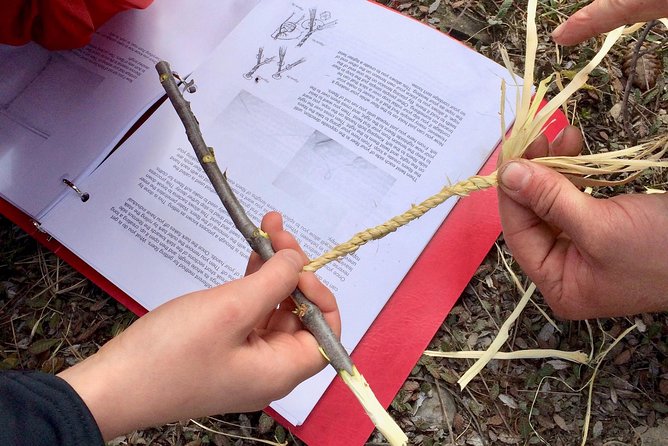
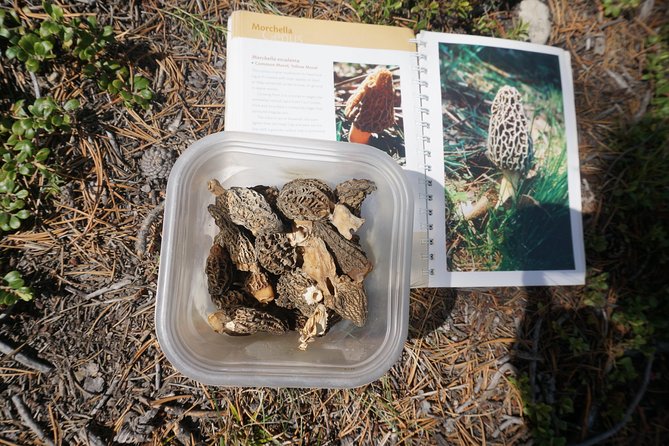
In the afternoon, the group hikes near Cline River while covering outdoor navigation and plant identification. The plant portion includes useful and medicinal plants, adding a practical layer beyond fire and shelter work.
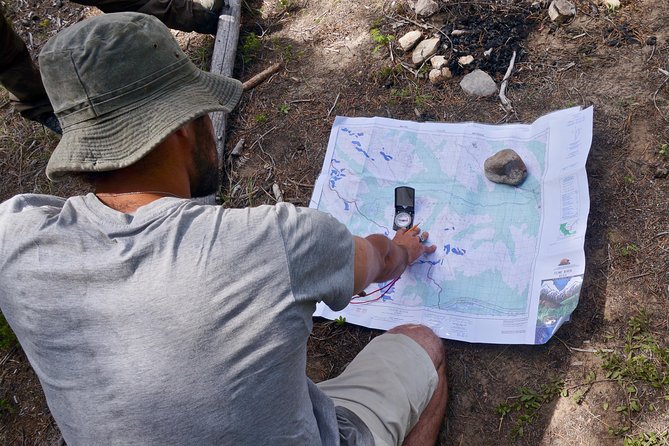
Navigation training is especially valuable for people who rely heavily on phones. The provided equipment includes compasses and GPS units, so you can work with both traditional and modern tools. The course description does not promise a particular navigation test or route, but it does make clear that finding your way outdoors is a central second-day topic.
If time permits, the instructor may add more advanced subjects. These include alternative food sources, basic traps and snares, improvised rope or cordage, and survival saws.
The phrase if time permits should guide your expectations. Treat those subjects as possible additions, not guaranteed parts of the program. The core lessons are safety, equipment, fire, shelter, knots, navigation, and plant identification.
Traps and snares also deserve a sensible perspective. They are presented as survival topics, not as a promise of hunting success or a substitute for proper food planning. The course gives you an introduction to options that might matter in an emergency, but you should not expect a full wildlife or foraging qualification after two days.
The program wraps up by late afternoon or early evening and returns to the original meeting point. You should have your own transport arranged for the end of the activity.
What the $205.56 price includes
At $205.56 per person, the price covers more than two days of instruction. You receive an experienced instructor, one night of camping, breakfast, lunch, and dinner during the course, plus the main equipment required for the lessons.
The included gear is a real saving if you are starting from scratch. Buying a tent, hatchet, knife, compass, GPS unit, and related equipment could quickly cost more than the course itself. You also avoid guessing which tools are suitable for the exercises.
The meals add value, particularly during a full day outdoors. You are not expected to stop training to organize every meal, although the food experience may vary depending on preparation and operating conditions. Tell the provider about vegetarian needs or other dietary requirements when booking.
The price does not include transportation to or from the program. That omission can change the final cost, especially if your group must organize a separate vehicle for the route from Nordegg into the training area.
I see the course as a fair value for a group that wants structured instruction and access to equipment. It is less attractive if you already own the gear, have solid fire and shelter skills, and mainly want a scenic camping weekend.
Who will get the most from this experience
This course suits outdoor beginners, casual campers, families with older children, and people preparing for backcountry travel. You will gain the most if you arrive ready to participate, ask questions, and practice rather than simply watch.
The private format also works well for groups with different confidence levels. A new camper can learn the basics while a more experienced friend asks about cordage, navigation, or emergency priorities.
You should think twice if you want luxury camping, a short sightseeing outing, or guaranteed advanced instruction. The course involves a full first day, an overnight shelter experience, a second-day hike, and changing outdoor conditions.
The program is offered in English. Most people can participate, service animals are allowed, and children need an accompanying adult. The activity requires good weather. If conditions force a cancellation, you can choose another date or receive a full refund.
Free cancellation is available up to 24 hours before the start time. Changes or cancellations inside that window are not accepted for a refund, so keep the local cut-off time in mind.
Should you book the two-day Rocky Mountain course?
I would book this if you want a practical introduction to backcountry skills and can accept a basic overnight experience. The strongest reasons are the private instruction, included equipment, real shelter exercise, and varied second-day work with navigation and plants.
I would first confirm the transportation plan, expected personal packing list, group arrangements, and meal details. Also understand that the advanced topics depend on available time and that the course is designed for beginners.
For a group of at least four people, the price offers a useful way to learn together without buying a full set of equipment. If you want confidence before camping farther into Alberta’s Rocky Mountains, this course is a sensible starting point.
FAQ
Where does the survival course begin?
The course begins at HI Nordegg Shunda Creek Wilderness Hostel, located at 321 Shunda Creek Road, Nordegg, Alberta.
How long does the course last?
The activity lasts approximately two days. It begins at 9:30 a.m. on the first day and finishes in the late afternoon or early evening on the second day.
Where does the training take place?
After meeting in Nordegg, the group drives about 40 kilometers to a training location near Kootenay Plains and Abraham Lake. The second-day hike takes place near Cline River.
Is transportation included?
No. Transportation to and from the program is not included. The activity ends back at the original meeting point.
What equipment is provided?
The course provides necessary training equipment, including tents, hatchets, knives, compasses, GPS units, and other course gear.
Are meals included?
Yes. Breakfast, lunch, and dinner are included during the course, including the overnight stay.
Can children take part?
Yes. Children must be accompanied by an adult, and the child rate applies only when sharing with paying adults.
Is the course private?
Yes. Only your own group participates. A minimum of four people is required per booking.
What happens if bad weather cancels the course?
If poor weather causes a cancellation, you can select a different date or receive a full refund. Free cancellation for personal changes is available up to 24 hours before the start time.
Just added around Alberta
- Discover the Lake Agnes Tea House Trail with an Audio Nature Tour★ 4.0 · 7 reviews
- Moraine Lake and Lake Louise Sightseeing Half Day Tour★ 5.0 · 23 reviews
- Yoho National Park Self-Guided Driving Audio Tour★ 4.0 · 4 reviews
- Smartphone Audio Driving Tour between Lake Louise and Calgary★ 4.0 · 15 reviews
- Official SkiByk Rentals in Banff & The Canadian Rockies★ 5.0 · 9 reviews
- Airport Shuttle: Lake Louise <---> Calgary★ 5.0 · 4 reviews
- Lake Louise to Jasper One-Way Tour★ 5.0 · 17 reviews
- Lake Louise Summer Gondola Experience★ 4.0 · 65 reviews