
Reviewed · WORKSHOPS
Leather belt making workshop
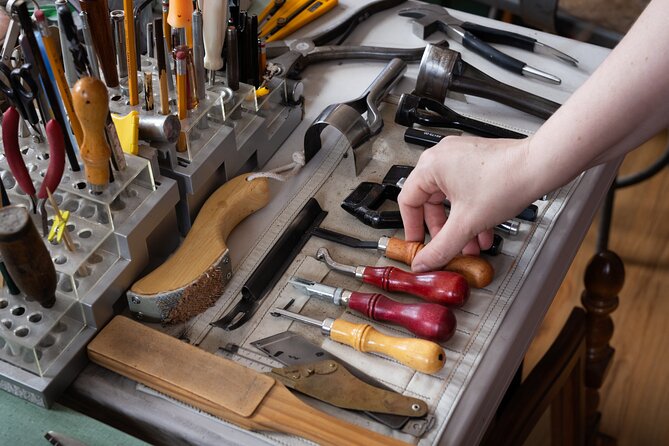
The best part of this Montreal workshop is that you do not simply watch a craft demonstration. You make a useful leather belt under the guidance of designer Kimberly Fletcher, learning the basic steps from choosing leather to finishing the completed piece. The class takes place at Flechr studio in the Plateau Mont-Royal district and lasts about two and a half hours.
I like the small maximum of four participants, which gives Kimberly room to guide each person through the work. I also like the balance between practical instruction and personal style: you learn how to make a durable belt, then use finishing techniques to give it your own look. The main thing to consider is noise. A few hammer blows are needed, so this may not suit anyone highly sensitive to sound.
In This Review
- Key points to know before booking
- Making a useful souvenir at Flechr studio
- What the two-and-a-half-hour class covers
- Choosing the leather
- Cutting and shaping the belt
- Assembling the pieces
- Adding finishing touches
- Why the group size matters
- Who will enjoy this Montreal workshop
- The value of making rather than buying
- Practical timing and meeting point
- Noise, tools, and comfort
- Cancellation and booking flexibility
- Is this the right Montreal experience for you?
- FAQ
- Where does the leather belt workshop take place?
- How long does the class last?
- Is the workshop suitable for beginners?
- What will I learn during the class?
- How many people can attend?
- Is the workshop offered in English?
Key points to know before booking
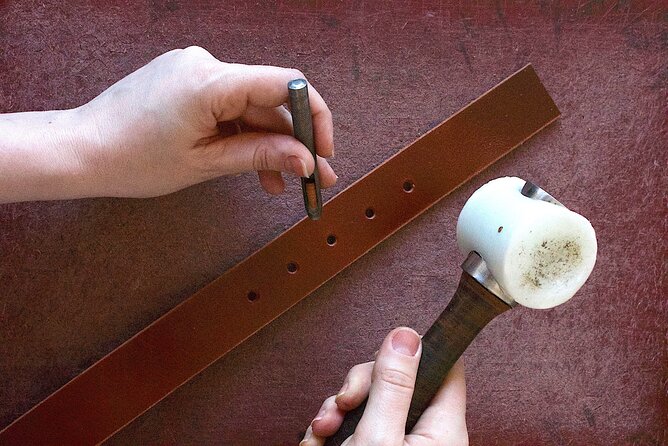
- You make your own leather belt: The class covers leather selection, cutting, shaping, assembly, and finishing.
- Kimberly Fletcher leads the workshop: You work in the studio of this Montreal designer and craftswoman.
- The group is capped at four: Expect a more personal class than a large craft lesson.
- It is made for beginners: No previous leatherworking experience is required.
- Plan for about two and a half hours: The workshop has enough time for instruction and hands-on work.
- A little hammering is part of the process: The class is not suited to people who need a completely quiet setting.
Making a useful souvenir at Flechr studio
Montreal has plenty of ways to spend two hours, but this workshop gives you something more lasting than a quick photo or a standard souvenir. You leave with a belt you helped create, along with a clearer sense of how leather goods are shaped and finished.
That practical result matters. You are not learning leatherworking only as an abstract craft. You are working toward an accessory you can use, wear, and remember. The belt also carries the small marks of your own decisions, which makes it more personal than something picked up from a shop shelf.
The workshop is held at Flechr studio, at 5450 Rue de Bordeaux in Montreal’s Plateau Mont-Royal district. The activity begins and ends at the same meeting point, so you do not need to arrange transport between different parts of the class.
The location is near public transportation, a useful point if you are staying elsewhere in Montreal. You should still allow enough time to find the studio and arrive ready to begin, since the listed activity time is focused on the workshop itself.
A few more Montreal trips to weigh up
- The Bagel Class presents : Montreal Bagel Making Workshop!
★ 5.0 · 463 reviews - Montreal: Cooking Class & Lunch with Michelin-Trained Chef
★ 4.4 · 32 reviews - Montreal Cooking Class & Wine Tasting with Michelin Chef Robert
★ 4.5 · 14 reviews
What the two-and-a-half-hour class covers
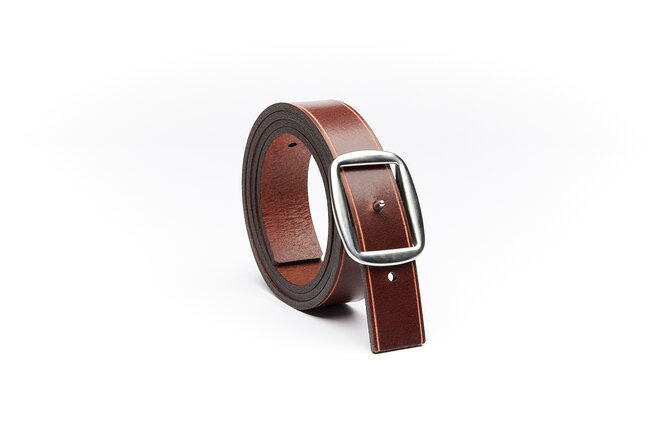
The class is built around the main stages of making a belt. The exact pace can vary depending on your choices and how quickly you work, but the course covers the full process rather than only one isolated technique.
Choosing the leather
You begin by learning how to select the right type of leather for a belt. This is an important first step because leather is not just a color or texture choice. The material needs to work as a durable accessory, and the right selection affects how the finished belt looks and performs.
For a beginner, this guidance is especially useful. Leathercraft can seem simple from a distance, but materials behave differently when they are cut, shaped, assembled, and finished. Kimberly helps you understand the choice before you start making permanent cuts.
This part also gives the finished belt more meaning. You are not simply following instructions with a fixed kit. You have a role in deciding what the final object will feel and look like.
Cutting and shaping the belt
Once the leather is selected, you learn how to cut and shape it. These steps require care, since the belt needs to be consistent and comfortable as a finished accessory.
You do not need prior leatherworking experience. Kimberly guides beginners through the process, making this a reasonable first class for someone who has never handled leather tools before. Still, you should expect to work carefully rather than rush. A hands-on craft class rewards patience.
The limited group size helps here. With no more than four participants, the instructor can focus on the work in front of each person. That is valuable when you are learning a physical skill, since a brief correction at the right moment can prevent a mistake and make the technique easier to understand.
Same province, a completely different day out:
- Montreal: Guided Bus Tour
★ 4.4 · 3,064 reviews - Montreal: Hop-On Hop-Off Double-Decker Bus Tour
★ 4.1 · 2,760 reviews - From Montreal: Quebec City and Montmorency Falls Day Trip
★ 4.5 · 2,669 reviews - Montreal Mile End Authentic Food Tour with 7 Delicacies Tastings
★ 5.0 · 2,598 reviews
Assembling the pieces
The next stage is putting the belt components together. This is where the earlier choices begin to form one finished item.
Assembly gives you a better feel for the difference between making something attractive and making something that can hold up to use. The belt must come together in a sound way, and the class teaches the basic approach needed to create a durable result.
A few hammer blows are necessary during the work. This is not described as constant or heavy noise, but it is an important practical detail. If you have high sensitivity to sound, take it seriously before booking. For most people, the occasional hammering will simply be part of the workshop atmosphere.
Adding finishing touches
The class also covers ways to finish the belt and make it unique. This is the stage where your piece can move beyond a basic exercise and gain more of your personal style.
The finishing work is one reason I see value in this experience. You are not only learning how to follow a pattern. You are learning that small choices in a handmade object can change its character.
The supplied information does not specify a set menu of colors, hardware, patterns, or finishing options, so you should not book expecting one particular design choice. What you can expect is instruction in finishing techniques that help make the belt your own.
Why the group size matters
A maximum of four participants is one of the strongest features of this experience. Small classes tend to work well for crafts because everyone needs time with the tools, the material, and the instructor.
Kimberly Fletcher is described as a skilled craftswoman with patience and humor, qualities that matter in a beginner class. Leatherworking has several stages where you may want to check your approach before continuing. A patient teacher can make the difference between feeling stuck and moving ahead with confidence.
The small setting also makes the class feel more like a studio lesson than a large public activity. You have room to concentrate, ask questions, and work at a reasonable pace. That does not mean the class is private, since up to four people may attend, but it is far more personal than a lesson designed for a large group.
If you prefer to work completely alone, this is not the right format. You will be sharing the studio and the instructor’s attention with other participants. For most beginners, though, the small group is a helpful compromise between private tuition and a lower-cost shared class.
Who will enjoy this Montreal workshop
This class is aimed at beginners, and no previous leather crafting experience is required. You can book it if you are curious about making things by hand but have never used leatherworking tools.
It suits you especially well if you like practical souvenirs, creative classes, or activities that give you something to take home. It can also be a good choice for someone who wants to try a new hobby without committing to a long course.
The recommended minimum age is 13 and over. That makes it suitable for teenagers and adults, but younger children are not the intended audience. The workshop involves tools, cutting, assembly, and some hammering, so it is better suited to participants who can follow instructions and work carefully.
You should also think about your expectations. This is an introductory class, not a professional leatherworking course. You will learn the basic process of making a belt and practice several techniques, but the experience is not presented as advanced training in leather design.
The value of making rather than buying
No price is provided here, so I cannot judge the exact cost against other Montreal workshops. I can still explain where the value lies.
You are paying for more than the belt itself. The experience includes instruction from Kimberly, access to a studio setting, guidance through the material choices, and time to complete a usable object. If you would otherwise buy a leather belt, the workshop adds a skill and a memory to that purchase.
The value is strongest if you enjoy the process. Someone interested only in finding the cheapest belt may be better off shopping. Handmade work takes time, and part of what you are paying for is the chance to understand how the item is produced.
The finished belt also gives you a clear measure of the class. You can see the result of your decisions rather than leaving with a vague impression from a demonstration. If the belt becomes part of your regular wardrobe, the workshop continues to pay off after your Montreal visit.
Practical timing and meeting point
The activity lasts about two hours and 30 minutes. That is long enough for a substantial beginner project, but short enough to fit into a day of exploring Montreal.
The class starts at 5450 Rue de Bordeaux, Montreal, Quebec H2H 2A8, and ends at the same location. Since the activity is based in one studio, you do not need to manage a complicated route during the class.
The studio is near public transportation. Check your route before setting out, and give yourself a little extra time if you are unfamiliar with the Plateau Mont-Royal area. A late arrival could be awkward in a hands-on class, since the group may already be working through the first steps.
The experience is offered in English. That is important if you are comparing craft workshops in Montreal and want instruction you can follow easily. Confirmation is provided at booking, and a mobile ticket is accepted.
Noise, tools, and comfort
The class requires a few hammer blows to create the belt. This is a small detail, but it can affect your decision if you are highly sensitive to noise.
You should also expect to handle materials and take part in the work. This is not a sit-back-and-watch activity. The central appeal is learning by doing, so come prepared to pay attention and follow directions.
Service animals are allowed, and most people can participate. The supplied information does not provide further details about specific physical access needs, seating, or studio layout. If you require particular arrangements, contact the provider before booking rather than assuming the space will meet them.
The studio setting and four-person maximum suggest a focused environment, but the available details do not promise a private class. Keep that in mind when deciding between this and a one-to-one lesson.
Cancellation and booking flexibility
Free cancellation is available if you cancel at least 24 hours before the experience start time. If you cancel less than 24 hours before the start, you will not receive a refund, and changes made inside that same window are not accepted.
The cut-off follows Montreal local time. The experience also requires a minimum number of participants. If the provider cancels because that minimum is not reached, you will be offered another date or experience, or a full refund.
Those terms are fairly manageable if your Montreal plans are firm. If your schedule is uncertain, book only once you are confident you can attend, since last-minute changes are not accepted.
Is this the right Montreal experience for you?
Book this workshop if you want a small, guided activity with a clear result. It is a strong choice for beginners, creative people, and anyone who would rather bring home a handmade belt than another mass-produced souvenir.
I especially like the combination of Kimberly Fletcher’s personal instruction, the maximum group size of four, and the chance to work through the entire belt-making process. The reported experience of patient guidance and humor also points to the right kind of teaching style for a first attempt.
Think twice if you dislike hands-on projects, need a silent setting, or want advanced leatherworking instruction. The class includes some hammering, requires concentration, and is designed for beginners.
For the right participant, this is a thoughtful way to spend two and a half hours in Montreal. You learn a useful craft, work in a local designer’s studio, and leave with a belt that reflects your own effort. That is a better souvenir than something you simply picked up on the way back to your hotel.
FAQ
Where does the leather belt workshop take place?
The workshop takes place at Flechr studio, 5450 Rue de Bordeaux, Montréal, QC H2H 2A8, Canada.
How long does the class last?
The activity lasts approximately two hours and 30 minutes.
Is the workshop suitable for beginners?
Yes. No previous leather crafting experience is required, and Kimberly Fletcher guides you through the process.
What will I learn during the class?
You will learn how to select leather, cut and shape it, assemble the belt, and use finishing techniques to make it unique.
How many people can attend?
The activity has a maximum of four participants.
Is the workshop offered in English?
Yes. The workshop is offered in English.
Just added around Montreal
- Montréal Downtown and Underground City Private Walking Tour★ 5.0 · 47 reviews
- Winter Express: Old Montreal Highlights Walking Tour★ 5.0 · 119 reviews
- Full Day Family Bike Rental★ 5.0 · 17 reviews
- Montreal Premium Driving Tour with River Cruise and Notre Dame★ 4.5 · 164 reviews
- Under the Surface of Montreal’s Chinatown: Guided Food Walking Tour★ 5.0 · 23 reviews
- Day at Mont-Tremblant National Park★ 4.0 · 5 reviews
- In the Shadow of the Mountain: Montreal Jewish History Walking Tour★ 4.5 · 33 reviews
- The Ultimate Montreal Boat Tour – Fall Colors Apéro Edition★ 4.5 · 31 reviews
Workshops, compared.

The Bagel Class presents : Montreal Bagel Making Workshop!
Read our review →
8 Iconic Stops. 12 Comfy Seats. See Banff’s Best in First Class.
Read our review →
Athabasca Canyon Run Family Rafting: Class II Plus Rapids
Read our review →
Sunwapta Challenge Whitewater Rafting: Class III Rapids
Read our review →
Class 3 Sunwapta River Rafting Adventure in Jasper
Read our review →
Cooking Class & Lunch with Michelin-Trained Chef
Read our review →
Cuivres A. Gilles – (Free Entry) Fee for Workshop
Read our review →
Montreal Cooking Class & Wine Tasting with Michelin Chef Robert
Read our review →Browse the lists this tour appears in