
Reviewed · WORKSHOPS
Quebec: Cuivres A. Gilles – (Free Entry) Fee for Workshop
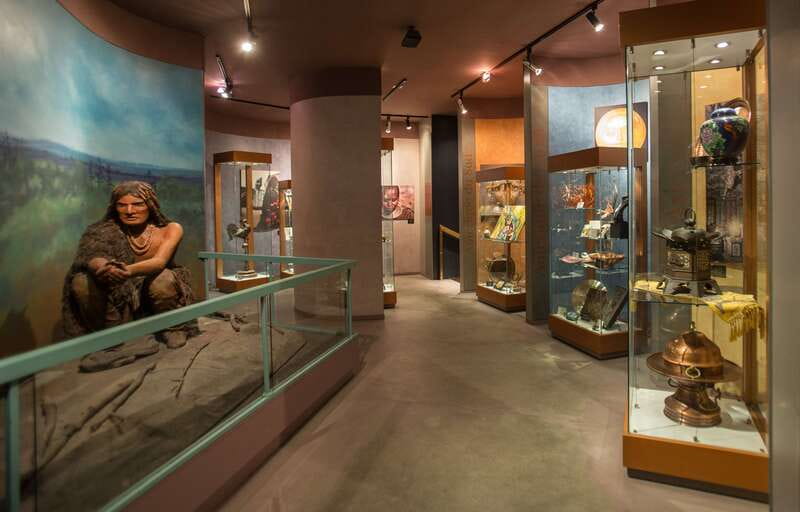
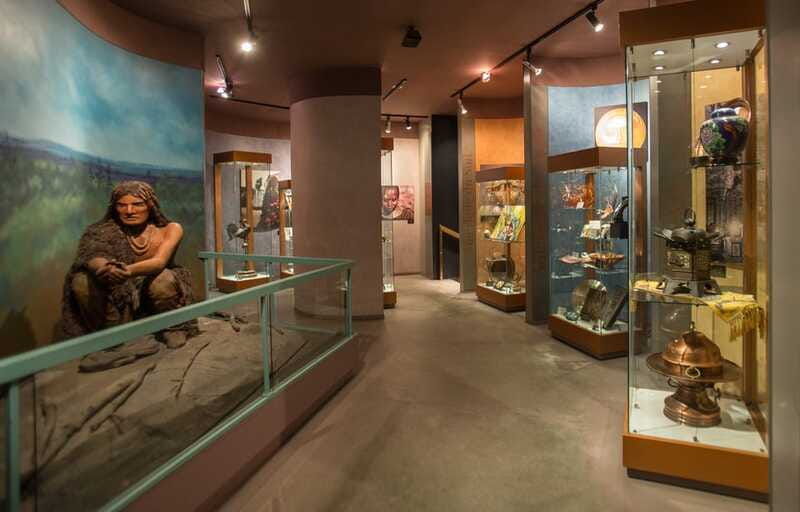
Copper becomes surprisingly expressive at Cuivres d’Art Albert Gilles. In Château-Richer, just outside Quebec City, you’ll see thin sheets hammered into religious scenes, decorative panels, chalices, and other works, then try the same basic repoussé technique yourself. The family’s work includes more than thirty places of worship in North America and Jamaica, along with commissions connected to Pope Pius XII, Walt Disney, Mae West, and General Motors proprietors.
I like two things here: the family tradition, now carried on by five women of the Gilles family, and the fact that you do not just look behind a glass case. You receive a demonstration, sit at a worktable, and make a small copper piece to take home. The main consideration is distance: the museum is about 15 to 20 kilometers from Old Quebec, so you need transportation. The actual visit is also fairly short, often about an hour.
In This Review
- Key points at a glance
- Why this small museum is worth your time
- Entering the world of Albert Gilles
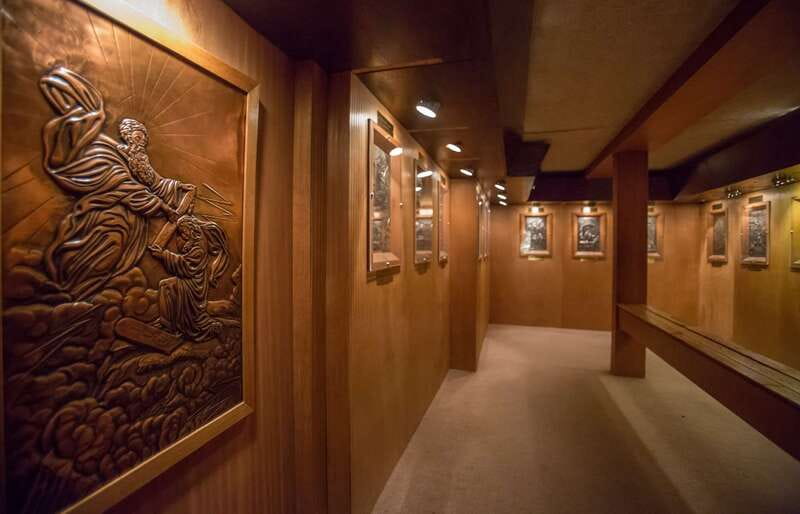
- The Christorama and fifty copper panels
- A second museum explains copper itself
- The repoussé demonstration
- Making your own copper souvenir
- How much time should you allow?
- Getting there from Old Quebec
- Is $12 a good value?
- Who will enjoy this activity most?
- Booking, language, and cancellation details
- Should you book Cuivres d’Art Albert Gilles?
- FAQ
- Where is Cuivres d’Art Albert Gilles located?
- How far is the museum from Old Quebec?
- How much does the experience cost?
- How long does the visit take?
- What language is the tour offered in?
- Can children take part?
- Is the museum wheelchair accessible?
Key points at a glance
- See Albert Gilles’s Christorama: Fifty copper panels show the Life of Christ, a project completed over 15 years.
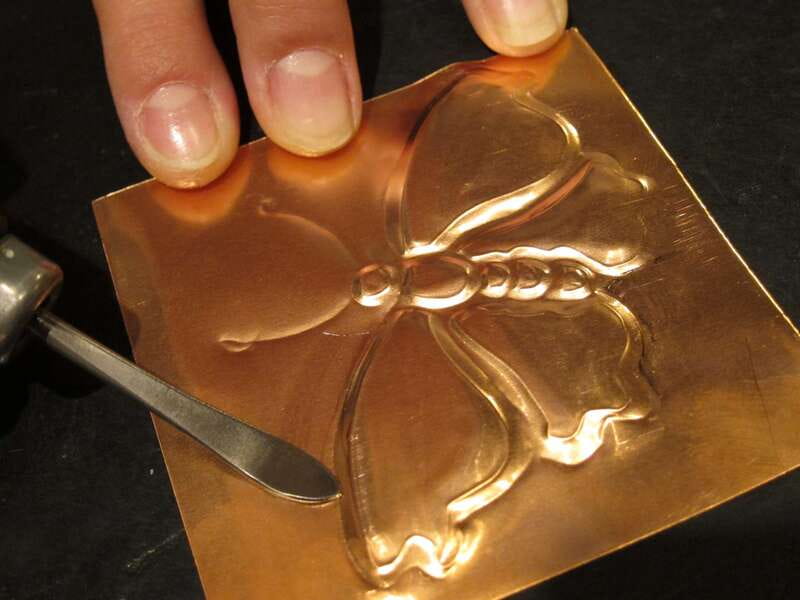
- Learn repoussé by watching and doing: A professional guide explains how copper is shaped before you create your own piece.
- Trace a remarkable commission career: The exhibits connect Gilles’s work with Pope Pius XII, churches, Jamaica, Mae West, General Motors proprietors, and Walt Disney.
- Visit two different museum areas: One focuses on the art and family, while another explains copper ore, mining, extraction, and worldwide uses.
- Bring home something you made: Your workshop piece is included in the $12 price, along with museum admission and the guided tour.
- Expect a short, focused outing: An hour may be enough for the visit, making it easy to pair with another stop near Quebec City.
Why this small museum is worth your time
Cuivres d’Art Albert Gilles is not a grand national museum. It is a working family art studio, museum, and boutique devoted to a craft that is easy to overlook in a fast-moving Quebec City itinerary. That smaller scale is part of its appeal. You get a clear introduction to one artist, one family, and one demanding technique.
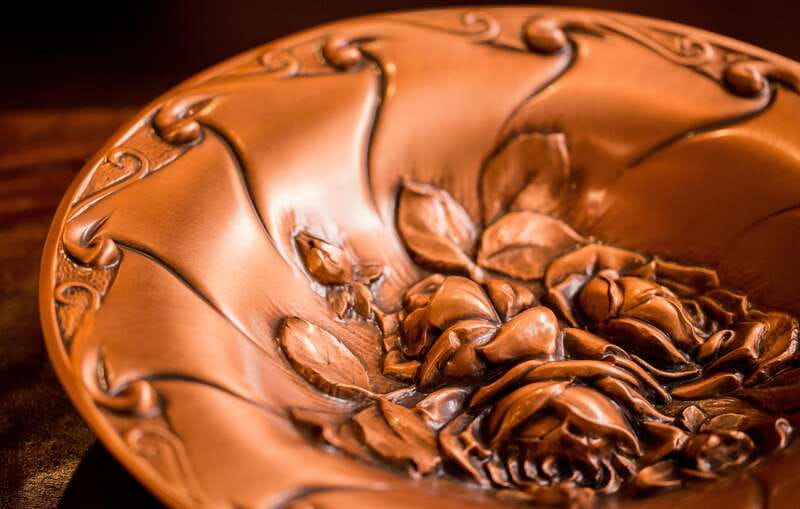
The craft is called repoussé. The artist works a sheet of metal from the back and front, pushing and hammering it until the surface gains relief. A flat piece of copper can become a face, a fold of clothing, a leaf, or an architectural pattern. The method requires patience and control. One overly hard blow can spoil a detail.
You will not leave after a long technical course in metalwork. This is an introductory experience. Still, the short demonstration gives you enough context to understand why the finished panels took years rather than afternoons. Then the workshop lets you feel the resistance of the material for yourself.
That change from looking to making is the best reason to visit. Museums often explain a craft through labels. Here, you get a tool in your hand and a piece of copper on the table. Your finished work will be simple, but it will give you a better sense of the skill behind the family’s larger pieces.
A few more Quebec City trips to weigh up
- The Bagel Class presents : Montreal Bagel Making Workshop!
★ 5.0 · 463 reviews - 8 Iconic Stops. 12 Comfy Seats. See Banff’s Best in First Class.
★ 5.0 · 316 reviews - Athabasca Canyon Run Family Rafting: Class II Plus Rapids
★ 5.0 · 193 reviews
Entering the world of Albert Gilles
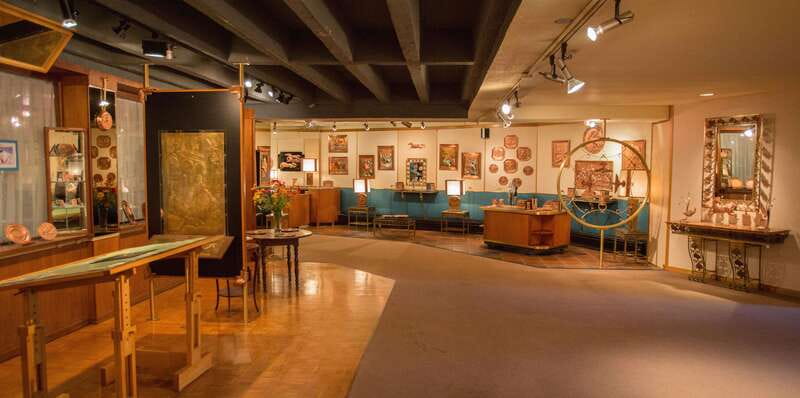
The first part of the visit introduces Albert Louis Gilles, the studio’s founder. The exhibits explain how he devoted his life to copper art and how the family continued the work after him. The focus is personal rather than abstract, so you can follow the development of an artist through his commissions and projects.
One detail gives the story extra weight: Pope Pius XII commissioned Gilles to make a silver chalice offered to the Archdiocese of Montreal in 1942. That commission helps show that Gilles’s work was not limited to small decorative objects. His career reached religious institutions and important clients across several countries.
You will also hear about the more than thirty places of worship he decorated in North America and Jamaica. The exact churches and interiors vary by exhibit, but the larger point is clear. His work belongs to both the worlds of devotional art and architectural decoration.
The stories of private clients add a different flavor. Mae West, the proprietors of General Motors, and Walt Disney are all connected to Gilles’s work. These names make the story memorable, but the real interest is seeing how a traditional craft could move between churches, private homes, and prominent commissions.
The family connection continues today through five women. That matters because repoussé is described as a disappearing art. Your visit supports a studio trying to keep the process visible and active, rather than presenting it only as a historical curiosity.
The Christorama and fifty copper panels
The Christorama is the museum’s most substantial single display. It consists of fifty panels depicting the Life of Christ, created by Albert Gilles over 15 years.
You should give this section time instead of treating it as a quick corridor display. Fifty panels allow the subject to unfold scene by scene, and the repeated use of copper lets you notice how the artist handles faces, clothing, gestures, and background details. The panels also show the patience required to complete a long sequence of related works.
Religious art may not be the main reason you plan a Quebec outing. Even so, the Christorama is valuable as a study in technique. You can compare the relief in one panel with another and watch how the artist uses light and shadow across the hammered surface.
The display also helps explain why the workshop is more than a souvenir activity. When you later make your own piece, you will be working with the same broad principle, though on a much simpler scale. The difference between your small design and Gilles’s 15-year project should make his achievement easier to appreciate, not less.
If you have limited time, this is one of the parts I would prioritize. It links the artist’s personal story with the actual objects he made.
A second museum explains copper itself
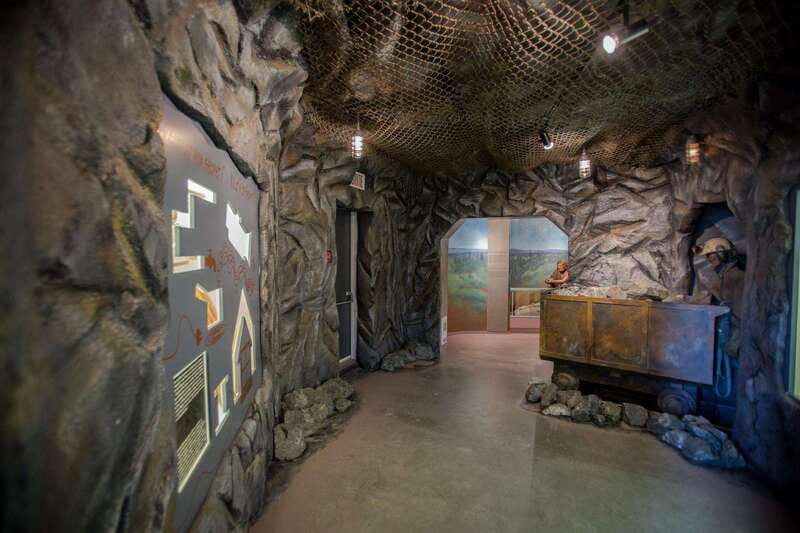
The visit is not only about finished art. A second museum area looks at copper ore, mining, extraction, and the many uses of copper around the world.
This section gives the material a useful backstory. Before copper becomes a polished panel or a decorative object, it must be found and removed from the earth. Learning about ore and extraction helps you see copper as an industrial resource as well as an artistic medium.
The contrast between the two museum areas works well. One concentrates on the Gilles family and the finished craft. The other steps back and explains the substance itself. You move from geology and industry to artistic technique.
For families and curious younger visitors, this may be the easiest way to connect the art with everyday life. Copper is not simply a precious surface in a display. It has practical uses around the world, and the museum places the decorative work within that wider story.
The activity is not designed as a full mining museum visit, so you should keep your expectations in check. Its purpose is to add context to the copper art, not replace a dedicated industrial or geological museum.
Same province, a completely different day out:
- Quebec City Walking Tour
★ 5.0 · 4,716 reviews - Quebec City: Guided Tour of Fairmont Le Château Frontenac
★ 4.7 · 3,027 reviews - Québec City: Guided Sightseeing River Cruise
★ 4.4 · 3,000 reviews - Half-Day Trip to Montmorency Falls and Ste-Anne-de-Beaupré from Quebec city
★ 4.0 · 2,718 reviews
The repoussé demonstration
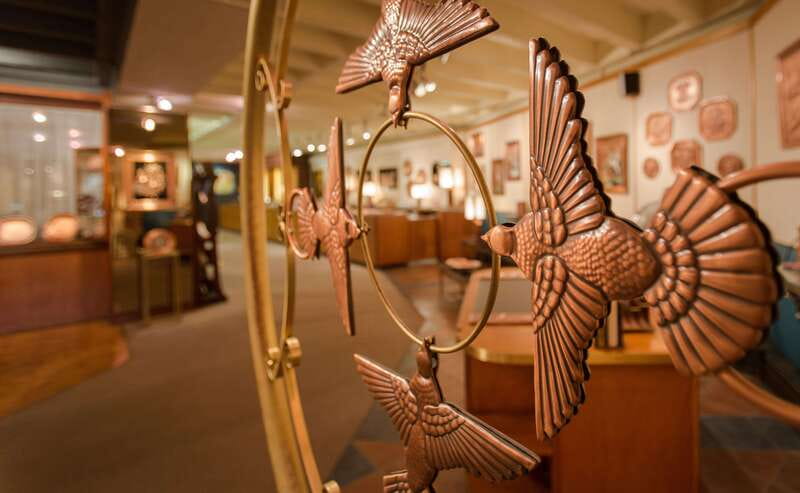
After the exhibits, a professional guide explains the techniques used to shape the copper. Instruction is available in English and French, which makes the visit accessible to both English-speaking and French-speaking visitors.
The demonstration is important because the tool marks are not always obvious when you first look at a finished piece. The guide shows how pressure and hammering create relief. You can then look back at Gilles’s panels with a clearer idea of how the surface was formed.
I like this order: see the finished work, learn the process, then try it. The demonstration gives the workshop a purpose. You are not simply decorating a prepared object without context. You are applying a basic version of the method you have just seen.
The experience does not promise that you will produce museum-quality copper art. That is a good thing. The value is in understanding the movement from a flat sheet to a textured design. Your small errors are part of the lesson, and the finished object becomes a personal reminder of the technique.
Since the full activity can take about an hour, the demonstration is necessarily compact. If you want a long, advanced metalsmithing class, this is not the right booking. If you want a clear introduction with a practical result, it fits the bill.
Making your own copper souvenir
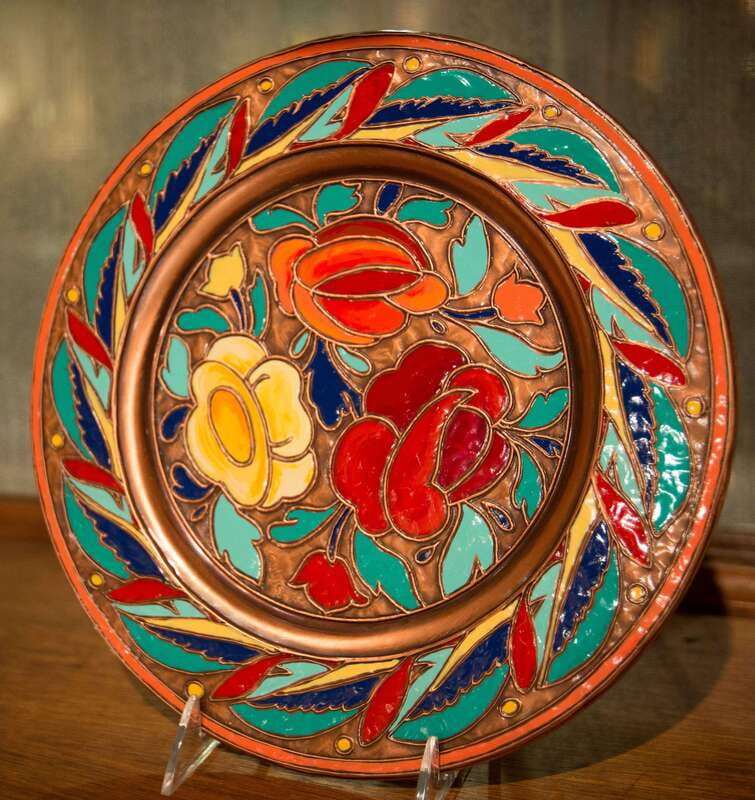
The workshop tables are set with copper and tools. After the demonstration, you create your own piece of copper art and take it home.
The hands-on portion is the most distinctive part of the visit. Admission alone would give you a small museum experience, but the included activity changes the outing into something you can remember through touch. You will understand the material differently after trying to press or hammer a design into it.
The finished piece is likely to be modest in size and detail, since this is a short introductory workshop. That should not bother you. You are paying for a guided cultural activity and a personal souvenir, not for a professional studio apprenticeship.
Children must be at least eight years old. That age limit makes sense because the activity involves tools and concentration. Younger children can still appreciate the displays, but they cannot take part in the workshop under the stated rules.
For families, couples, and solo visitors, the workshop adds a welcome break from looking at exhibits. It also gives you something to discuss afterward. You can compare designs, laugh at uneven lines, and keep the result as a small record of your Quebec visit.
How much time should you allow?
The advertised duration is listed as one day of validity, but the visit itself is much shorter. A practical plan is to allow about an hour for the museum tour, demonstration, and workshop, with extra time if you want to browse the boutique or examine the displays carefully.
One hour is enough for the core activity because the museum is focused. You are not facing a large institution with several floors and a long route. The compact format is useful if you are building a day trip along the Sainte-Anne corridor.
The short length can also be a drawback. If you expect a half-day cultural program, you may finish sooner than planned. One recent booking described an hour as more than enough, while still finding the visit unique and worthwhile. I would treat that as sound planning advice.
Check the available starting times before you go. The activity is valid for one day, but the visit is arranged around scheduled availability rather than an open-ended all-day admission.
Getting there from Old Quebec
The address is 7450 Boulevard Sainte-Anne, Château-Richer, Quebec, G0A 1N0. From Old Quebec, the museum is about 15 to 20 kilometers away.
That distance is the main practical issue. You should arrange a car or another suitable means of transportation rather than assuming you can walk there from the historic center. The museum makes the most sense as part of a broader outing outside central Quebec City.
The location can work well if your plans already include the Sainte-Anne area. If you are staying in Old Quebec and have only a short window, factor in transportation time on both ends. The workshop may last about an hour, but the full outing will be longer once you include the trip.
The site is wheelchair accessible, which is useful for visitors who need step-free access. The supplied information does not give detailed specifications for every exhibit or workshop table, so you may want to confirm any particular access needs in advance.
Is $12 a good value?
At $12 per person, the price is modest for what is included. You receive entrance to the Cuivres d’Art Albert Gilles Museum and Boutique, access to all exhibits, a professional guided tour, the copper-making workshop, your own copper souvenir, and local taxes and fees.
The value comes from the combination. A museum ticket at this price would be reasonable on its own, but the included workshop gives you a direct activity rather than passive viewing. The personal piece also means you are not paying extra for the main hands-on element.
You should compare the price with your expectations. If you want a long guided tour, extensive historic interpretation, or a large museum complex, the experience may feel brief. If you want an affordable cultural stop with a practical activity, $12 is easy to justify.
The title can create some confusion because the experience is described with free entry and a workshop fee. The supplied price is $12 per person, and the listed inclusions indicate that museum admission and the workshop are covered. Check the final booking page for the current charge before paying.
Who will enjoy this activity most?
I would recommend Cuivres d’Art Albert Gilles to anyone curious about traditional craft, religious art, family-run studios, or the story of copper itself. It is especially suitable for people who prefer a small, focused museum over a large collection that takes half a day to cover.
Families with children aged eight and older get a good mix of seeing, listening, and making. The workshop gives children a reason to pay attention during the demonstration, while the copper displays provide a broader story for adults.
It also suits couples and solo visitors who want a quieter cultural stop outside Old Quebec. You do not need to be an art expert. The guide explains the process, and the hands-on work gives you a simple way into the subject.
You may want to skip it if transportation outside the city center is difficult or if your schedule cannot spare time for the trip. It is also not the best match for someone seeking a long, advanced metalworking class. The activity is short and introductory by design.
Booking, language, and cancellation details
The tour is offered in English and French, and a professional guide leads the visit. You can reserve now and pay later, which is useful when your Quebec schedule is still changing.
Free cancellation is available up to 24 hours in advance for a full refund. That policy gives you some flexibility, but you should still check the exact booking conditions attached to your selected time.
The activity is wheelchair accessible, and children under eight are not permitted to take part. The meeting point is the Cuivres d’Art Albert Gilles Boutique et Musée at 7450 Boulevard Sainte-Anne.
Should you book Cuivres d’Art Albert Gilles?
Book it if you want an affordable, unusual stop where you can connect a family art tradition with a hands-on activity. The Christorama, the stories of major commissions, and the copper-mining display give the visit more substance than a simple craft demonstration.
I would be especially inclined to book if you already have transportation and are planning time outside Old Quebec. At $12, the combination of guided exhibits, a demonstration, and a take-home copper piece is strong value.
Skip it if you need a full-day attraction close to the historic center or want advanced instruction. For most other visitors, the short length is an advantage. You can learn something specific, make a souvenir, and get back to your Quebec City plans without giving up an entire day.
FAQ
Where is Cuivres d’Art Albert Gilles located?
It is located at 7450 Boulevard Sainte-Anne, Château-Richer, Quebec, G0A 1N0, Canada.
How far is the museum from Old Quebec?
The museum is about 15 to 20 kilometers from Old Quebec, so you should arrange transportation to reach the activity.
How much does the experience cost?
The listed price is $12 per person. Museum admission, access to the exhibits, the guided tour, the workshop, the souvenir, and local taxes and fees are included.
How long does the visit take?
The activity is valid for one day, but the actual visit can be completed in about an hour. You may want extra time to look through the exhibits and browse the boutique.
What language is the tour offered in?
The guide-led activity is available in English and French.
Can children take part?
Children must be at least eight years old to participate.
Is the museum wheelchair accessible?
Yes, the activity is listed as wheelchair accessible.
Just added around Quebec City
- Kingston: Skippered Sailing Charter★ 4.7 · 4 reviews
- Quebec: Private custom tour with a local guide★ 4.9 · 4 reviews
- Quebec Interactive Street Theatre: “Crimes in New France”★ 4.6 · 175 reviews
- Quebec : Old Town Walking Tour With A Local Guide★ 4.5 · 38 reviews
- Québec: Fortifications-of-Québec Guided Walking Tour★ 4.7 · 60 reviews
- Quebec: Christmas Interactive Walking Tour of New France★ 4.3 · 7 reviews
- Québec City: Weekend River Brunch Cruise★ 4.5 · 116 reviews
- Quebec City: Winter Walking Tour in Old Quebec★ 4.9 · 30 reviews
Workshops, compared.

The Bagel Class presents : Montreal Bagel Making Workshop!
Read our review →
8 Iconic Stops. 12 Comfy Seats. See Banff’s Best in First Class.
Read our review →
Athabasca Canyon Run Family Rafting: Class II Plus Rapids
Read our review →
Cooking Class & Lunch with Michelin-Trained Chef
Read our review →
Banff Top Sights via Electric Fat Bike Tour All Skill Levels
Read our review →
Browse the lists this tour appears in