
Reviewed · HOP-ON HOP-OFF BUS TOURS
Quebec City: Hop-on Hop-off Open-Top Double Decker Bus Tour
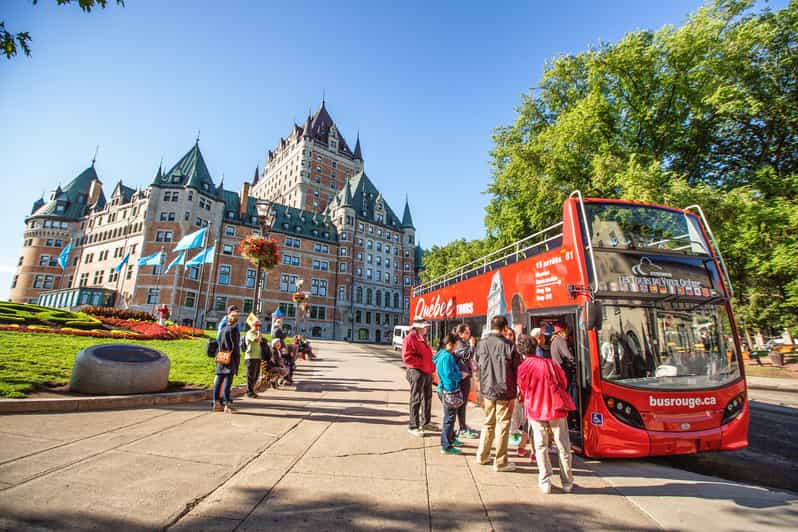
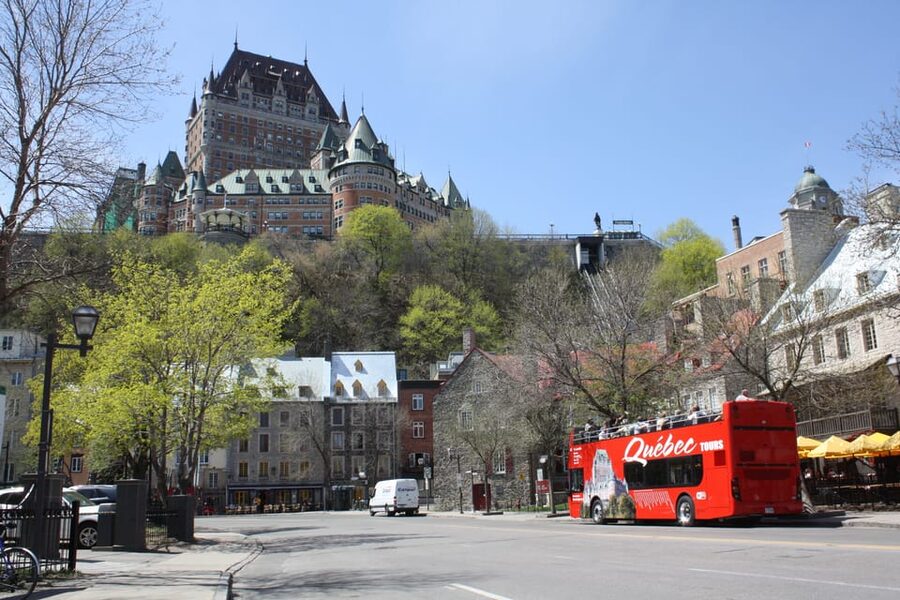
Québec City’s steep streets and spread-out sights make this more than a sightseeing ride. From the top deck, you can get your bearings without wearing out your legs, then return to the places that catch your eye. Start near Château Frontenac at Place d’Armes, where the city’s old quarter is right outside the door.
I like the full two-hour circuit as a first look at the city, and I like having 15 stops that reach beyond the prettiest lanes of Old Québec. The recorded commentary is offered in 10 languages, while some drivers, including Pierre and Martin, add their own humor and local details.
The main trade-off is waiting time. Buses may arrive every 30 to 45 minutes, and a complete loop takes 1 hour 45 minutes to 2 hours, so a poorly timed hop-off can cost a large part of your afternoon. The open top deck is wonderful in good weather, but you need a hat and weather-ready clothing.
In This Review
- Key points to know before boarding
- What this Québec City bus tour is really good at
- Starting near Château Frontenac at Place d’Armes
- Saint-Roch and the Museum of Civilization
- Place Royale and the Old Port
- The convention center and Observatoire de la Capitale
- The Voltigeurs Armoury and the Plains of Abraham
- The National Museum of Fine Arts and Avenue Cartier
- Place d’Youville and the Citadelle
- Audio commentary, drivers, and what you hear
- How to plan a useful one-day ride
- Comfort, weather, and the small frustrations
- Who should book this Québec City tour?
- Should you book it?
- FAQ
- Where does the Québec City hop-on hop-off bus tour start?
- How long does one complete loop take?
- How often do the buses depart?
- What languages are available for the audio guide?
- Is the bus wheelchair accessible?
- What does the ticket cost and can I cancel?
Key points to know before boarding
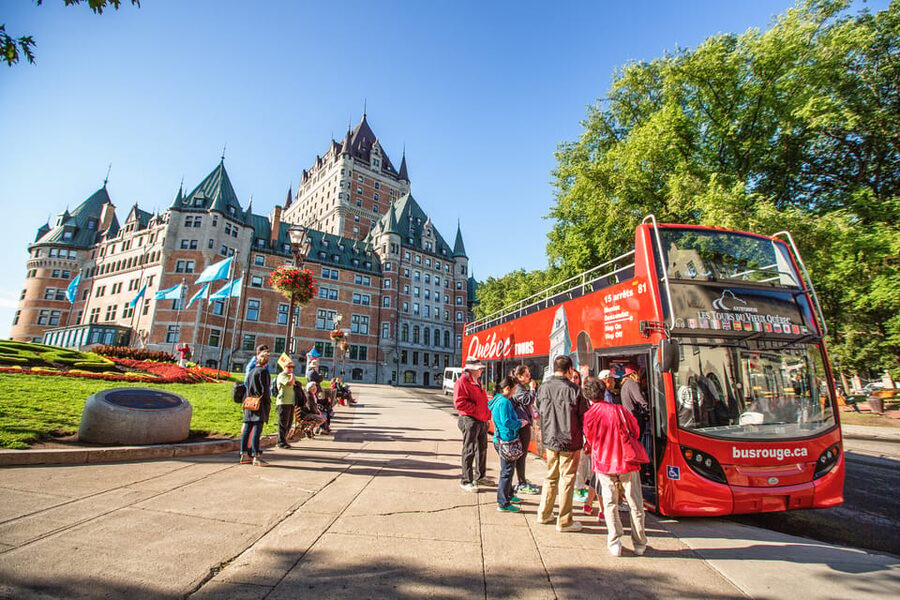
- Start at Place d’Armes: The main first stop is near Château Frontenac at 7 Rue du Fort, with other listed boarding points at 85 Rue Dalhousie and 17 Rue du Fort.
- Ride the full loop first: You get a useful overview of Old Québec, Saint-Roch, the Plains of Abraham, Saint-Jean-Baptiste, and the Citadelle in about two hours.
- Use the bus for the hills: The route is helpful when you want to reach sights that would mean repeated climbs on foot.
- Listen in your language: Audio is available in English, French, Spanish, Chinese, German, Italian, Japanese, Arabic, Portuguese, and Russian.
- Expect variable driver commentary: The recording is standard, but some drivers, such as Pierre, Martin, and Michel, may add live narration and photo pauses.
- Plan around the weather: The upper deck gives the best views, but the ride is much less appealing in cold, wet, or windy conditions.
What this Québec City bus tour is really good at
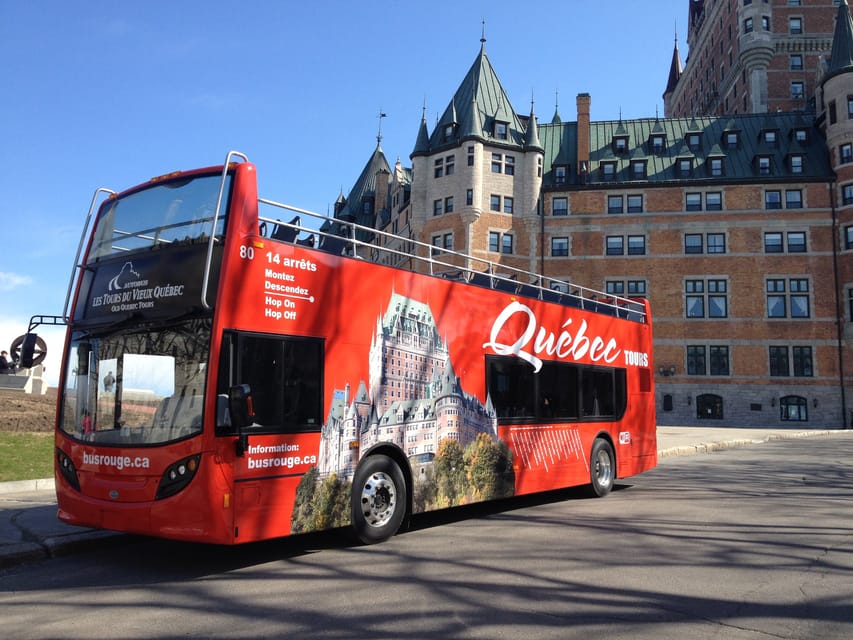
This is a city-orientation tour first and a transportation service second. You sit high above the street, pass through several different districts, and hear enough context to decide where you want to spend your limited time.
That matters in Québec City because the sights are not all packed into one small cluster. Château Frontenac, Place Royale, the Old Port, the Plains of Abraham, the art museum, Saint-Roch, and the Citadelle each offer a different side of the city.
I would make this one of my first activities, especially if I had only a day or two. The first circuit lets you see the city without making decisions at every corner. On the next circuit, you can hop off with a clearer plan.
The tour is also a practical answer to Québec City’s hills. The route does not replace walking, since you still need to explore each stop on foot, but it can spare you from climbing every slope between districts.
More hop-on hop-off bus tours in Quebec City:
- Quebec City Hop-On Hop-Off
★ 4.0 · 1,226 reviews - Big Bus Vancouver Hop-On Hop-Off Sightseeing Tour
★ 3.5 · 3,028 reviews - Montreal: Hop-On Hop-Off Double-Decker Bus Tour
★ 4.1 · 2,760 reviews
Starting near Château Frontenac at Place d’Armes
Place d’Armes is the natural place to begin. It sits beside Château Frontenac and close to the heart of Old Québec, so you can combine the bus with a walk through the historic center.
Have your phone voucher ready when you board. You can also start at another stop along the route, but clear information about this is important because many people assume they must begin at the main stop.
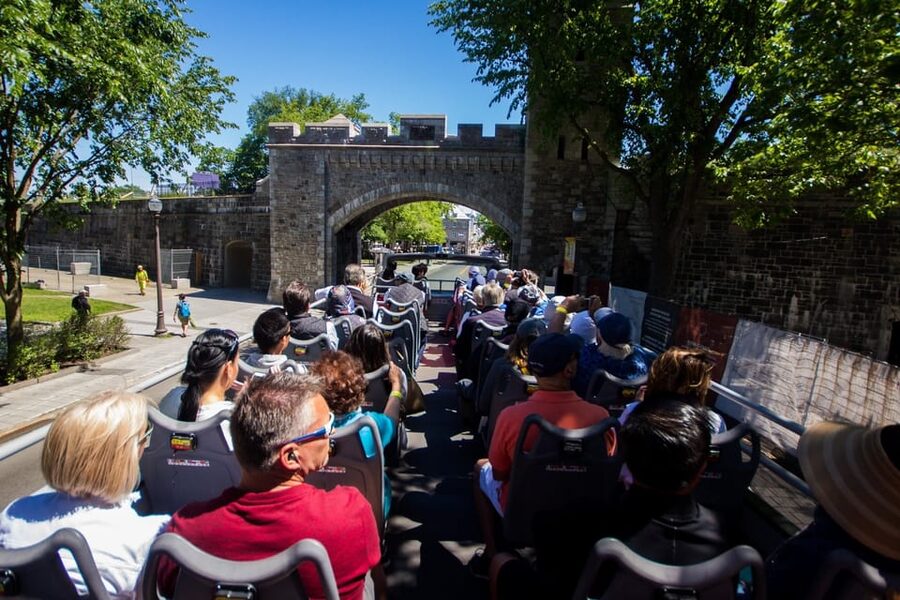
The upper deck is the prize on a clear day. You get a broad view over streets, rooftops, fortifications, and major buildings, while the lower deck offers a better refuge when the weather turns sour.
The bus is wheelchair accessible, but pets and large bags are not allowed. Wear comfortable shoes, even if you plan to ride often, since the best parts of Québec City still require walking once you get off.
Saint-Roch and the Museum of Civilization
The route then reaches Saint-Roch, a useful contrast to the more polished old quarter. You pass through a district with a different urban feel, giving you a fuller picture of Québec City rather than only its postcard center.
Saint-Roch is a sensible stop if you want to see beyond the fortified upper town. If your main aim is the classic sights, you may prefer to stay aboard on the first circuit and save this area for later.
The bus continues past the Museum of Civilization. Its location makes it a useful stop for anyone interested in Québec’s culture and social story. It also gives you a reason to break up the bus ride with an indoor visit, especially on a cold or rainy day.
Because the bus may not return for up to 45 minutes, check the timing before you step off. A short museum visit may not fit neatly between buses, and you may need to wait for the next full arrival.
Place Royale and the Old Port
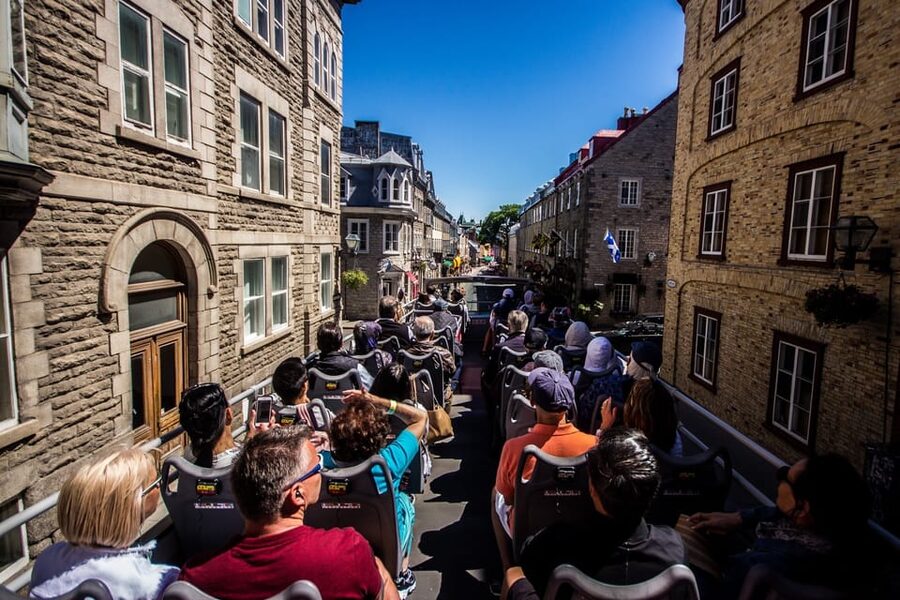
At Place Royale, the tour reaches one of the most atmospheric parts of Québec City. This is a strong place to leave the bus and walk, since the surrounding streets reward slow exploration more than a quick look from the upper deck.
The route also serves the Marché du Vieux-Port, or Old Port Market. This stop works well if you want a break from monuments and museums, with a chance to browse local food and market displays.
I would group Place Royale and the Old Port together on foot if the timing works. The stops are close enough in parts of the route that walking between a couple of them can be more efficient than waiting for the bus.
This is also where the ride’s strengths and limits become clear. The bus shows you the setting and provides background, but it cannot give you the same feel as walking the lanes, pausing in a square, or looking closely at the buildings.
A few more Quebec City trips to weigh up
- Quebec City Walking Tour
★ 5.0 · 4,716 reviews - Quebec City: Guided Tour of Fairmont Le Château Frontenac
★ 4.7 · 3,027 reviews - Québec City: Guided Sightseeing River Cruise
★ 4.4 · 3,000 reviews - Half-Day Trip to Montmorency Falls and Ste-Anne-de-Beaupré from Quebec city
★ 4.0 · 2,718 reviews
The convention center and Observatoire de la Capitale
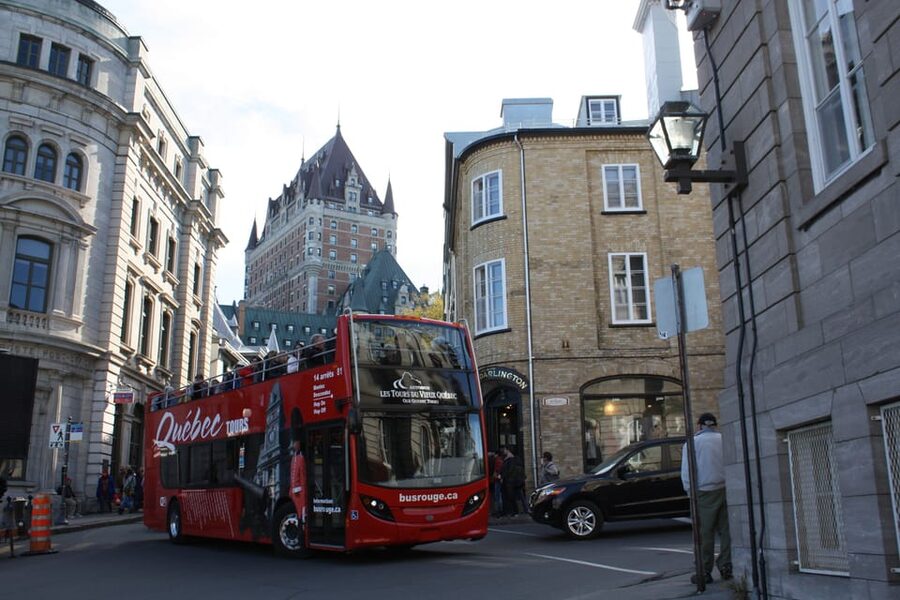
The route next passes the Centre des Congrès de Québec, the city’s convention center. It is not likely to be the first stop you choose for sightseeing, but it helps connect Old Québec with the newer city center.
The Observatoire de la Capitale is a more useful stop for a high-level view. The bus already provides a raised perspective, but an observation deck gives you a fixed panorama and a chance to understand how Québec City fits together.
If you want to visit the observatory, allow enough time for the next bus. The 30 to 45-minute service interval can turn a quick stop into a longer pause, which is fine if you have a flexible schedule but less convenient if you are trying to fit several museums into one day.
The recorded narration tends to place strong weight on history. That is helpful if you want background about the city and its battles, but it may not always identify each sight as clearly as you expect. Keep your eyes up and use the stop list as a guide to what you are passing.
The Voltigeurs Armoury and the Plains of Abraham
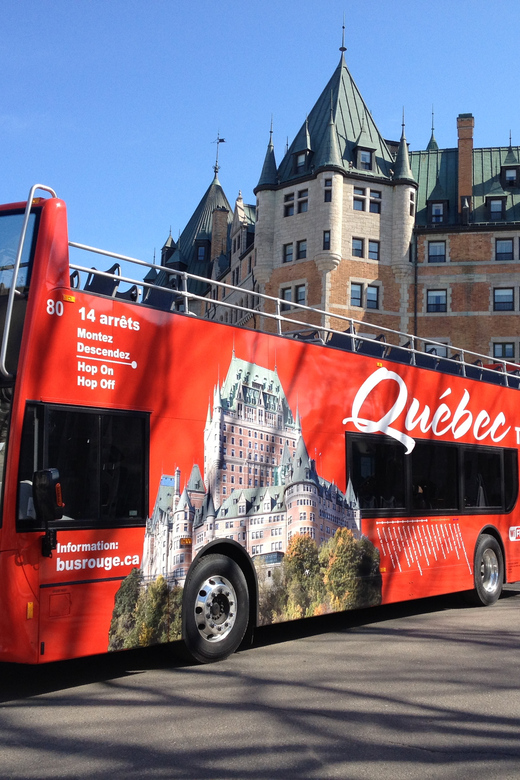
The Voltigeurs de Québec Armoury, also called the Manège Militaire, adds a military chapter to the route. It fits naturally with the commentary about the conflicts involving the French, English, and Americans.
The bus then reaches the Plains of Abraham, one of the key open spaces in Québec City. This is a good place to get off if you want room to walk and a break from the tight streets of the old center.
The Plains are particularly valuable for putting the city’s military story in context. The ride gives you the broad outline, while getting off lets you spend time with the setting itself.
I would not rush this stop. If you have a sunny day, the open deck and the open park make a pleasant combination, but you should bring sun protection. A hat is specifically recommended, and the upper deck can expose you to more sun than expected.
The National Museum of Fine Arts and Avenue Cartier
The route continues to the National Museum of Fine Arts of Québec, a natural choice for art lovers and for anyone who wants an indoor stop. It is also a good place to pause if the weather makes the top deck uncomfortable.
Nearby Avenue Cartier and the Quartier Saint-Jean-Baptiste offer a change from the monumental streets around Château Frontenac. These areas are useful for seeing a more everyday side of the city, with shops, restaurants, and local street life.
The listed route includes the Quartier Saint-Jean-Baptiste as well as Avenue Cartier. You may find that the best plan is to walk between nearby points rather than treat every stop as a separate bus excursion.
This is one of the route’s practical advantages. You can use the bus to cover distance, then walk short sections when stops are close together. That approach reduces waiting and gives you more time outside the vehicle.
Place d’Youville and the Citadelle
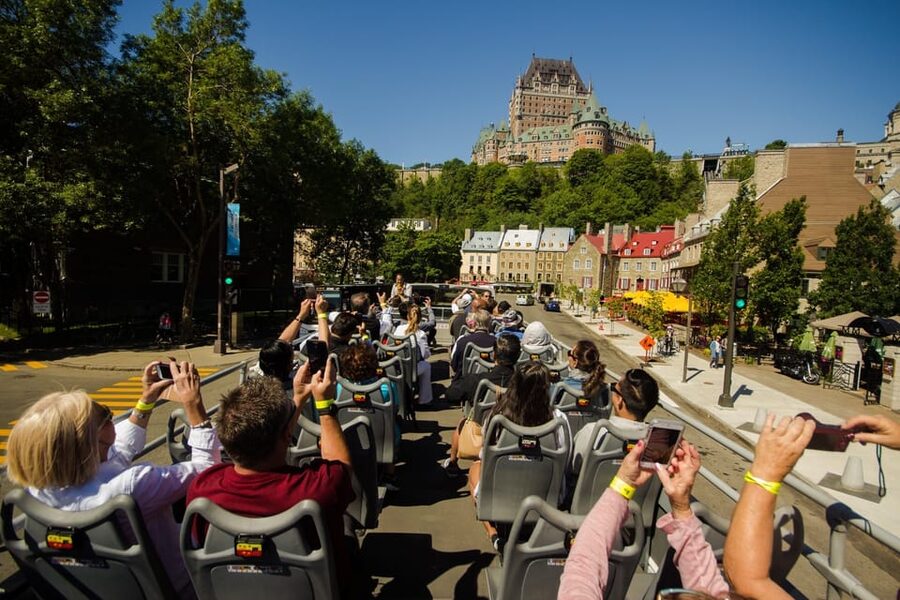
Place d’Youville sits near an important transition between Old Québec and the newer parts of the city. It is a convenient stop for combining the bus with a walk toward Saint-Jean Gate and the old fortifications.
The final major sight is the Citadelle de Québec, a must-see for anyone interested in military history, city defenses, or the relationship between Québec and the British Empire. The bus makes reaching it easier than tackling the uphill streets from the lower parts of town.
The Citadelle is a good example of why the tour works best as a planning tool. You can see where it is on the circuit, get some background, and then decide if you want to return for a longer visit.
The route brings you back to Place d’Armes. From there, you can continue exploring on foot or start another circuit if your ticket remains valid.
Audio commentary, drivers, and what you hear
The included headphones connect you to recorded commentary in 10 languages: English, French, Spanish, Chinese, German, Italian, Japanese, Arabic, Portuguese, and Russian.
The headsets generally provide clear sound, and the onboard ports are reported to work well. This is a useful feature because traffic noise and open-air seating can make ordinary spoken narration hard to follow.
The recording is more historical than stop-by-stop in places. You may hear a useful account of Québec City’s past without always being told exactly which building is in front of you. I would keep the route map or stop list handy so you can match the narration with the sights.
The driver can make a major difference. Pierre is praised for adding useful information and humor, while Martin is described as friendly and funny. Michel may also provide extra live commentary, and one driver named Leon was remembered for stopping to allow photo opportunities.
You cannot count on a live guide for every departure. Some drivers rely mainly on the recording, while others add their own local details. That is not a flaw in the basic product, but it does mean the experience can vary from one ride to the next.
How to plan a useful one-day ride
I would begin with a full circuit and avoid getting off during the first run. At roughly two hours, it gives you a clean outline of the city and helps you decide which areas deserve more time.
After that, choose two or three priority stops. Trying to visit all 15 in one day will leave you spending too much time waiting and boarding. Québec City is best enjoyed at a slower pace once you know where you want to walk.
Keep the bus schedule in mind. Departures every 30 to 45 minutes are reasonable for a sightseeing service, but they are not frequent enough for careless planning. If you leave the bus just after it departs, you may wait a while, and the next full circuit can take close to two hours.
Some stops are close enough to reach on foot. Use that to your advantage, particularly around Place Royale, the Old Port, Place d’Youville, Saint-Jean-Baptiste, and Avenue Cartier. You may be able to visit two or three places before rejoining the route.
A two-day option is worth considering if available for your dates. Several people found the second day useful and only a small extra cost, since the first day can be used for orientation and the next for focused stops. The advertised one-day price is $48 per person, but the final cost depends on the option selected, so compare the one-day and two-day choices before paying.
Comfort, weather, and the small frustrations
The open-air top deck gives you the best views and makes the ride feel more like sightseeing than simple transport. On a warm, sunny day, it is the clear choice.
The same seats can feel less comfortable during a long circuit, and one person found the seats a little hard. The lower deck is the practical choice in poor weather, though heat and comfort may vary from one bus to another.
Cold weather deserves extra caution. A report of one chilly morning bus without the heat working shows why you should bring layers, especially in spring and autumn.
The bus is not the right place for luggage storage. Large bags are not allowed, so plan to board with only what you can keep with you. Comfortable shoes remain important because hopping off is only useful if you are ready to walk.
Who should book this Québec City tour?
I would recommend it to first-time visitors, people with limited time, families who want a break from walking, and anyone who finds steep streets difficult. It is also useful if you are staying outside the old center and want one ride to connect several districts.
It suits independent sightseers who want control over the day. You are not locked into a guide’s walking pace, and you can stay aboard for the full loop or get off at the places that interest you.
It is less useful if you already know Québec City well or plan to spend the whole day inside one museum or one compact neighborhood. In that case, the waiting time may cost more than the bus saves.
At $48 for one day, the value depends on how actively you use the stops. A single ride around the city is pleasant, but it is not the strongest value by itself. The ticket makes more sense when you use it to reach several districts, reduce uphill walking, and return to sights you want to explore.
Free cancellation up to 24 hours before departure and reserve-now, pay-later booking add flexibility. The tour is wheelchair accessible, but you should still check the physical needs of your planned stops once you get off.
Should you book it?
Book this bus tour if you want a clear first look at Québec City, need help with the hills, or have enough time to use several stops. Ride the full circuit first, then use the bus selectively rather than treating it as a taxi.
Skip it if you prefer to explore one compact area on foot and already know your route. For most first visits, though, the combination of open-deck views, broad city coverage, multilingual audio, and occasional live commentary makes this a practical way to get oriented before you set out on your own.
FAQ
Where does the Québec City hop-on hop-off bus tour start?
The first stop for all loops is Place d’Armes, near Château Frontenac, at 7 Rue du Fort in Québec City. You can also board at other stops along the route.
How long does one complete loop take?
One complete loop takes about 1 hour 45 minutes to 2 hours, depending on traffic and other conditions.
How often do the buses depart?
Buses generally depart every 30 to 45 minutes, with frequency changing by season and possible delays from traffic or other issues.
What languages are available for the audio guide?
The audio commentary is available in English, French, Spanish, Chinese, German, Italian, Japanese, Arabic, Portuguese, and Russian.
Is the bus wheelchair accessible?
Yes, the activity is listed as wheelchair accessible. Pets and luggage or large bags are not allowed.
What does the ticket cost and can I cancel?
The listed one-day price is $48 per person. Ticket options may include one or two days, depending on availability. You can cancel up to 24 hours in advance for a full refund, and reserve-now, pay-later booking is available.
Just added around Quebec City
- Kingston: Skippered Sailing Charter★ 4.7 · 4 reviews
- Quebec: Private custom tour with a local guide★ 4.9 · 4 reviews
- Quebec Interactive Street Theatre: “Crimes in New France”★ 4.6 · 175 reviews
- Quebec : Old Town Walking Tour With A Local Guide★ 4.5 · 38 reviews
- Québec: Fortifications-of-Québec Guided Walking Tour★ 4.7 · 60 reviews
- Quebec: Christmas Interactive Walking Tour of New France★ 4.3 · 7 reviews
- Quebec: Cuivres A. Gilles – (Free Entry) Fee for Workshop★ 4.8 · 19 reviews
- Quebec City: Winter Walking Tour in Old Quebec★ 4.9 · 30 reviews
Hop-On Hop-Off Bus Tours, compared.

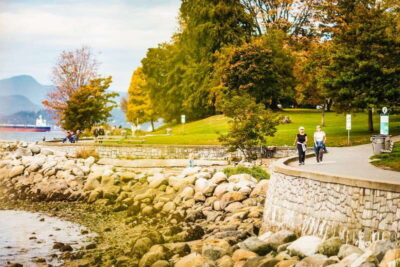
Big Bus Vancouver Hop-On Hop-Off Sightseeing Tour
Read our review →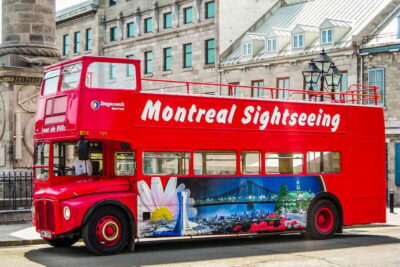
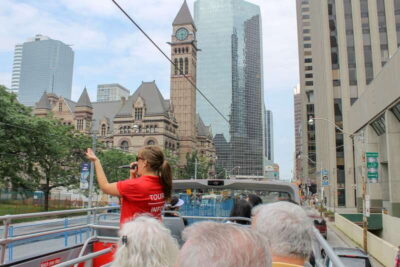
Hop-on Hop-off Sightseeing Tour with 10 Stops
Read our review →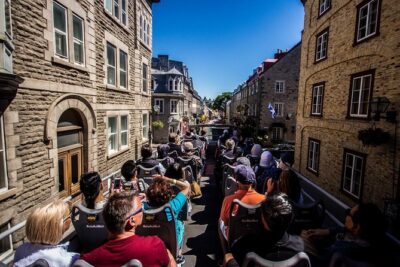

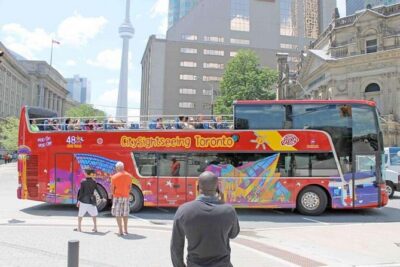
City Sightseeing Toronto Hop-On Hop-Off Bus Tour
Read our review →
Browse the lists this tour appears in