
Reviewed · CITY TOURS
Québec City: Saint-Louis-Forts-and-Châteaux visit
Beneath Québec City’s famous Dufferin Terrace lie the remains of Château Saint-Louis, where French and British governors directed colonial affairs for more than two centuries. I like the way this one-hour visit turns buried foundations into a readable story, and I especially like the Huron-Wendat perspective on diplomacy, which gives the site more depth than a simple fort tour.
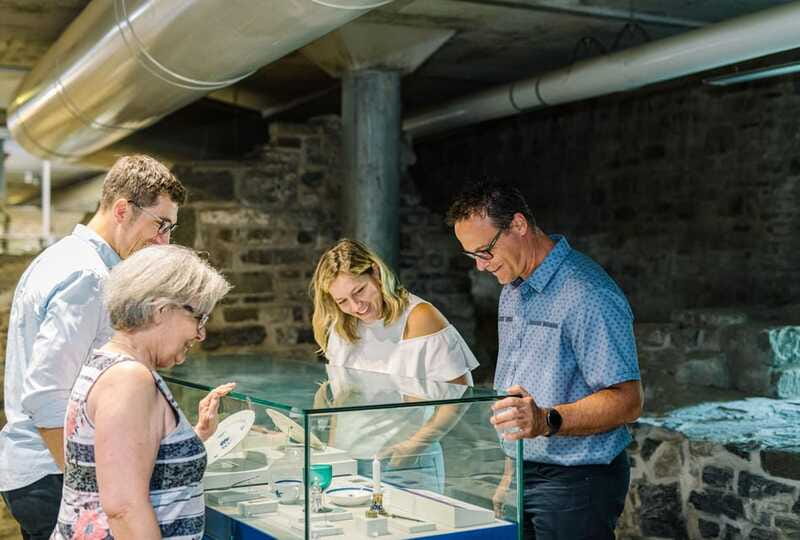
The archaeological displays are another strong point. You can study household objects and other finds that help explain daily life, including details about an old icebox and the odd uses of ammonia bottles. The main consideration is mobility: you descend stairs, and the site is not suitable for wheelchair users or people with mobility impairments.
In This Review
- Key points to know before you go
- Starting under Dufferin Terrace in Old Québec
- What Château Saint-Louis meant from 1620 to 1834
- Following diplomacy from a Huron-Wendat perspective
- Reading the artifacts instead of only looking at ruins
- Choosing the live guide or the Parks Canada audio tour
- A short visit with a lot packed into it
- Is the $9 admission a good deal?
- Who will appreciate this Québec City visit
- Practical tips for a smoother visit
- Should you book the Saint-Louis Forts and Châteaux visit?
- FAQ
- Where does the Saint-Louis Forts and Châteaux visit begin?
- How long does the visit last?
- How much does admission cost?
- Is the visit guided or self-guided?
- Which languages are available?
- Is the site accessible for wheelchair users?
- What should I avoid bringing?
Key points to know before you go
- The remains sit beneath Dufferin Terrace, right beside one of Old Québec’s best viewpoints over the St. Lawrence River.
- Château Saint-Louis was the seat of French and British power from 1620 to 1834, making this a political site as much as a military one.
- More than 120 archaeological artifacts help explain food, household routines, formal events, and life inside the château.
- The Huron-Wendat exhibition adds an important Indigenous perspective on alliances with colonial governors.
- You can choose a live guide or an audio tour through the downloadable Parks Canada app.
- The $9 price is strong value if you want historical context in a short visit, though the audio version may feel theatrical to some listeners.
Starting under Dufferin Terrace in Old Québec
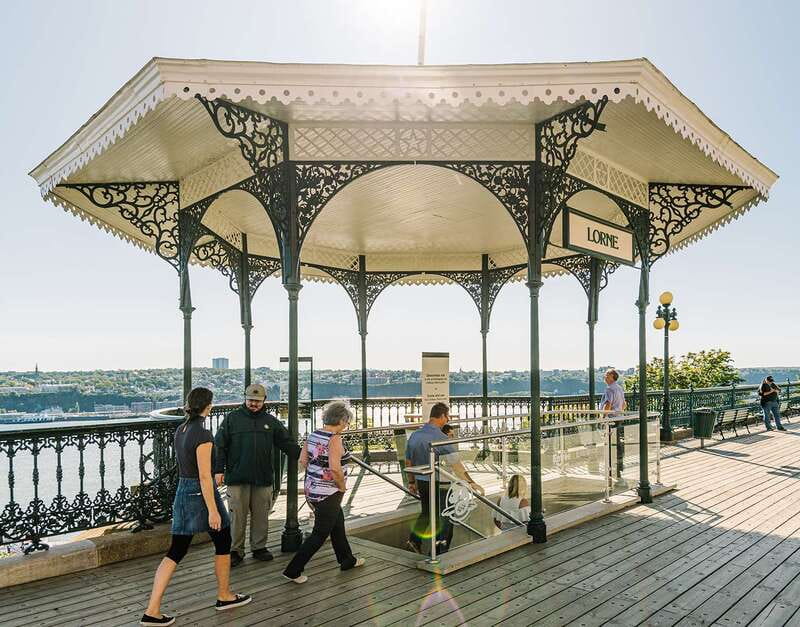
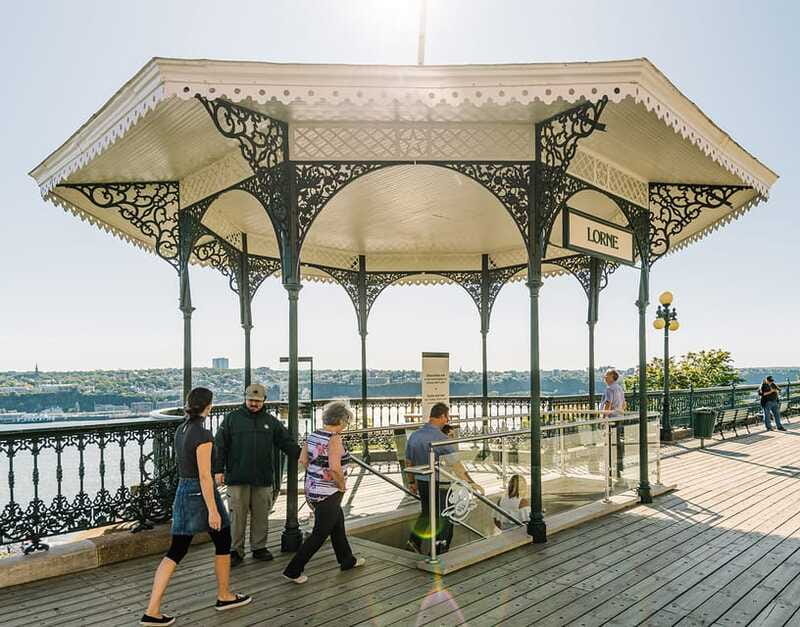
The visit begins at the start of Dufferin Terrace, where you look for a green and white kiosk marked Frontenac and flying a Canadian flag. A guide wears a green and beige uniform, so the meeting point is fairly easy to identify once you are on the boardwalk.
Take a moment before going below ground. Dufferin Terrace gives you broad views of the St. Lawrence River, and the setting helps explain why this ridge mattered. Québec City’s upper town offered commanding views and a defensible position, while the river served as the major route for trade, troops, news, and government.
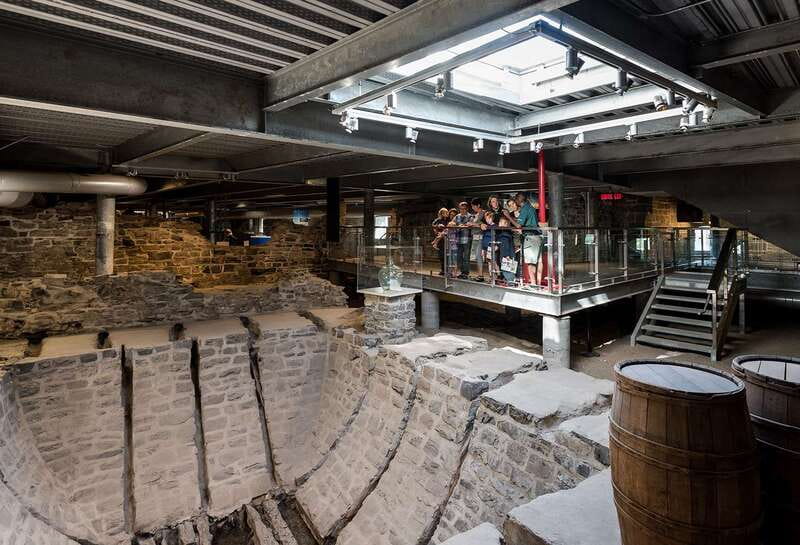
Then you leave the open boardwalk and descend to the archaeological site. That change is part of the appeal. One minute you are looking across the river from a busy public promenade, and the next you are among the foundations of a residence where governors hosted officials, received diplomats, and made decisions with consequences across North America.
The stairs are also the first practical warning. This is not a step-free attraction. If stairs are difficult for you, the visit will not be comfortable, and the site is specifically not suitable for wheelchair users or people with mobility impairments.
A few more Canada trips to weigh up
- Quebec City Walking Tour
★ 5.0 · 4,716 reviews - Quebec City: Guided Tour of Fairmont Le Château Frontenac
★ 4.7 · 3,027 reviews - Québec City: Guided Sightseeing River Cruise
★ 4.4 · 3,000 reviews
What Château Saint-Louis meant from 1620 to 1834
Château Saint-Louis was the official residence and seat of power for French and British governors between 1620 and 1834. It was not simply a place where officials slept. It was a working center of colonial administration, ceremony, diplomacy, and decision-making.
The site lets you picture the château as a changing complex rather than a single frozen building. Over more than 200 years, its architecture, planning, and use evolved. The remains help you follow that change, even though you are seeing foundations and archaeological evidence rather than a fully rebuilt château.
This is also the only château erected in Québec City. That distinction gives the site a useful place in the city’s story. Visitors often focus on the stone walls, churches, and fortifications still visible above ground, but this visit shows the residence that once connected those physical defenses to the political machinery behind them.
I find the political side especially worthwhile. The tour links the building to decisions affecting all of North America, but it does not leave the story at the level of governors and official events. The displays also bring the focus down to ordinary routines, objects, and practical problems inside the residence.
Following diplomacy from a Huron-Wendat perspective
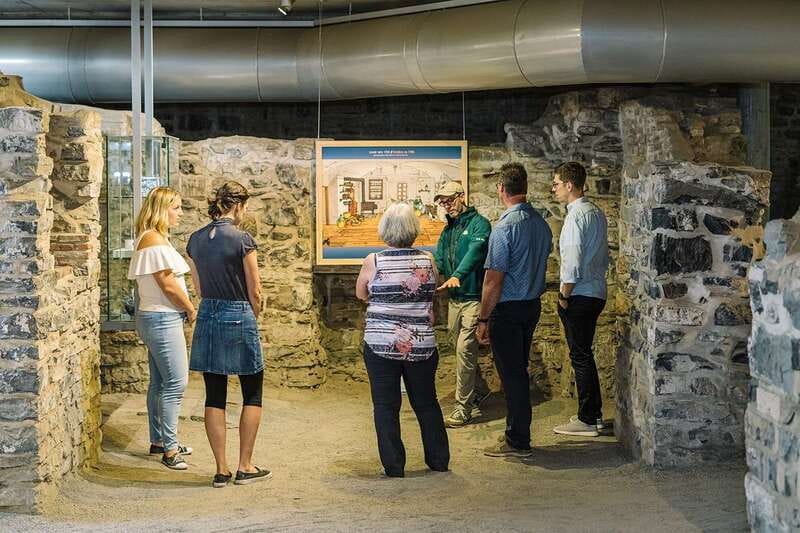
One of the most valuable parts of the visit is the exhibition created in collaboration with the Huron-Wendat Nation. It examines diplomatic alliances between the Huron-Wendat and colonial governors from a Huron-Wendat perspective.
That matters because colonial history can easily become a parade of governors, battles, and official agreements. Here, you get a reminder that diplomacy involved Indigenous nations with their own goals, political relationships, and choices. The château was a place where those relationships were discussed and managed, not just a stage for European authority.
The display gives the site a broader purpose. You are not only asking who lived in the building or how it was designed. You are also considering who met there, how alliances worked, and how decisions made at this official residence affected people far beyond Québec City.
If you have limited time in Old Québec, this section is one reason to choose the Saint-Louis visit over a purely architectural stop. The archaeological remains provide the physical setting, while the Huron-Wendat material helps you understand the human and political relationships that made the site important.
Reading the artifacts instead of only looking at ruins
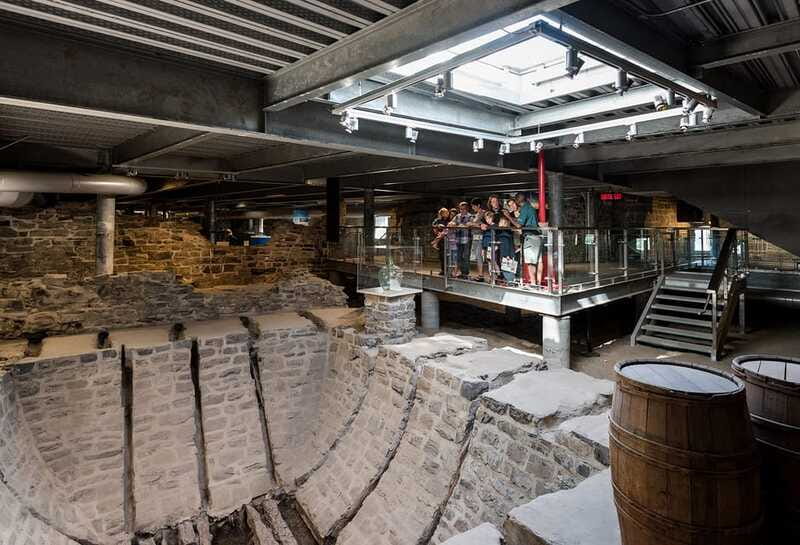
Ruins can be hard to interpret without help. A wall fragment or floor line may be interesting, but you need context to understand what it tells you. The archaeological collection solves that problem by putting daily objects alongside the remains.
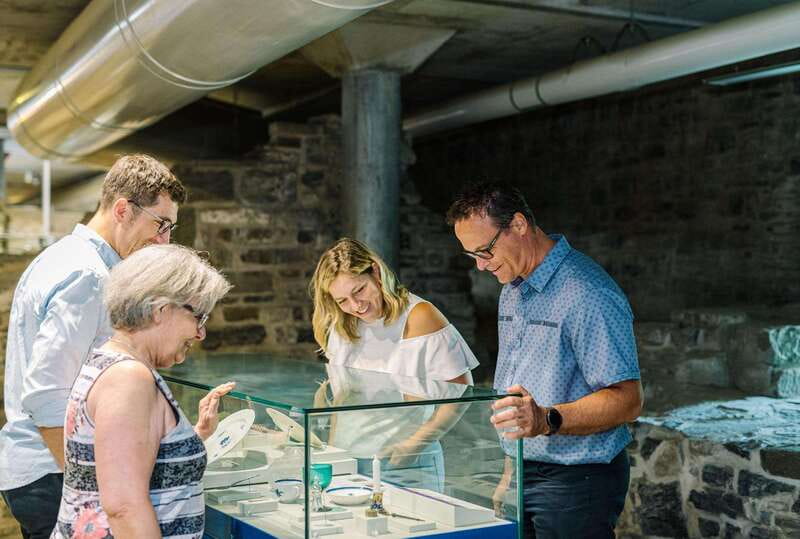
More than 120 artifacts are highlighted at the site, with finds from archaeological digs showing how the château functioned. The objects are useful because they make the residence feel occupied. Lavish official events are part of the story, but so are storage, food, cleaning, household work, and the small devices that made life possible.
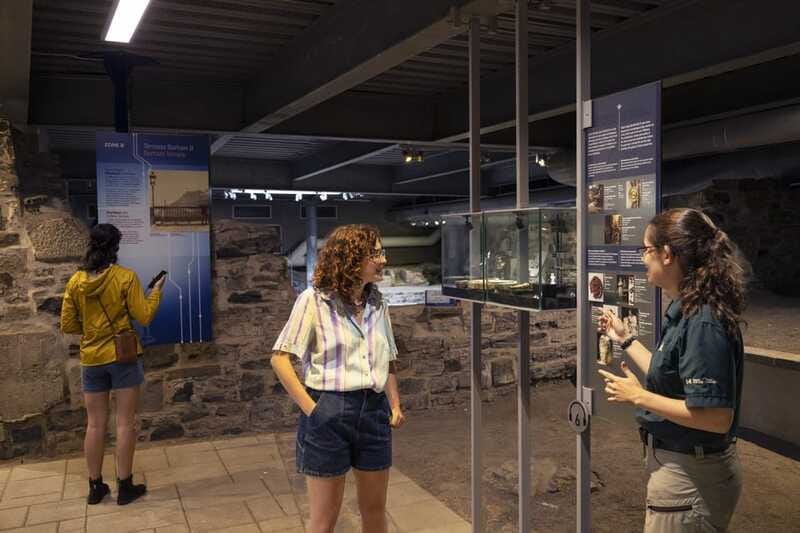
One particularly useful feature is the attention to details that you might otherwise pass without noticing. The tour explains how an icebox was used, what grooves in the bottom were for, and why women used bottles of ammonia. These practical facts can be more memorable than a list of dates because they answer the questions you naturally ask when looking at old household objects.
The displays also help you think about class and labor. A governor’s residence could host formal events and diplomatic meetings, but it depended on servants and workers handling the less glamorous tasks. The contrast between public ceremony and private labor gives the château a more believable shape.
I would not rush through the artifact cases. You can learn a great deal from objects that appear ordinary at first glance. Allow time to read the explanations, especially if you are using the audio tour and want to match what you hear with what you see.
Same province, a completely different day out:
- Vancouver Half-Day Whale Watching Adventure with Free Photos
★ 5.0 · 5,000 reviews - Niagara Falls: Premium Tour, Boat & Journey Behind the Falls
★ 4.8 · 4,207 reviews - Banff: Banff Gondola Admission Ticket
★ 4.7 · 3,698 reviews - Toronto: Niagara Falls Day Tour with Optional Boat Cruise
★ 4.6 · 3,178 reviews
Choosing the live guide or the Parks Canada audio tour
You have two ways to experience the site. An on-site heritage guide can lead the visit, or you can use the downloadable Parks Canada app for a self-guided audio tour.
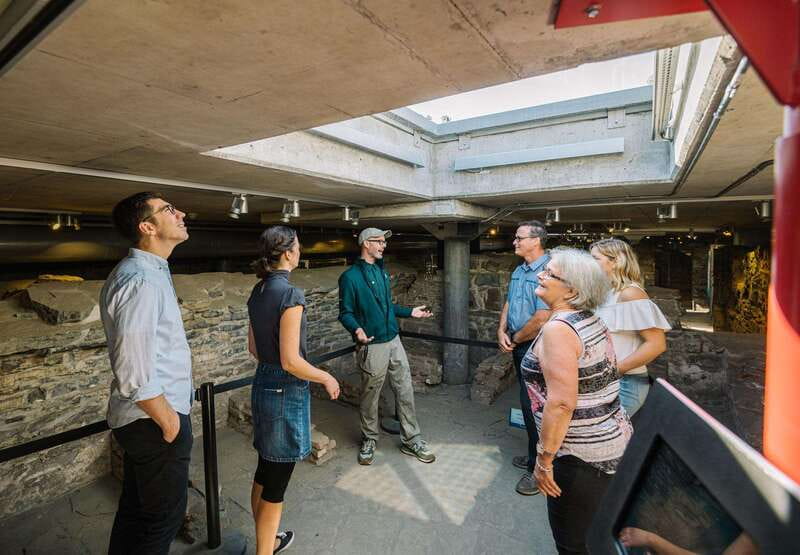
The live option is the better choice if you enjoy asking questions or want a guide to adjust the pace. A strong guide can connect the foundations, artifacts, diplomacy, and daily life without making the visit feel like a museum lecture. The experience has earned especially high marks for animated, informative guiding, so the live format is worth considering if it is available at a convenient time.
The audio version gives you more control. You can move at your own pace and spend extra time with objects that catch your attention. It is also useful if your group prefers to split up briefly or listen without keeping up with a walking group.
There is one caveat. The audio circuit uses a playful format in which you may hear roles such as governor or servant. Some people will find this interactive approach entertaining. Others may prefer straightforward historical explanation and dislike an audio piece that feels like theater.
If you want dates, objects, and direct interpretation, check your expectations before selecting the self-guided option. The audio tour still provides information, but its presentation style may not suit every listener. The live tour is the safer choice for visitors who prefer a traditional guide.
Guided tours are available in English, French, Spanish, German, and Chinese. The supplied information does not identify individual guides by name, so do not book expecting a particular person. The important choice is between a live heritage guide and the app-based audio route.
A short visit with a lot packed into it
The advertised duration is one hour, which is a useful fit for a day of sightseeing in Old Québec. You can visit the site without giving up half a day, yet the material covers architecture, government, diplomacy, household life, and archaeology.
That short length also means the pace may feel brisk if you read every label carefully. If you are fascinated by archaeology, you may want to stay longer with the displays than the standard circuit allows. The tour is best treated as a focused introduction rather than a complete study of every find from the site.
I like the balance between above-ground views and below-ground history. Start on Dufferin Terrace, take in the river, then use the stairs to reach the remains. That sequence gives you a clear sense of place before the indoor interpretation begins.
The experience works particularly well as a companion to other Old Québec sights. It adds the political residence beneath the terrace to the churches, streets, fortifications, and public squares you see elsewhere. You get a more complete picture of how the city functioned as a center of power.
Is the $9 admission a good deal?
At $9 per person, this is one of the easier Old Québec history stops to recommend on price alone. The fee includes access to an archaeological site, artifact displays, and either a heritage guide or the Parks Canada audio material. You are paying for interpretation, not just entry into an empty ruin.
The value is strongest if you enjoy understanding what you see. Without the explanations, the foundations could be difficult to read. With the tour, they become evidence of changing buildings, political decisions, formal gatherings, and daily routines.
The price is also reasonable for families and visitors building a full day around Old Québec. A one-hour stop does not demand a major time commitment, and the site is close to the attractions around Dufferin Terrace.
Military personnel, Canadian veterans, and their immediate families can receive daily free admission to Parks Canada sites with the applicable Platinum Une FC card or Canadian Veteran Service Card. This free entry does not include a guided tour, so confirm what format you are choosing if that benefit applies to you.
The main limitation is not cost but access. People who cannot manage stairs will not be able to make good use of the admission, and large bags, luggage, food, drinks, pets, and bare feet are not allowed. Assistance dogs are permitted.
Who will appreciate this Québec City visit
I would recommend the site to anyone who likes history with physical evidence. The remains and artifacts give you something concrete to study, while the diplomatic material keeps the story from becoming only a tour of old walls.
It is also a good match for visitors who want a short, central activity. One hour is enough to add substance to a walk around Old Québec without crowding out other plans.
Families may enjoy the everyday details more than the formal political material. The icebox, grooves, and ammonia bottles offer the kind of odd facts that help younger visitors connect with the past. The playful audio format could also appeal to children, though adults who dislike role-playing may prefer a live guide.
The visit suits history-minded adults, archaeology fans, and anyone interested in the relationship between colonial governments and First Nations. The Huron-Wendat perspective gives the stop more value for people who want to understand power and diplomacy from more than one side.
I would be cautious if you want a fully reconstructed building with grand rooms and intact furnishings. This is an archaeological site beneath a terrace, not a restored château that you can walk through room by room. Its rewards come from interpretation and imagination.
Practical tips for a smoother visit
Arrive at the green and white kiosk near the beginning of Dufferin Terrace and look for the Frontenac sign. The Canadian flag and the guide’s green and beige uniform help identify the meeting point.
Wear shoes suitable for stairs and an indoor heritage site. Leave large bags and luggage behind, since they are not allowed. Food and drinks are also prohibited, so plan to finish snacks before entering.
If you want a guide, check the available starting times before building your day around the visit. If you prefer to move independently, download the Parks Canada app and choose the self-guided audio route.
The site offers free cancellation up to 24 hours before the scheduled visit, and you can reserve now while paying later. Those terms are useful if your Old Québec plans depend on weather, river excursions, or a changing sightseeing schedule.
Should you book the Saint-Louis Forts and Châteaux visit?
Book it if you want an affordable, well-focused look at the political heart beneath Dufferin Terrace. The best reasons are the archaeological artifacts, the clear link to French and British government, and the Huron-Wendat perspective on diplomacy. At $9 and one hour, it adds real context without taking over your day.
Choose the live guide if you prefer direct explanation and questions. Choose the audio tour if you want flexibility, but keep in mind its role-playing style may not suit everyone.
Skip it if stairs are a serious problem or if you are looking for intact château rooms rather than foundations and displays. For everyone else, this is a useful Old Québec stop that makes the ground beneath the famous terrace tell a much bigger story.
FAQ
Where does the Saint-Louis Forts and Châteaux visit begin?
Meet at the beginning of Dufferin Terrace, near a green and white kiosk with a Frontenac sign and a Canadian flag.
How long does the visit last?
The visit lasts one hour.
How much does admission cost?
The listed price is $9 per person.
Is the visit guided or self-guided?
You can choose an on-site heritage guide or a self-guided audio tour using the downloadable Parks Canada app.
Which languages are available?
Live tours are available in English, French, Spanish, German, and Chinese.
Is the site accessible for wheelchair users?
No. The visit is not suitable for wheelchair users or people with mobility impairments.
What should I avoid bringing?
Food, drinks, luggage, large bags, pets, and bare feet are not allowed. Assistance dogs are permitted.
Just added around Canada
- 1 Hour Spray River Ride★ 4.5 · 204 reviews
- 2 Hour Banff Horseback Riding Adventure★ 4.0 · 145 reviews
- Lake Minnewanka, Peyto Lake, Bow Lake , Icefields★ 4.5 · 63 reviews
- Along Icefields Parkway: Peyto Lake, Bow Lake & Columbia Icefield★ 4.0 · 19 reviews
- Moraine Lake Lake Louise Johnston Canyon Emerald Lake Day tour★ 5.0 · 4 reviews
- 3 Day Algonquin Park Canoe Trip – Moose & Beaver Safari★ 5.0 · 27 reviews
- 3 Hour Algonquin Park Bass & Trout Fishing (private- price is for 1 or 2 people)★ 5.0 · 5 reviews
- Discover the Lake Agnes Tea House Trail with an Audio Nature Tour★ 4.0 · 7 reviews
City Tours, compared.


Half-Day Trip to Montmorency Falls and Ste-Anne-de-Beaupré from Quebec city
Read our review →

Old Quebec City: Grand Walking Tour with Private Option
Read our review →

Quebec City and Montmorency Falls Day Trip from Montreal
Read our review →Browse the lists this tour appears in