
Reviewed · HISTORICAL TOURS
The Really Gay History Tour in Vancouver, Canada
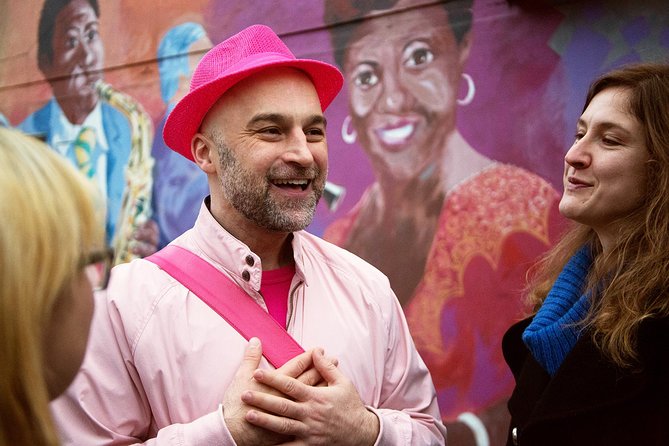
Vancouver’s queer past is written into ordinary streets, parks, churches, bookstores, and bars. This two-hour walking tour brings those places into focus, linking early Pride parades, community courage, political fights, and painful chapters such as the GRID crisis. Guide Glenn, known as the man in pink, carries the experience with warm humor and serious purpose.
I like two things right away: the route gives you a better feel for central Vancouver on foot, and the stories reach beyond famous names and rainbow storefronts. You hear about drag kings, gay ministers, a transgender campaigner, two-spirit resistance, and the people who pushed the city toward change. The main consideration is that the tour includes explicit language and difficult subjects, so it is best suited to mature listeners aged 14 and older.
In This Review
- Key points to know before you book
- Why Vancouver’s queer history is best heard on foot
- Meeting the man in pink on Burrard Street
- Churches, health crises, and the cost of visibility
- Nelson Park and the quieter side of community life
- Early Pride, Jim Deva Plaza, and public protest
- Vancouver’s secret gay village and a crime whistleblower
- The story of Gone to the Spirits
- The Davie Street finish and what $29.29 buys you
- Who should book this Vancouver walking tour
- Should you book The Really Gay History Tour?
- FAQ
- Where does The Really Gay History Tour start?
- Where does the tour end?
- What time does the tour begin?
- How long does the walking tour last?
- Is the tour suitable for children?
- What happens if it rains?
Key points to know before you book
- Glenn’s storytelling is the main attraction: He connects individual lives to larger events and keeps the tone human, funny, and respectful.
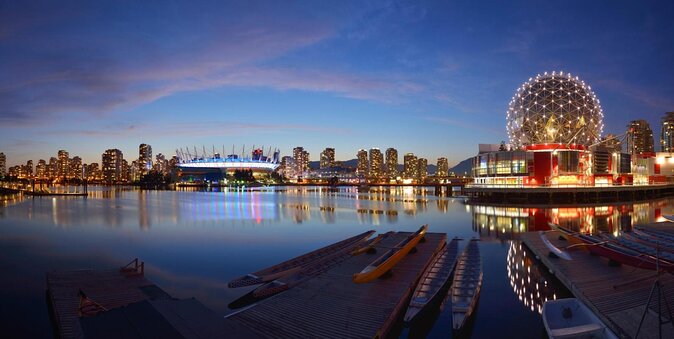
- The route crosses several important Vancouver districts: You walk from Burrard Street through the West End and finish in the Davie Street village.
- The subjects are wide-ranging: Expect Pride, drag culture, church history, public health, activism, crime, censorship, and two-spirit identity.
- It is a manageable half-day plan: The walk lasts about two hours and ends near bars and restaurants, leaving your afternoon open.
- The tour runs rain or shine: Sensible shoes matter, and sunscreen helps on warm days. Several stops offer cover.
- The small group limit is 20 people: That gives the guide a reasonable chance to be heard and keeps the walk from feeling like a parade.
Why Vancouver’s queer history is best heard on foot
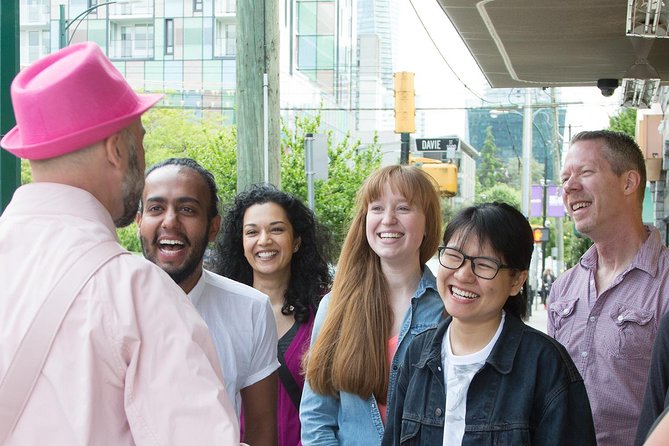
The appeal here is not simply learning where Vancouver’s LGBTQ2+ community gathers today. You are shown how public spaces gained meaning over time. A plaza may look like a pleasant place to sit, while a nearby storefront may appear to be just another business. The guide adds the missing layer: who fought there, who organized there, and what changed because people refused to stay silent.
That makes this a useful first-day or last-day activity. Early in your visit, it can help you understand the West End and Davie Street before you explore them on your own. Near the end of your stay, it can give familiar streets a new meaning. One especially good feature is the short format. Two hours is long enough for substance but not so long that your feet or attention give out.
The tour starts at 10:00 a.m. outside Trees Organic Coffee Shop at 930 Burrard Street. Plan to arrive about 10 minutes early. The guide departs on time, and late arrivals risk missing the opening. The finish at Jim Deva Plaza, 1200 Bute Street, puts you directly in the Davie Street village, a handy spot for lunch or an afternoon walk.
A few more Vancouver trips to weigh up
- Gastown Historic Walking Food Tour
★ 5.0 · 1,863 reviews - Vancouver: Gastown Historical Walking Food Tour
★ 4.8 · 539 reviews - Vancouver: Guided Food and City History Tour
★ 4.5 · 53 reviews
Meeting the man in pink on Burrard Street
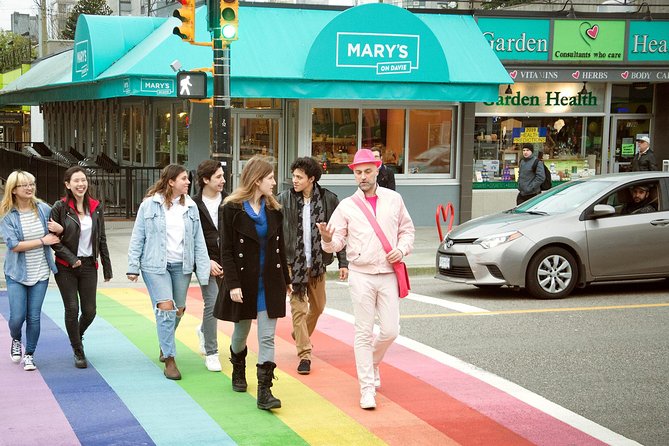
The opening introduction sets the tone. Glenn is presented as the man in pink, an easy visual marker when you are meeting outside a busy downtown coffee shop. His role is more than pointing out buildings. He gives you the people and conflicts that make those buildings matter.
The storytelling is repeatedly praised for its clarity, humor, and emotional range. Glenn can handle painful material without flattening it into a lecture, then find room for a laugh when the subject allows. That balance matters on a tour covering discrimination, public health, activism, and loss. You should expect a lively spoken presentation rather than a dry list of dates.
The first stretch moves through downtown Vancouver and introduces the forces that shaped the city’s LGBTQ2+ community. You hear about Imperial Court coronations, an important part of queer social and fundraising culture, as well as drag kings at the Quadra. These details give you a fuller picture of community life. This was not only a political movement. It also involved performance, celebration, chosen family, and spaces where people could be seen.
Churches, health crises, and the cost of visibility
The route includes the story of gay ministers at the United Church. That stop broadens the tour beyond nightlife and protest. Religion and queer identity are often presented as simple opposites, but this story points to a more complicated Canadian experience, with individual clergy and congregations helping shift public attitudes.
You also hear about Patient Zero and the GRID crisis. These are difficult topics, and the tour does not treat LGBTQ2+ history as a cheerful collection of victories. The health crisis brought fear, misinformation, grief, and a need for organized community care. Hearing about it in the city where people lived through those years gives the subject a local scale.
This is one reason I would not choose the tour for a young child or anyone looking only for light sightseeing. The material may be emotionally heavy. The stated guidance is that it is not recommended for anyone under 14, and the tour includes explicit language. For mature listeners, that directness is part of its value. It respects the fact that progress came with a price.
Nelson Park and the quieter side of community life
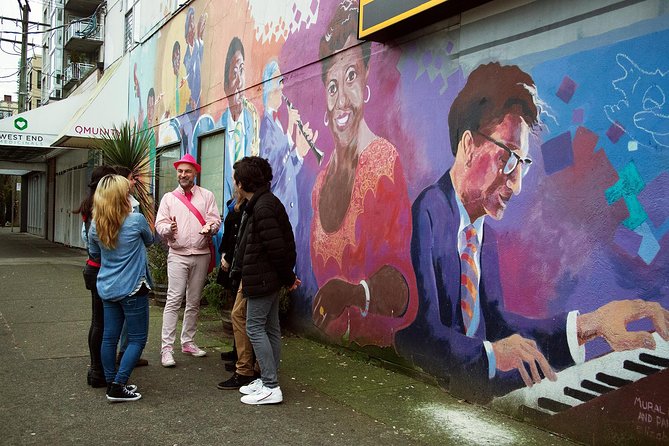
The walk includes Nelson Park, described as an urban oasis in the West End. Parks can seem like pauses between major landmarks, but here the stop helps show how queer life occupied ordinary public space. Community history is not confined to a museum or a single district. It unfolds in places where people met, rested, organized, and watched city life pass by.
The tree-lined West End also gives your legs a break from the harder surfaces of downtown. Still, this is a walking tour, not a vehicle-based city circuit. You should wear sensible shoes and be ready to walk for roughly two hours. The physical demand is described as moderate, and the route is considered a relatively easy walk, but anyone with mobility concerns should think carefully about the pace and surfaces.
Weather is another practical point. The tour runs rain or shine. Some stops are under cover, but you should arrive prepared for Vancouver’s changing conditions. Bring sunscreen in warm weather, and dress for rain when the forecast calls for it. Mobile tickets keep the arrival simple, but they do not replace basic preparation.
Same province, a completely different day out:
- Vancouver Half-Day Whale Watching Adventure with Free Photos
★ 5.0 · 5,000 reviews - Big Bus Vancouver Hop-On Hop-Off Sightseeing Tour
★ 3.5 · 3,028 reviews - Victoria & Butchart Gardens Tour with Ferry from Vancouver
★ 4.5 · 2,703 reviews - Vancouver: Covered Whale Watching Adventure with Free Photos
★ 4.8 · 2,260 reviews
Early Pride, Jim Deva Plaza, and public protest
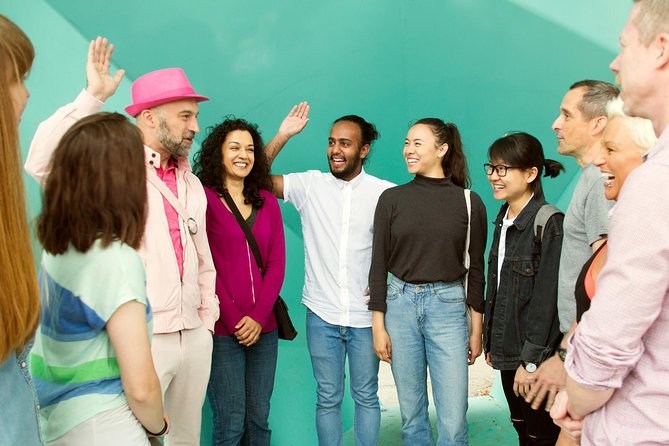
As the route continues toward the West End, the focus shifts to public action. You learn about Vancouver’s earliest Pride parade and the people who made visibility possible at a time when public queer expression could carry real personal and professional risk.
Jim Deva Plaza is one of the most meaningful points on the route and also the endpoint. The plaza honors Jim Deva, a major local bookseller and free-expression advocate. The tour connects the place with bookstore bombings, showing how access to queer books and information became a target, and why defending a bookstore could also mean defending a community’s right to speak and learn.
Ending here works well. Instead of finishing at an isolated attraction, the tour leaves you in the middle of Davie Street’s gay village. You can continue the conversation over food or drinks, or simply walk the district with a better sense of what you are seeing. The final location is useful even if you are not planning nightlife, since it gives you a central base for the rest of your day.
Vancouver’s secret gay village and a crime whistleblower
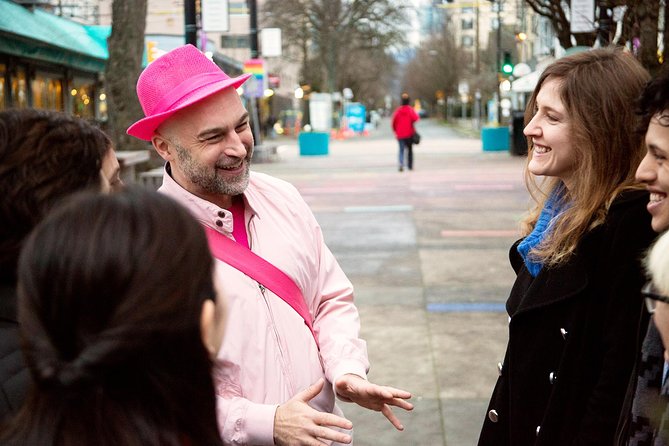
One of the more intriguing parts of the walk concerns Vancouver’s secret gay village. The phrase points to a lesser-known layer of the city’s past, when queer gathering places were not always openly marked or publicly accepted. This section should appeal to anyone who prefers local history that is not limited to official plaques and major attractions.
The tour also tells the story of a transgender campaigner who blew the whistle on the biggest crime in Vancouver history. That pairing, hidden community spaces and a major public crime, shows how LGBTQ2+ history intersects with the wider civic story. Queer people were not simply watching Vancouver change from the sidelines. They were activists, witnesses, organizers, artists, ministers, business owners, and public figures who shaped the city around them.
Because the supplied details do not name the crime or provide a full account of the campaigner’s case, you should expect Glenn to supply the fuller narrative during the walk. The promise here is the connection between personal courage and public consequence, not a complete course in Vancouver criminal history.
The story of Gone to the Spirits
The itinerary closes with the remarkable story of Gone to the Spirits, described as a two-spirited warrior. This adds an Indigenous and gender-diverse perspective that is important to the tour’s scope. It signals that LGBTQ2+ history cannot be reduced to a modern gay-and-lesbian timeline or to the history of Davie Street alone.
The exact detail of the story is best heard from the guide, but its place in the route is clear. The tour aims to show a broad community with different identities, traditions, and struggles. That wider view gives the walk more depth than a simple tour of nightlife venues.
You may find that the emotional tone changes from stop to stop. Some stories are funny, some are startling, and some are painful. Glenn’s gift, according to the strongest praise for the experience, is knowing when to use humor and when to let a serious story have room. That is a valuable skill on a subject that can easily become either too grim or too glossy.
The Davie Street finish and what $29.29 buys you
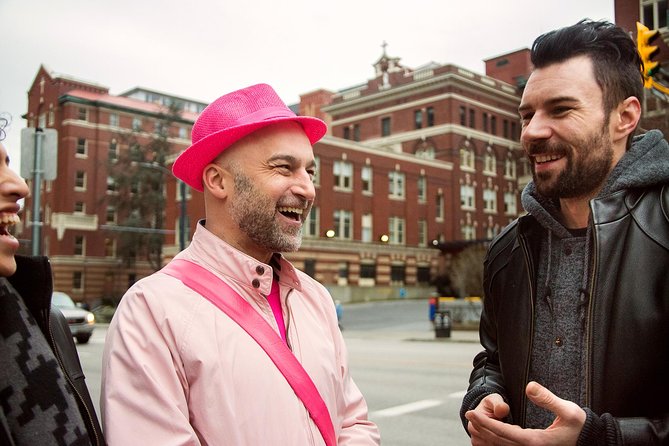
At $29.29 per person, this is a fair price for a small-group, professionally guided two-hour experience in central Vancouver. You are paying for research, presentation, and access to a connected local story, not for admission to a museum or a meal. The tour includes a professional guide, while admission is otherwise free.
The value is strongest if you care about history, LGBTQ2+ culture, local politics, or learning the meaning behind places you might otherwise pass without noticing. It is also a sensible choice for solo visitors. The group gives you a social setting without requiring a full-day commitment, and the route ends near places where you can continue on your own.
The value is less clear if you want sweeping views, major architectural sights, or a general introduction to Vancouver. This is a focused history walk. You will see city streets and parks along the way, but the stories are the point. For a broad city overview, pair it with another activity rather than expecting this one tour to cover everything.
The maximum group size is 20 people. That is not private-tour intimacy, but it is small enough to support a clear presentation and questions when the group is attentive. The tour is offered in English only, and mobile ticketing makes it easy to carry confirmation on your phone.
Free cancellation is available up to 24 hours before the start time for a full refund. Changes or cancellations made less than 24 hours before the 10:00 a.m. departure are not accepted for a refund, so keep that deadline in mind when arranging your Vancouver schedule. Service animals are allowed, and the start is near public transportation.
Who should book this Vancouver walking tour
I would recommend this tour to you if you want more than a quick photo on Davie Street. It suits people who enjoy strong storytelling, local social history, and tours that connect private lives with public change. It also works well for LGBTQ2+ visitors looking to understand Vancouver’s queer community, but you do not need to identify as LGBTQ2+ to get value from it.
It is a particularly good pick for:
- First-time visitors who want a meaningful introduction to the West End and Davie Street
- Vancouver residents who suspect they know the city but want its less visible stories
- Solo visitors, couples, and friends seeking a short, focused activity
- People interested in Pride, activism, drag culture, church history, public health, or free expression
- Anyone who prefers a guide with personality rather than a scripted sightseeing route
I would hesitate if you dislike explicit language, find discussions of illness and discrimination upsetting, or cannot manage a moderate walk. The rain-or-shine policy also calls for practical clothing. This is not a polished parade of easy victories. It includes pain, conflict, and unfinished work, alongside humor, love, and progress.
Should you book The Really Gay History Tour?
Yes, if you want to understand Vancouver through the people who fought to make room for themselves in it. At two hours and $29.29, the tour asks for little time or money, yet gives you a much sharper sense of why the West End and Davie Street matter.
Book it for Glenn’s storytelling, the carefully connected route, and the chance to hear about subjects that standard city tours usually skip. Just arrive early, wear good shoes, prepare for the weather, and come ready for candid language and serious history. If that sounds like your kind of afternoon, this is an easy tour to add to your Vancouver plans.
FAQ
Where does The Really Gay History Tour start?
It starts outside Trees Organic Coffee Shop at 930 Burrard Street, Vancouver, British Columbia.
Where does the tour end?
The walk ends at Jim Deva Plaza at 1200 Bute Street, in the Davie Street village.
What time does the tour begin?
The scheduled start time is 10:00 a.m. You should arrive 10 minutes early for check-in.
How long does the walking tour last?
The tour lasts approximately two hours.
Is the tour suitable for children?
The tour is not recommended for anyone under 14. It includes explicit language and discusses difficult subjects connected with LGBTQ2+ history.
What happens if it rains?
The tour runs rain or shine. Several stops are under cover, but you should wear suitable clothing and bring sunscreen when the weather is warm.
Just added around Vancouver
- Vancouver: The Supernatural TV Show Locations Tour★ 4.9 · 32 reviews
- The Ultimate Stanley Park E-Bike Tour★ 4.9 · 33 reviews
- The Haunting of Vancouver Film Tour★ 4.9 · 9 reviews
- Sunset Bus Tour: Stanley Park & English Bay Photostops★ 4.5 · 181 reviews
- Stanley Park Self Guided Bike Tour★ 4.1 · 12 reviews
- Stanley Park EUC & E-scooters loop tour★ 5.0 · 4 reviews
- Stanley Park CarTour:SmallGroup/Comfort&CheaperThan BikeTour★ 4.9 · 46 reviews
- Snowshoeing At The Top Of The Sea To Sky Gondola★ 5.0 · 6 reviews
Historical Tours, compared.
Evening Gourmet Tour 5 Course Dinner – History and Food in Old Quebec City
Read our review →
Browse the lists this tour appears in