
Reviewed · WALKING & GHOST TOURS
Quebec City: Old Quebec Historical Walking Tour
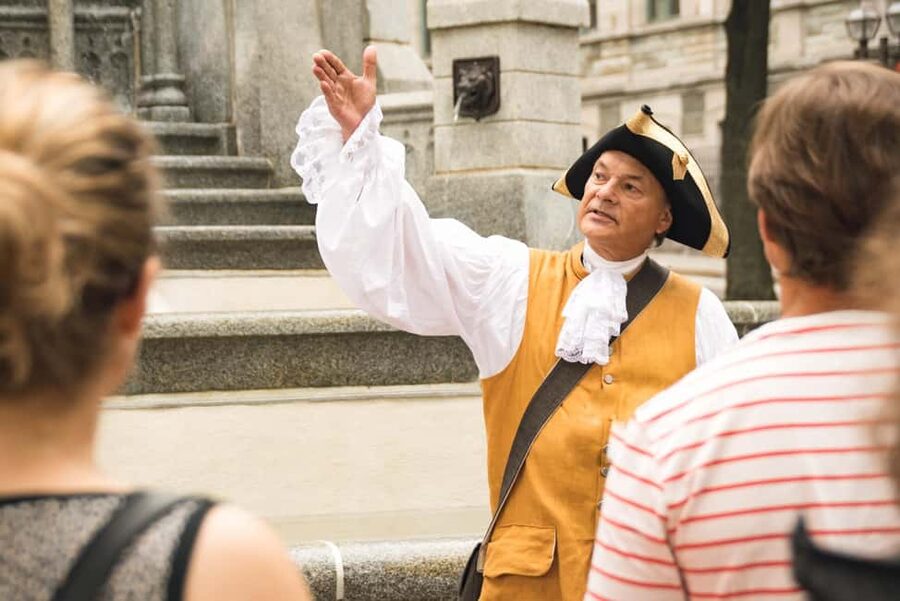
Old Quebec is best understood on foot, and this two-hour historical walk gives you a lively introduction to its stone streets, grand buildings, and French beginnings. Your guide appears in period costume and takes on a historical character, turning the city’s past into a story rather than a string of dates. Guides have included Pierre, Louis Hébert, Champlain, Bernard, and Marie-Anne Barbel.
I like the way the tour reaches beyond the obvious postcard views, and I like its mix of political, religious, Indigenous, and everyday settlement history. At $24 per person, it is a strong value for a first look at the city. The main caution is physical: Old Quebec has hills, stairs, and uneven streets, and the tour is not suitable for wheelchair users.
In This Review
- Key points to know before you book
- Why a guide helps in Old Quebec
- Starting at Sainte-Anne Street
- Château Frontenac and Dufferin Terrace
- Notre-Dame Basilica and the religious story
- Place Royale, the cradle of French settlement
- A story-led tour with room for questions
- How demanding is the two-hour walk?
- Is $24 a fair price?
- Who should take this tour?
- Should you book the Old Quebec Historical Walking Tour?
- FAQ
- How long is the Old Quebec Historical Walking Tour?
- How much does the tour cost?
- Which languages are offered?
- Where do I check in?
- Which sights are included on the route?
- Is the guide in costume?
- Is the tour suitable for wheelchair users?
- What should I bring?
- Can I cancel the booking?
Key points to know before you book
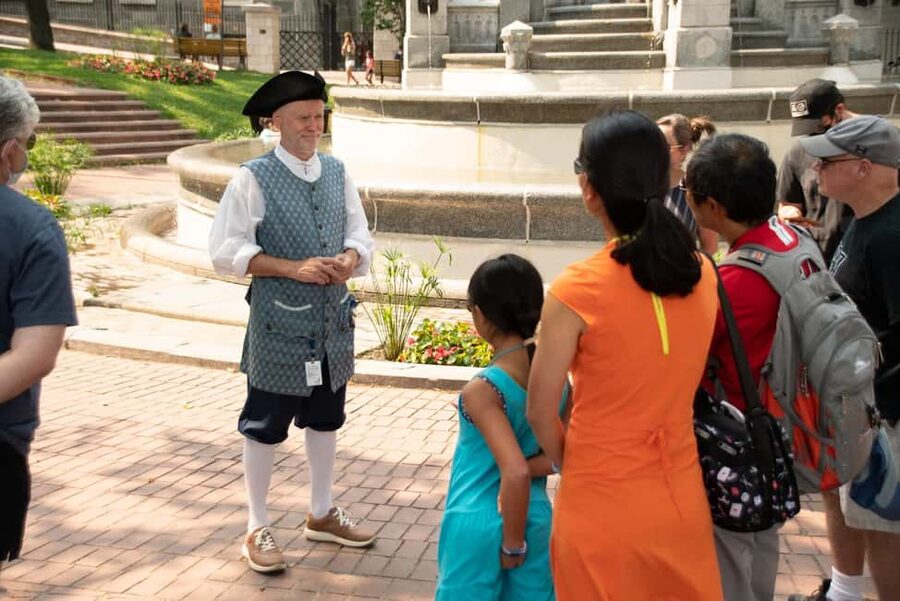
- A period-costume guide makes the past easier to follow: Historical characters such as Champlain or Louis Hébert help turn complex events into memorable stories.
- The route covers Old Quebec’s essential sights: Expect Place Royale, Dufferin Terrace, Château Frontenac, Notre-Dame Basilica, and winding streets inside the city walls.
- The tour goes beyond a standard photo stop: Guides may point out less familiar places and explain how farmers, settlers, churches, soldiers, and political leaders shaped the city.
- The pace is generally manageable: The walk covers a fair amount of ground without being described as overly taxing, but the final stretch can feel harder for older walkers.
- French and English are available: Small-group options are available, and guides have adapted the pace and route to suit the people taking part.
- Wear proper walking shoes: Hills and stairs are part of Old Quebec, so comfortable clothes and shoes matter.
Why a guide helps in Old Quebec
Old Quebec can look easy to understand. You see a church, a wall, a grand hotel, and a row of old houses, then move on. But without context, the city’s buildings can blur together. This tour gives each place a role in a larger story that reaches back roughly 400 years.
The guide does not simply point toward a monument and name it. The period character helps explain who lived here, why the city developed where it did, and how French settlement took root in North America. One guide presented himself as Louis Hébert, a farmer connected with the early colony. That approach gives you a useful reminder that Quebec was not shaped only by governors and soldiers. Farmers and working families also made permanent settlement possible.
You also get more than one point of view. The tour can address religious life, Indigenous perspectives, colonial politics, geography, and present-day Canada. That range is useful because Quebec City’s story is not one simple tale of French buildings. It involves contact, conflict, settlement, faith, changing control, and the growth of a modern city.
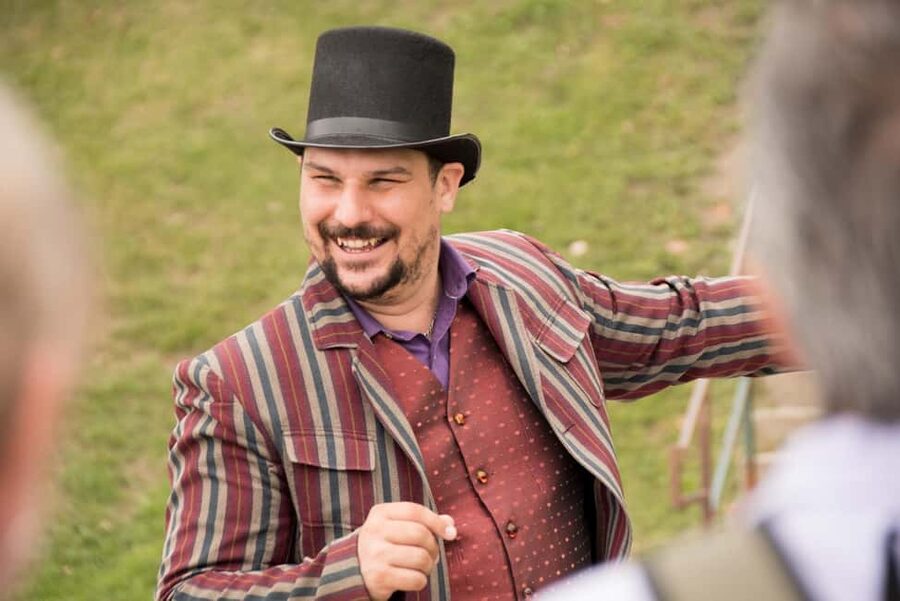
The format is theatrical, but it is not meant to be a stage show. The strongest guides use costume, humor, and first-person storytelling to hold your attention while still answering questions directly. Several guides have been praised for being animated without becoming over the top. That balance matters, especially if you usually find standard history talks dry.
More Walking & Ghost Tours in Quebec City
- Quebec City Walking Tour
★ 5.0 · 4,716 reviews - Old Quebec City: Grand Walking Tour with Private Option
★ 4.8 · 2,609 reviews - Old Quebec Classique Walking Tour with Funicular
★ 5.0 · 1,317 reviews
Starting at Sainte-Anne Street
You check in at the Cicerone Information Centre at 12 Sainte-Anne Street, G1R 3X2, though the exact meeting point can vary by booking option. Confirm your meeting details before setting out. One past booking had an incorrect starting address, which caused a frustrating extra walk through an unfamiliar part of the city.
Sainte-Anne Street puts you close to some of Old Quebec’s most important sights. Once the guide gathers the group, expect an introduction to the character being portrayed and an outline of the city’s major historical phases. One guide began by explaining three broad periods, then used the streets and buildings around you to show how those periods fit together.
This opening is valuable because it gives you a framework for the rest of the walk. Instead of hearing isolated facts, you begin to understand the order of events. The city’s physical setting also starts to make sense: its upper and lower sections, defensive position, religious buildings, and public squares all connect to the story.
The tour is offered in French and English. A small group is available, which is worth considering if you want to ask questions or hear the guide clearly. The exact group size is not guaranteed for every departure, so check the option you choose when booking.
Château Frontenac and Dufferin Terrace
Château Frontenac is one of the visual anchors of Old Quebec. Its tall roofline and grand exterior architecture make it hard to miss, but a guide helps you understand why this hotel matters beyond its appearance. You will have the chance to admire the building from the outside and benefit from access to exclusive areas associated with the Château Frontenac option.
Be clear about what you want from this part of the tour. The experience gives the hotel an important place in the route, but it is still a two-hour walking tour of Old Quebec, not a dedicated Château Frontenac visit. Some people would prefer more time inside the hotel or along the boardwalk at Dufferin Terrace. If those are your top priorities, you should plan extra time before or after the walk.
Dufferin Terrace offers one of the city’s signature public spaces. It is closely tied to the Château Frontenac and helps you see how the upper town relates to the river and lower sections of the city. The tour’s value here comes from the explanation of the setting, not just the view. The guide connects the terrace and hotel to the wider story of Quebec’s growth and public life.
This is also one of the points where the route can feel busy with sightseeing activity, so listen closely and stay near the guide. The costume makes the guide easier to spot, but Old Quebec’s streets can still separate a group quickly.
Notre-Dame Basilica and the religious story
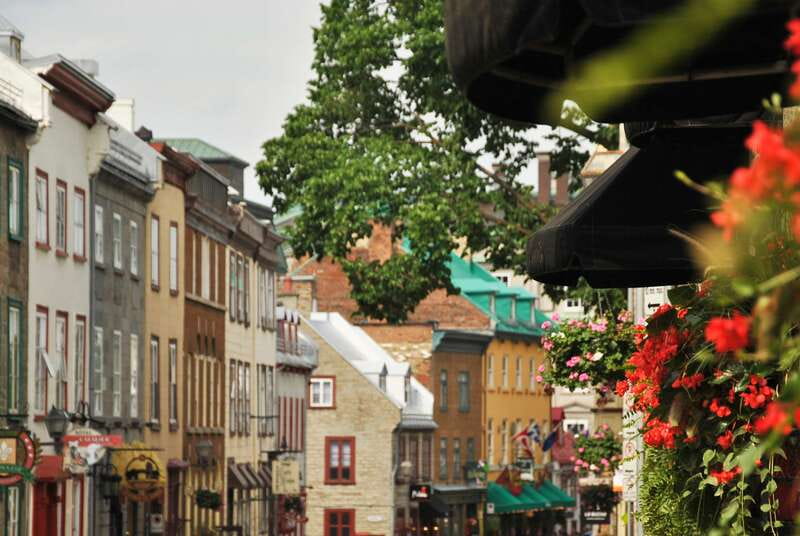
The Basilica of Notre-Dame de Québec adds another layer to the walk. Its presence reflects the central role of Catholic institutions in the city’s development, and the guide places the building within that larger religious and social story.
You should not treat this tour as an in-depth church interior visit. The information provided highlights the basilica as a picturesque place on the route, so the focus is on its place in Old Quebec and its exterior architecture rather than a long examination of every interior detail.
That limitation is not a flaw for a first visit. In two hours, you need a route that keeps moving. A good guide can explain why the basilica matters, then leave you with enough interest to return independently if you want more time inside.
The religious perspective works especially well alongside the discussion of Indigenous and political history. It prevents the walk from presenting Old Quebec as nothing more than a preserved European-style quarter. You get a broader sense of the forces that shaped the city and the people who lived through those changes.
Same province, a completely different day out:
- Quebec City: Guided Tour of Fairmont Le Château Frontenac
★ 4.7 · 3,027 reviews - Québec City: Guided Sightseeing River Cruise
★ 4.4 · 3,000 reviews - Half-Day Trip to Montmorency Falls and Ste-Anne-de-Beaupré from Quebec city
★ 4.0 · 2,718 reviews - Quebec City: Montmorency Falls with Cable Car Ride
★ 4.6 · 2,392 reviews
Place Royale, the cradle of French settlement
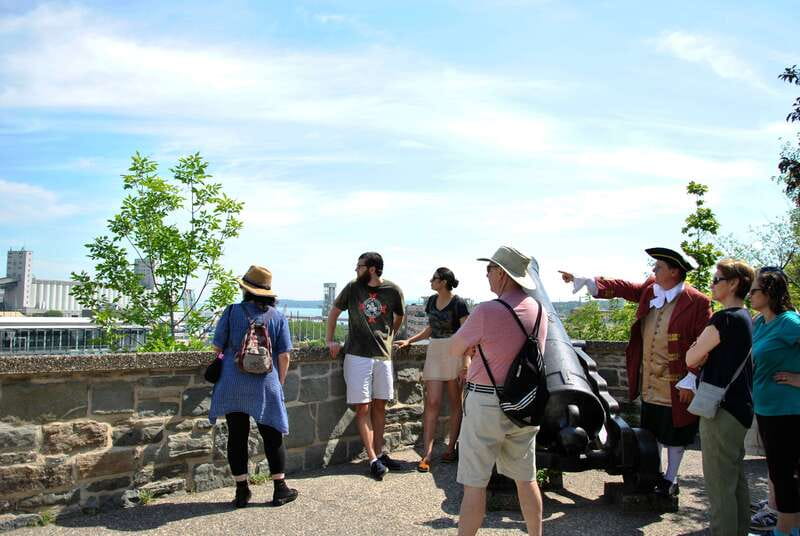
Place Royale is among the most important stops because it is considered the cradle of French civilization in North America. This is where the tour’s settlement story becomes concrete. Rather than hearing only about distant figures, you can stand in the setting connected with the early French presence.
The square is also one of the prettiest places on the route, with old buildings and a strong sense of place. The guide explains how the area developed and how it relates to Quebec’s lower town. One guide used the story of early farmers to show how the colony grew, a useful counterpoint to the usual focus on explorers and military leaders.
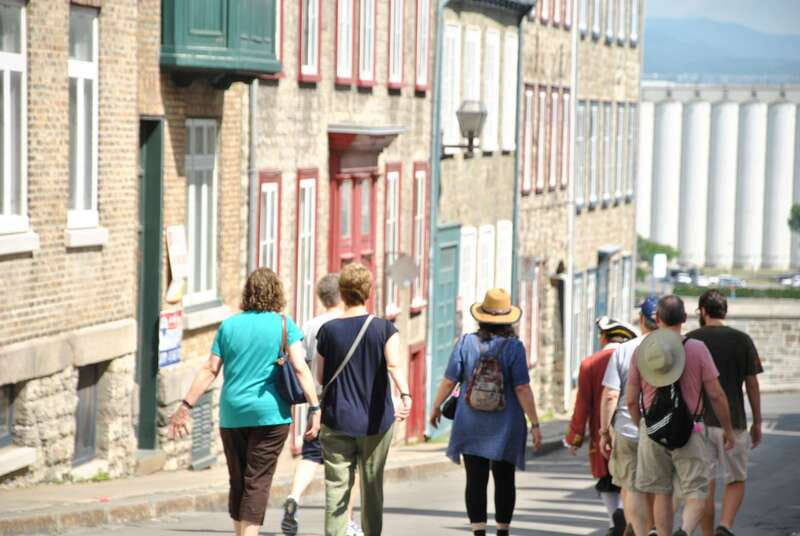
Place Royale is a good example of why walking works better than a bus for this subject. You can move through the scale of the square, notice the way the buildings meet the street, and follow the guide into corners you might otherwise pass without understanding. The route may include less familiar spots nearby, depending on the guide and the needs of the group.
The drawback is that lower Old Quebec involves slopes and, in places, stairs. The guide may choose sloping roads instead of many flights of steps, as one past route did, but you should still expect changes in elevation. A visitor in their late seventies found the ending difficult, despite enjoying the tour. Build in extra time and do not assume that a short distance means an easy walk.
A story-led tour with room for questions
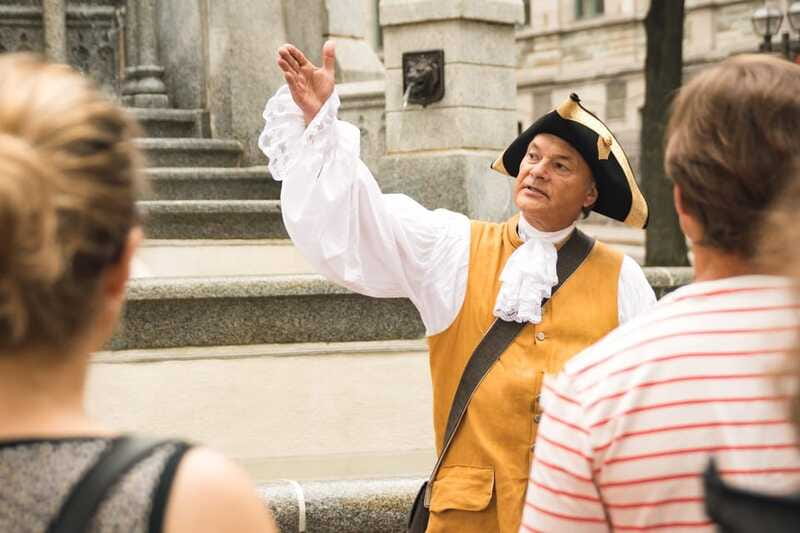
The best part of this experience is the guide’s role. You are not following a silent lecturer with a folder of notes. You are walking with a character who uses stories, humor, and historical detail to keep the group involved.
Guides have included Pierre, Sylvain, Bernard, Gary, Jean-Claude, Chantel, Guillemette, and Marie-Anne. The cast changes, so your experience will depend partly on who leads your departure. The common thread is a presentation built around storytelling and questions rather than a fixed speech delivered without interaction.
That format also lets the guide adjust to the group. One guide changed the pace to match participants, and another avoided steep stairways to reduce the risk of injury. A guide may spend more time on a question if the group is interested, or keep the walk moving when the weather or terrain makes lingering uncomfortable.
You should feel free to ask about side topics. Guides have handled questions about settlement, current Canadian issues, religious history, and the people who made the city their home. This is where the tour can become more than an introduction. A good answer may point you toward a subject you want to explore later.
The theatrical style will not suit everyone. If you prefer a purely academic lecture or want a precise, unchanging route, a period character may feel a little performative. For most first-time visitors, though, the humor makes the information easier to remember.
How demanding is the two-hour walk?
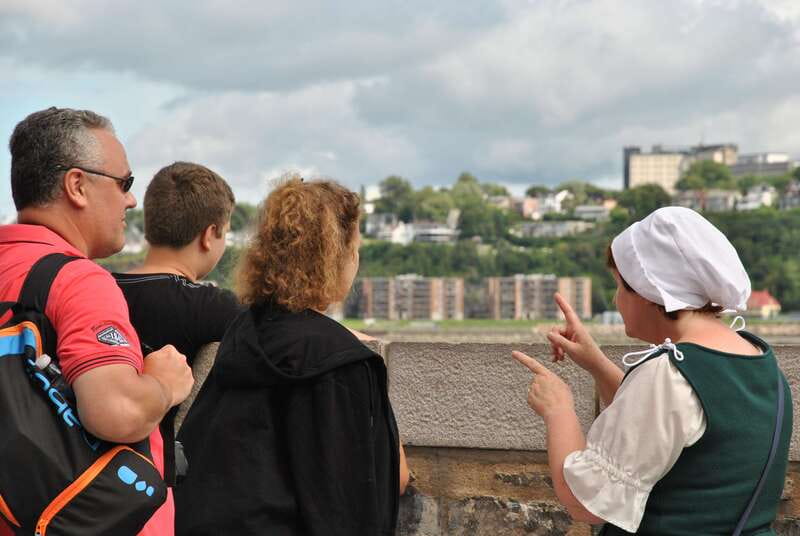
The route covers a good portion of Old Quebec, but the overall pace is generally relaxed. Several descriptions of the experience point to a walk that sees many major sights without feeling too taxing. Still, you should prepare for hills, stairs, uneven paving, and a more difficult final section.
Wear comfortable shoes and clothes. This is not the time for fashion footwear or a casual assumption that the old town is flat. The guide can sometimes use sloping streets instead of stairs, but that does not remove the city’s natural changes in level.
There are limited built-in opportunities to sit. One person wished for more rest stops, perhaps for tea, a souvenir, or a few quiet minutes on a bench. If you need regular breaks, tell the guide at the start and consider planning a café stop after the tour.
The tour is not suitable for wheelchair users. If mobility is a concern, review the route and meeting details carefully before booking. The information supplied does not promise step-free access, so you should not rely on this walk as an accessible introduction to Old Quebec.
Weather matters, too. The walk operates outdoors, and a past guide continued through poor weather while keeping the group engaged. Bring clothing suited to the forecast. The tour includes no special weather protection, so comfort is up to you.
Is $24 a fair price?
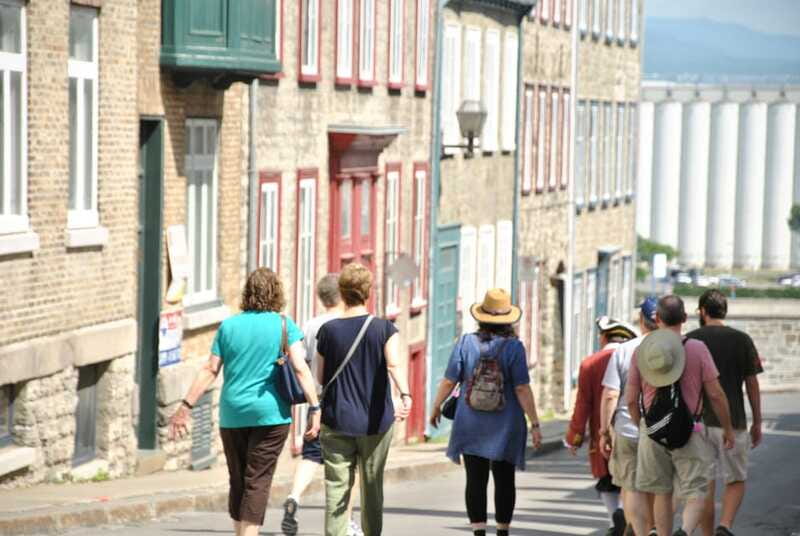
At $24 per person, this is a sensible use of two hours in Quebec City. You are paying for a licensed guide, a structured route, and historical interpretation in both French and English, with small-group availability on selected options.
The price is especially fair if this is your first visit. You will see several major landmarks quickly, learn how they connect, and gain enough background to make the rest of your stay more rewarding. The tour also helps you avoid spending your first day wandering without knowing which streets and buildings deserve your attention.
Value depends on your expectations. If you want a long visit inside Château Frontenac, extensive time on Dufferin Terrace, or entry into every major church and museum, you will need separate plans. This is an overview, not a full-day historical program.
Gratuity is not included. Keep that in mind when working out the total cost. Free cancellation is available up to 24 hours before the tour for a full refund, and reserve-now-pay-later booking can help if your schedule is still changing.
Who should take this tour?
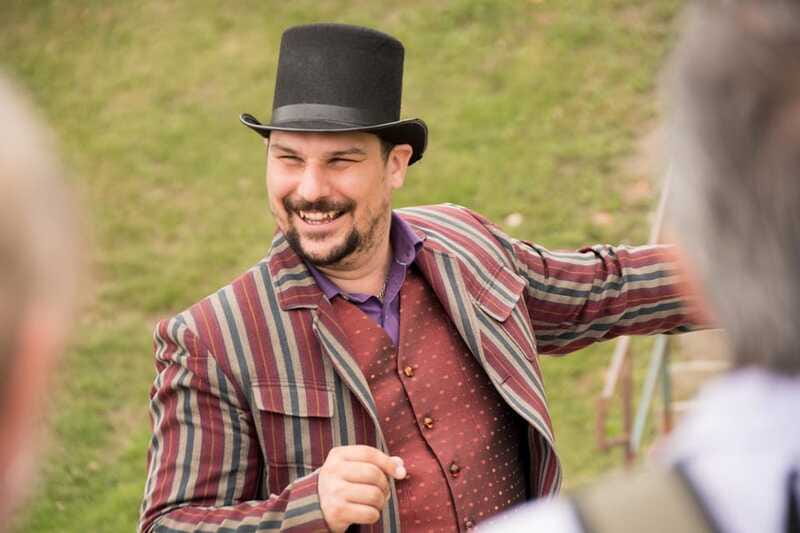
I would choose this walk for a first visit to Quebec City, especially if you want the city to make sense before exploring on your own. It is also useful for repeat visitors who previously saw Old Quebec from a bus or wandered without much historical context. One repeat visitor found the walking format revealed more than earlier bus tours.
Families and mixed-age groups may like the humorous presentation, though the hills and stairs still require honest judgment. History fans will appreciate the broad range of subjects, from early farmers and French settlement to religious life, Indigenous perspectives, political change, and modern Canada.
You will get the most from it if you listen actively and ask questions. The guides are prepared to explain details and connections, not just recite names. If you have limited time in Quebec City, the walk is a practical way to cover the core sights without giving up the texture of the streets.
Should you book the Old Quebec Historical Walking Tour?
Book it if you want a lively, affordable orientation to the walled city, with a guide who uses costume and character to make 400 years of history easier to follow. The strongest reasons are the storytelling, the broad historical viewpoint, and the chance to see both famous landmarks and less obvious corners.
Skip it if you need a wheelchair-accessible route, dislike hills, or want a long interior visit at Château Frontenac. Otherwise, $24 buys a useful first chapter in your Quebec City experience. Take the walk early in your stay, wear good shoes, and leave time afterward to return to the places that catch your interest.
FAQ
How long is the Old Quebec Historical Walking Tour?
The tour lasts two hours.
How much does the tour cost?
The listed price is $24 per person.
Which languages are offered?
The tour is available in French and English.
Where do I check in?
Check in at the Cicerone Information Centre at 12 Sainte-Anne Street, G1R 3X2. The meeting point may vary depending on the option booked.
Which sights are included on the route?
The route includes places such as Château Frontenac, Dufferin Terrace, the Basilica of Notre-Dame de Québec, and Place Royale.
Is the guide in costume?
Yes. The tour is led by a licensed guide dressed in full colonial or period costume, often portraying a historical character.
Is the tour suitable for wheelchair users?
No. The experience is listed as not suitable for wheelchair users.
What should I bring?
Bring comfortable shoes and comfortable clothes. The route includes walking through Old Quebec, where hills and stairs may be part of the experience.
Can I cancel the booking?
Yes. You can cancel up to 24 hours in advance for a full refund. Reserve-now-pay-later booking is also available.
More Walking Tours in Quebec City
- Quebec: Crimes of New France Animated Walking Tour
★ 4.6 · 926 reviews - Quebec City: Old Quebec Classic Walking Tour with Funicular
★ 4.9 · 695 reviews - Uncover Old Quebec: Fun Walking Tour of the City with Local Guide
★ 5.0 · 667 reviews - Private Tour: Quebec City Walking Tour
★ 5.0 · 596 reviews
More Historical Tours in Quebec City
- Evening Gourmet Tour 5 Course Dinner – History and Food in Old Quebec City
★ 5.0 · 496 reviews - Combo Historical and Food Tour of Old Quebec
★ 5.0 · 360 reviews - Walking Tour Through Quebec City’s History
★ 4.5 · 263 reviews - Quebec City: Historical Walking and Tasting Tour
★ 4.8 · 70 reviews
Just added around Quebec City
- Kingston: Skippered Sailing Charter★ 4.7 · 4 reviews
- Quebec: Private custom tour with a local guide★ 4.9 · 4 reviews
- Quebec Interactive Street Theatre: “Crimes in New France”★ 4.6 · 175 reviews
- Quebec : Old Town Walking Tour With A Local Guide★ 4.5 · 38 reviews
- Québec: Fortifications-of-Québec Guided Walking Tour★ 4.7 · 60 reviews
- Quebec: Christmas Interactive Walking Tour of New France★ 4.3 · 7 reviews
- Quebec: Cuivres A. Gilles – (Free Entry) Fee for Workshop★ 4.8 · 19 reviews
- Québec City: Weekend River Brunch Cruise★ 4.5 · 116 reviews
Walking & Ghost Tours, compared.
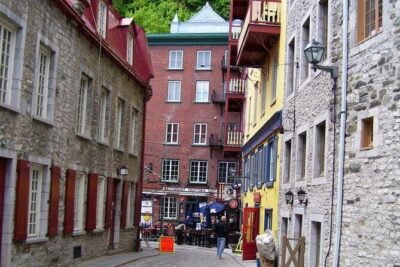

Old Quebec City: Grand Walking Tour with Private Option
Read our review →
The Original Old Montréal Walking Tour by Guidatour
Read our review →
Old Montreal Small-Group Walking Tour | Max 10 | by MTL Detours
Read our review →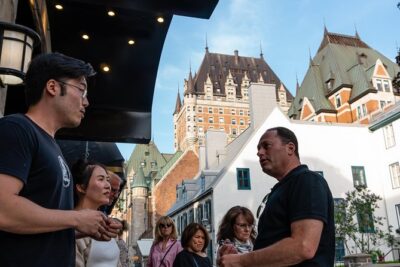
Old Quebec Classique Walking Tour with Funicular
Read our review →
Old Quebec City Food Tour with 10+ Autentic Local Tastings
Read our review →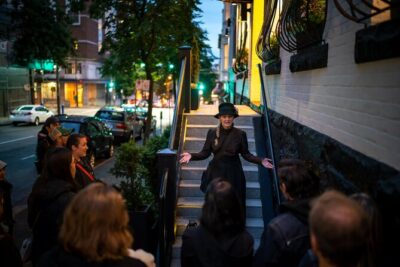

Browse the lists this tour appears in