
Reviewed · MUSEUMS
Calgary: Gasoline Alley Museum Admission
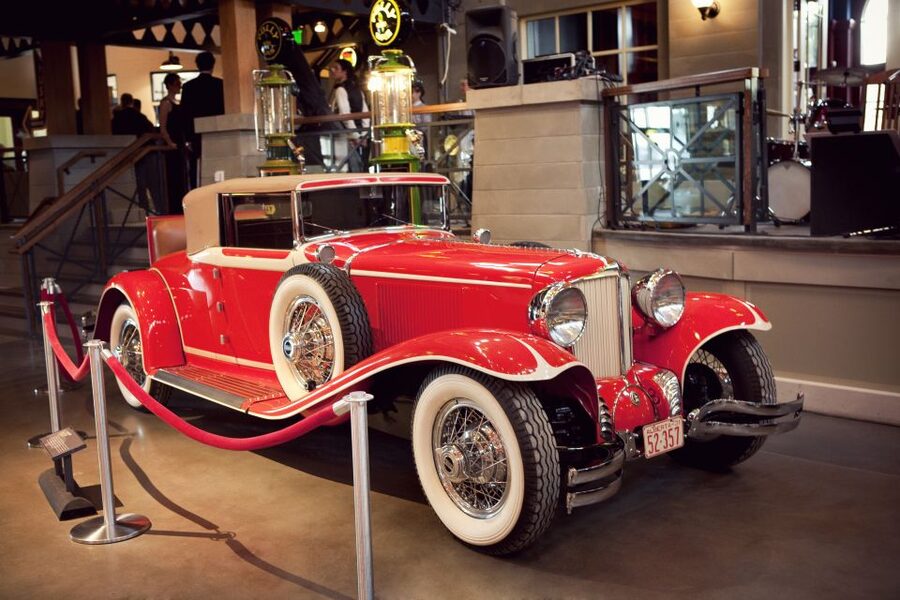
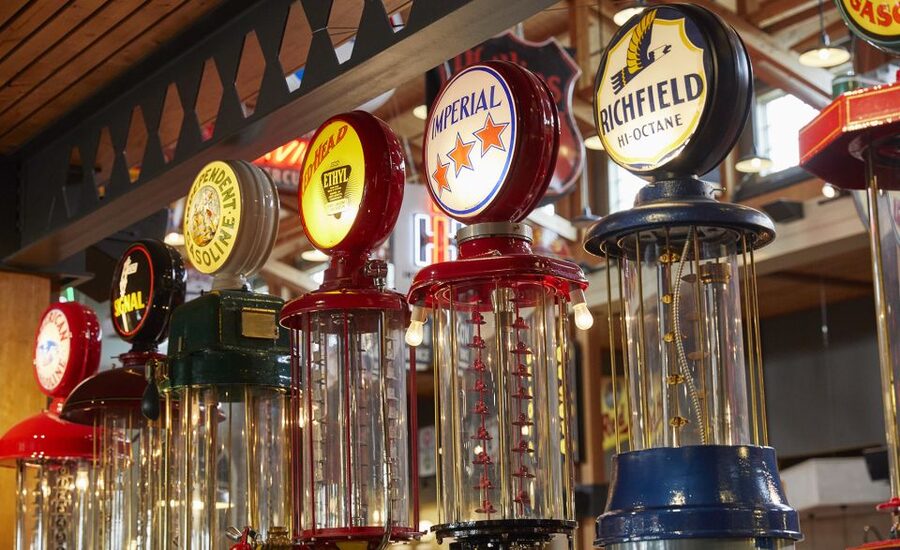
Gasoline Alley Museum puts the early automobile age on display with rare cars, trucks, working vehicles, antique gasoline pumps, and old petroleum signs. The collection covers the years when North America shifted from horse and carriage to motor car, so you get both handsome machines and the story behind their impact.
I like the remarkable pump collection, which gives the museum a character beyond a standard car display. I also like the lower showroom, where the visit continues with more artifacts instead of ending after one main gallery. The main consideration is simple: the $10 admission covers Gasoline Alley Museum only, not the full Heritage Park Historical Village.
In This Review
- Key points to know before you go
- Why Gasoline Alley is more than a car collection
- Entering the main showroom, cars from the 1900s to the 1950s
- The gasoline pumps and signs that give the museum its personality
- Looking at the oldest automobile artifacts
- The lower showroom deserves a proper visit
- What the interpreters add to your visit
- How long to stay and how the one-day ticket works
- Is the $10 admission good value?
- Getting to 1900 Heritage Drive Southwest
- Who will enjoy Gasoline Alley Museum most?
- Practical booking advice before you commit
- Should you book Gasoline Alley Museum?
- FAQ
- Where is Gasoline Alley Museum located?
- How much does admission cost?
- How long is the admission valid?
- Is access to Heritage Park Historical Village included?
- Is Gasoline Alley Museum open year-round?
- Is the museum included with Heritage Park admission in summer?
- How can I reach the museum by public transportation?
- Is the museum wheelchair accessible?
- Can I cancel my booking for a refund?
Key points to know before you go
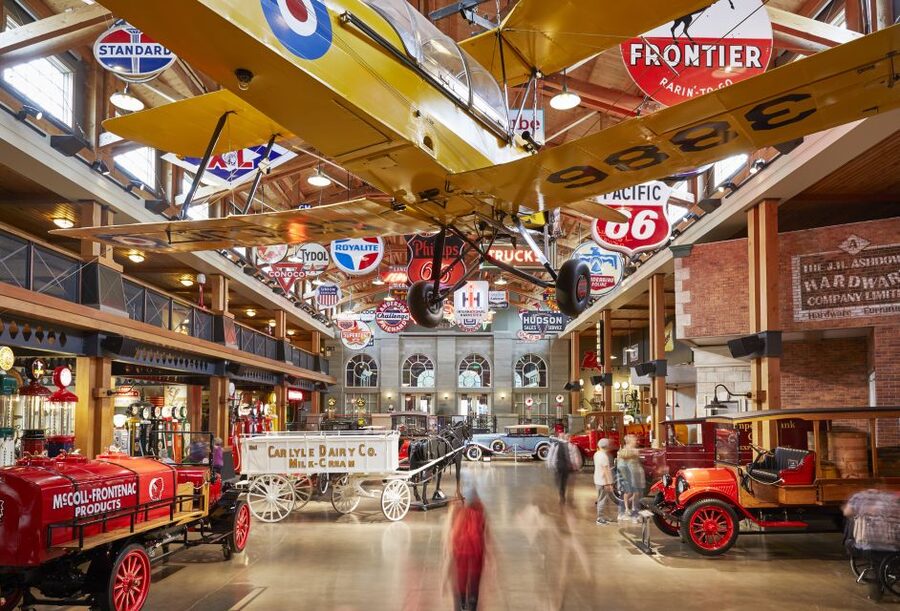
- Rare pre-World War II artifacts: See some of the oldest automobile-related objects in the collection, alongside vehicles from the early 1900s through the 1950s.
- Antique pumps and petroleum signs: The gasoline equipment is a major reason to visit, especially if you enjoy industrial design and old advertising.
- A story about social change: The museum explains how cars altered travel, work, commerce, and daily life across North America.
- Two showroom levels: Allow time for the lower showroom, which contains additional vehicles and artifacts.
- Good value at $10: A full day of access makes the admission modest, though the ticket does not include other Heritage Park attractions.
- Open year-round: Gasoline Alley Museum and the Railway Café remain open when many of Heritage Park’s outdoor attractions close for the winter.
Why Gasoline Alley is more than a car collection
A room full of old cars can be pleasant for an hour. Gasoline Alley Museum aims for something larger: it shows how the automobile changed the way people lived.
The early car was not just a new machine. It altered the distance people could cover, the goods businesses could move, and the shape of towns and roads. The museum presents that shift through vehicles, pumps, signs, and other petroleum-related objects.
That context gives the displays a useful purpose. You are not simply looking at polished bodies and unusual wheels. You are seeing the equipment that helped create a new travel system across North America.
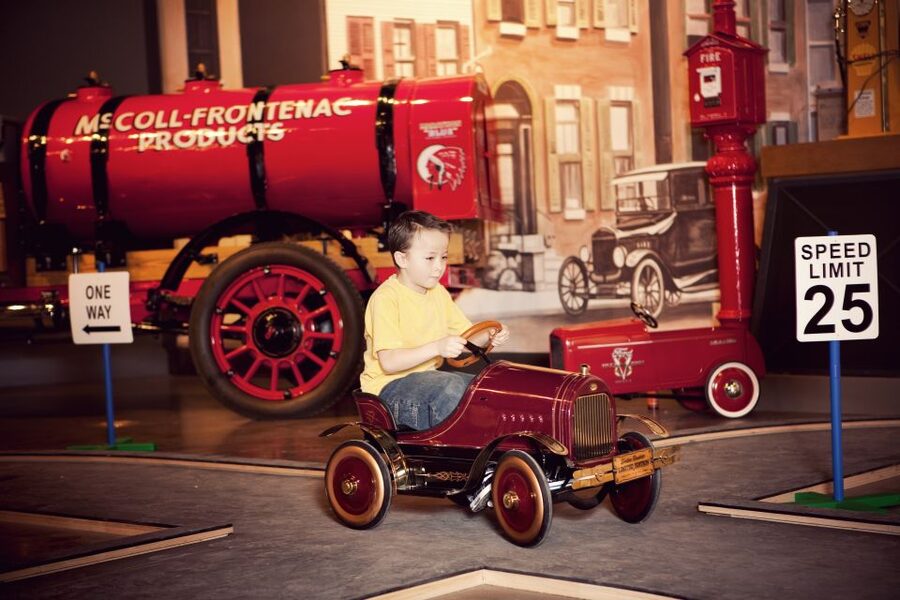
I find this approach especially helpful if you are visiting with children or with someone who is not already a car expert. The vehicles provide the visual hook, while the broader story gives the visit some substance.
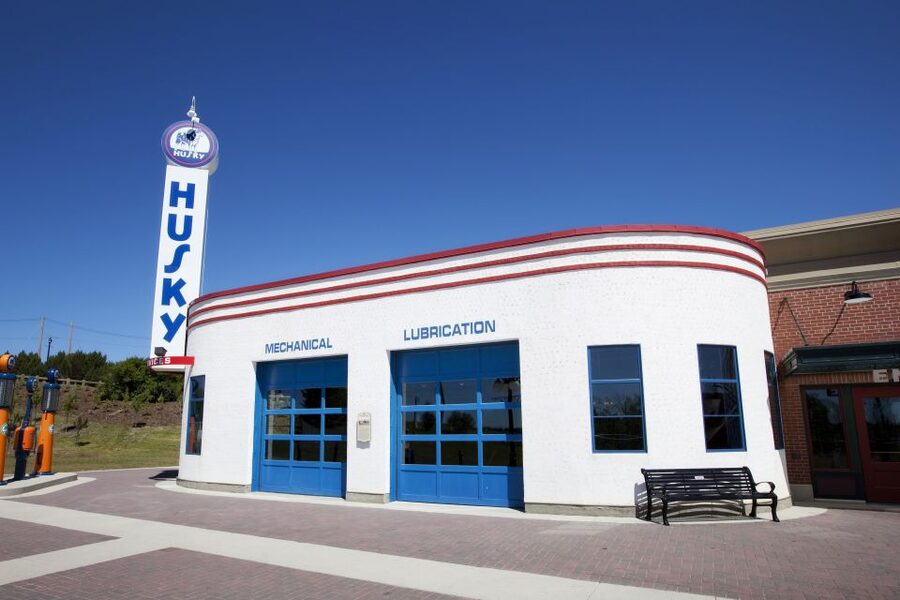
The museum is part of Heritage Park Historical Village in southwest Calgary, but this admission is specifically for Gasoline Alley Museum. That distinction matters. Heritage Park includes other attractions, yet they are not part of this ticket.
A few more Calgary trips to weigh up
- Calgary: 3.5-Hour Bus City Tour with Gasoline Alley Museum
★ 4.7 · 205 reviews - Drumheller: Bad Land & Dinosaur Museum Tour from Calgary
★ 4.8 · 18 reviews - Badlands Tour: Drumheller with Museum, Hoodoos & Coal Mine
★ 4.7 · 18 reviews
Entering the main showroom, cars from the 1900s to the 1950s
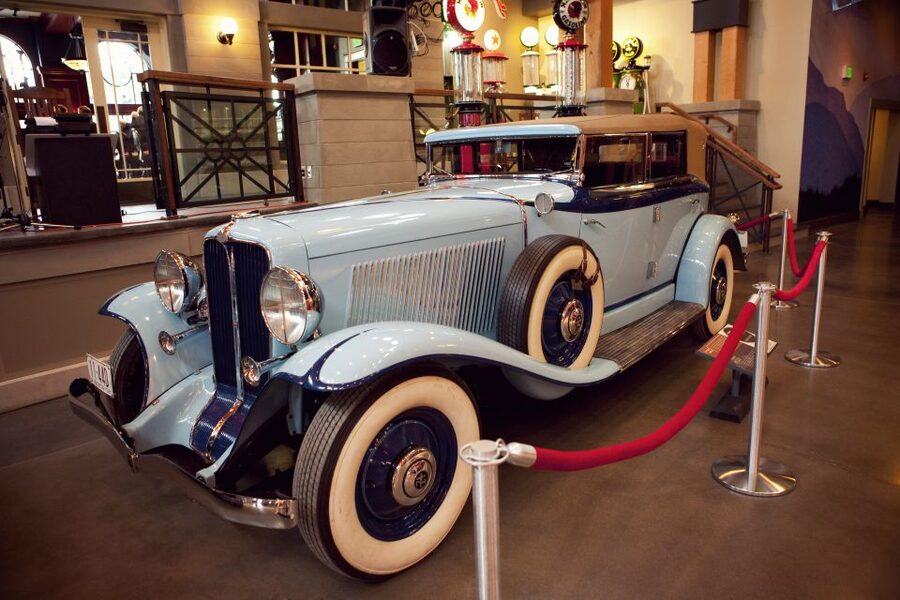
Start with the main collection of restored classic automobiles. The date range, from the 1900s to the 1950s, lets you see the automobile develop across several important decades.
The earliest vehicles show how new and unfamiliar the motor car once was. Later cars and trucks reveal the move toward more recognizable forms, larger scale, and wider practical use. Working vehicles add another angle, since they show the automobile as a tool rather than only a private pleasure.
You can expect a mix of cars, trucks, and other vehicles rather than a display devoted to one narrow make or model. That variety works well for a first visit because you can compare design, purpose, and period as you move through the rooms.
The restored condition of the vehicles is a major part of the appeal. Details that might disappear on a rough old machine, such as body lines, fittings, and painted finishes, are easier to appreciate here.
At the same time, restoration can make old vehicles look more perfect than they did in daily use. If you want a strict archaeological record of wear and damage, this may not be that kind of museum. If you want to understand how these machines looked and functioned, the polished presentation is a real advantage.
The gasoline pumps and signs that give the museum its personality
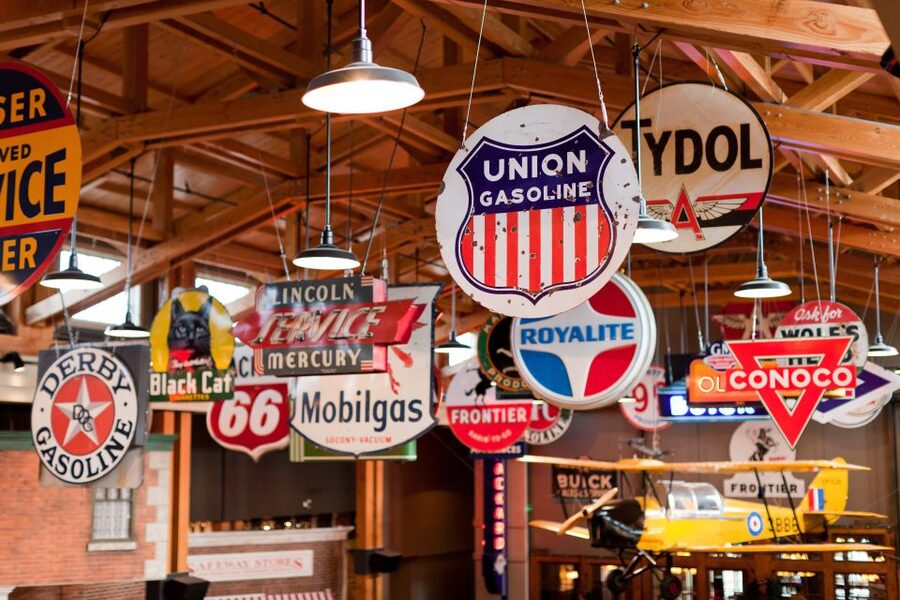
For me, the antique gasoline pumps are among the best reasons to visit. They are distinctive objects, and the collection includes an impressive range of old pumps connected with different petroleum companies.
A gasoline pump is easy to overlook in modern life. Here, you can study its shape, lettering, colors, and mechanical character. These were once familiar roadside objects, but many now feel like pieces of industrial sculpture.
The petroleum signs add another layer. They show how companies presented themselves to motorists and how strongly fuel brands became part of the visual culture of the road.
This section should appeal even if classic cars are not your main interest. The signs and pumps explain the supporting system that made driving possible. Cars needed fuel, and fuel needed visible stations, recognizable brands, and equipment built for roadside use.
The pump collection also helps break up the display of vehicles. You move from complete automobiles to smaller objects that reveal how motoring worked in practice. Give these items time instead of treating them as background decoration.
Looking at the oldest automobile artifacts
The museum includes some of the world’s oldest automobile artifacts, including objects from before World War II. This is where the visit gains extra weight for anyone interested in early motoring.
Prewar artifacts can show how quickly automobile technology and design changed. They also help place the later vehicles in context. A car from the 1950s looks different when you have already seen what came before it.
You might find the earliest items less immediately flashy than the larger restored cars. That is normal. Their value comes from age, rarity, and what they reveal about an industry still finding its direction.
Take time to look at small details. Early automobile objects can tell you about materials, controls, fuel systems, and the practical problems manufacturers were trying to solve. The museum’s interpreters can help explain those points when you want more than a quick look.
The displays are also useful for families. A child may first notice the size or shape of a vehicle, then start asking why it looks unlike a modern car. Those questions create a natural opening to talk about invention, transport, and changing habits.
Same province, a completely different day out:
- Lake Louise, Moraine Lake, Banff Tour from Calgary/Canmore/Banff
★ 5.0 · 2,792 reviews - Calgary: 3-Hour Sightseeing Bus Tour
★ 4.7 · 940 reviews - Explore Banff National Park with Our Premium Day Tour
★ 5.0 · 777 reviews - Discover Banff National Park – Premium Day Trip
★ 5.0 · 682 reviews
The lower showroom deserves a proper visit
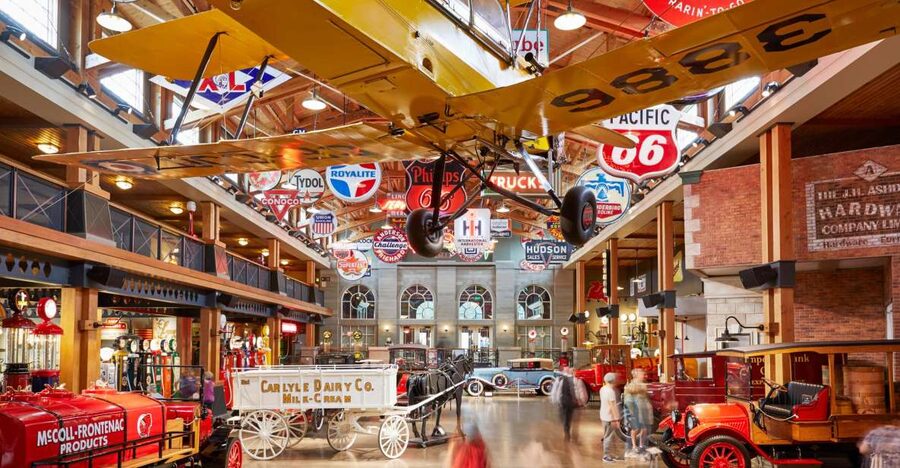
Do not stop after the first showroom. The lower showroom contains additional vehicles and artifacts, and it is specifically worth including in your plan.
A common museum mistake is to give the main room all your attention and then rush through the rest. Here, the lower level extends the collection and gives you more time with the range of objects on display.
Because the supplied information does not assign a separate theme to every section, I would treat the lower showroom as extra viewing time rather than expect a particular scripted sequence. Follow the displays, read the information available, and ask an interpreter about objects that catch your eye.
The lower showroom is also a good reason not to schedule this as a ten-minute stop between other Calgary attractions. You can see the main vehicles quickly, but you will get more from the museum if you allow time for the pumps, signs, older artifacts, and lower-level displays.
What the interpreters add to your visit
Admission includes on-site interpreters. That is useful in a museum where a vehicle’s appearance may not explain its full importance.
An interpreter can help connect a pump to the petroleum company behind its sign, or explain why an early vehicle mattered in the larger shift from horse transport to motor travel. You can also ask about objects that lack immediate context.
The human element is one of the museum’s strengths. The people working with the collection are described as friendly and well informed, and one recent account specifically praised the volunteers for their strong grasp of rare cars and trucks. Another response in French described the guides as very friendly.
No guide names are provided, and this is not presented as a fixed guided tour with a named leader. Think of the interpreters as a resource available during your visit, not as someone leading you through a timed itinerary.
That format suits independent visitors. You can look at the displays at your own pace, then ask for help when a question comes up. It also works for families, since children can move ahead while adults stop for more detail.
How long to stay and how the one-day ticket works
The admission is valid for one day from first activation. That gives you flexibility to plan a relaxed visit instead of racing through the building.
The stated duration is one day, but that does not mean you need to spend every hour inside the museum. The practical value is that you are not forced into a short timed entry. You can take a careful look, pause for food, and return to the displays during the same day if your plans allow.
Gasoline Alley Museum is open year-round. The Railway Café is also open year-round, which is useful during colder months when outdoor Heritage Park attractions are closed.
From mid-October to mid-May, the other attractions in Heritage Park Historical Village are closed, so Gasoline Alley becomes a particularly clear stand-alone visit. In summer, the museum is included with general admission to Heritage Park Historical Village. If you are going during the summer and plan to see the wider park, check the general admission option before buying a separate museum ticket.
This seasonal difference affects value. The $10 price is attractive when you want the museum alone, especially in the off-season. In summer, the better deal may be the broader Heritage Park admission if you want more than the indoor collection.
Is the $10 admission good value?
At $10 per person, this is a fairly easy Calgary attraction to justify. The ticket includes the museum, the on-site interpreters, and access for one day. You are paying for a substantial collection rather than a single small exhibit.
The value is strongest for three types of visitors:
- Someone who enjoys classic cars, trucks, pumps, and old commercial signs
- A family looking for an indoor activity with educational content
- A visitor interested in how transportation changed North American society
The value is less clear if you only want a quick photograph of a few famous cars. This museum rewards time and curiosity. The more you care about the objects and their setting, the more the $10 admission makes sense.
In summer, compare the price with Heritage Park’s general admission because Gasoline Alley is included. Paying separately may not be the best choice if you already intend to explore the outdoor village.
Food, drinks, and souvenirs are not included. The Railway Café is open year-round, but café purchases are separate from admission.
Getting to 1900 Heritage Drive Southwest
The meeting point is 1900 Heritage Drive SW, Calgary, Alberta, T2V 1R1. If you use public transportation, a shuttle bus is available from Heritage LRT Station.
That shuttle detail makes the museum easier to reach without a car. Plan the trip around the connection from the station, since the museum is located within the Heritage Park site rather than in central Calgary.
The museum is wheelchair accessible. Pets are not allowed, and alcohol and drugs are prohibited. These rules are straightforward, but they matter if you are planning a family outing or managing a day with several stops.
Because the ticket is valid for one day, you have some room to work around transport timing. Still, allow enough time for the shuttle and for finding the museum once you arrive at the Heritage Park address.
Who will enjoy Gasoline Alley Museum most?
I would choose this museum for anyone who likes machines with a story. You do not need to know the difference between car makes or engine types to enjoy the collection.
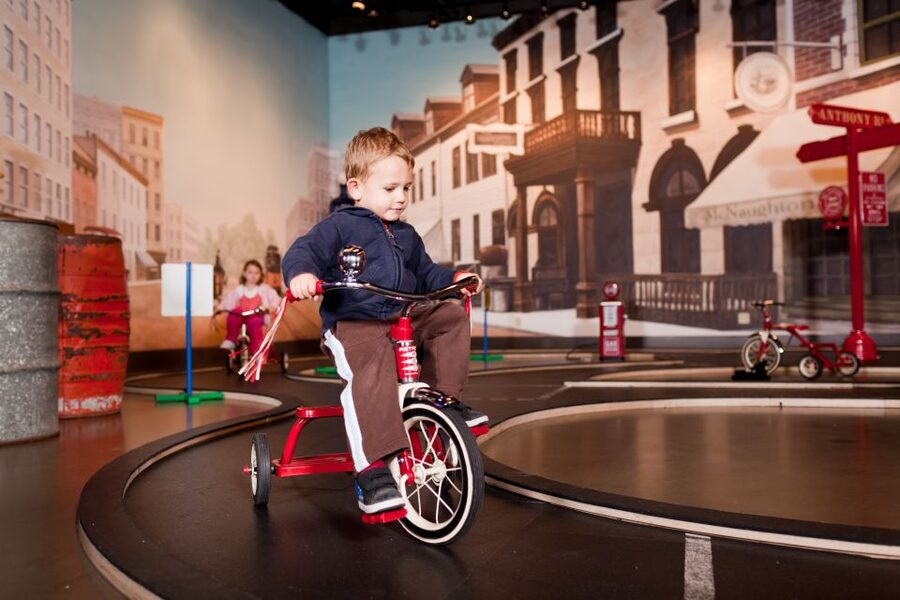
It works particularly well for families because the vehicles are visually engaging and the social story gives adults something meaningful to discuss. Children can focus on size, color, and unusual design, while older visitors may spend more time with the petroleum signs and early artifacts.
It is also a good choice for a winter Calgary day. Since Gasoline Alley stays open year-round, you are not limited to the outdoor season at Heritage Park.
Car enthusiasts will likely want more time than casual visitors. The rare vehicles, restored presentation, antique pumps, and prewar objects provide plenty to examine. The museum’s strongest appeal is its breadth, not a single headline car.
You may want to skip it if your Calgary schedule is extremely tight and you have little interest in transport history. The museum is worth the admission, but it is not a substitute for seeing the wider Heritage Park experience if that is your main goal.
Practical booking advice before you commit
Free cancellation is available up to 24 hours in advance for a full refund. You can also reserve now and pay later, which helps if your Calgary schedule is still changing.
The admission is wheelchair accessible. For a smoother visit, check whether you are booking during the summer, when Gasoline Alley is included with general Heritage Park admission. That one detail can change the best ticket choice.
I would also plan around the museum’s year-round status. From mid-October to mid-May, it may be one of the few Heritage Park attractions available, while summer allows you to pair it with the outdoor historical village.
Should you book Gasoline Alley Museum?
Book it if you want a focused, affordable look at North America’s automobile past. The rare vehicles, pre-World War II artifacts, antique pumps, and petroleum signs give the museum more range than a basic classic-car hall.
I would especially recommend it for families, car fans, and anyone looking for a dependable indoor Calgary activity outside the main summer season. At $10, the risk is low, and the one-day validity gives you time to take the collection at a sensible pace.
The main caution is the ticket boundary. You are buying Gasoline Alley Museum, not all of Heritage Park Historical Village. In summer, compare it with general park admission. If the museum is your main interest, book it confidently. If you want the complete Heritage Park day, choose the wider admission instead.
FAQ
Where is Gasoline Alley Museum located?
Gasoline Alley Museum is at 1900 Heritage Dr SW, Calgary, Alberta, T2V 1R1, Canada.
How much does admission cost?
Admission costs $10 per person.
How long is the admission valid?
The admission is valid for one day from the time you first activate it.
Is access to Heritage Park Historical Village included?
No. This admission covers Gasoline Alley Museum only. Access to other Heritage Park Historical Village attractions is not included.
Is Gasoline Alley Museum open year-round?
Yes. Gasoline Alley Museum is open year-round. The Railway Café is also open year-round.
Is the museum included with Heritage Park admission in summer?
Yes. During the summer months, Gasoline Alley Museum is included with general admission to Heritage Park Historical Village.
How can I reach the museum by public transportation?
A shuttle bus is available from Heritage LRT Station.
Is the museum wheelchair accessible?
Yes. Gasoline Alley Museum is wheelchair accessible.
Can I cancel my booking for a refund?
Yes. You can cancel up to 24 hours in advance for a full refund. You can also reserve now and pay later.
Just added around Calgary
- Moraine Lake Louise Emerald Johnston Canyon Banff Yoho Tour★ 4.9 · 184 reviews
- Moraine Lake and Lake Louise Half Day Tour★ 4.6 · 14 reviews
- Lake Louise,Moraine Lake,Yoho NP,Johnston Canyon & BanffTour★ 4.5 · 11 reviews
- From Calgary: Private Lake Louise and Banff Day Trip★ 4.9 · 6 reviews
- Kootenay: From Icy Mountain Rivers to Steamy Hot Springs★ 4.6 · 8 reviews
- Icefield: Icefield Parkway, Bow Lakes & Peyto Lakes Day Tour★ 4.3 · 11 reviews
- Iconic Eats of Calgary Food Tour★ 4.7 · 4 reviews
- Calgary: Glaciers, Mountains, Lakes, Canmore and Banff Tour★ 4.8 · 88 reviews
Museums, compared.


Art Gallery of Ontario General Admission Ticket
Read our review →




Browse the lists this tour appears in