
Reviewed · WALKING & GHOST TOURS
Historical Chinatown Walking Tour
Victoria’s Chinatown tells a much bigger story than its narrow streets suggest. In 90 minutes, you’ll hear how gold rush traffic made Victoria a major supply center, why thousands of Chinese people built lives here, and how Canada’s oldest Chinatown still functions today. The Chinese Public School and Fan Tan Alley give the walk strong visual anchors.
I like the small group limit of 10, which should make it easier to ask questions and hear personal details. I also like the mobile listening aids, especially since Government Street traffic and city noise can swallow a guide’s voice. Guides John Adams and Chris bring years of local study and connections with current shopkeepers.
The main drawback is the fixed 10:30 a.m. start. That may not suit a cruise schedule or a packed Victoria day, and the walk runs in all weather. Bring sensible shoes and clothing for the forecast.
In This Review
- Key points to know before you book
- Why Victoria’s Chinatown deserves 90 minutes
- Meeting at Government Street
- The Chinese Public School and the city’s early Chinese community
- Fan Tan Alley, gambling rooms, and a narrow route through time
- A guide who connects old buildings with living people
- What the $18.01 price really buys you
- Who will get the most from this Chinatown walk
- Booking details that matter in real life
- Should you book the Historical Chinatown Walking Tour?
- FAQ
- Where does the Historical Chinatown Walking Tour start?
- Where does the tour finish?
- What time does the tour begin?
- How long does the walking tour last?
- What language is the tour offered in?
- Is Fan Tan Alley included?
- Is admission to the historic sites included?
- Does the tour operate in bad weather?
Key points to know before you book
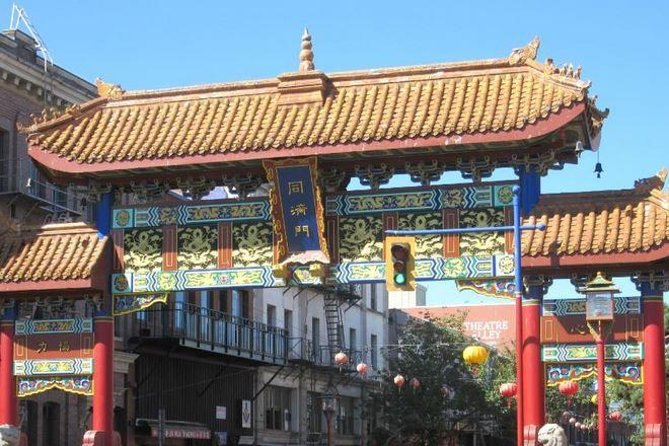
- Canada’s oldest Chinatown: The walk explains why Victoria’s Chinatown holds this national distinction, even though the city’s Chinese population is now smaller than that of larger Canadian cities.
- A guide-led history lesson: John Adams and Chris are among the named guides, and both are closely tied to local Chinatown research and community life.
- Two memorable landmarks: The ornate Chinese Public School and narrow Fan Tan Alley give the tour its clearest sense of place.
- Listening aids included: Mobile devices help you follow the guide when traffic noise gets in the way.
- A small, short format: The tour lasts about 90 minutes and allows a maximum of 10 people.
- Good value at $18.01: You pay less than many longer city tours while getting a focused look at a small but important part of Victoria.
Why Victoria’s Chinatown deserves 90 minutes
Victoria was British Columbia’s largest city before Vancouver grew in the 1880s. During the gold rush, it served as a supply center, drawing people, goods, money, and opportunity. Chinese workers became a major part of that story, and for many years Victoria had the largest Chinese population in Canada.
That past is easy to miss if you simply walk through Chinatown on your way to another attraction. The district occupies a small area, but its story reaches into gold fields, coal mines, logging camps, fish canneries, farms, restaurants, laundries, and private homes across the region.
I like that this walk treats Chinatown as more than an old commercial quarter. You learn about the work Chinese immigrants did, the businesses they created, and the discrimination they faced. You also see the neighborhood as a living part of Victoria, not just a preserved historic display.
The tour is offered in English, and the guide does the work of connecting buildings and streets to the wider story. That is where the price makes sense. At $18.01 per person, you are paying for interpretation, not admission to a large attraction. The Chinatown National Historic Site and Fan Tan Alley do not charge an entry fee, but the guide provides the context you would otherwise miss.
More Walking & Ghost Tours in Victoria
- Ghostly Walking Tour in Victoria
★ 5.0 · 816 reviews - Historical Victoria Walking Tour
★ 5.0 · 173 reviews - Victoria City Highlights 3 Hour Walking Tour | Grauity-Based
★ 4.5 · 169 reviews
Meeting at Government Street
The walk starts at 1681 Government Street, with a scheduled departure at 10:30 a.m. The location is near public transportation, so you do not need a complicated transfer from elsewhere in central Victoria.
The meeting point also puts you near the historic Chinatown district from the start. You should arrive ready to walk rather than expecting a coach or shuttle. The route is a city walk through streets and lanes, and you should dress for the weather because the tour operates in all conditions.
The small group cap matters here. With no more than 10 people, the guide can usually keep the group together in tight spaces and answer questions without turning the walk into a speech delivered to a crowd. That is particularly useful in Fan Tan Alley, where space is limited.
A mobile listening aid is supplied to help you hear clearly. This is one of the more practical features of the experience. Victoria’s streets can be noisy, and a good story is not much use if you are straining to catch every other sentence.
The Chinese Public School and the city’s early Chinese community
The Chinese Public School is one of the most intriguing buildings on the route. Its ornate exterior invites a quick photograph, but the point of the stop is to understand why it was built and what its design communicates.
The school gives the guide a way to explain community priorities. Chinese residents were not simply passing through Victoria as part of the gold rush economy. They established stores, restaurants, laundries, and farms, and created institutions that helped support community life.
The wider story is often difficult. Some Chinese residents worked as gardeners, servants, and cooks in non-Chinese homes. Others left the city for coal mines, logging camps, canneries, and gold fields. The tour places these jobs in the context of the barriers and discrimination Chinese immigrants faced.
That balance is important. You get the hardship without reducing the people of Chinatown to hardship alone. The buildings and businesses also reflect determination, enterprise, and the effort to maintain a community in a city that did not always welcome it.
John Adams is a particularly strong fit for this subject. He has written a book about the Chinese experience in Victoria and helped found the Chinese Museum. If John leads your walk, you can expect a guide with a long-standing connection to the subject. Chris is also known for linking world events to Victoria’s development and for having close ties with local residents and business owners.
The exact guide is not guaranteed, so I would not book solely for one name. Still, the experience provider, Walking Tours by Discover the Past, clearly draws on guides who have spent years studying and presenting local history.
Fan Tan Alley, gambling rooms, and a narrow route through time
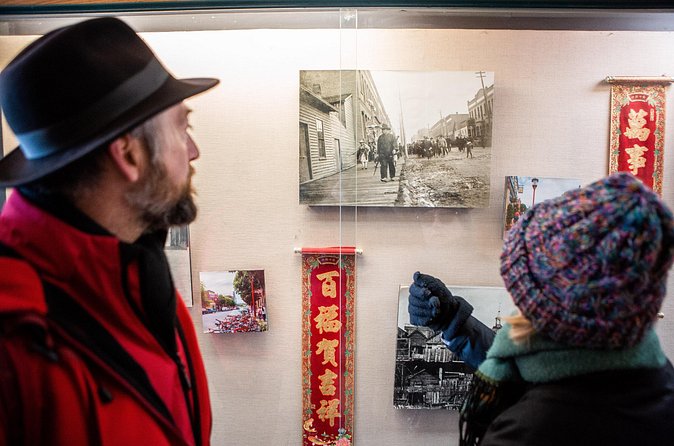
Fan Tan Alley is the tour’s most recognizable stop. It is famous across Victoria, and the physical setting makes an immediate impression. The lane is narrow, compact, and easy to pass through in a few minutes on your own.
The guide turns that quick glimpse into a story. Former gambling dens still exist in the alley, and a demonstration of the fan tan game may be included. That demonstration is a useful touch because it gives you something concrete to understand rather than asking you to picture an unfamiliar pastime from a spoken description.
The word may matters here. A fan tan demonstration is not guaranteed on every departure. The same is true of a possible visit to Tam Kung Temple, where an optional donation of $1 per person is recommended if the temple is included.
Fan Tan Alley can feel like a small stop compared with the amount of history connected to it. That is not a problem if you understand the format. This is not a long museum visit or a full-day Chinatown food tour. It is a focused walk that uses a few surviving places to explain a much larger community.
I would give the guide room to talk here rather than rushing ahead for photographs. The lane is the kind of place you can revisit after the tour, when you understand what you are looking at.
Same province, a completely different day out:
- Victoria Half-Day Whale Watching Adventure with Free Photos
★ 5.0 · 2,259 reviews - Victoria Guided Food and History Tour
★ 5.0 · 2,015 reviews - Victoria Zodiac Boat Whale Watching Adventure
★ 5.0 · 916 reviews - Victoria: 3-Hour Zodiac Whale-Watching Tour
★ 4.6 · 651 reviews
A guide who connects old buildings with living people

The strongest part of this experience is the guide’s role. The tour is not built around plaques or a recorded narration. You walk with a local person who can explain what happened in the area and, in some cases, connect the past with people who live and work there now.
Chris has been praised for his relationships with local residents and shopkeepers. John is also closely associated with Chinatown research and community history. That local connection can add personal detail to a district that might otherwise feel like a collection of old facades.
One special touch reported from a departure was the sharing of Chinese pastry treats. This is not listed as a guaranteed inclusion, so you should not book expecting food. It does show the kind of informal, human detail that can appear when a guide has real ties to the neighborhood.
Another useful feature is the possibility of meeting shopkeepers. Again, this should be viewed as a bonus rather than a promise. If it happens, it adds a current voice to the historical material and helps you see Chinatown as an active district rather than a stage set.
The guides also handle difficult subjects with care. You will hear about racism, open discrimination, working conditions, and the lives of early Chinese settlers. The subject is serious, but the walk is designed to be engaging rather than grim. Past guests have found the guides patient with questions and able to explain the material with humor when appropriate.
What the $18.01 price really buys you
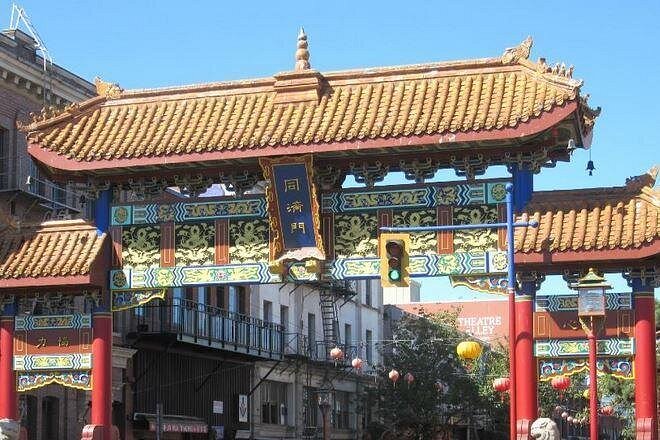
At $18.01, this is an inexpensive organized walk by Victoria standards. Since admission to the listed sites is free, the value depends almost entirely on the guide.
For me, that is a good trade in a historic district. You can walk Fan Tan Alley without paying anyone, but you cannot easily reconstruct its role in Chinatown, understand the Chinese Public School’s purpose, or connect Victoria’s growth to Chinese work and migration without preparation.
The 90-minute length is another strength. It is long enough to build a clear story, yet short enough to fit before lunch or alongside other downtown plans. The compact format also suits families and first-time visitors who want substance without committing to a half-day activity.
The tour may run a little longer than the stated 90 minutes. That can be welcome if you enjoy questions and discussion, but it is worth keeping in mind if you have a strict departure time.
The main value is educational rather than entertainment-based. You should book if you want to understand Victoria better. If you are looking only for quick photographs of Fan Tan Alley, you can see that without a paid walk.
Who will get the most from this Chinatown walk
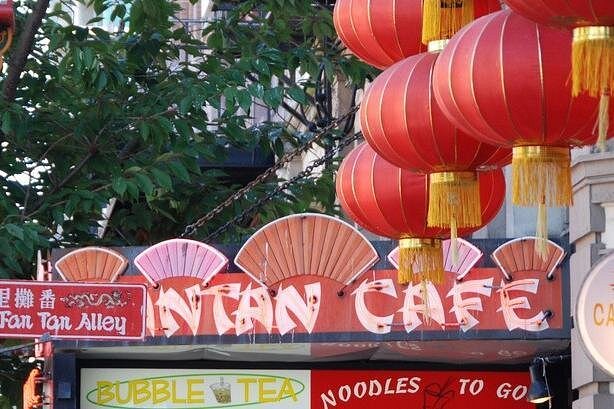
This tour suits adults, couples, families, and local residents who want a clearer sense of Victoria’s Chinese Canadian past. Children can participate, but they must be accompanied by an adult. An 11-year-old has enjoyed the walk in the past, suggesting that the format can work for older children who are willing to listen.
It is also a good choice if you have already visited the Chinese Museum. The guide can add movement, street-level detail, and local context to what you saw indoors. John Adams’s connection with the museum makes that especially useful when he leads the tour.
You should also consider it if you care about responsible historical storytelling. The walk does not treat Chinatown as a decorative photo stop. It addresses discrimination and hard working conditions while recognizing the community’s businesses, institutions, and contributions.
This is less suitable for someone who wants food tastings, extensive shopping time, or a long temple visit. The only food detail available is an occasional pastry tasting, and any Tam Kung Temple visit includes a suggested donation rather than a standard admission.
Most people can take part, and no health restrictions are specified. Still, you are walking outdoors for about an hour and a half, so comfortable footwear is sensible. Since the tour runs in all weather, rain gear or sun protection may be necessary depending on the day.
Booking details that matter in real life
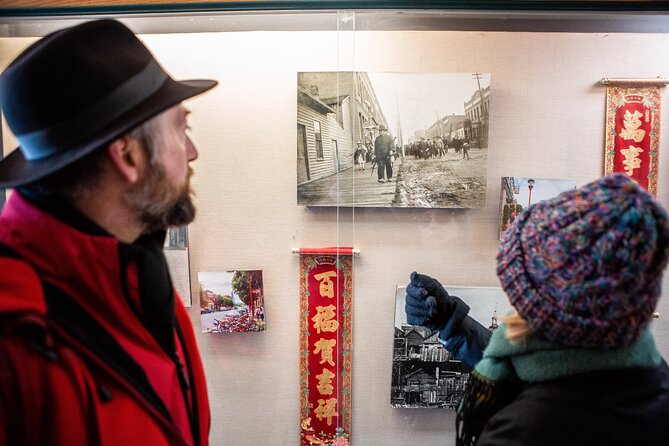
The tour is booked, on average, 10 days ahead. That does not guarantee that every departure fills, but it suggests you should reserve before arriving if the 10:30 a.m. time is important to your plans.
You receive confirmation when booking, and the ticket is mobile, so there is no need to print a voucher. The tour is in English and includes a local guide.
Free cancellation is available if you cancel at least 24 hours before the start time. Cancellations made less than 24 hours in advance are not refunded, and changes inside that window are not accepted. The cutoff uses Victoria local time.
The small group maximum of 10 is worth checking when you book. It helps explain why the tour can feel more personal than a large city walk, and it may affect availability during busy periods.
Should you book the Historical Chinatown Walking Tour?
I would book this walk if you want the story behind Victoria’s Chinatown, not just a quick look at Fan Tan Alley. The price is modest, the time commitment is manageable, and the strongest guides, especially John Adams and Chris, bring local research and community connections to the route.
You should be comfortable walking outdoors, listening in English, and discussing difficult parts of Canadian history. The 10:30 a.m. start and all-weather policy are the main practical limits.
For a short downtown experience with real historical weight, this is a smart choice. Book it if you want Victoria’s oldest Chinatown to make sense after you leave the narrow lanes.
FAQ
Where does the Historical Chinatown Walking Tour start?
The tour starts at 1681 Government Street, Victoria, British Columbia, V8W 0A1.
Where does the tour finish?
The tour ends at 3 Fan Tan Alley, Victoria, British Columbia, V8W 3G9.
What time does the tour begin?
The scheduled start time is 10:30 a.m.
How long does the walking tour last?
The tour lasts approximately 90 minutes. It may run slightly longer depending on the discussion.
What language is the tour offered in?
The tour is offered in English.
Is Fan Tan Alley included?
Yes. Fan Tan Alley is one of the main stops and receives about 20 minutes of attention during the walk.
Is admission to the historic sites included?
There is no admission charge for the listed stops. If Tam Kung Temple is visited, an optional donation of $1 per person is recommended.
Does the tour operate in bad weather?
Yes. The tour operates in all weather conditions, so you should dress appropriately. Children must be accompanied by an adult, and most people can participate.
More Walking Tours in Victoria
- Victoria Bites and Sights Walking + Ferry (winter Sat, Sun)
★ 5.0 · 242 reviews - Iconic & Obscure Victoria Walking Tour
★ 4.7 · 44 reviews - Private | Victoria City Highlights Walking Tour
★ 5.0 · 16 reviews - Private | Banff City Highlights Walking Tour
★ 5.0 · 6 reviews
More Historical Tours in Victoria
- Heritage Horse-Drawn Carriage Experience in Victoria
★ 5.0 · 68 reviews - Historical Landmarks Tour of Victoria Grand City and Craigdarroch Castle
★ 4.5 · 32 reviews - Gastown Historic Walking Food Tour
★ 5.0 · 1,863 reviews - Vancouver: Gastown Historical Walking Food Tour
★ 4.8 · 539 reviews
Just added around Victoria
- Hot Tub Boat Ride Around Victoria★ 5.0 · 89 reviews
- 24 Hour Hop-On, Hop-Off Double Decker Victoria City Tour★ 4.0 · 198 reviews
- Heritage Horse-Drawn Carriage Experience in Victoria★ 5.0 · 68 reviews
- Hip & Hidden Chinatown + Old Town Food Tour Victoria★ 5.0 · 169 reviews
- The Signature Tour Victoria★ 5.0 · 21 reviews
- Private Tour of Beautiful Victoria in Luxury Van★ 5.0 · 24 reviews
- Eat Like a Canadian Food & Sightseeing Tour★ 5.0 · 38 reviews
- Indulge in a Wine & Food Tour – Cowichan Valley★ 5.0 · 151 reviews
Walking & Ghost Tours, compared.

Old Quebec City: Grand Walking Tour with Private Option
Read our review →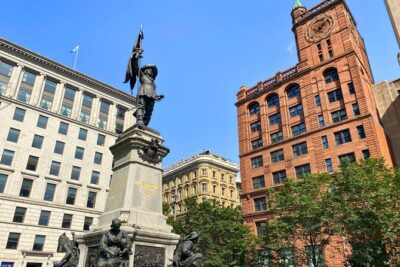
The Original Old Montréal Walking Tour by Guidatour
Read our review →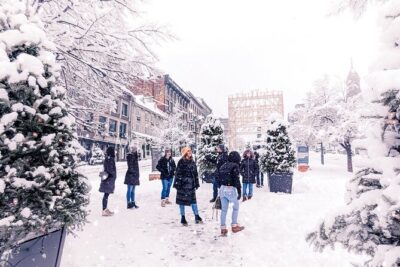
Old Montreal Small-Group Walking Tour | Max 10 | by MTL Detours
Read our review →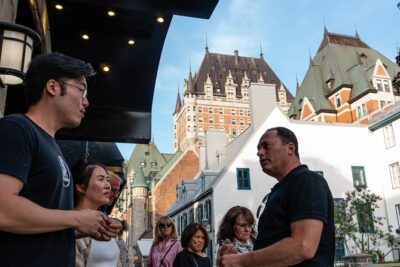
Old Quebec Classique Walking Tour with Funicular
Read our review →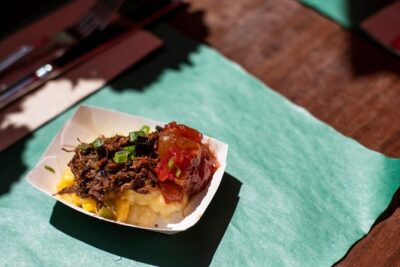
Old Quebec City Food Tour with 10+ Autentic Local Tastings
Read our review →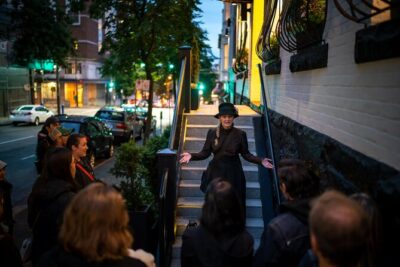

Browse the lists this tour appears in