
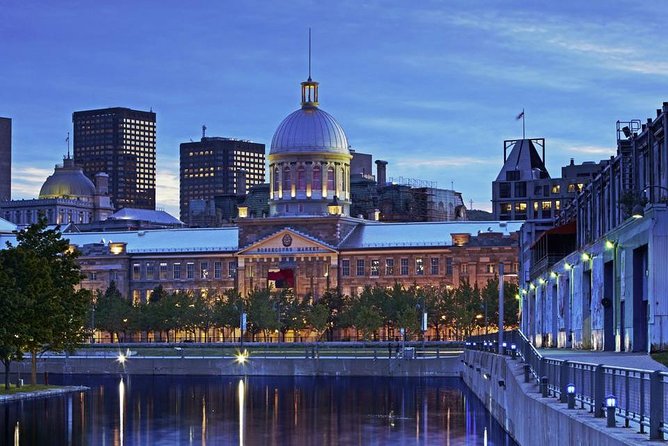
Reviewed · WALKING & GHOST TOURS
Old Montreal Private Walking Tour
Old Montreal is best understood on foot, one stone façade and narrow lane at a time. This private two-hour walk takes you from Notre-Dame Basilica through the district’s oldest squares, former financial streets, religious landmarks, and portside history, giving you a useful sense of how Montreal grew.
I like the private format, which gives you room to ask questions and adjust the pace. I also like the practical local advice, from coffee at Crew in an old bank building to restaurant, gelato, crepe, and museum suggestions. The main consideration is that two hours passes quickly, and much of the tour takes place outdoors, so cold weather, snow, or wet streets can affect your comfort.
In This Review
- Key things to know before you book
- Starting near Notre-Dame Basilica and Rue Saint-Jacques
- Old Montreal’s narrow streets and old stone buildings
- Place d’Armes and Place Royale
- Jacques-Cartier Square and the grand public buildings
- Bonsecours Market, City Hall, and Notre-Dame-de-Bon-Secours Chapel
- St-Paul Street and the former Wall Street of Canada
- The Sulpician Seminary and the Old Port
- How the private format changes the experience
- What the guide can add to your Montreal visit
- Weather, walking, and practical comfort
- Who should book this two-hour walk?
- Should you book the Old Montreal Private Walking Tour?
- FAQ
- How long is the Old Montreal Private Walking Tour?
- How much does the tour cost?
- Is this a private tour?
- Where does the tour start?
- Where does the tour end?
- What sights can the tour include?
- Is food or drink included?
- What should I wear?
- Can I cancel for a full refund?
Key things to know before you book
- A private guide for up to 15 people: Your group stays together, with no strangers joining the walk.
- A strong first-day orientation: The route helps you understand Old Montreal before you explore on your own.
- A history and architecture focus: Expect stories about churches, courthouses, city government, finance, hospitals, and the Old Port.
- Useful local recommendations: Guides such as Sarah, Pierre, Thomas, Stacy, and Joanne have offered suggestions for food, coffee, museums, and later sightseeing.
- A compact two-hour route: You get a broad introduction, not a slow examination of every building.
- Weather matters: Comfortable walking shoes are advised, and winter visitors should dress for snow and cold.
Starting near Notre-Dame Basilica and Rue Saint-Jacques
The tour information gives two meeting details, so check your confirmation carefully. The tour is described as beginning at Notre-Dame Basilica, while the listed meeting point is BMO Bank of Montreal at 119 Rue Saint-Jacques. The end point is listed at Le Vieux Montréal, 500 Place-d’Armes.
That small mismatch is worth clearing up before you arrive. Old Montreal is easy to walk around, but you do not want to spend your two-hour appointment searching for the guide on the wrong side of a square.
The route begins in the heart of the historic district. You will be surrounded by old stone buildings, busy pedestrian streets, public squares, and streets that still reveal Montreal’s French and British past. A private start also lets you settle into the walk at your own speed instead of trying to keep up with a large group.
The tour is offered in English, and the booking details refer to two language options. The guide team includes people who speak more than one language, including François, who speaks English, French, and Spanish. If language is important to your group, confirm the available option when booking.
More Walking & Ghost Tours in Montreal
- The Original Old Montréal Walking Tour by Guidatour
★ 4.5 · 2,217 reviews - Old Montreal Small-Group Walking Tour | Max 10 | by MTL Detours
★ 5.0 · 2,088 reviews - Montréal: The Original Old Montréal Walking Tour
★ 4.8 · 911 reviews
Old Montreal’s narrow streets and old stone buildings
The first major stretch takes you through Old Montreal, where the value of a guide becomes clear. At street level, the district can look like a collection of attractive façades, restaurants, galleries, and shops. A good guide explains what those buildings were for, how the streets changed, and why this part of town became the city’s historic core.
You can expect a walking route through narrow streets lined with substantial stone buildings. The emphasis is not simply on taking pictures. Guides such as Sarah, Luc, Gaston, Frances, and Robert have been praised for connecting the buildings to the wider story of Montreal and for making the past easy to follow.
That personal storytelling is one of the strongest parts of the experience. The guides are not limited to reciting dates. They can explain architecture, point out details you might pass without noticing, and connect old sites with present-day Montreal.
For a first visit, this orientation is especially useful. You begin to see how the district fits together, which streets deserve another look, and where you might return for a meal or museum visit. The tour can also help you avoid spending the rest of your stay wondering which attractive building is a church, a courthouse, a market, or a former bank.
Place d’Armes and Place Royale
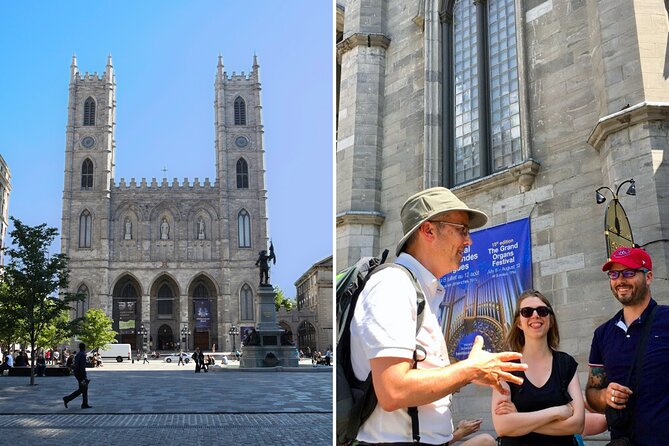
Place d’Armes is one of the likely stops, and it is a good place to read several layers of Montreal at once. The square brings together major buildings and changing architectural styles, making it a natural classroom for the district’s development.
Your guide may use the square to explain the institutions that shaped the city. The point is not only what you see in front of you, but how religion, commerce, law, and public life occupied the same compact area.
Place Royale offers a different feel. It is tied to the city’s earliest period and helps explain Montreal’s connection to the river and the port. A guide can give the square a sense of purpose rather than leaving it as a pretty open space surrounded by old walls.
Because this is a private outing, you can ask the questions that interest you most. Architecture fans can press for details about façades and building styles. Families can ask for shorter stories and more visual clues. Groups who have already taken a general city tour can request less repetition, as one guide did for a returning group.
Jacques-Cartier Square and the grand public buildings
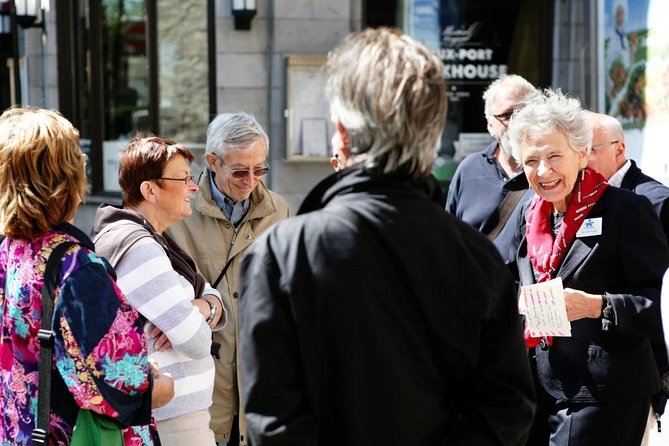
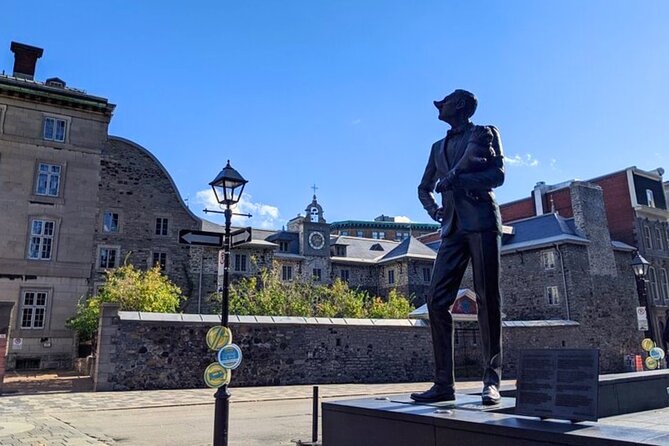
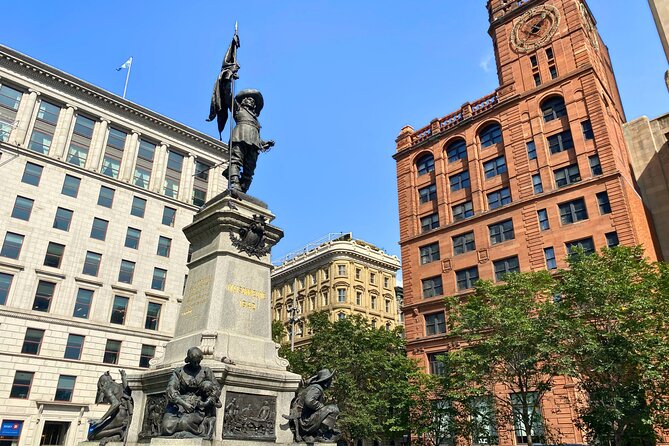
Place Jacques-Cartier is another central stop. Here, you can look at monuments, public art, and the impressive buildings that frame the square.
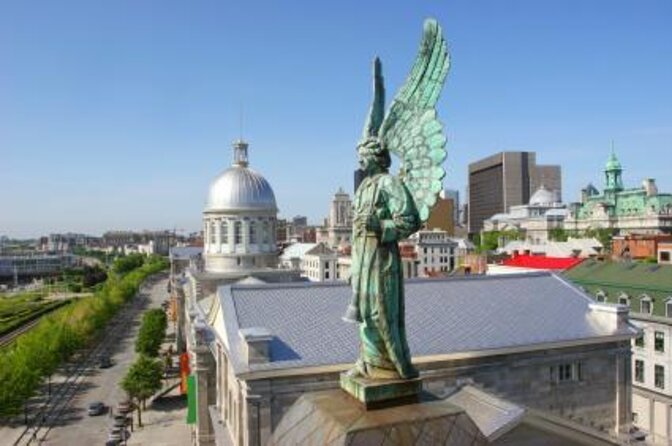
The route may include the three courthouses, Château Ramezay, and Bonsecours Market. Each gives you a different view of Montreal’s civic and commercial life. The courthouses point to the city’s legal institutions. Château Ramezay adds a more domestic and political dimension. Bonsecours Market recalls the importance of trade and public commerce.
The tour focuses on exterior architecture, so do not book it expecting admission to every landmark. That keeps the route moving, but it also means you may want to return later to places that catch your eye.
This is where a guide’s sense of timing matters. The best pace lets you stop for photographs without turning the walk into a lineup at every doorway. Joanne was praised for using the two-hour schedule well, while Pierre was singled out for a comfortable pace and for fitting in breaks during cold weather.
Same province, a completely different day out:
- Montreal: Guided Bus Tour
★ 4.4 · 3,064 reviews - Montreal: Hop-On Hop-Off Double-Decker Bus Tour
★ 4.1 · 2,760 reviews - From Montreal: Quebec City and Montmorency Falls Day Trip
★ 4.5 · 2,669 reviews - Montreal Mile End Authentic Food Tour with 7 Delicacies Tastings
★ 5.0 · 2,598 reviews
Bonsecours Market, City Hall, and Notre-Dame-de-Bon-Secours Chapel
From Jacques-Cartier Square, you may pass Bonsecours Market and continue toward Notre-Dame-de-Bon-Secours Chapel and City Hall. These buildings help show how Old Montreal moved from a small colonial settlement toward a larger civic center.
The chapel is one of the district’s important religious landmarks. City Hall provides a different angle, with public administration and political power taking their place in the story. Seeing both on the same walk helps you understand that Old Montreal was not built for tourism. It was a working part of the city, shaped by worship, government, trade, and daily business.
You will mainly view the buildings from outside. That is a benefit if you want a broad route in two hours, but a limitation if your priority is indoor visits. Ask your guide which places deserve a return visit, and use the walk to decide how to spend the rest of your day.
Families should find the private setup helpful. Guides have kept children and teenagers engaged by mixing stories with the buildings around them. Stacy worked well with children ages nine and eleven, while Frederick held the attention of a seven-year-old and a twelve-year-old. Joann also managed to keep three teenagers interested on a chilly afternoon.
St-Paul Street and the former Wall Street of Canada
St-Paul Street is one of the most atmospheric parts of the route. Its narrow scale and old buildings make it easy to imagine the district before modern office towers and wide traffic corridors changed the city around it.
Just off St-Paul Street, the tour may lead you to Cours Le Royer. This quiet passage is connected with the foundation site of Hôtel-Dieu, Montreal’s first hospital. It is a fine example of the kind of detail you could miss without context. You may walk past it, see attractive old masonry, and never realize what stood there.
The tour also follows St-Jacques Street, once known as the Wall Street of Canada. That nickname points to Montreal’s former financial importance. It adds a useful counterpoint to the churches and public squares, showing that Old Montreal was also a center for money, banking, and business.
This mix is what makes the walk more than a postcard circuit. You see religious buildings, legal institutions, commercial spaces, hospitals, and finance along a fairly compact route. The result is a more complete picture of the district.
The Sulpician Seminary and the Old Port
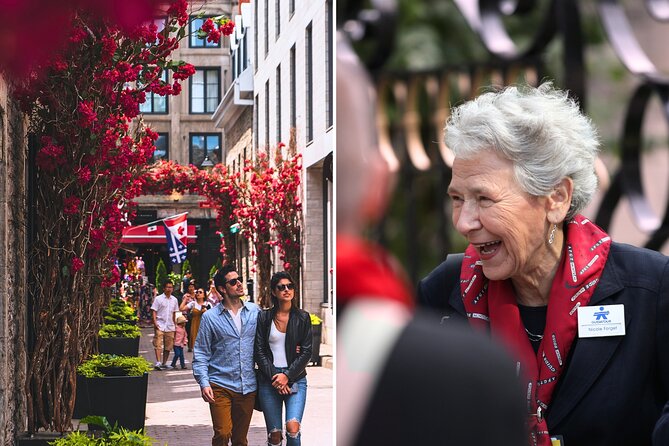
A photo stop at the Sulpician Seminary gives you a chance to see the oldest building in the historic district. It is the sort of landmark that benefits from a pause, especially if your guide explains what makes its age and design important.
The final portion introduces the Old Port and ties the neighborhood to the St. Lawrence River. Montreal’s port shaped its trade, growth, and contact with the wider world. By ending near this waterfront area, the tour gives you a useful geographic framework for the city.
Do not expect a long waterfront excursion. The experience lasts about two hours, and its purpose is orientation. You will leave with a better idea of how Old Montreal relates to the river, the central city, and the nearby streets you may explore later.
One advantage of finishing with this broader setting is that it gives you choices. You may want to continue around the Old Port, return to Place d’Armes, visit an archaeology museum, or stop for food. Frances recommended the archaeology museum to one group, and that kind of suggestion can help turn a short walk into a better planned day.
How the private format changes the experience
The price is $168.98 per group, with a maximum of 15 people. For one or two people, that is a fairly serious expense compared with a shared walking tour. For a family or group of friends, the calculation changes quickly because the cost is divided among the whole party.
The private format gives you three real advantages:
- You can ask questions without waiting for a large group to move on.
- The guide can adjust the route and explanations to your interests.
- Your group can discuss food, museums, architecture, or later plans as you walk.
This flexibility has practical value. One guide adjusted an early start time for a business group. Another changed the content so it would not repeat a previous tour. Pierre even helped a group understand how to use the metro after the walk.
That does not mean every minute will be custom-built. The route still needs to cover the core district within two hours. If you want a very slow architectural study, extensive indoor visits, or a long food stop, this is probably too short.
The group limit of 15 is generous. A group that size will still need to stay alert at crossings and narrow streets, and conversation may be less personal than it would be with two or four people. Still, you are not sharing the guide with unrelated parties, which makes the experience easier to shape.
What the guide can add to your Montreal visit
The guide team is the main reason to choose this format. Sarah has been praised for research, preparation, and tailoring the walk to a group’s interests. Pierre has been especially good at combining architecture, history, restaurant tips, indoor breaks, and practical metro help.
Joanne and Thomas have been valued for making the most of two hours and offering useful meal suggestions. Stacy and Frederick have worked well with children. Luc has connected the history to the buildings in a clear, engaging way, while Gaston has added suggestions beyond the usual sightseeing list.
Those details matter because Old Montreal can become repetitive if every stop is treated as another old façade. A good guide gives each place a reason to matter. You should expect stories, explanations, and recommendations, not just a march from one landmark to the next.
The feedback is especially strong on guide quality, with a 4.9 rating from 314 reviews and 98 percent of customers recommending the experience. That is a powerful sign, though you should still remember that the exact feel depends on the guide assigned to your group and the interests you bring.
Weather, walking, and practical comfort
Wear comfortable walking shoes. The route covers historic streets and public squares, and there is no promise of a seated tour or a fully indoor path.
Winter is possible, but you need to dress for it. Snow and low temperatures did not prevent groups from enjoying the walk, and Pierre and Frederick were able to include indoor time or short breaks. Still, cold weather can make two hours feel longer, especially if you are not prepared.
Food and drinks are not included. That is not a problem for most people, since the route passes through an area with many places to eat and drink, but budget for your own coffee, snack, or meal afterward. The local recommendations are one of the tour’s practical bonuses.
The activity is near public transportation, and service animals are allowed. Most people can participate, but the tour is still a walking experience, so consider your group’s comfort with standing and moving through city streets.
You receive confirmation at booking. Children must be accompanied by an adult. Free cancellation is available until 24 hours before the start time, while cancellations or changes made less than 24 hours ahead are not accepted for a refund.
Who should book this two-hour walk?
I would choose this tour for a first visit to Montreal, especially if you want context before exploring on your own. It also works well for families, groups of friends, business groups, and anyone who prefers asking direct questions rather than following a large public tour.
It is a particularly good fit if you care about architecture, local history, food suggestions, or practical orientation. The short length makes it easy to place on your first afternoon or morning, and the private setup lets you request a pace that suits your group.
I would think twice if you want extensive indoor admissions, a food-focused outing, or a full-day tour. You pay for the guide’s time and flexibility, not for meals or entrance tickets, and two hours can only cover the district’s main framework.
Should you book the Old Montreal Private Walking Tour?
Book it if you want a clear introduction to Old Montreal, personal attention, and useful advice for the rest of your stay. The strongest value comes when several people share the $168.98 group price, or when your family needs a flexible pace.
Before booking, confirm the exact meeting point, since the information names both Notre-Dame Basilica and BMO Bank of Montreal on Rue Saint-Jacques. Then bring good shoes, dress for the forecast, and arrive with a few questions.
If Sarah, Pierre, Joanne, Thomas, Stacy, Luc, or another guide from this team brings the same care and local detail described in the tour information, you should leave with more than photographs. You will know what you are looking at, where to return, and how Old Montreal fits into the larger city.
FAQ
How long is the Old Montreal Private Walking Tour?
The tour lasts approximately two hours.
How much does the tour cost?
The listed price is $168.98 per group, for up to 15 people.
Is this a private tour?
Yes. Only your group participates, with a maximum of 15 people per booking.
Where does the tour start?
The tour description says to meet the private guide at Notre-Dame Basilica. The listed meeting point is BMO Bank of Montreal at 119 Rue Saint-Jacques, so confirm the exact location in your booking details.
Where does the tour end?
The listed end point is Le Vieux Montréal at 500 Place-d’Armes.
What sights can the tour include?
Possible sights include Old Montreal, Place d’Armes, Place Royale, Place Jacques-Cartier, the courthouses, Château Ramezay, Bonsecours Market, Notre-Dame-de-Bon-Secours Chapel, City Hall, St-Jacques Street, Cours Le Royer, the Sulpician Seminary, and the Old Port.
Is food or drink included?
No. Food and drinks are not included in the tour price.
What should I wear?
Comfortable walking shoes are recommended. Since much of the experience takes place outdoors, dress appropriately for the weather, especially in winter.
Can I cancel for a full refund?
Yes, if you cancel at least 24 hours before the experience start time. Cancellations or changes made less than 24 hours in advance are not accepted for a refund.
More Walking Tours in Montreal
- Old Montreal: Traditional Ghost Walk of the Haunted City
★ 4.7 · 746 reviews - Old Montreal Ghost Walking Tour
★ 4.5 · 726 reviews - The Essential 101 Non-Touristy Walking Tour by Spade & Palacio
★ 5.0 · 716 reviews - Montreal: Top Rated Small Group Old Montreal Walking Tour
★ 4.9 · 611 reviews
Just added around Montreal
- Montreal: 3-Day Toronto, Niagara Falls, Thousand Islands★ 4.7 · 5 reviews
- Old Montréal Small-Group Christmas Tour★ 4.4 · 39 reviews
- Secret Food Tours: Montreal – Jean-Talon & Little Italy★ 4.0 · 4 reviews
- Montreal: Maple Syrup Tour with Sugar Shack & Local Cuisine★ 4.1 · 25 reviews
- Port of Montreal Glass Tower Entry★ 4.4 · 129 reviews
- Outdoor mini golf in Montreal★ 4.9 · 13 reviews
- Montreal: An unforgettable guided tour in a vintage 1930s convertible car★ 5.0 · 9 reviews
- Montreal: Private 2h Walking Tour RESO and Old Montreal★ 5.0 · 20 reviews
Walking & Ghost Tours, compared.

Old Quebec City: Grand Walking Tour with Private Option
Read our review →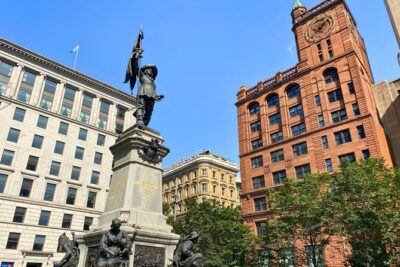
The Original Old Montréal Walking Tour by Guidatour
Read our review →
Old Montreal Small-Group Walking Tour | Max 10 | by MTL Detours
Read our review →
Old Quebec Classique Walking Tour with Funicular
Read our review →
Old Quebec City Food Tour with 10+ Autentic Local Tastings
Read our review →

Browse the lists this tour appears in