
Reviewed · WALKING TOURS
Private 2-Hour Walking Crime Tour in Toronto
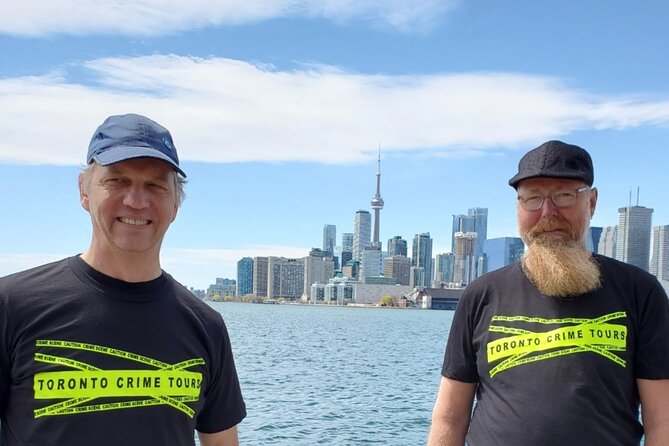
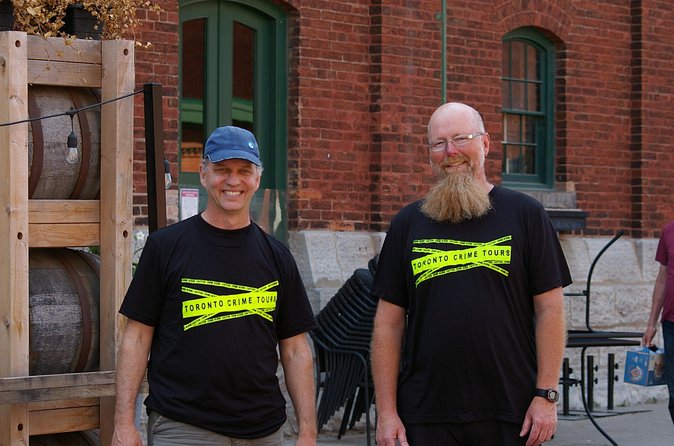
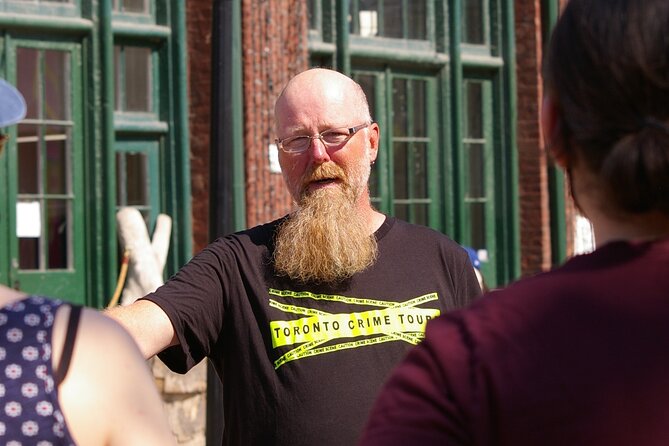
Toronto’s criminal past comes alive in places you might otherwise pass without a thought. On this private walking tour, former detectives such as Phil, Bob, and Dave connect downtown streets, courthouses, old jails, and the Distillery District with murders, riots, robberies, police scandals, and Toronto’s most famous unsolved disappearance. The result is social history with a crime-story edge, not just a parade of grim tales.
I like two things right away. First, the guides draw on years of work with Toronto Police Services, giving the stories a practical feel. Second, the route links 15 short stops, so you keep moving through the city instead of sitting in one room listening to a lecture. The private format also lets your group shape the discussion.
The main caution is physical. The walk lasts about two hours and 15 minutes, follows a brisk pace, and can add up to roughly 6,500 steps. You need comfortable shoes, your own drink, and a willingness to hear stories involving murder, mental illness, executions, and violence.
In This Review
- Key points to know before booking
- Starting at the Eaton Centre with a shocking murder
- Yonge Street and Toronto’s Year of the Gun
- Riots from 1837 to the G20
- The PATH and the treatment of mental illness
- Ambrose Small, Toronto’s great disappearance
- Courthouse Square and the old public gallows
- The Massey trial and Toronto’s powerful families
- The Boyd Gang and escapes from the Don Jail
- The Jarvis Duel near St. Lawrence Market
- Gangland crime and the Corner
- The 1855 circus clown riot and police reform
- The Village and the serial killer investigation
- Topless sunbathing and changing public morals
- Gooderham & Worts and the Distillery District
- What the private format is worth at $28.21
- Who will enjoy this Toronto crime tour
- My verdict: book it for a darker view of Toronto
- FAQ
- How long does the Toronto Crime Tour last?
- Where does the tour begin?
- Where does the tour end?
- Is this a private tour?
- Who leads the tour?
- How much walking is involved?
- What happens if the tour is canceled because of bad weather?
Key points to know before booking
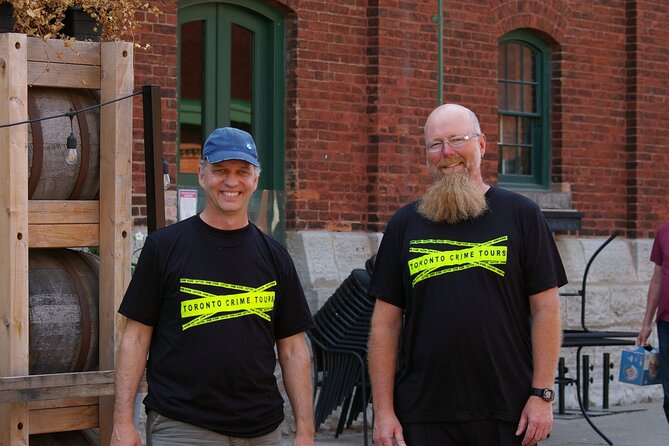
- Former detectives lead the walk: Phil, Bob, and Dave bring police experience to stories about crime and law in Toronto.
- The route covers 15 stops: You walk from the CF Toronto Eaton Centre to the Distillery Historic District.
- The stories range across centuries: Expect material from the Upper Canada Rebellion in 1837 through the G20 riots of 2010 and more recent Toronto crime.
- The private group can shape the tour: The experience can be adjusted to suit your interests and questions.
- The pace is brisk: One participant counted about 6,500 steps over the two-hour walk.
- The price is modest for a private tour: At $28.21 per person, it offers a low-cost way to combine sightseeing, local history, and true crime.
Starting at the Eaton Centre with a shocking murder
The tour begins at 250 Yonge Street, beside the CF Toronto Eaton Centre, at 1 p.m. This is a useful central starting point, close to public transportation and easy to pair with other downtown plans.
The first story concerns the 1977 murder of a 12-year-old shoeshine boy. It is not presented as a random horror story floating free of its setting. The case is tied to the condition of downtown Toronto at the time and to the public pressure that helped push the city toward cleaning up its central streets.
That connection is one of the tour’s strengths. Crime becomes a way to understand how a city changes. You hear about the crime itself, then consider how public fear, policing, and urban policy shaped the streets you see today.
A few more Toronto trips to weigh up
- Show me the City! A Small Group Walking Tour of Toronto
★ 5.0 · 621 reviews - Toronto Distillery District Walking Tour
★ 5.0 · 327 reviews - Toronto: City Highlights Walking Tour | 3-Hour
★ 4.6 · 306 reviews
Yonge Street and Toronto’s Year of the Gun
The next stops stay close to Yonge Street. One focuses on Toronto’s 2005 Year of the Gun and the Boxing Day murder of a 15-year-old girl caught in crossfire during a street-gang shootout.
This section brings the tour closer to present-day Toronto. Older stories can feel safely distant, but this case shows how gun violence affected ordinary people in public places. The guide’s police background matters here, since the discussion includes more than a headline. You get a sense of how crime affects public confidence and how a city responds when violence appears to be spreading.
The stop itself is brief, listed at about five minutes, so do not expect a long investigation into one case. The value comes from the way it fits into the wider story of Toronto’s changing relationship with crime.
Riots from 1837 to the G20
Another Yonge Street stop covers Toronto’s riot history, from the Upper Canada Rebellion in 1837 to the G20 riots of 2010. This is a good reminder that crime tours do not have to focus only on individual criminals.
The stories here concern political anger, public disorder, policing, and the line between protest and riot. They also help you see Toronto as a place shaped by conflict, not simply as a polished business center.
The short format works well for this subject. You get a clear thread across nearly two centuries, then move on before the political detail becomes heavy. If you enjoy social and political history, this may be one of the most useful sections of the walk.
The PATH and the treatment of mental illness

The route then turns toward The PATH, Toronto’s underground pedestrian network. The subject is not a particular crime, but the treatment of mentally ill people within the criminal justice system.
This is among the more serious parts of the tour. It shifts the focus from sensational cases to a difficult question: what happens when people with mental illness come into contact with police, courts, and jails?
I appreciate that the tour includes this topic. It gives the experience more weight and prevents it from becoming a simple collection of spooky tales. At the same time, you should know that the subject may feel troubling rather than entertaining. The tone can change quickly from colorful crime stories to the failures and limits of public institutions.
Same province, a completely different day out:
- Toronto: Niagara Falls Day Tour with Optional Boat Cruise
★ 4.6 · 3,178 reviews - Niagara Falls Day Tour from Toronto
★ 5.0 · 2,889 reviews - Toronto: Casa Loma Entry Ticket
★ 4.7 · 2,705 reviews - Niagara Falls Canada Day Tour From Toronto + Boat Cruise Option
★ 5.0 · 2,576 reviews
Ambrose Small, Toronto’s great disappearance
Downtown provides the setting for the story of Ambrose Small, a wealthy theatre owner who disappeared in 1919. His case remains Toronto’s greatest unsolved mystery in the tour’s telling.
Small’s wealth and public profile make the disappearance especially striking. This is not simply a story about a missing person. It raises questions about money, influence, reputation, and how much a city can ever know about one of its most prominent figures.
The stop should appeal to anyone who likes old mysteries with a strong Toronto setting. Because the case remains unsolved, the guide can focus on what is known, what is uncertain, and why the disappearance has stayed in the city’s memory.
Courthouse Square and the old public gallows
At Courthouse Square in Old Toronto, the subject turns to the last public gallows in Canada. The guide explains which crimes once carried the death penalty, including offenses as startling as stealing turnips and stealing cattle.
This stop gives you a sharp look at how law changes over time. Punishments that seem extreme today were once part of the legal system, and the list of capital crimes reveals the priorities of an earlier society.
The setting also adds force to the story. You are not just hearing about a court in the abstract. You are standing in an area associated with trials, punishment, and public justice. The five-minute stop cannot cover every detail, but it provides a memorable snapshot of an older legal order.
The Massey trial and Toronto’s powerful families
The tour continues with the 1915 murder of Bert Massey, a member of the wealthy Massey Ferguson family. It is described as the trial of the century, which tells you something about the public attention surrounding the case.
This story adds a class and politics angle to the tour. Crime did not affect only poor neighborhoods or shadowy figures. It also reached prominent families, major businesses, and the people who occupied Toronto’s highest social circles.
I find this kind of contrast useful. You can compare the treatment of powerful people with the cases involving children, gang members, and marginalized communities. The tour does not present Toronto’s criminal past as one simple story. It shows how status, money, and public interest can shape the way crime is remembered.
The Boyd Gang and escapes from the Don Jail

No Toronto crime walk would feel complete without the Boyd Gang. The tour covers their bank heists and their repeated escapes from the Don Jail.
This is likely one of the more colorful sections. The combination of robberies, prison escapes, and media attention gives the story a fast pace, even when the group is standing still. It also shows how criminals can become public characters, with newspaper coverage turning real violence into a kind of ongoing spectacle.
The guide also points beyond the drama. The Boyd Gang story is not treated only as a collection of daring escapes. It raises the issue of sensational media coverage and the gap between a criminal legend and the damage caused by the crimes themselves.
The Jarvis Duel near St. Lawrence Market
Near St. Lawrence Market, you hear about the Jarvis Duel of 1817, described as Toronto’s last duel. Duels were once more common, but this one offers a glimpse of a society where disputes among prominent men could end in an arranged armed confrontation.
The stop works well because St. Lawrence Market is already a popular part of Old Toronto. You get a food and market district on one hand, and a story of honor, violence, and old legal customs on the other.
This is also a good example of the tour’s range. It does not stick to police cases from the modern era. It reaches back to a time when Toronto was much smaller and its social rules were very different.
Gangland crime and the Corner
In Old Town, the guide tells the story of Canada’s first gangland slaying in 1939. The discussion also covers the sordid state of the area known as The Corner, at Dundas and Jarvis.
This stop helps explain how certain streets gained a reputation for disorder. It also gives you a clearer sense of the city before later redevelopment and cleanup changed downtown conditions.
You may find this part less polished than the major landmarks around it, but that is part of its value. Crime often makes more sense when you look at the ordinary streets where people lived, worked, and passed through, rather than only at grand buildings.
The 1855 circus clown riot and police reform
One of the tour’s strangest stories involves a riot in 1855 between circus clowns and the Hook & Ladder fire company. The disorder had a lasting effect, helping lead to changes in Toronto’s police structure.
This is a welcome break from murder cases. It is odd, memorable, and tied to a clear civic consequence. A fight involving circus performers and firefighters sounds like a comic side note, but the story shows how public disorder can expose weaknesses in city government.
The guide links the event to a police structure that remains in effect more than a century later. That makes the stop useful for understanding why institutions change. Sometimes reform follows a carefully planned review. Sometimes it follows an absurd public mess.
The Village and the serial killer investigation
The most disturbing section concerns a serial killer targeting gay men in The Village. The police initially said there was no proof or connection among the missing men. Later, eight victims were found buried in a ravine.
This is not a light story, and I would not book the tour expecting every stop to feel entertaining. The case raises serious issues about missing-person investigations, the treatment of gay men, and institutional failure.
The tour’s treatment of this subject is important because it places a painful chapter of Toronto’s recent past in the city’s broader criminal and social history. You should be prepared for a sober tone here. It is one of the points where the experience asks you to think about people and communities, not just the mechanics of a crime.
Topless sunbathing and changing public morals
The next Old Toronto stop takes a lighter turn, asking whether topless sunbathing in a park was illegal or immoral.
This brief subject opens a window onto changing ideas about public behavior, gender, law, and morality. It also keeps the walk from becoming relentlessly grim. Crime and policing are not only about murder and robbery. They are also about the rules a society chooses to enforce.
The question is deliberately framed around both legality and morality. Those are not always the same thing, and the distinction makes this a useful small story in the middle of a darker tour.
Gooderham & Worts and the Distillery District
The walk finishes in the Distillery Historic District at 55 Mill Street. This is a satisfying endpoint because the area is one of Toronto’s best-known historic settings, but the tour looks past its restored appearance.
The first Distillery District stop covers the rapid growth of whiskey making at Gooderham & Worts in 1832. The guide also asks whether the ghost of William Gooderham, or the site’s whiskey-making past, still lingers there.
You should treat the ghost element as atmosphere rather than the main reason to book. The stronger point is the contrast between the district’s current public image and its rougher industrial past. The buildings become evidence of work, alcohol production, wealth, and the people who operated around the business.
The final stop moves to bootlegging in 1922. This adds organized crime and illegal alcohol trade to the tour’s long story of Toronto lawbreaking. Ending here gives the walk a natural progression from old public punishment to modern criminal networks.
The Distillery District is also a practical place to finish. You can continue exploring on foot after the tour, though the experience itself does not include food, drinks, or bottled water. Bring your own beverage, especially on a warm day.
What the private format is worth at $28.21
At $28.21 per person, this is an unusually affordable private activity. The exact value depends on group size. For one or two people, the price buys a personal walking experience with the chance to ask questions. For a larger group, it becomes an inexpensive way to give everyone the same focused introduction to Toronto’s darker past.
The private format matters because the subject covers a lot of ground. You can ask for more attention to police work, old Toronto, unsolved cases, riots, mental health, or the city’s gay history. The tour can be customized, though the supplied details do not promise that every request will be possible.
All fees and taxes are included. Bottled water is not, so bring your own. There is a mobile ticket, confirmation is provided when you book, service animals are allowed, and the route is near public transportation.
The stated duration is about two hours and 15 minutes, while the experience is often described as a two-hour walk. I would plan for the longer figure, especially if your group asks questions or the pace slows. The route is not suited to anyone who cannot walk for two hours.
Who will enjoy this Toronto crime tour
I would choose this experience if you like:
- Toronto history told through real cases
- Police work and the development of law enforcement
- Unsolved mysteries and old newspaper scandals
- Social history involving class, mental illness, sexuality, and public morality
- Walking tours with frequent stops rather than long indoor talks
- A private guide who can respond to your group
It works for both visitors and Toronto residents. If you already know the standard downtown sights, the tour gives you a different reason to look at them. The Eaton Centre, Yonge Street, The PATH, St. Lawrence Market, Old Town, and the Distillery District all take on new meaning when you learn what happened around them.
I would think twice if you dislike stories about murder, capital punishment, serial crime, or institutional failure. The experience also requires good weather, and cancellation is possible if the weather is poor or the minimum group size is not met.
My verdict: book it for a darker view of Toronto
I recommend this tour for people who want more than landmark photos and standard city history. The former detectives are the main draw, and the route gains force from their connection to Toronto policing. The best moments are the ones that link a crime to a change in the city, such as the 1977 murder and downtown cleanup, the circus riot and police reform, or the treatment of mentally ill people in the justice system.
Book it if you can handle a brisk walk and serious subject matter. Bring comfortable shoes, water, and an open mind. At $28.21 per person, the tour offers a lot of context for a small price, especially if you want a private experience that can be shaped around your group.
FAQ
How long does the Toronto Crime Tour last?
The tour lasts approximately two hours and 15 minutes, though it is also described as a two-hour walking experience. Plan for roughly the longer time.
Where does the tour begin?
The tour begins at 250 Yonge Street, Toronto, Ontario, M5B 2L7, beside the CF Toronto Eaton Centre. The start time is 1 p.m.
Where does the tour end?
The tour ends at 55 Mill Street in the Distillery Historic District, Toronto, Ontario, M5A 3C4.
Is this a private tour?
Yes. Only your group participates, and the tour can be customized to suit your needs.
Who leads the tour?
The tour is led by former or retired Toronto detectives. Guides named in the tour information include Phil, Bob, and Dave.
How much walking is involved?
You must be able to walk for two hours. The pace can be brisk, and one recorded experience covered about 6,500 steps.
What happens if the tour is canceled because of bad weather?
You will be offered a different date or a full refund if poor weather causes the tour to be canceled. The experience may also be canceled if the minimum number of participants is not met, with a different date, another experience, or a full refund offered.
Just added around Toronto
- Toronto Craft Brewery Tour★ 5.0 · 97 reviews
- Canada eSIM | 3-30 days | Daily data | QR code★ 4.0 · 12 reviews
- Underground Toronto PATH Tour★ 4.5 · 6 reviews
- Handcrafted Donuts of Toronto: A Sweet City Walking Tour★ 5.0 · 141 reviews
- Customizable Walking Tour of Toronto’s Hidden Gems★ 5.0 · 15 reviews
- Pottery wheel class in Toronto Bay&Dundas★ 4.5 · 5 reviews
- Toronto’s Longest Running Improv Theatre – Marquee Show★ 5.0 · 5 reviews
- Toronto Airport Private Transfer to Downtown★ 4.5 · 10 reviews
Walking Tours, compared.

Old Quebec City: Grand Walking Tour with Private Option
Read our review →
The Original Old Montréal Walking Tour by Guidatour
Read our review →
Old Montreal Small-Group Walking Tour | Max 10 | by MTL Detours
Read our review →
Old Quebec Classique Walking Tour with Funicular
Read our review →

Browse the lists this tour appears in