

Reviewed · WALKING TOURS
Private Jewish Walking Tours in Toronto
Toronto’s Jewish story comes alive on ordinary-looking streets during this private walk from the Art Gallery of Ontario to Kensington Market. You’ll trace immigrant life, old synagogues, schools, labor groups, theaters, delis, and the commercial world that once filled this part of the city.
I like the small private format, since your group can focus on the questions and stories that matter to you. I also like the route’s physical detail: the former Henry Street synagogue, Eitz Chaim school, Minsker Synagogue, and the old institutional buildings on Cecil Street. The main drawback is that this is chiefly a history of Toronto’s older Jewish community, with little attention to Jewish life today.
In This Review
- Key points at a glance
- Why this route matters to Toronto’s Jewish story
- Starting at the AGO and 136 Beverley Street
- Eitz Chaim and the character of Beverley Street
- The former Henry Street synagogue at 23 Henry Street
- Cecil Street, once an institutional center
- Spadina Avenue, from cowboys to Yiddish culture
- Minsker Synagogue and the walk’s final chapter
- What you get for $41.16
- Pace, access, and practical planning
- Who will enjoy this walk most
- Should you book Private Jewish Walking Tours in Toronto?
- FAQ
- How long is the private Jewish walking tour in Toronto?
- Where does the tour begin?
- Where does the tour end?
- What language is the tour offered in?
- Is this a private tour?
- Are admission tickets included?
- Can I cancel for a full refund?
Key points at a glance
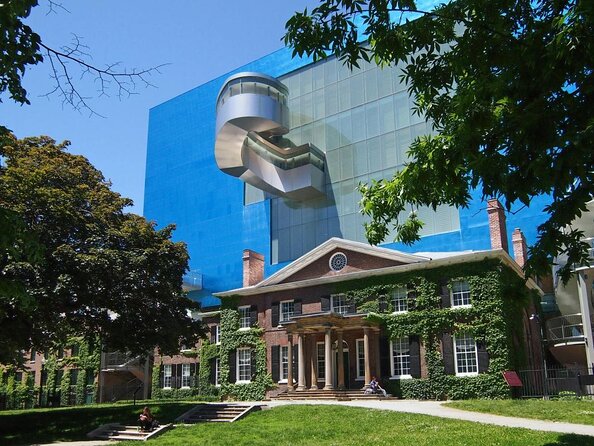
- A walk through Toronto’s old Jewish quarter: Begin near the AGO and finish at Kensington Avenue and St. Andrew Street.
- Nine carefully linked areas: The route covers immigration, schools, synagogues, labor politics, commerce, music, and Yiddish culture.
- Historic buildings viewed from outside: Most stops are free, but no admission ticket is included for the Art Gallery of Ontario.
- A private English-language tour: Only your group takes part, making it easier to ask questions and set the pace.
- A strong two-hour history lesson: Expect plenty of information packed into a compact route, with outdoor walking throughout.
- Best for history-minded visitors: The tour suits people interested in immigrant neighborhoods and Toronto’s Jewish past more than those seeking a portrait of the present-day community.
Why this route matters to Toronto’s Jewish story
Toronto’s Jewish community grew rapidly during the mass immigration of the late 19th and early 20th centuries. This walk shows how newcomers created institutions, adapted to government immigration policies, built places of worship, and developed businesses and cultural organizations.
The value is in seeing those subjects on the streets where they unfolded. You are not simply hearing a broad account of immigration. You are connecting that account to a former school, a converted synagogue, a labor headquarters, and a neighborhood market.
The route also gives you a useful correction to the idea that immigrant history is only about hardship. The stops point to religious life, education, political organizing, entertainment, commerce, and the ways a community absorbed new arrivals.
Because the tour is private, you can ask for more detail in the areas that interest you most. If you want to understand religious buildings, ask about synagogue architecture. If labor history appeals to you, spend more time on Cecil Street. If food and entertainment are your priority, the Spadina portion offers the clearest connection to everyday city life.
A few more Toronto trips to weigh up
- Show me the City! A Small Group Walking Tour of Toronto
★ 5.0 · 621 reviews - Toronto Distillery District Walking Tour
★ 5.0 · 327 reviews - Toronto: City Highlights Walking Tour | 3-Hour
★ 4.6 · 306 reviews
Starting at the AGO and 136 Beverley Street
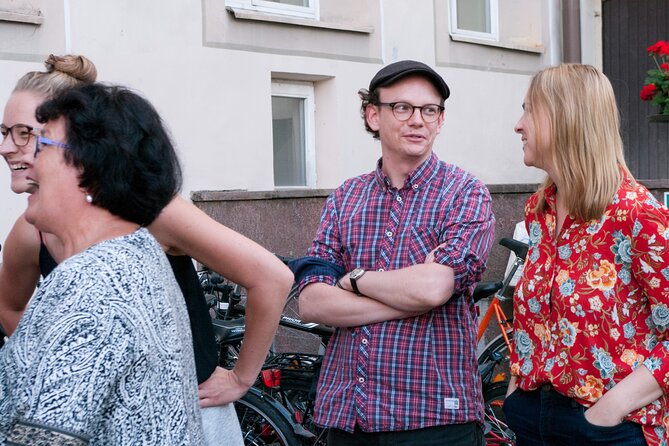
The meeting point is outside the Art Gallery of Ontario at 317 Dundas Street West. The opening stop takes about 10 minutes and uses the AGO area to introduce the early history of Jewish Toronto, especially the major wave of immigration from Europe during the late 19th and early 20th centuries.
You do not receive an admission ticket to the gallery as part of the walk. That is worth noting if you hoped to combine the tour with an art visit. The gallery is a meeting landmark here, not the main attraction.
From there, the walk reaches 136 Beverley Street. You’ll look at the original character of the neighborhood and learn how Jewish institutions helped absorb and support newcomers. This short stop lasts about seven minutes, but it sets up one of the tour’s main themes: a community is built not only through homes and businesses, but also through schools, charities, religious groups, and political organizations.
At 147 Beverley Street, the guide turns to government immigration policies and the Jewish response to them. The stop lasts only about three minutes, so expect a concise explanation rather than a long lecture. Still, this is an important part of the route because it places local Jewish life within the larger rules that shaped who could enter Canada and how new arrivals were treated.
Eitz Chaim and the character of Beverley Street
At 70 D’Arcy Street, you’ll encounter the former Eitz Chaim school. The stop takes about four minutes and brings the story down to individual personalities, including colorful figures connected with the school’s past.
That detail matters. A walk about institutions can easily become a list of dates and building names. Stories about the people who used those places make the neighborhood easier to picture. You may find this stop especially useful if you enjoy social history more than formal political history.
The next point, at 186 Beverley Street, adds non-Jewish Canadian context through George Brown House. The guide also discusses the Jewish history of the public school next door. It is a quick three-minute stop, yet the pairing helps explain that Toronto’s Jewish community developed alongside other groups and public institutions, not in isolation.
As you walk toward Henry Street, the guide points out commercial history along the way. This part is easy to underestimate. Streets reveal how people made a living, where they shopped, and how a residential district became an active urban quarter.
The former Henry Street synagogue at 23 Henry Street
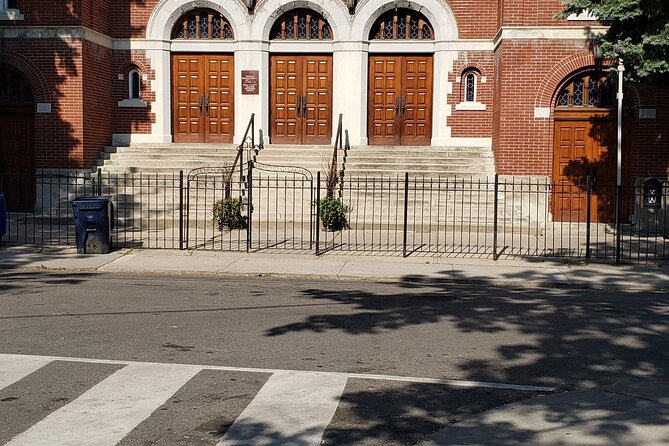
At 23 Henry Street, Holy Trinity Russian Orthodox Church occupies the building that was formerly the Henry Street synagogue. The tour spends about 10 minutes here, making it one of the more substantial stops.
You’ll look at synagogue architecture and learn about Toronto’s early synagogues and first Jewish architects. The building’s later use as an Orthodox church adds another layer, showing how city structures can outlast the communities that first built them.
I find this kind of stop particularly useful because it links design with social history. A synagogue is not just an old building. Its form can tell you something about worship, community needs, and the period in which it was built. Since the stop is viewed as part of a walking route, you should expect the explanation to center on the building’s exterior and its place in the neighborhood.
This is also one of the places where the private format helps. If you want to compare the synagogue’s design with later buildings on the route, you can ask the guide to make that connection instead of simply moving on with a larger group.
Same province, a completely different day out:
- Toronto: Niagara Falls Day Tour with Optional Boat Cruise
★ 4.6 · 3,178 reviews - Niagara Falls Day Tour from Toronto
★ 5.0 · 2,889 reviews - Toronto: Casa Loma Entry Ticket
★ 4.7 · 2,705 reviews - Niagara Falls Canada Day Tour From Toronto + Boat Cruise Option
★ 5.0 · 2,576 reviews
Cecil Street, once an institutional center
Cecil Street receives the longest treatment, about 24 minutes. The area once served as an institutional hub for the older Jewish community, and the guide uses several addresses to show how much activity was concentrated here.
The route discusses the rabbi of the Henry Street Synagogue before introducing 206 and 207 Beverley Street and Cecil Street’s wider role. At 24 Cecil Street, you’ll learn about a Labour Zionist headquarters and school, followed by its later political history.
That combination is a strong feature of the walk. It shows that Jewish Toronto was not defined by religious practice alone. Education, labor, Zionism, and political debate also shaped the community. If you have a family or personal connection to Jewish labor movements, this may be one of the most meaningful sections.
The guide then surveys Jewish organizations and institutions that once occupied addresses between 33 and 58 Cecil Street. You will hear about several groups rather than stopping at one single landmark. The advantage is breadth. The drawback is that 24 minutes can feel dense if you prefer a slower pace or want extended time at each building.
The Cecil Street Community Centre adds another turn in the story. Its building had earlier use as a synagogue and a center for traditional entertainment. This helps you see how community buildings changed purpose over time while retaining a role in neighborhood life.
Bring a few questions to this section. The route covers enough political, educational, religious, and cultural material that your interests can shape the experience.
Spadina Avenue, from cowboys to Yiddish culture
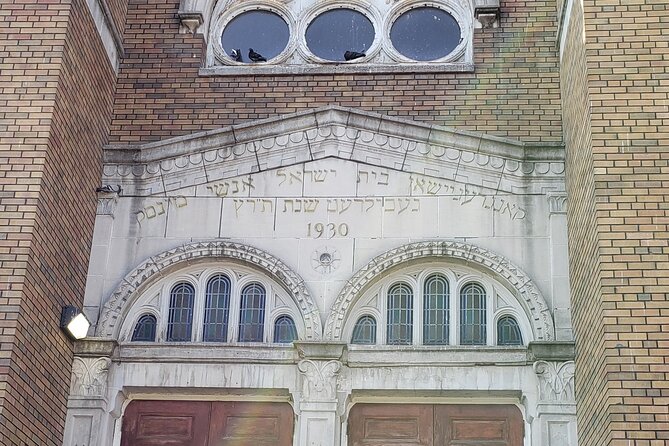
The Spadina Avenue section lasts about 26 minutes and covers a broad stretch between Cecil Street and the El Mocambo. It is the most varied part of the walk, moving from social history to commerce, music, theater, restaurants, and neighborhood change.
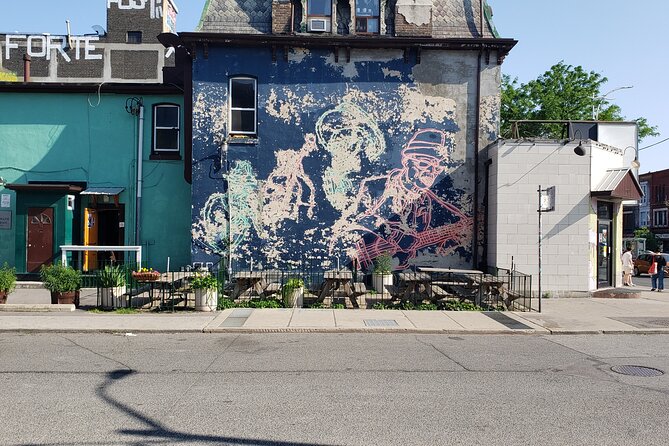
Heading north from Cecil Street, the guide discusses the less traditional side of the neighborhood and the Spadina Avenue cowboys of the 1930s and 1940s. The phrase points to local street culture and the colorful characters associated with the avenue during that period.
Returning south toward Cecil Street, the route includes Grossman’s Tavern, commercial development, and Spadina’s music scene. This gives you a different picture of the district. The avenue was not only a place of worship and political organizing. It was also a place for work, entertainment, and nightlife.
At Spadina and Baldwin Street, the guide explains how Kensington became a market. This is a useful transition because Kensington Market is now one of Toronto’s best-known districts, but its character developed through changing populations, commerce, and food businesses over time.
The section between Dundas Street and St. Andrew Street turns to Yiddish theater, delicatessens, dairy restaurants, and the history of the hat trick. Those subjects offer a glimpse into the everyday culture of the older Jewish neighborhood. Food and theater are often the easiest ways to understand how a community expressed identity in public.
You should expect a lot of ground covered here. The route is not a food tour, so you are learning about delicatessens and dairy restaurants rather than stopping for a meal. It is also not a music tour, although the discussion of Spadina’s music scene adds welcome context to the commercial story.
Minsker Synagogue and the walk’s final chapter
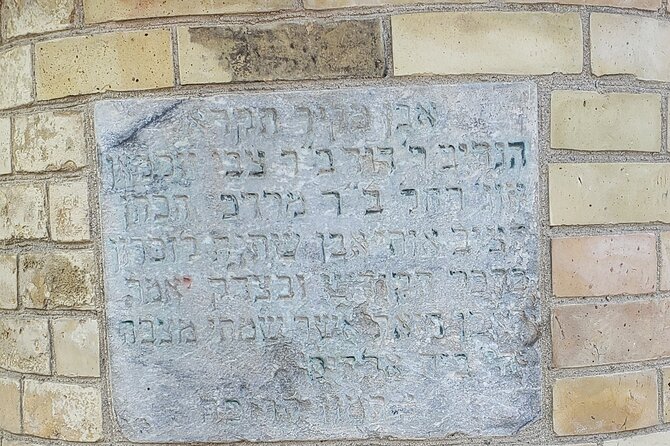
The final listed stop is 10 St Andrew Street, home of the Minsker Synagogue. The visit takes about five minutes and explains the synagogue’s history as the first synagogue in the Kensington area.
St. Andrew Street is presented as a miniature version of the neighborhood, bringing together religious, political, educational, and community history. Across the street, the Labour Lyceum adds another reminder of the role that labor organizations played in Jewish Toronto.
The tour ends at 57 Kensington Avenue, at the corner of Kensington Avenue and St. Andrew Street. That is a practical finish because you are left in the heart of Kensington Market, with a chance to continue exploring on your own.
The ending also makes sense thematically. You begin with immigration and institution-building, then move through schools, synagogues, labor groups, commerce, entertainment, and market life. The final stop brings those threads together in one small area.
What you get for $41.16
At $41.16 per person, the tour offers good value if you want a focused historical guide rather than a general city walk. The price pays for a private experience, a carefully planned route, and close attention to a subject that is easy to miss during a first visit to Toronto.
The value is strongest for a small group that would otherwise need to research several addresses independently. You are not paying for museum admission or a meal, but the tour does connect many free public sites in a short time.
A two-hour walk also fits neatly into a city day. You can visit the AGO before or after, though the gallery admission is separate. The finish in Kensington Market gives you an easy next stop for independent browsing and food.
The price may feel less attractive if you want a broad introduction to all of Toronto or a detailed account of the current Jewish community. This walk is specific. Its focus is the older Jewish neighborhood and the forces that shaped it.
Pace, access, and practical planning
The experience is offered in English and uses a mobile ticket. Confirmation is provided when you book. Since it is a private activity, only your group participates, which can make the pace more comfortable than a large scheduled walk.
The route is outdoors and requires good weather. If poor weather cancels the experience, you can choose another date or receive a full refund. The same choice applies if the minimum number of participants is not met.
Most people can participate, and service animals are allowed. The route is near public transportation, so you have a practical way to reach the AGO meeting point and leave Kensington Market afterward.
Wear shoes suited to two hours of city walking. The published stop times range from three to 26 minutes, but the experience also includes movement between addresses. You’ll get more from it if you allow yourself time to look at the buildings instead of treating the walk as a race.
The tour is usually booked about 21 days ahead. That is useful planning information for a fixed Toronto schedule, especially if you want a particular date. Free cancellation is available until 24 hours before the start time. Changes or cancellations inside that window are not accepted for a refund.
Who will enjoy this walk most
I would choose this experience if you care about immigration, urban history, religious buildings, Jewish culture, or the way neighborhoods change. It also suits repeat visitors who have already seen Toronto’s major sights and want a more specific local story.
The walk is a good match for families or friends who prefer a private guide and want to ask questions. The route has enough variety for people with different interests: architecture at Henry Street, education at Eitz Chaim, labor history on Cecil Street, and food and entertainment on Spadina.
I would think twice if you want a relaxed stroll with little narration. The route packs many subjects into two hours. You should also choose another experience if your main goal is present-day Jewish Toronto, since the emphasis here is on the older community and its historic institutions.
The mixed rating reflects that limitation. The strongest response comes from the storytelling, detail, and sense of what it was like to live in the area decades ago. The main criticism is the lack of a current-community perspective.
Should you book Private Jewish Walking Tours in Toronto?
Book it if you want a compact, private walk through the streets where Toronto’s older Jewish community built its schools, synagogues, political groups, businesses, and cultural life. The best parts are the former Henry Street synagogue, the long Cecil Street section, and the Spadina discussion of Yiddish theater, restaurants, markets, and music.
Before booking, decide what kind of Jewish history you want. If you want the immigrant and neighborhood story, this is a strong choice at $41.16. If you want current institutions and modern community life, ask about that focus in advance or choose a tour designed around the present day.
FAQ
How long is the private Jewish walking tour in Toronto?
The tour lasts approximately two hours.
Where does the tour begin?
The meeting point is the Art Gallery of Ontario at 317 Dundas Street West, Toronto, Ontario M5T 1G4.
Where does the tour end?
The tour ends at 57 Kensington Avenue, at the corner of Kensington Avenue and St. Andrew Street in Kensington Market.
What language is the tour offered in?
The tour is offered in English.
Is this a private tour?
Yes. Only your group participates in the activity.
Are admission tickets included?
Admission tickets are not included for the Art Gallery of Ontario. The other listed stops are marked as free.
Can I cancel for a full refund?
Yes. You can cancel at least 24 hours before the experience start time for a full refund. Cancellations made less than 24 hours before the start time are not refunded.
Just added around Toronto
- Toronto Craft Brewery Tour★ 5.0 · 97 reviews
- Canada eSIM | 3-30 days | Daily data | QR code★ 4.0 · 12 reviews
- Underground Toronto PATH Tour★ 4.5 · 6 reviews
- Handcrafted Donuts of Toronto: A Sweet City Walking Tour★ 5.0 · 141 reviews
- Customizable Walking Tour of Toronto’s Hidden Gems★ 5.0 · 15 reviews
- Pottery wheel class in Toronto Bay&Dundas★ 4.5 · 5 reviews
- Toronto’s Longest Running Improv Theatre – Marquee Show★ 5.0 · 5 reviews
- Toronto Airport Private Transfer to Downtown★ 4.5 · 10 reviews
Walking Tours, compared.
Old Quebec City: Grand Walking Tour with Private Option
Read our review →
The Original Old Montréal Walking Tour by Guidatour
Read our review →
Old Montreal Small-Group Walking Tour | Max 10 | by MTL Detours
Read our review →
Old Quebec Classique Walking Tour with Funicular
Read our review →
Browse the lists this tour appears in