
Reviewed · WALKING & GHOST TOURS
St. John’s Downtown Walking Tour
St. John’s reveals itself best on foot, one steep street and bright-painted house at a time. This 2.5-hour downtown walk ties together George Street, Water Street, the Colonial Building, local cemeteries, summer gathering places, and the harborfront, giving you a useful first look at Newfoundland’s capital.
I like the way the tour mixes major sights with local stories, rather than treating downtown as a string of photo stops. I also like the small maximum of 18 people, since guides such as Dave, Pierre, Sam, Tyra, Bob, and David can keep the presentation personal and adjust the talk to the group.
The main caution is the terrain. St. John’s has steep hills and some stairs, and there is no scheduled bathroom stop, though the guide can help find a facility if you ask. Wear good shoes, carry water, and arrive early if you need to sort out parking.
In This Review
- Key points at a glance
- Starting on George Street in the heart of downtown
- Water Street and the stories between the stops
- Jellybean Row and St. John’s visual character
- Cemetery lore and the places people overlook
- The summer park stop
- The Colonial Building and Newfoundland politics
- Reaching the harbor and the War Memorial
- What the guides add to the walk
- Fitness, weather, and the practical side
- Is $44.31 a fair price?
- Who should book this St. John’s walking tour?
- Should you book it?
- FAQ
- How long is the St. John’s Downtown Walking Tour?
- How much does the tour cost?
- Where does the tour begin?
- Where does the tour finish?
- Is the tour offered in English?
- Are morning and afternoon tour times available?
- How large is the group?
- Is the walking route physically demanding?
- Can I cancel for a full refund?
Key points at a glance
- George Street sets the tone: Begin among the city’s best-known pubs and entertainment venues while learning how the street fits into St. John’s story.
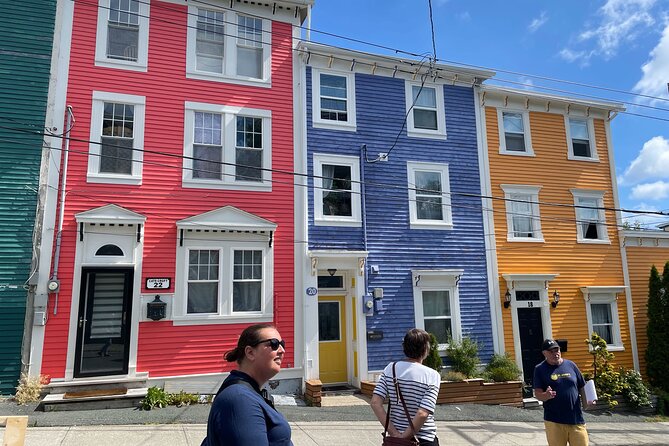
- Jellybean houses add color: The walk includes the famous painted homes that make St. John’s feel unlike other Canadian cities.
- Local guides make the difference: Dave, Pierre, Sam, Tyra, Bob, and David are praised for humor, personal stories, dialects, and strong knowledge of the city.
- The route is genuinely active: Expect hills, stairs, and roughly two and a half hours on your feet.
- The harbor finish gives the tour purpose: End at the War Memorial and consider how the sea shaped the city’s past and present.
- The price is fair for an orientation: At $44.31 per person, you are paying for a guided introduction that can save you time during a short stay.
Starting on George Street in the heart of downtown
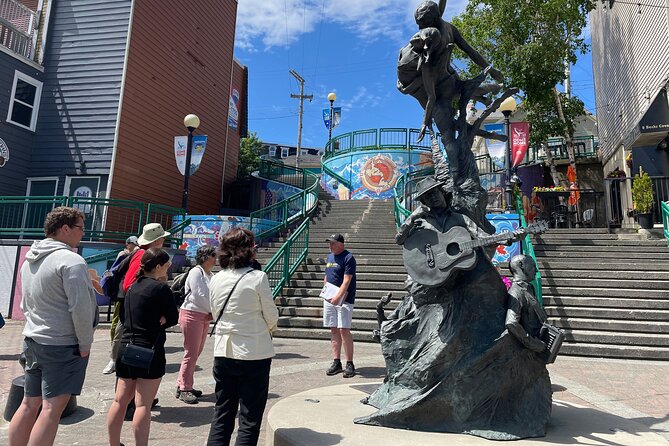
The tour begins at the A TIME statue at 4 George Street. This is a handy downtown starting point, and the first ten minutes introduce George Street and explain what lies ahead.
George Street is more than a convenient meeting place. It is one of St. John’s most famous streets, known for its nightlife and tightly packed historic setting. Starting here gives you an immediate sense of the city’s social side before the walk turns toward older streets, public buildings, and the waterfront.
I find this opening useful because it puts the city in human terms. You are not simply told dates and names. You start with a place where people still gather, then build outward into the forces that shaped St. John’s.
The stop is short, so do not expect a long visit focused only on George Street. Its role is to orient you and establish the larger story. If you want time for photographs, browsing, or a drink afterward, save that for later.
More walking & ghost tours in Canada:
- Quebec City Walking Tour
★ 5.0 · 4,716 reviews - Old Quebec City: Grand Walking Tour with Private Option
★ 4.8 · 2,609 reviews - The Original Old Montréal Walking Tour by Guidatour
★ 4.5 · 2,217 reviews
Water Street and the stories between the stops
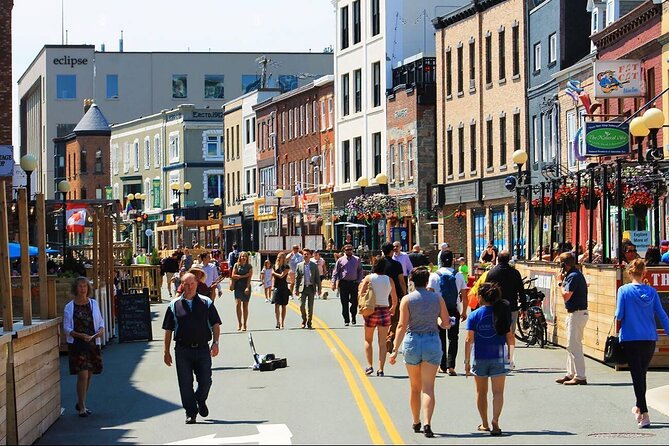
The route continues along Water Street with several short pauses. This part of the walk focuses on shops, street details, and the setting around them.
Water Street is especially important because it connects downtown St. John’s with the working life of the harbor. The guide uses the street to point out small details and share facts that are easy to miss when you walk alone. That is the kind of information that turns a pleasant stroll into a useful city lesson.
The tour does not appear to be built around long indoor visits or admission-ticket attractions. Instead, you learn outdoors, in front of the places being discussed. I like that approach in St. John’s, where the steep streets, painted buildings, old commercial areas, and harbor views are part of the subject.
Several people praise the guides’ ability to keep the talk lively. David is noted for stories and dialects, while Pierre adds local suggestions for ice cream, craft beer, poutine, and lunch. Dave is praised for using stories and even artifacts to make the past easier to picture.
Those details matter if you are in St. John’s for only a day. A good walking guide can help you decide where to eat and what to see next, not just explain what you have already passed.
Jellybean Row and St. John’s visual character
The tour includes views of Jellybean Row houses, one of the city’s most recognizable features. These brightly painted homes bring a playful look to streets that can otherwise feel gray under Atlantic weather.
You should not think of Jellybean Row as a single formal attraction with a gate or ticket. It is part of the city’s residential fabric, seen as you move through downtown and nearby historic streets. The value comes from understanding why the houses matter and how they fit St. John’s identity.
This is one of the most photograph-friendly parts of the walk, but the guide’s explanation gives the colors more meaning than a quick snapshot would. The houses also help break up the heavier political and wartime subjects later in the route.
The exact views can depend on the route and the pace of the group. Still, the inclusion of Jellybean houses gives the walk a strong visual thread. You get architecture, local character, and a better sense of how St. John’s differs from a standard modern city center.
Cemetery lore and the places people overlook

At one cemetery stop, the guide raises a simple but intriguing question: how many people are buried there? The answer is not known, and the guide explains why.
This is a good example of the tour’s storytelling style. Rather than presenting every stop as a polished monument, the walk makes room for uncertainty, missing records, and the imperfect way cities preserve their past. You are encouraged to notice a place that many people would otherwise pass without a thought.
The cemetery stop also provides a change of mood. The route is not only about colorful houses and busy streets. It acknowledges the people who lived, worked, worshiped, and died in the city.
Because the stop is outdoors and brief, you should expect interpretation rather than a formal cemetery visit. The appeal lies in the story attached to the place. If you prefer tours built only around famous landmarks, this quieter stop may feel less immediately exciting, but it adds depth to the walk.
A few more Canada trips to weigh up
- Old Montreal Small-Group Walking Tour | Max 10 | by MTL Detours
★ 5.0 · 2,088 reviews - Gastown Historic Walking Food Tour
★ 5.0 · 1,863 reviews - Old Quebec Classique Walking Tour with Funicular
★ 5.0 · 1,317 reviews - Vancouver Lost Souls of Gastown Walking Tour
★ 5.0 · 1,273 reviews
The summer park stop
Another pause focuses on what makes a local park a hub of activity during summer. The supplied route does not identify the park by name, so you should treat this as a local-life stop rather than a major attraction with a fixed program.
That distinction is useful. A city tour should show you how a place works when people are not simply sightseeing. A park that fills with activity in summer gives you a glimpse of St. John’s as a community, not just as a historic port.
The guide’s explanation can also help you understand seasonal life in the city. St. John’s weather affects how public spaces are used, and a summer gathering place says something about how residents make the most of the warmer months.
This stop is likely to appeal most if you enjoy ordinary city details. It may be less important to you if you are focused on a checklist of landmark buildings, but it helps the route feel connected to present-day St. John’s.
The Colonial Building and Newfoundland politics
The Colonial Building receives a short five-minute stop. Here, you learn why the ruling party sits on the left and what happened in 1932.
That brief description points to one of the more unusual political stories in St. John’s. The building represents Newfoundland’s period of colonial government and the political history that led toward its place as Canada’s tenth province.
The guide connects architecture with government, which is exactly what makes a walking tour useful. You are not only looking at a handsome old building. You are learning how decisions made inside it affected the direction of Newfoundland.
The stop is short, so do not expect an extended visit inside. The emphasis is on the exterior setting and the guide’s explanation. If political history interests you, this may be one of the most memorable moments of the tour. If it does not, the guide’s humor and storytelling help keep the subject moving.
The best guides also adjust their emphasis to the group. Pierre is praised for shaping the discussion around the people with him, and several guides are described as engaging rather than formal. That flexibility helps a mixed group stay involved.
Reaching the harbor and the War Memorial

The tour ends at the War Memorial at 92 Water Street, close to the water. The final ten minutes focus on what brought people to St. John’s in the first place and what continues to draw them back.
Ending by the harbor gives the route a clear arc. You begin in the center of downtown, move through streets and public places, consider government and community life, and finish with the sea that made the city possible.
The War Memorial is a fitting place to close because it connects local life with larger events. The final section also gives you a chance to think about St. John’s as a port, a place shaped by arrivals, departures, work, conflict, and return.
The endpoint is practical, too. You finish on Water Street rather than returning to George Street, so plan your next move. That may be convenient if you want to continue near the harbor, but you should not assume you will be brought back to your starting point.
What the guides add to the walk
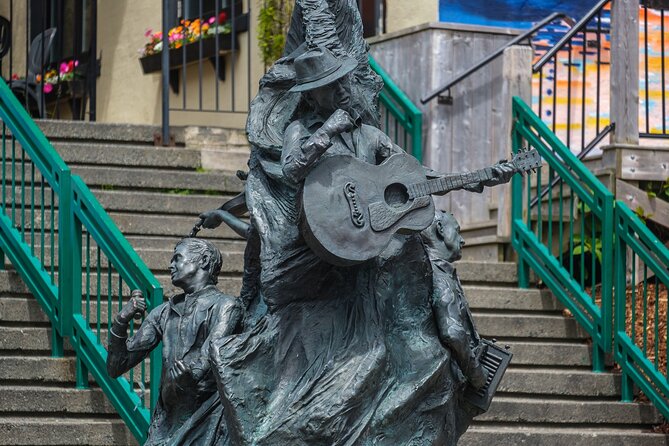
The strongest part of this tour is the guide. The names that come up most often are Dave, Pierre, Sam, Tyra, Bob, and David, though your guide will depend on the date and group.
Dave is praised for history, stories, dialects, and a strong local connection. Pierre is known for passion, humor, and useful food and drink suggestions. Sam is described as energetic and full of facts, while Tyra brings a funny, engaging presentation.
Bob’s style combines information with personal anecdotes. David is singled out for his pride in being a native Newfoundlander and for keeping the group informed throughout the full 2.5 hours.
These descriptions suggest a tour that depends heavily on personality. That is normal for a walking tour, and it can be a strength. You are likely to get a more human account of the city than you would from an audio guide.
It also means the tone can vary. One review raises concern about how a sensitive subject was handled, while the operator says it aims for a balanced presentation. I would keep that in mind if you want a strictly neutral, academic treatment. The overall approach is lively and conversational.
Fitness, weather, and the practical side
This is a true walking tour, not a bus tour with short strolls. You should have a moderate level of fitness and be comfortable walking for about two and a half hours.
The route includes steep hills and some stairs. One person specifically advises bringing water, and another found the tour strenuous and wished for a scheduled bathroom break. The operator explains that there is no dedicated break because it could take 15 to 20 minutes, but the guide can help locate a facility if someone needs one.
I would use the bathroom before meeting the group and carry water. Comfortable shoes are essential. St. John’s streets can be demanding, and wet or poor weather could make hills and stairs feel harder.
The tour is offered in English, with morning and afternoon times. The mobile ticket is convenient, and confirmation arrives when you book. Service animals are allowed, and the starting point is near public transportation.
Parking deserves some planning. A review describes difficulty finding parking and trouble with a payment meter, so I would arrive early rather than trying to pull in at the last minute. Any parking fee or ticket is separate from the tour.
The maximum group size is 18. That is small enough for the guide to speak directly to the group, though the experience will still feel more like a shared walk than a private tour.
Is $44.31 a fair price?
At $44.31 per person, this is not the cheapest way to spend two hours in St. John’s. You can walk George Street, Water Street, and the harbor on your own for free.
The value comes from the interpretation. You get local history, political context, cemetery lore, architectural details, Jellybean Row, and practical recommendations in one route. If you are short on time, that can be a good trade.
I especially see the value for a first day in St. John’s. The walk helps you understand the shape of downtown and gives you ideas for the rest of your stay. Several guides also recommend places for lunch, ice cream, craft beer, and poutine, which adds useful value beyond the formal route.
The tour is less appealing if you dislike hills, prefer indoor attractions, or already know downtown well. You are paying for a guide’s stories and judgment, not entry to museums or historic interiors.
Who should book this St. John’s walking tour?
I would choose this tour if you have one day in St. John’s, are arriving by cruise ship, or want a clear introduction before exploring alone. It suits couples, solo visitors, families with reasonably fit adults, and anyone who likes history delivered with humor.
It is also a good choice if you want local food suggestions. Pierre’s recommendations and the guides’ personal stories can help you make better plans after the walk.
I would think twice if stairs are difficult for you, if you need regular scheduled bathroom stops, or if you want a slow photography walk. The route covers a lot in 2.5 hours, and the pace needs to keep the group moving.
Book at least a little ahead if your schedule is fixed. The tour is often reserved 41 days in advance, and it requires a minimum number of people to operate. If the minimum is not met, you will be offered another date or experience, or receive a full refund.
Free cancellation is available up to 24 hours before the start time. Changes or cancellations made less than 24 hours ahead are not accepted for a refund.
Should you book it?
Yes, if you want a lively first look at St. John’s and can manage the hills. The route covers the city’s colorful architecture, political past, public spaces, cemeteries, harbor, and food culture without wasting time on long formal stops.
I would book it early in your stay, wear sturdy shoes, bring water, and arrive prepared to walk uphill. The tour’s value rests on the guide, and the strong performances from Dave, Pierre, Sam, Tyra, Bob, and David make it a worthwhile introduction for most visitors.
FAQ
How long is the St. John’s Downtown Walking Tour?
The tour lasts approximately 2 hours and 30 minutes.
How much does the tour cost?
The listed price is $44.31 per person.
Where does the tour begin?
The meeting point is the A TIME statue at 4 George Street, St. John’s, Newfoundland and Labrador.
Where does the tour finish?
The tour ends at the War Memorial at 92 Water Street.
Is the tour offered in English?
Yes. The activity is offered in English.
Are morning and afternoon tour times available?
Yes. You can choose a morning or afternoon departure.
How large is the group?
The maximum group size is 18 people.
Is the walking route physically demanding?
You should have a moderate level of fitness. The route includes steep hills and stairs, so comfortable shoes and water are recommended.
Can I cancel for a full refund?
Yes, if you cancel at least 24 hours before the experience begins. Cancellations made less than 24 hours in advance are not refundable. If the minimum number of people is not reached and the tour is canceled, you will be offered another date or experience, or a full refund.
Just added around Canada
- 1 Hour Spray River Ride★ 4.5 · 204 reviews
- 2 Hour Banff Horseback Riding Adventure★ 4.0 · 145 reviews
- Lake Minnewanka, Peyto Lake, Bow Lake , Icefields★ 4.5 · 63 reviews
- Along Icefields Parkway: Peyto Lake, Bow Lake & Columbia Icefield★ 4.0 · 19 reviews
- Moraine Lake Lake Louise Johnston Canyon Emerald Lake Day tour★ 5.0 · 4 reviews
- 3 Day Algonquin Park Canoe Trip – Moose & Beaver Safari★ 5.0 · 27 reviews
- 3 Hour Algonquin Park Bass & Trout Fishing (private- price is for 1 or 2 people)★ 5.0 · 5 reviews
- Discover the Lake Agnes Tea House Trail with an Audio Nature Tour★ 4.0 · 7 reviews
Walking & Ghost Tours, compared.

Old Quebec City: Grand Walking Tour with Private Option
Read our review →
The Original Old Montréal Walking Tour by Guidatour
Read our review →
Old Montreal Small-Group Walking Tour | Max 10 | by MTL Detours
Read our review →
Old Quebec Classique Walking Tour with Funicular
Read our review →
Old Quebec City Food Tour with 10+ Autentic Local Tastings
Read our review →

Browse the lists this tour appears in