
Reviewed · WALKING & GHOST TOURS
Then & Now Walking Tour
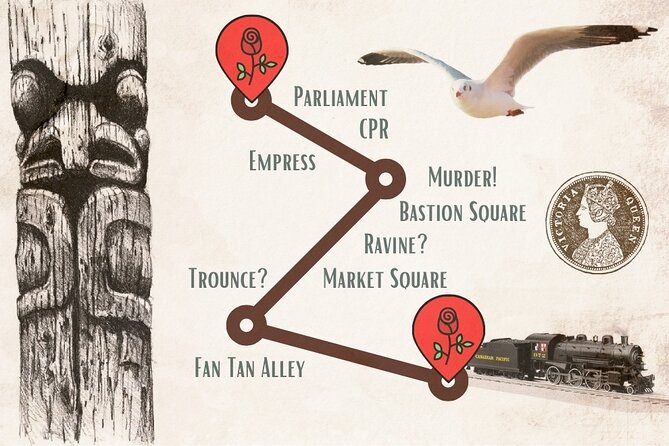
Victoria’s past comes in several distinct layers on this walk. You begin with Indigenous carvings and Thunderbird Park, move through the grand colonial world of the Empress Hotel, then finish in Chinatown with Fan Tan Alley’s stories of opium, gambling, and immigrant life.
I like the way the route links famous sights with smaller corners such as Trounce Alley and Market Square. I also like the local, conversational approach associated with guides Helen and Claire, who can help you choose restaurants, shops, and entertainment after the tour. The main drawback is price: at $220.32 per person for roughly two hours, this is costly for a walking tour, even though minors 16 and under go free.
In This Review
- Key points to know before you book
- Why this short walk gives Victoria a useful shape
- Starting at Thunderbird Park and the Royal BC Museum
- The Empress Hotel and the power of a grand address
- Trounce Alley, Morse code, and a small dose of oddity
- Market Square and the ravine that divided communities
- Bastion Square’s courthouse, jail, and darker stories
- Fan Tan Alley and the complicated story of Chinatown
- The guide makes more difference than the route
- What the $220.32 price really buys you
- Timing, clothing, and the practical details
- Who should book this Victoria walking tour?
- FAQ
- How long does the Then & Now Walking Tour last?
- What time does the tour start?
- Where does the tour begin and end?
- Which places does the walking tour visit?
- Are children charged for the tour?
- Can I cancel for a full refund?
- Should you book it?
Key points to know before you book

- Six central stops in about two hours: The route covers Thunderbird Park, the Empress Hotel, Trounce Alley, Market Square, Bastion Square, and Fan Tan Alley.
- A tour built around contrasts: Indigenous culture, British colonial power, Chinese Canadian history, and modern Victoria all appear in one compact walk.
- Guides Helen and Claire bring the stories to life: Expect local anecdotes, scandal, intrigue, and practical suggestions for the rest of your stay.
- The tour ends in Chinatown: You finish near the Gate of Harmonious Interest, a useful spot for continuing your own exploration.
- Children 16 and under are free: This can make the cost easier to justify for families.
- Plan for the weather: Bring water and dress for changing west-coast conditions. The tour requires good weather.
Why this short walk gives Victoria a useful shape
Victoria is easy to admire at street level. The old buildings, harbor setting, and tidy shopping lanes can make the city feel like a pleasant collection of postcard scenes. This tour helps you connect those scenes to the people, conflicts, and decisions that shaped them.
The route does not spend long at any one place. Most stops last 10 to 20 minutes, so you get a broad introduction rather than a detailed museum visit. That is a good fit if you have only one day in Victoria, are arriving by cruise ship, or want a strong orientation before exploring on your own.
The most useful feature is the range of subjects. The walk does not focus only on British colonial architecture. It begins with First Nations art, moves into the power and money surrounding the Empress and the old courthouse, then ends with Chinatown and the complicated social history around Fan Tan Alley.
That mix gives you a more honest sense of place. You see the polished side of Victoria, but you also hear about jail cells, hangings, gambling, opium, and the dividing lines between different communities.
More walking & ghost tours in Vancouver Island:
- Private Vancouver City Highlights Walking Tour
★ 5.0 · 22 reviews - Victoria Scavenger Hunt and City Highlights Walking Tour
★ 5.0 · 17 reviews - Downtown Victoria’s Historical Heart: A Self-Guided Walking Tour
★ 4.0 · 15 reviews
Starting at Thunderbird Park and the Royal BC Museum
The tour begins at 9:30 a.m. at 698 Government Street, beside the Royal BC Museum area. The first stop is listed as IMAX Victoria in the Royal BC Museum, with attention to the totem poles, Thunderbird Park, and the Ceremonial House.
You have about 20 minutes here. The stop is not designed as a full museum visit, and admission to the walking tour stops is not included as a separate ticket because the listed admission cost is free. The value comes from having a guide explain what you are seeing instead of simply walking past the carvings on your way downtown.
This is an important opening. Victoria’s public image often leans heavily on its British buildings and afternoon-tea reputation. Beginning with Indigenous art changes the frame from the start. You are reminded that the city’s story did not begin with colonial construction.
The short time also matters. If you want to study every carving or visit the museum’s indoor exhibits, plan to return later on your own. For this tour, the stop works as an introduction before the route shifts toward the nineteenth-century city center.
The Empress Hotel and the power of a grand address
From Thunderbird Park, the route continues to the Fairmont Empress, a National Historic Site of Canada. You spend about 20 minutes hearing about the hotel’s history and its architect.
The Empress is one of Victoria’s most recognizable buildings, but the tour aims to give you more than a quick photo stop. The hotel represents the city’s connection to British imperial style, rail travel, wealth, and the visitors who helped shape Victoria’s public identity.
You may also get a look at attractive interior spaces, depending on the guide and access at the time. Helen is described as particularly good at showing beautiful interiors and explaining the people and decisions behind important buildings. Do not treat this part as a full architectural tour, though. Twenty minutes is enough for context and a close look, not a detailed study of every room or design feature.
I like this stop because it gives the tour a strong visual change. You move from carved cedar and Indigenous symbolism to a formal hotel designed to project status and permanence. That contrast makes the city’s competing stories easier to understand.
Trounce Alley, Morse code, and a small dose of oddity
Trounce Alley receives about 10 minutes, but it sounds like one of the more unusual stops on the route. The guide explains the origin of its name, its connection to Morse code, and the shops and old-school arcade found along the lane.
This is the sort of place that can disappear if you explore downtown without a local pointing it out. The lane is less about a major landmark and more about noticing how small spaces carry traces of working city life.
The arcade reference adds a lighter note after the formal Empress stop. That balance is one of the tour’s strengths. You get serious discussion of colonial power and social divisions, but you also get curious details that help you remember the walk.
Because the stop lasts only 10 minutes, expect a quick story rather than time for browsing. If a shop catches your eye, note its location and return after the tour. You will have more freedom to explore once the group has moved on.
A few more Vancouver Island trips to weigh up
- Quebec City Walking Tour
★ 5.0 · 4,716 reviews - Old Quebec City: Grand Walking Tour with Private Option
★ 4.8 · 2,609 reviews - The Original Old Montréal Walking Tour by Guidatour
★ 4.5 · 2,217 reviews - Old Montreal Small-Group Walking Tour | Max 10 | by MTL Detours
★ 5.0 · 2,088 reviews
Market Square and the ravine that divided communities
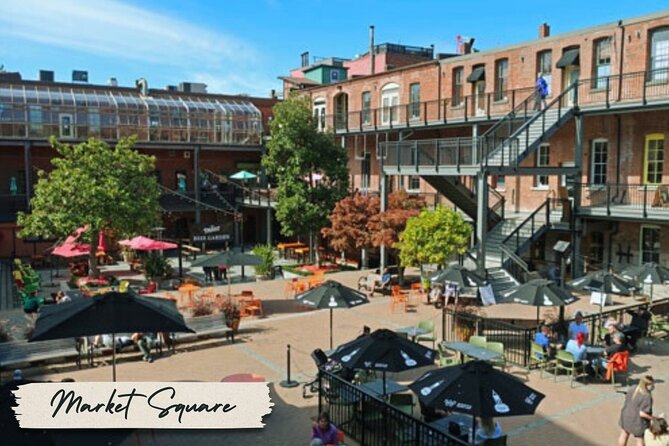
At Market Square, the guide spends about 10 minutes explaining the ravine that once divided European and Chinese colonists. This is a compact stop with a large subject behind it.
The point is not simply that Victoria had separate neighborhoods. The physical shape of the city helped create social boundaries, and those boundaries reflected unequal power. Hearing about the ravine gives you a better sense of how geography and prejudice worked together.
Market Square is also a useful place to pause and look around. The modern setting can make the earlier divisions hard to imagine, which is exactly why a guide helps here. You are asked to picture how the area functioned before streets, buildings, and public spaces took their current form.
This section also prepares you for the final stop in Chinatown. Instead of treating Fan Tan Alley as a quirky photo opportunity, the route gives you some background about why Chinese residents, businesses, and institutions occupied a distinct part of the city.
Bastion Square’s courthouse, jail, and darker stories
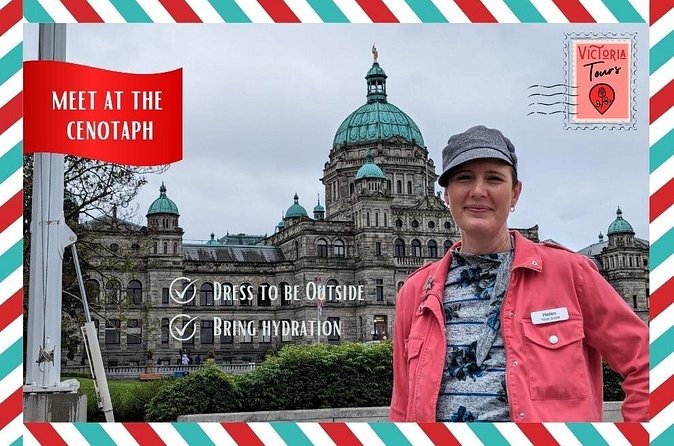
Bastion Square gets about 15 minutes. The subjects here include the courthouse, jailhouse, law offices, and public hangings.
This is where the tour turns toward the machinery of law and punishment. Victoria’s old center can feel genteel today, so stories about criminal cases and executions add a needed edge. You learn how justice was administered and how public spaces once served purposes far removed from shopping and sightseeing.
The stop should appeal to you if you enjoy social history more than architectural description. The guide’s storytelling style is central here. Helen has been praised for stories involving scandal and intrigue, and for adding small details that do not appear in ordinary guidebooks.
At the same time, keep your expectations realistic. Fifteen minutes cannot provide a full legal history of colonial Victoria. You get a sharp introduction, a few memorable episodes, and a reason to look at the square differently when you pass through again.
Fan Tan Alley and the complicated story of Chinatown
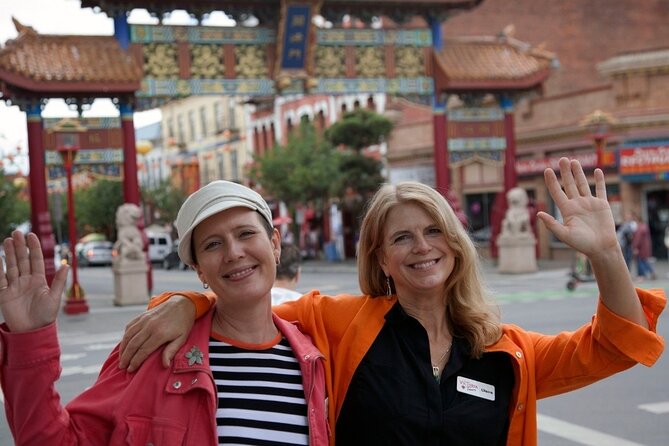
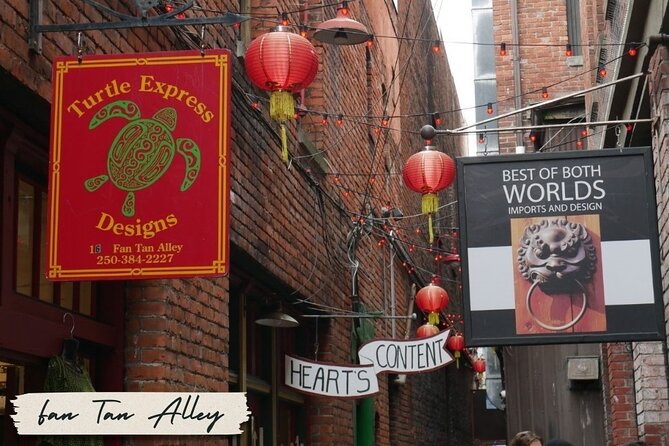
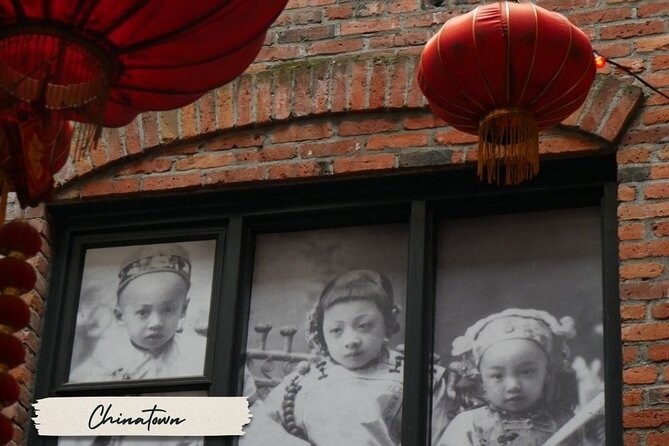
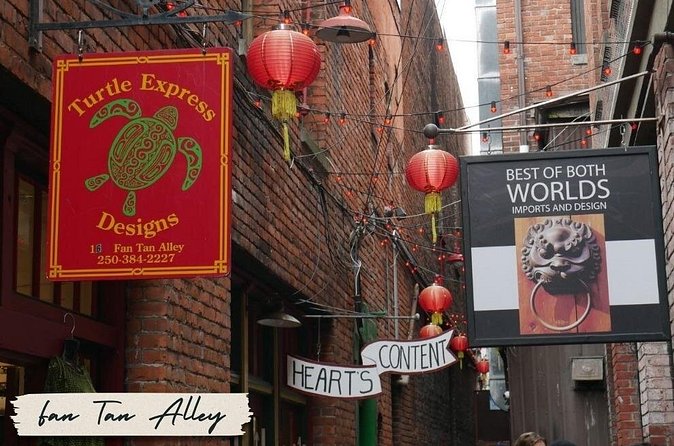
The final stop is Fan Tan Alley, where the tour spends about 15 minutes discussing opium, gambling, and Chinatown. The walk ends at 568 Fisgard Street, near the Gate of Harmonious Interest, or at another preferred location in the area.
Fan Tan Alley is narrow and visually memorable, but its importance is not limited to its appearance. The guide places the alley within the wider story of Chinese Canadian life in Victoria, including businesses and activities that were often regulated, stigmatized, or pushed out of public view.
The mention of opium and gambling gives the stop a dramatic hook, but the stronger value lies in the social context. You are seeing a part of the city shaped by migration, exclusion, commerce, and survival. That is a more useful takeaway than simply photographing the narrow passage.
Ending here is practical. You can continue into Chinatown for food, shopping, and further sightseeing. Since the guide may also suggest restaurants or places to shop, save your questions for the end. The final location gives you a natural base for the rest of your afternoon.
The guide makes more difference than the route
The route itself is compact and easy to follow. The real reason to choose this experience is the guide’s ability to connect facts with stories.
Helen receives especially strong praise for being funny, friendly, easy to talk with, and good at improvising when explaining a story. Claire is also described as bringing strong knowledge of the area and unusual local details. The company may assign either guide, so you should not book on the assumption that one particular person is guaranteed unless the provider confirms it.
That personal approach is useful for first-time visitors. You can ask where to eat, what to see next, or where to shop, and the conversation can continue beyond the formal stops. One guide also welcomed a dog on the walk, and service animals are allowed.
The small maximum group size of 20 helps. It is not a private tour, but a group of that size still gives you a better chance to hear the guide and ask questions than a large city walk would. Most people can participate, and the experience is near public transportation.
What the $220.32 price really buys you
At $220.32 per person, this is expensive for a two-hour to two-and-a-half-hour walking experience. The arithmetic works out to a high hourly cost, especially since the route does not include paid museum entry, food, or other admission.
The price may make sense if you place a high value on a personal introduction and plan to use the guide’s advice for the rest of your stay. It is also more defensible for a family because children 16 and under are free. A family of several people should compare the total cost carefully, since the free youth places can change the value calculation.
Pickup is offered, but the listed meeting point is 698 Government Street at 9:30 a.m. Confirm the pickup arrangement when booking if you need transportation rather than simply walking to the start. The route ends in Chinatown, so you should also allow time to get back to your hotel or onward connection.
I would not choose this tour only for sightseeing photographs. You can see the Empress, Market Square, Bastion Square, and Fan Tan Alley without paying for a guide. I would choose it for the connections between those places, especially if you want a local voice and a quick orientation with stories that go beyond standard guidebook notes.
Timing, clothing, and the practical details
The walk lasts approximately two hours to two hours and 30 minutes. The schedule gives you six stops, but the pace and exact finish time may vary with questions, group size, and the guide’s storytelling.
Bring your own water. Wear shoes suitable for walking and dress for the weather, since west-coast conditions can change. The experience requires good weather, and poor conditions may lead to a new date or a full refund.
The tour is offered in English and uses a mobile ticket. Confirmation arrives when you book. Service animals are allowed, and the activity is near public transportation. The maximum group size is 20.
Free cancellation is available up to 24 hours before the 9:30 a.m. start time for a full refund. Changes or cancellations made within 24 hours are not accepted for a refund, and the local cut-off time applies. If the minimum number of participants is not reached, the operator may offer another date or experience, or a full refund.
Who should book this Victoria walking tour?
I would recommend it most strongly to first-time visitors who want the city to make sense quickly. It is also a good fit if you enjoy stories of scandal, law, architecture, migration, and local personalities more than a simple list of dates.
Families should look closely at the free policy for children 16 and under. The early start also leaves most of the day open for the Royal BC Museum, Chinatown, harbor sights, or another activity.
This is less suitable if you want a long museum visit, a slow architectural study, or a low-cost introduction. The route is short, the paid value rests heavily on the guide, and the price is high compared with an unguided walk through the same district.
FAQ
How long does the Then & Now Walking Tour last?
The experience lasts approximately two hours to two hours and 30 minutes.
What time does the tour start?
The tour starts at 9:30 a.m.
Where does the tour begin and end?
It begins at 698 Government Street, Victoria, BC V8V 2L8. It ends at 568 Fisgard Street in Chinatown, near the Gate of Harmonious Interest, or at your preferred location in the area.
Which places does the walking tour visit?
The route includes Thunderbird Park and the Royal BC Museum area, the Empress Hotel, Trounce Alley, Market Square, Bastion Square, and Fan Tan Alley.
Are children charged for the tour?
Minors 16 years old and under are free of charge.
Can I cancel for a full refund?
Yes. You can cancel at least 24 hours before the experience start time for a full refund. Poor weather or failure to meet the minimum number of participants may also result in an alternative date or a full refund.
Should you book it?
Book this tour if you want a fast, story-driven introduction to Victoria and are willing to pay for a local guide rather than simply see the sights on your own. Helen and Claire bring the sort of personal detail that can turn a hotel, alley, or courthouse into a place with meaning.
Skip it if price matters most or if you already know downtown Victoria well. For everyone else, the strongest case is the route’s range: Indigenous art at the start, colonial power in the center, and Chinatown at the finish. That gives you a more useful picture of Victoria than a walk focused only on pretty buildings.
Just added around Vancouver Island
- Victoria BC – Coast & Castle Tour by E-Bike★ 5.0 · 5 reviews
- Salish Sea Whale Watching Tour in Campbell River★ 5.0 · 90 reviews
- Wildlife, Waterfalls, Caves, Old Growth on Vancouver Island★ 4.5 · 6 reviews
- West Coast Wildlife Rainforest Waterfall and Beaches★ 5.0 · 10 reviews
- Victoria City Highlights E-Bike Tour – Hoods & Legends★ 5.0 · 8 reviews
- Victoria Vistas and Views Progressive Food Tour★ 4.5 · 6 reviews
- One-Way High-Speed Passenger Ferry: Victoria, BC to Seattle, WA★ 4.0 · 76 reviews
- Half-Day Victoria to Cowichan Valley Wine Tour with Tastings★ 5.0 · 107 reviews
Walking & Ghost Tours, compared.

Old Quebec City: Grand Walking Tour with Private Option
Read our review →
The Original Old Montréal Walking Tour by Guidatour
Read our review →
Old Montreal Small-Group Walking Tour | Max 10 | by MTL Detours
Read our review →
Old Quebec Classique Walking Tour with Funicular
Read our review →
Old Quebec City Food Tour with 10+ Autentic Local Tastings
Read our review →

Browse the lists this tour appears in