
Reviewed · WALKING & GHOST TOURS
Toronto Discovery District 2hr Walking Tour
Toronto’s civic center and university district tell two very different stories in a short stretch. This two-hour route begins beneath the giant Toronto sign at Nathan Phillips Square, then moves north through Queen’s Park and the University of Toronto before finishing at the Royal Ontario Museum.
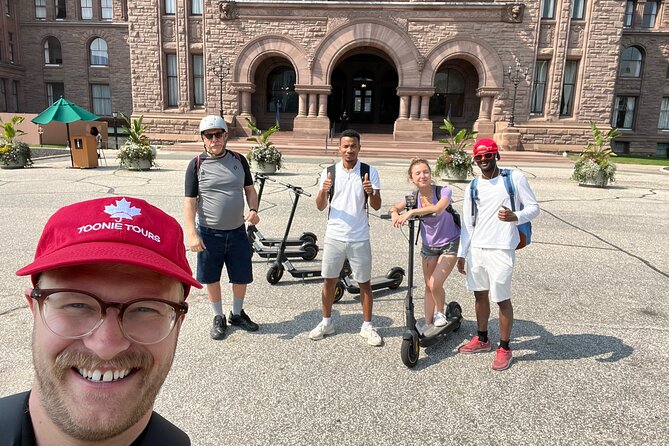
I like the compact route and the small group, capped at 15 people. I also like that the guides offer restaurant tips and help with photos, not just dates and building names. The main thing to check before booking is the transport format: the experience is described as a walking tour, but several comments refer to scooters and riding through roads, sidewalks, and bike lanes.
In This Review
- Key points to know before you book
- What this Toronto tour actually covers
- Nathan Phillips Square and the Toronto sign
- Toronto’s public service and College Place
- Queen’s Park and Ontario’s political story
- The University of Toronto campus
- Convocation Hall and Alumni Plaza
- Soldiers’ Tower and Philosopher’s Walk
- Koerner Hall, snack break, and the ROM exterior
- The guides and the feel of the experience
- Walking or scooter tour: why you should clarify
- Who gets the best value for $34.99?
- Should you book the Toronto Discovery District tour?
- FAQ
- How long does the Toronto Discovery District tour last?
- Where does the tour begin?
- Where does the tour end?
- Is admission to the Royal Ontario Museum included?
- What language is the tour offered in?
- How large is the group?
- Can I cancel for a full refund?
Key points to know before you book
- A downtown-to-university route: Start at Nathan Phillips Square and finish outside the Royal Ontario Museum.
- Ten-minute stops: The schedule gives each main location about 10 minutes, so expect a brisk overview rather than long visits.
- A small group: A maximum of 15 people leaves room for questions and personal help with photos.
- Strong guide focus: Joel, Tai, Joshua, and Wei-Ting are named in feedback, with praise for humor, local advice, and clear explanations.
- No museum admission included: The ROM stop is outdoors only, and every listed stop is free to enter.
- Check the vehicle details: Some feedback describes scooters, which does not match the advertised walking format.
What this Toronto tour actually covers
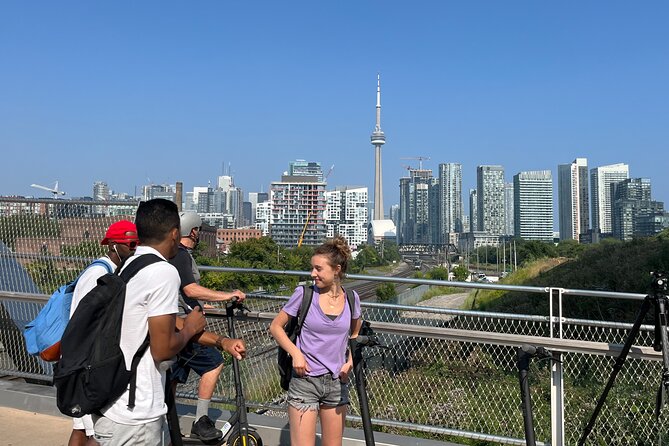
This is a central Toronto orientation tour with a useful northbound route. You get civic architecture, medical history, provincial politics, university traditions, war memorials, music, and an outdoor look at the ROM.
The pace matters. Each stop is listed at roughly 10 minutes, so you will hear the main story, take a few pictures, and move on. That makes this a good first-day activity if you want a map in your head before exploring Toronto on your own.
You are not paying for entry to a museum or historic interior. The value comes from the guide’s narration, the easy route, and the chance to ask questions. At $34.99 per person, that is a fair price if you want context rather than a long, formal lecture.
The group limit of 15 is also important. In a large city, a small group makes it easier to hear the guide, stop for a question, or get help framing a photo. It also keeps the tour from feeling like a parade through downtown.
More Walking & Ghost Tours in Toronto
- Show me the City! A Small Group Walking Tour of Toronto
★ 5.0 · 621 reviews - Toronto Distillery District Walking Tour
★ 5.0 · 327 reviews - Toronto: City Highlights Walking Tour | 3-Hour
★ 4.6 · 306 reviews
Nathan Phillips Square and the Toronto sign
The meeting point is Nathan Phillips Square, at 100 Queen Street West. The giant Toronto sign gives you the obvious opening photo, with Toronto City Hall and the square behind it.
The square is more than a selfie stop. It is a working public space that often hosts markets, festivals, and protests. That gives your guide a natural way to explain how Toronto presents itself as Ontario’s capital and how public life appears in the city center.
The listed stop lasts about 10 minutes and costs nothing to enter. Arrive ready to start, since the tour’s meeting point can be tricky to locate. One person had difficulty finding it and needed several calls to the support line, while the guide also acknowledged that the location was not easy to spot.
If the weather is cold or wet, this opening wait can be uncomfortable. The guide identification issue also matters because one booking problem involved a group waiting in the snow while the tour continued with other people. The provider later confirmed a refund, but I would still arrive early and keep the meeting instructions handy.
Toronto’s public service and College Place
One unnamed stop focuses on the place where Toronto’s public service works today. The guide explains the building’s unusual design and the ideas behind its artistic and cultural gardens.
This is the sort of stop you might walk past without noticing. A guide gives the building a reason to exist, rather than treating it as another office block. The art and garden details should also break up the more familiar civic sights.
The next stop, College Place, shifts from government to medicine. At the beginning of the 20th century, the building served as the third version of Toronto General Hospital. The tour presents it as one of the most complete and modern hospitals in the world at that time.
You will hear about how the project came together, the obstacles involved, and its medical achievements. The stop lasts around 10 minutes, so expect a quick account of the building and its role in Toronto’s medical development.
This section is especially useful if you enjoy the practical side of urban history. You are not simply looking at old stonework. You are learning how a city tried to improve public health and build modern institutions.
Queen’s Park and Ontario’s political story

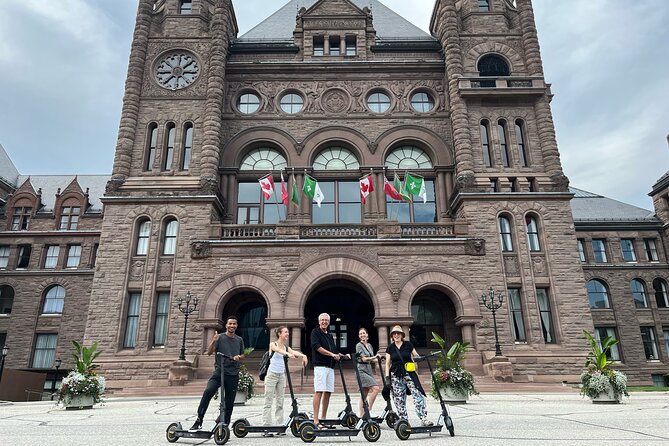
Queen’s Park packs provincial history into a landscaped public space filled with statues and a central architectural feature made for photographs. The guide uses the park to explain how Ontario developed and how its story connects with Canada’s wider past.
At 10 minutes, this is a sampler. You will not get every political detail, but you should come away with enough context to understand why the park matters. The statues also give you something concrete to look at while the guide talks.
I like this stop because it changes the mood of the route. Nathan Phillips Square feels civic and modern, while Queen’s Park offers a more ceremonial setting. If you are taking photos, this is one of the easier places to pause without blocking the flow of the group.
Same province, a completely different day out:
- Toronto: Niagara Falls Day Tour with Optional Boat Cruise
★ 4.6 · 3,178 reviews - Niagara Falls Day Tour from Toronto
★ 5.0 · 2,889 reviews - Toronto: Casa Loma Entry Ticket
★ 4.7 · 2,705 reviews - Niagara Falls Canada Day Tour From Toronto + Boat Cruise Option
★ 5.0 · 2,576 reviews
The University of Toronto campus

The route then enters the University of Toronto, where the focus turns to education, war, memory, and architecture. The campus is described as a place to cruise through on two wheels, which is another clue that the actual format may sometimes involve scooters.
The guide covers the university’s wartime efforts and how the institution remembers people who died defending Canada. That subject gives the campus more weight than a simple architecture walk.
A university is also a good setting for a guided tour because many of its details are easy to miss. You may notice a grand building, a memorial, or an old pathway without understanding its purpose. The guide connects those pieces and keeps the route moving.
If you expect a gentle walk, ask about the transport before you arrive. Some feedback describes a scooter tour as faster and easier than cycling, using a mix of roads, pavements, and bike lanes. That could be fun, but it is a different experience from strolling through campus.
Convocation Hall and Alumni Plaza
Convocation Hall brings the university’s ceremonial side into view. The guide explains its origins, its role, and how it rose after the 1890 fire. You also see Alumni Plaza, where the university honors its graduates.
This is a good example of the tour’s approach: explain why a building matters, then point out the public space around it. You get a story about loss and rebuilding, followed by a modern expression of university life.
The stop is again about 10 minutes. That is enough for an introduction and photographs, but not enough to examine every architectural feature. If Convocation Hall interests you, note the location so you can return later on your own.
Soldiers’ Tower and Philosopher’s Walk
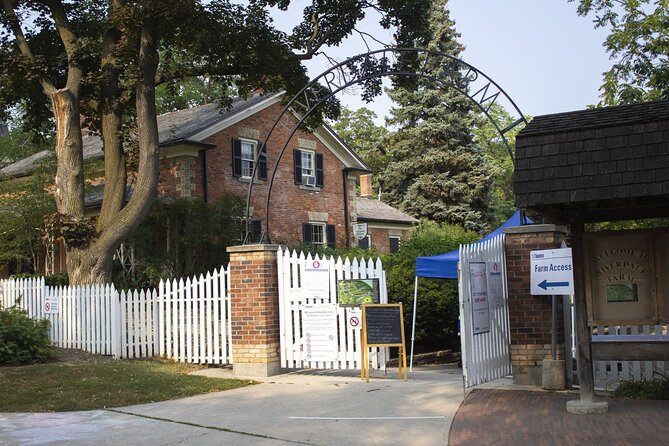
Soldiers’ Tower is a memorial to those lost in the First and Second World War. The tour frames it as a tribute to people who defended freedom, and the stop adds a quiet moment to an otherwise active city route.
From there, Philosopher’s Walk provides one of the more atmospheric stretches. The path runs through the heart of the University of Toronto campus, linking art, music, history, and culture.
The guide explains how the path was built, what stood on the site before it, and how it connects different parts of university life. This is likely the least hurried-feeling section, even though the official timing remains about 10 minutes.
I like the contrast here. Soldiers’ Tower asks you to pause and remember. Philosopher’s Walk then gives you a pedestrian route shaped by learning and culture. You get more than a checklist of buildings.
Koerner Hall, snack break, and the ROM exterior

Koerner Hall sits along Philosopher’s Walk and belongs to the Royal Conservatory of Music. The guide discusses its cultural role, the mix of new architecture and classic preservation, and the way the building fits into the older campus setting.
This is also the planned washroom and snack break. That small pause matters on a two-hour route, especially if the tour uses scooters or covers ground at a quicker pace.
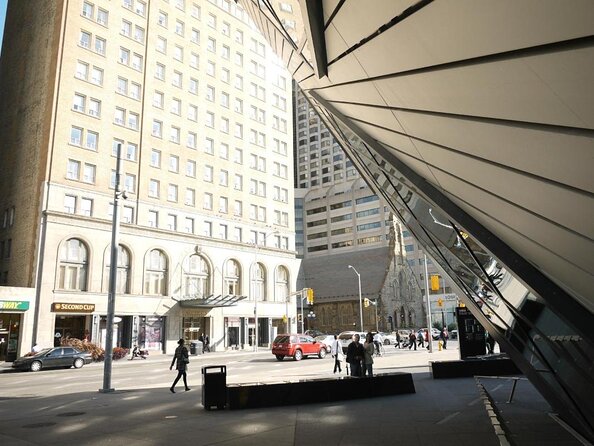
The final stop is the Royal Ontario Museum at 100 Queens Park. The tour ends there, but it does not take you inside. This is an outdoor-only look at the ROM’s striking architecture, so you will need a separate admission if you want to explore the collections.
Ending at the ROM is practical. You can continue into the museum, walk back toward the university, or use nearby public transport. Just remember that the tour price covers the guide and outdoor stops, not museum entry.
The guides and the feel of the experience
The strongest part of this experience is the guide-led conversation. Joel is described as funny, kind, and able to adapt the tour to the group’s interests. Tai is praised for keeping the information engaging and for suggesting good places to eat.
Joshua is singled out as a particularly good guide, while Wei-Ting led a one-to-one tour that covered several parts of Toronto. That feedback also describes a scooter format and a mix of roads, pavements, and bike lanes.
These details suggest that the guide can shape the experience. You are not locked into a silent march from one stop to the next. Ask about food, neighborhoods, museums, or what to do later in your visit. Local recommendations are part of what is included.
There is one communication caution. A comment about a guide from Taiwan describes him as kind and friendly but notes that the language barrier sometimes made things difficult. The tour is offered in English, but clarity may vary by guide.
Walking or scooter tour: why you should clarify
The supplied tour details describe an easy walking route. Yet several comments talk about scooters, riding, and a fun mode of transport. One person specifically compared scooters favorably with cycling and enjoyed covering more ground.
This is too consistent to ignore. It may reflect a changed format, a different version of the activity, or feedback attached to the wrong product. You should confirm the current transport before paying, especially if you want a traditional walking tour or have concerns about riding in traffic areas.
The distinction changes the tour’s character:
- A walking tour lets you notice small details and move at a human pace.
- A scooter tour may cover more ground and reduce physical effort, but it requires comfort with the vehicle and the route.
- A small group is helpful in either case, since the guide can manage questions and keep people together.
Do not assume the scooter comments are irrelevant. Ask the provider directly if the current booking includes walking, scooters, or another setup.
Who gets the best value for $34.99?
I see good value here for a first visit to Toronto. You get two hours with an English-speaking local guide, a planned route, history and culture, photo help, and suggestions for the rest of your stay.
The free admission at every listed stop keeps the cost clear. You are paying for time and interpretation, not hidden entry fees. A voluntary gratuity of $10 per person is suggested for a great experience, so budget for that if you usually tip guides.
The tour suits you best if:
- You want a quick orientation to central Toronto.
- You enjoy architecture, public spaces, universities, and memorials.
- You prefer a small group to a large coach tour.
- You want restaurant ideas and practical advice for the rest of your visit.
- You are happy seeing the ROM from outside rather than entering it.
- You want a route that ends near a major museum and public transport.
It is less suitable if you want long visits inside buildings, a museum tour, or a slow photographic walk. It may also disappoint if you arrive expecting a walking tour but find that the current operation uses scooters.
The experience is booked about 32 days ahead on average, so popular dates may fill early. Confirmation arrives at booking, and free cancellation is available up to 24 hours before the start time. Cancellations inside 24 hours are not refunded, and a minimum group size is required for the tour to operate.
Should you book the Toronto Discovery District tour?
Book it if you want a short, affordable introduction to Toronto’s civic center and university district, with a guide who can add food tips and answer questions. The route has real variety, from the Toronto sign and public art to medical history, wartime memory, music, and the ROM’s exterior.
Before booking, confirm two things: where exactly the guide will meet you at Nathan Phillips Square, and whether the current experience is on foot or by scooter. If those details fit your plans, $34.99 is a sensible price for a focused two-hour city orientation.
FAQ
How long does the Toronto Discovery District tour last?
The tour lasts approximately two hours.
Where does the tour begin?
It begins at Nathan Phillips Square, 100 Queen Street West, Toronto, Ontario M5H 2N3.
Where does the tour end?
The tour ends outside the Royal Ontario Museum at 100 Queens Park, Toronto, Ontario M5S 2C6.
Is admission to the Royal Ontario Museum included?
No. The ROM portion is outdoors only and is limited to viewing the building’s architecture.
What language is the tour offered in?
The experience is offered in English and includes a local English-speaking guide.
How large is the group?
The maximum group size is 15 people.
Can I cancel for a full refund?
Yes, if you cancel at least 24 hours before the scheduled start time. Cancellations or changes made within 24 hours are not refunded or accepted.
More Walking Tours in Toronto
- Old Town Toronto Highlights 3 Hour Walking Tour | Gratuity-Based
★ 4.5 · 290 reviews - Toronto: Dark History Nighttime Walking Tour
★ 4.7 · 273 reviews - Toronto: Distillery District Historic Walking Tour
★ 4.8 · 267 reviews - Ghost Tour of Toronto Original Haunted Walk
★ 4.5 · 185 reviews
Just added around Toronto
- Toronto Craft Brewery Tour★ 5.0 · 97 reviews
- Canada eSIM | 3-30 days | Daily data | QR code★ 4.0 · 12 reviews
- Underground Toronto PATH Tour★ 4.5 · 6 reviews
- Handcrafted Donuts of Toronto: A Sweet City Walking Tour★ 5.0 · 141 reviews
- Customizable Walking Tour of Toronto’s Hidden Gems★ 5.0 · 15 reviews
- Pottery wheel class in Toronto Bay&Dundas★ 4.5 · 5 reviews
- Toronto’s Longest Running Improv Theatre – Marquee Show★ 5.0 · 5 reviews
- Toronto Airport Private Transfer to Downtown★ 4.5 · 10 reviews
Walking & Ghost Tours, compared.

Old Quebec City: Grand Walking Tour with Private Option
Read our review →
The Original Old Montréal Walking Tour by Guidatour
Read our review →
Old Montreal Small-Group Walking Tour | Max 10 | by MTL Detours
Read our review →
Old Quebec Classique Walking Tour with Funicular
Read our review →
Old Quebec City Food Tour with 10+ Autentic Local Tastings
Read our review →

Browse the lists this tour appears in