
Reviewed · WALKING TOURS
Toronto’s Multicultural Heart – Kensington & Chinatown Walk
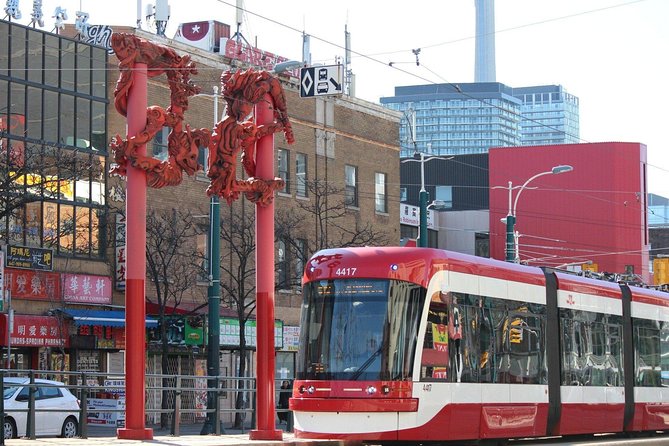
Toronto’s best neighborhood stories begin where the polished downtown streets give way to Kensington Market’s murals, bakeries, vintage shops, and independent stalls. This walk then crosses into Chinatown, giving you two very different communities within a compact part of the city.
I like the included coffee or tea and local snack, since they turn a sightseeing walk into something you can taste. I also like the small group, capped at 12, and guides such as Kieran, Jackie, Robert, and Jason, who bring humor, personal insight, and plenty of room for questions.
The main drawback is that this is a walking and standing tour, not a sit-down food tour. You should wear good shoes, and you may find the experience less satisfying if you want a long list of substantial tastings or a tightly scripted march from sight to sight.
In This Review
- Key points at a glance
- Why these two neighborhoods belong together
- Kensington Market, from Jewish market to bohemian district
- What makes the Kensington stop worthwhile
- Chinatown and Toronto’s Chinese community
- Guides are the main reason to book
- How much value do you get for $64.25?
- Timing, meeting point, and practical planning
- Who will enjoy this walk most?
- Should you book the Kensington and Chinatown walk?
- FAQ
- How long does the Kensington and Chinatown walk last?
- Where does the tour begin?
- Where does the tour end?
- What food and drinks are included?
- How many people can join the tour?
- Can children join the tour?
Key points at a glance
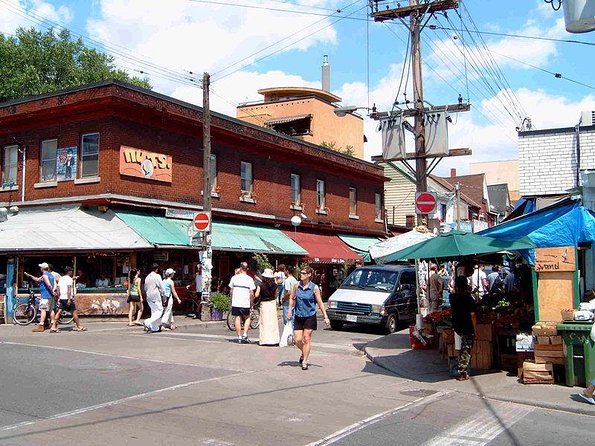
- Kensington’s independent spirit: See a neighborhood shaped by Jewish roots, later immigration, small shops, cafés, murals, and a firm dislike of large chains.
- Chinatown next door: Learn how Toronto’s Chinese community developed along Dundas Street West and Spadina Avenue.
- Food included: Stop at a neighborhood café for coffee or tea and try a local snack from a vendor or market stall.
- Small groups: The maximum is 12 people, and a private upgrade is available if you want more personal attention.
- Strong guide element: Kieran, Jackie, Robert, Roydon, Jason, Aaron, and others have been praised for storytelling, humor, patience, and local recommendations.
- Useful starting point: The walk begins beside the Art Gallery of Ontario and ends at Dragon City Shopping Centre, making it easy to continue exploring on your own.
Why these two neighborhoods belong together
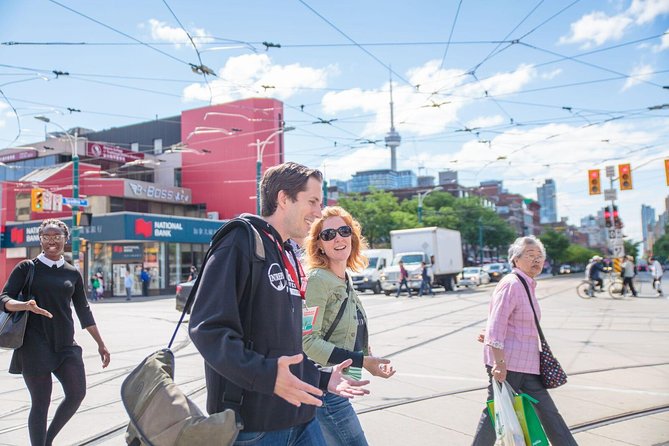
Kensington Market and Chinatown sit side by side, but they do not feel like copies of one another. That contrast is the point of the walk. In a few hours, you move from a bohemian market district filled with murals and independent stores into one of Toronto’s largest Chinese communities, lined with restaurants, shops, and busy streets.
I like this pairing because it gives you a better sense of Toronto than a tour of only central landmarks can. The city’s identity is tied to immigration, small businesses, changing neighborhoods, and communities that have worked to keep their character.
The route also makes practical sense. The meeting point is at the southwest corner of McCaul Street and Dundas Street West, beside the Art Gallery of Ontario. You start near a major cultural sight, then head into neighborhoods that feel more local and less formal. The walk ends at the Dragon City Shopping Centre on the southwest corner of Spadina Avenue and Dundas Street West.
The experience lasts about three hours, although the two named stops are each listed at roughly one hour. Expect time for walking between places, conversation, a café stop, and the food tasting. The 10:00 am start gives you a useful first look at the area before planning a longer lunch nearby.
A few more Toronto trips to weigh up
- Show me the City! A Small Group Walking Tour of Toronto
★ 5.0 · 621 reviews - Toronto Distillery District Walking Tour
★ 5.0 · 327 reviews - Toronto: City Highlights Walking Tour | 3-Hour
★ 4.6 · 306 reviews
Kensington Market, from Jewish market to bohemian district
Kensington Market is the heart of the walk. Its present-day mix of food shops, vintage clothing, cafés, bakeries, bars, and street art grew from a much earlier working-class Jewish market. Over the years, other immigrant communities added new foods, businesses, languages, and traditions.
Your guide explains that change while pointing out the details around you. This is not a neighborhood of grand monuments. Its appeal comes from storefronts, side streets, painted walls, food counters, and the people keeping small businesses alive.
One detail I find especially useful is the area’s resistance to large multinational chains. The neighborhood has no McDonald’s or Starbucks, and its independent character is part of what residents have worked to protect. That does not mean every shop is inexpensive or untouched by change, but it does help explain why Kensington feels different from a typical downtown shopping strip.
Look closely at the walls. Graffiti and commissioned murals are among the area’s signature features, and the guide points out both the art and the stories behind it. Several tour participants have particularly enjoyed learning about local graffiti artists and seeing laneways that are easy to pass without understanding their place in the neighborhood.
The stop also includes time at a local café for coffee or tea. This is more than a beverage break. It gives the group a chance to sit briefly, hear how the neighborhood evolved, and ask questions without trying to keep pace with a moving guide.
You also receive a local snack from a street vendor or market stall. The exact item can vary, so do not book this expecting a fixed tasting menu. Think of it as a small introduction to Kensington’s international food scene, with restaurant and shopping suggestions you can use after the walk.
What makes the Kensington stop worthwhile
Kensington works best when you enjoy ordinary urban details. You might find a vintage shop that deserves another visit, a bakery you want to return to, or a colorful wall that would be easy to miss without someone explaining why it matters.
The guides have taken different approaches. Kieran has been praised for bringing the area to life with stories and for asking about the group’s own connection to Toronto. Jackie has combined city history with street-art knowledge and food stops. Robert has tailored walks to the interests and abilities of small groups, while Jason has been singled out for humor, conversation, coffee, and a relaxed storytelling style.
That variety matters. This is not simply a memorized route. The strongest version of the tour seems to adjust to the people in front of the guide. Families with teenagers have found the stories engaging, and solo participants have sometimes received a nearly private experience when bookings were light.
Still, set your expectations correctly. One less enthusiastic assessment found the walk more like a stroll through Kensington than a full tour, with good treats but limited engagement from the guide. That is a useful warning. Much of the value depends on the person leading your departure and on how actively you ask questions.
Chinatown and Toronto’s Chinese community
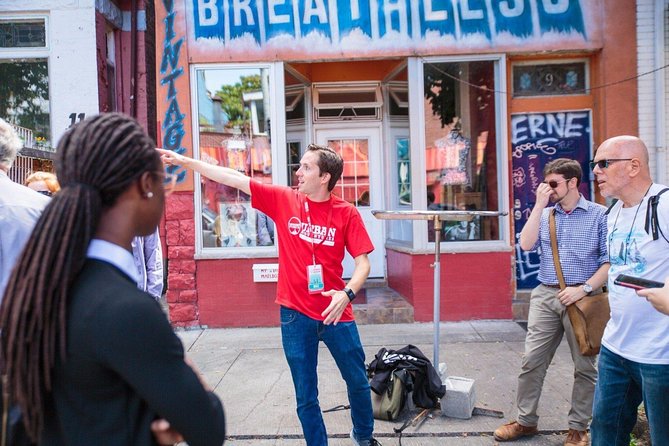
From Kensington, you move into Chinatown, one of Canada’s largest Chinese communities and one of the biggest Chinatowns in North America. The district developed in the late 19th century and grew into a busy part of Toronto along Dundas Street West and Spadina Avenue.
Here, the guide focuses on local stories, the neighborhood’s development, and the challenges faced by immigrant communities over time. The most valuable part is the context. You are not just being shown restaurant signs and shops. You are given a way to understand how communities shape a city while maintaining elements of their identity.
Chinatown is also where restaurant advice becomes especially useful. The guide can point you toward places to eat after the tour, which is handy because the included tasting is only a snack. If you plan to have lunch in the area, keep the end point in mind and avoid filling your schedule with another distant attraction immediately afterward.
The streets can be busy, and there is a fair amount of standing during explanations. That is normal for a walking tour, but it is worth knowing if you have limited stamina. Comfortable footwear is recommended, and the experience involves enough walking that flimsy shoes are a poor choice.
The stop also provides a contrast with Kensington. Kensington’s appeal comes from its bohemian shops, murals, and anti-chain spirit. Chinatown feels more focused on food, commerce, community institutions, and the long development of a Chinese Canadian neighborhood. Seeing both in one morning gives you a clearer picture of Toronto’s many local identities.
Same province, a completely different day out:
- Toronto: Niagara Falls Day Tour with Optional Boat Cruise
★ 4.6 · 3,178 reviews - Niagara Falls Day Tour from Toronto
★ 5.0 · 2,889 reviews - Toronto: Casa Loma Entry Ticket
★ 4.7 · 2,705 reviews - Niagara Falls Canada Day Tour From Toronto + Boat Cruise Option
★ 5.0 · 2,576 reviews
Guides are the main reason to book
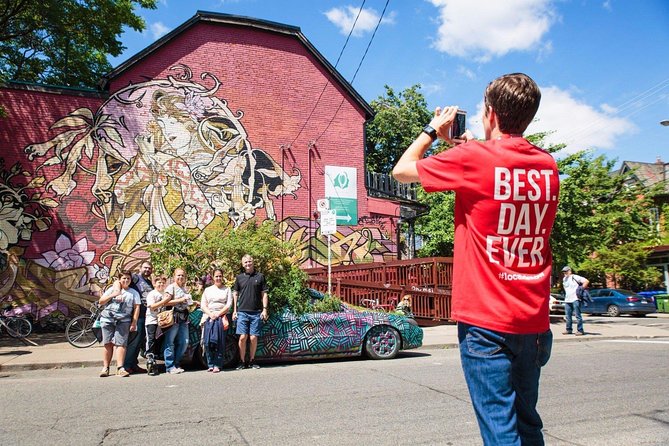
The route is good, but the guide is the deciding factor. The strongest accounts describe leaders who combine facts with anecdotes, invite questions, and make the group feel like it is walking with a well-informed local friend.
Kieran has been praised for clear storytelling, wit, cultural sensitivity, and patience. Jackie has impressed families with her ability to keep teenagers interested while explaining Toronto’s past and present. Robert has been described as personable, flexible, and able to tailor the pace to the group.
Other named guides include Aaron, Roydon, Richard, Jennifer, Thomas, and Jason. Aaron has been appreciated for food stops and personal attention. Roydon has paced the walk well and balanced neighborhood stories with coffee and a Chinese pastry. Jennifer has guided groups from varied backgrounds by connecting Toronto’s growth to the people who built its communities.
You cannot choose a particular guide from the details provided, so do not book solely for one name. The useful takeaway is that several leaders have received strong praise for the same core qualities: local insight, friendly conversation, and the ability to connect history with what you are seeing.
A small group helps. With a maximum of 12 people, you should have a better chance to hear the guide and ask questions than on a large bus or crowded group walk. If you want the route shaped around your own interests, a private option is available.
How much value do you get for $64.25?
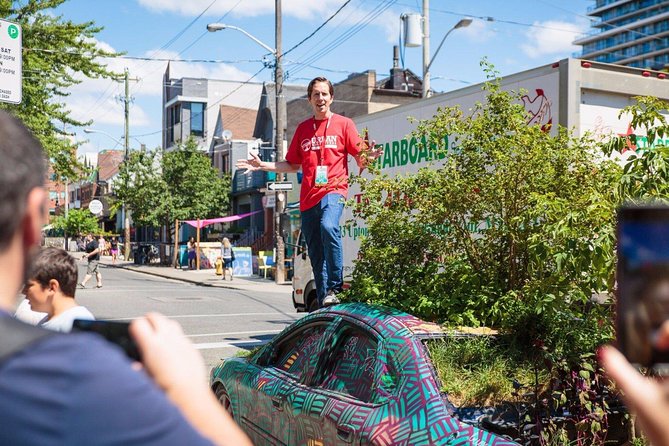
At $64.25 per person, this is not the cheapest way to walk through Kensington Market and Chinatown. You can visit both areas on your own without paying an admission fee, and the included food and drink are modest.
The value comes from interpretation. A self-guided stroll shows you storefronts and murals, but it may not explain the neighborhood’s Jewish beginnings, immigration patterns, local businesses, street art, or the pressures facing established communities. A good guide connects those pieces and gives you restaurant and shopping ideas for the rest of your stay.
I would consider the price fair if you are new to Toronto, enjoy neighborhood stories, and plan to make use of the recommendations afterward. It is also a reasonable choice for a solo visitor who wants company without committing to a huge group.
The value is weaker if you mainly want food. This is not a progressive tasting tour with a series of full portions. You receive a café drink and a local snack, then pay for any extra food or beverages yourself.
The high overall rating of 4.8 from 151 ratings, with 94 percent recommending the experience, suggests that most bookings meet that guide-led expectation. One serious failure did occur when a guide did not arrive. The operator explained that a booking made only a few hours before departure had not allowed enough time to assign a leader to a very small departure, and issued a refund through the booking company. To reduce that risk, book well ahead rather than at the last minute. The experience is commonly booked about 36 days in advance.
Timing, meeting point, and practical planning
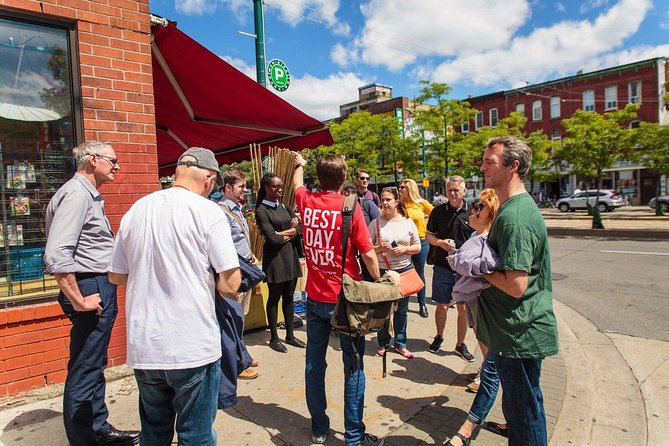
The tour begins at 10:00 am at Dundas Street West and McCaul Street, Toronto, Ontario M5T 1G1, beside the Art Gallery of Ontario. Confirm the exact southwest corner before setting out, since a large intersection can have several plausible meeting spots.
The tour ends at Dragon City Shopping Centre, at the southwest corner of Spadina Avenue and Dundas Street West. That is a useful finish because you can continue eating, shopping, or exploring Chinatown without retracing the route.
Hotel pickup and drop-off are not included. The walk is near public transportation, so you should plan to reach the starting point independently. A mobile ticket is provided, and the tour is offered in English.
Children under six can join free, but you should tell the operator in advance if you are bringing one. The activity is described as child-friendly, and families with teenagers have enjoyed the mix of art, food, and stories. Still, younger children need to manage a good amount of walking and standing.
The tour is suitable for most people, but the practical limits are clear. Wear comfortable shoes, bring water if you need it, and leave room in your schedule for browsing or lunch afterward. Additional snacks and drinks are not included, so carry money or a payment method for anything beyond the included tasting.
Who will enjoy this walk most?
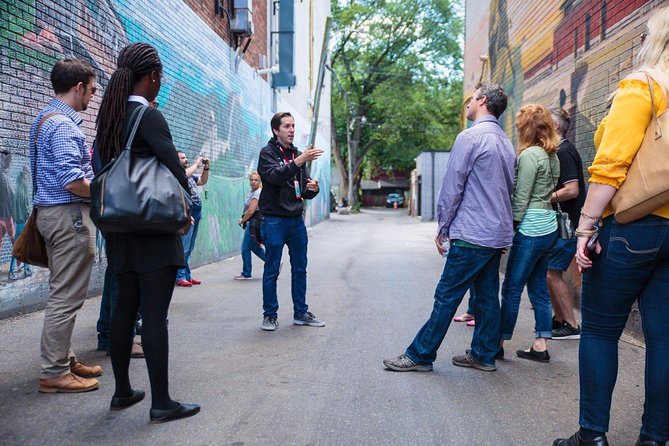
I would recommend it most to first-time Toronto visitors who have already seen the central sights or want something beyond them. It gives you an early understanding of two neighborhoods that are easy to reach but harder to interpret on your own.
It also suits solo visitors. A small group creates an easy setting for conversation, and light bookings can make the walk feel almost private. Couples and families can benefit too, especially if they like food, street art, independent shops, and local stories more than formal museum visits.
The tour is a good fit for people who want practical follow-up ideas. Listen for restaurant recommendations in Chinatown, café and bakery suggestions in Kensington, and shops that catch your eye. The real benefit may come later, when you return to a place you discovered during the walk.
I would be more cautious if you want a formal lecture, a long food menu, or a route with many ticketed attractions. The experience is built around streets and conversation. Its success depends on the guide, the weather, the group, and your willingness to look closely.
Free cancellation is available up to 24 hours before the 10:00 am start for a full refund. Within 24 hours, cancellations and changes are not accepted for a refund, and the cut-off uses Toronto local time.
Should you book the Kensington and Chinatown walk?
Book it if you want Toronto explained through its communities, small businesses, food, and public art rather than only through major sights. The included coffee or tea, local snack, small group, and restaurant tips add useful texture, while the best guides make the neighborhoods easier to understand and enjoy.
Skip it if you are looking for a substantial food tour or prefer exploring at your own pace. You can walk the same streets independently, but you will miss the personal stories and background that connect Kensington Market with Chinatown.
For most visitors, I would book this early in a Toronto stay, then use the recommendations to return for lunch, shopping, or a second look at the murals. At $64.25, it is a fair buy for local context and a friendly guide, not for the food alone.
FAQ
How long does the Kensington and Chinatown walk last?
The experience lasts approximately three hours. The listed Kensington Market and Chinatown portions are each about one hour, with additional time for walking, the café stop, and the snack.
Where does the tour begin?
It begins at the southwest corner of McCaul Street and Dundas Street West, beside the Art Gallery of Ontario in Toronto.
Where does the tour end?
The walk ends at Dragon City Shopping Centre, on the southwest corner of Spadina Avenue and Dundas Street West.
What food and drinks are included?
You receive a coffee or tea at a neighborhood café and a local snack from a street vendor or market stall. Additional snacks and beverages are not included.
How many people can join the tour?
The maximum group size is 12 people. A private tour upgrade is also available.
Can children join the tour?
Yes. The experience is child-friendly, and children under six may join free of charge. You should inform the operator if you are bringing a child under six.
Just added around Toronto
- Toronto Craft Brewery Tour★ 5.0 · 97 reviews
- Canada eSIM | 3-30 days | Daily data | QR code★ 4.0 · 12 reviews
- Underground Toronto PATH Tour★ 4.5 · 6 reviews
- Handcrafted Donuts of Toronto: A Sweet City Walking Tour★ 5.0 · 141 reviews
- Customizable Walking Tour of Toronto’s Hidden Gems★ 5.0 · 15 reviews
- Pottery wheel class in Toronto Bay&Dundas★ 4.5 · 5 reviews
- Toronto’s Longest Running Improv Theatre – Marquee Show★ 5.0 · 5 reviews
- Toronto Airport Private Transfer to Downtown★ 4.5 · 10 reviews
Walking Tours, compared.

Old Quebec City: Grand Walking Tour with Private Option
Read our review →
The Original Old Montréal Walking Tour by Guidatour
Read our review →
Old Montreal Small-Group Walking Tour | Max 10 | by MTL Detours
Read our review →
Old Quebec Classique Walking Tour with Funicular
Read our review →

Browse the lists this tour appears in