
Reviewed · HIKING & TREKKING
Tyroparc: Via Ferrata and Hiking in the Laurentians
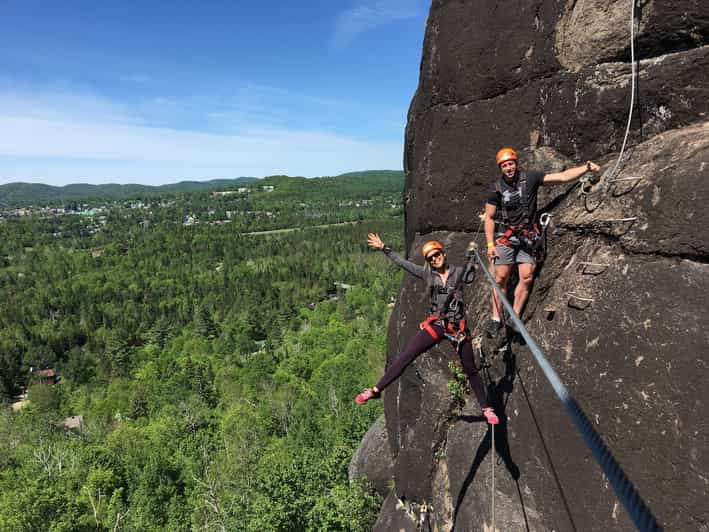
The best part of Tyroparc’s Via Ferrata is the mix of real cliff climbing and wide Laurentian views. You hike 450 meters to Cap Beauséjour, clip into a steel safety cable, and work your way up a 60-meter rock face, roughly the height of a 20-floor building. It feels like mountaineering, but the route gives you fixed steps, handles, and cables to use.
I like the small groups of four, since a guide can watch your technique instead of shouting instructions from far below. I also like the careful balance of effort and reward: the climb brings the adrenaline, then the 700-meter walk back down lets you take in the region from a calmer angle.
The main catch is that this is not a gentle sightseeing walk. You need to meet strict height and weight limits, handle a strenuous ascent, and arrive ready for changing weather. The one-hour to 90-minute drive from Montreal also makes this a better day trip than a quick city add-on.
In This Review
- Key points at a glance
- Climbing Cap Beauséjour above Sainte Agathe-des-Monts
- The 450-meter walk to the cliff
- Learning the cable system before the ascent
- Bridges, handles, and the 60-meter rock face
- Reaching the top for the Sainte Agathe views
- The 700-meter hike back to base camp
- What the $66 price gets you
- Who will enjoy this Tyroparc outing
- Practical preparation for the three hours
- Should you book the Cap Beauséjour Via Ferrata?
- FAQ
- Where is the Tyroparc Via Ferrata located?
- How long does the Via Ferrata activity last?
- How high is the Cap Beauséjour climb?
- What languages does the guide speak?
- What is the maximum group size?
- What are the age, height, and weight requirements?
- What should I bring and what is not allowed?
Key points at a glance
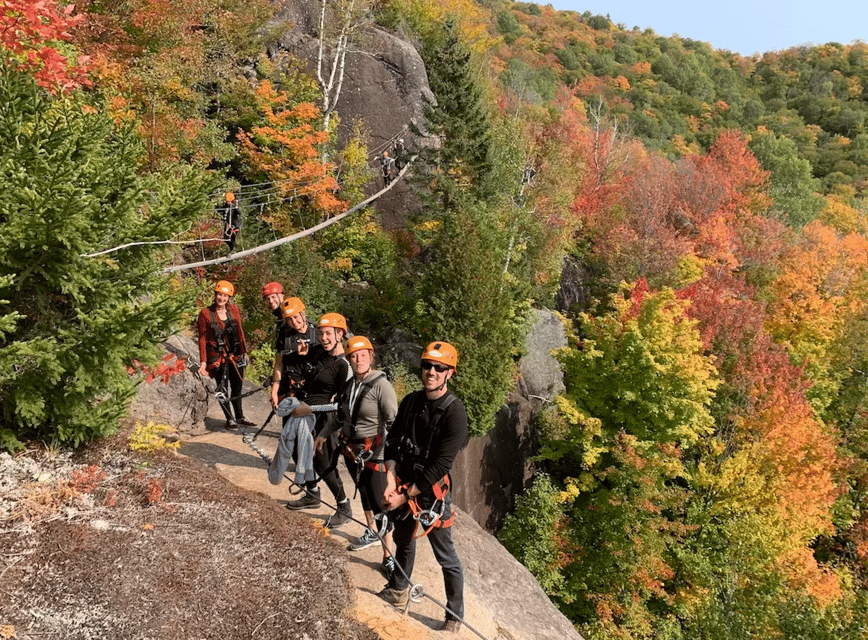
- A 60-meter cliff climb: Ascend Cap Beauséjour with steel cables, metal anchors, steps, and handholds.
- A 450-meter approach hike: Walk from the chalet to the base of the cliff before the climbing begins.
- Several bridges and obstacles: The route adds variety instead of turning into one long ladder.
- Views over Sainte Agathe-des-Monts: The reward comes at the top, where you can see across the region.
- Small groups of four: The guide can provide close support and steady instruction.
- Strict participation rules: The minimum age is 10, with height, weight, and mobility requirements.
Climbing Cap Beauséjour above Sainte Agathe-des-Monts
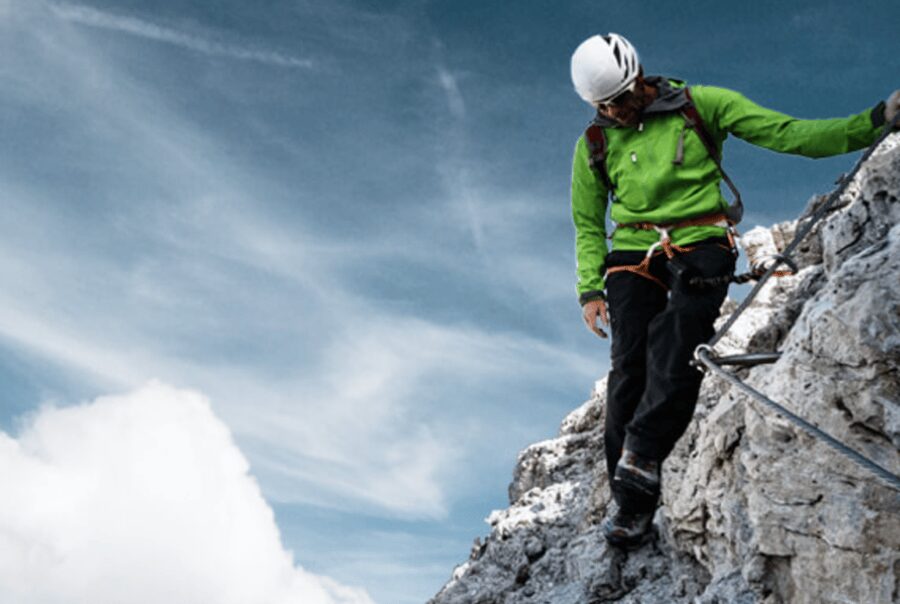
Tyroparc’s Via Ferrata gives you a controlled way to experience a cliff face without needing to bring your own climbing equipment or know technical rope work. The name means iron way, and that describes the setup well: you move along a rock route fitted with metal anchors, fixed steps, handles, and a continuous steel cable.
You remain secured to the cliff as you climb. That does not make the route effortless, but it does give you a clear safety system and a fixed line to follow. Your guide explains how to use the equipment before the ascent, then leads you through the route.
The cliff rises more than 60 meters above the base. That is about the height of a 20-floor building, so the scale becomes clear once you look down or pause to check your progress. You do not simply walk uphill. You pull, step, balance, and choose where to place your hands and feet.
That combination is what makes this activity appealing. A standard hike gives you distance and scenery. A climbing wall gives you physical effort but usually not much wilderness around it. Here, the rock face, forest setting, cables, bridges, and views all work together.
A few more Canada trips to weigh up
- Guided Glacier Hike on The Athabasca with IceWalks
★ 5.0 · 334 reviews - From Toronto: Algonquin Park Canoeing & Hiking Adventure
★ 4.6 · 291 reviews - From Montreal: Mont-Tremblant National Park Hiking Day Trip
★ 4.6 · 243 reviews
The 450-meter walk to the cliff
The activity begins at the chalet, not at the rock face. You hike about 450 meters to reach the bottom of Cap Beauséjour. This approach is short enough not to dominate the day, but it serves an important purpose: it gets your body moving before the harder portion begins.
It also gives the guide time to organize the group and explain what lies ahead. With only four participants, you should have a better chance to ask questions and confirm how the clips and safety line work. English and French instruction is available.
Do not treat this opening walk as a reason to arrive in casual shoes. Hiking shoes or sports shoes are required, and open-toed footwear, sandals, and flip-flops are not allowed. Comfortable outdoor clothes make sense, since you will need to move your arms and legs freely on the rock.
This is also the point to notice the weather. The activity runs rain or shine, so bring weather-appropriate clothing and prepare for outdoor conditions. Sunscreen, insect repellent, and a reusable water bottle are sensible additions. You should also bring gloves and goggles as requested.
Backpacks are not allowed. That rule matters more than it may first seem. A pack could catch on the metal equipment or get in the way while you move across bridges and around the cliff. Keep your belongings light and follow Tyroparc’s instructions about what can come onto the route.
Learning the cable system before the ascent
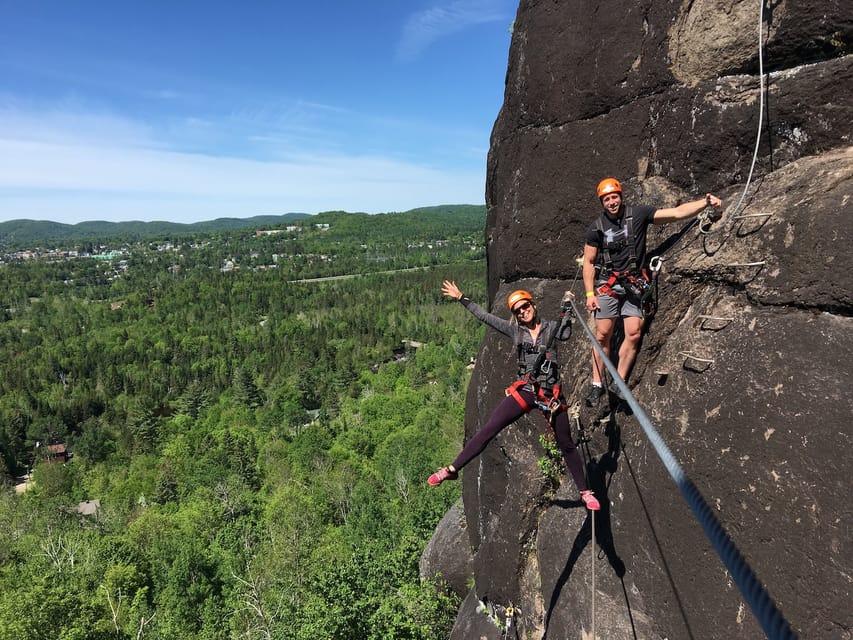
Before you begin climbing, you receive the equipment and a safety briefing. The guide’s job is not only to point out the route. You need to understand how to stay attached, how to move along the cable, and how to handle the obstacles without rushing.
The fixed steel cable gives you the central safety connection. Metal anchors and climbing hardware guide you along the route, while steps and handles provide places for your feet and hands. You still have to manage your own movement, but the route gives you built-in support.
This is where the limited group size has real value. A group of four allows the instructor to keep the pace together and offer closer help if someone needs a reminder. It also makes the experience feel less like a crowded attraction and more like a guided outdoor outing.
A previous participant singled out guide MJ for calm, step-by-step coaching and for helping keep the experience enjoyable. That is useful information if you feel nervous about heights. The fixed equipment protects you, but a calm guide can make the difference between focusing on the next handhold and getting stuck in your head.
Still, no guide can remove the physical work. You must be ready to climb using your arms and legs. The minimum height requirement is 1.70 meters from your feet to the tips of your raised fingers, not simply your standing height. The minimum weight is 45 kilograms, or 100 pounds, and the maximum is 100 kilograms, or 220 pounds.
Bridges, handles, and the 60-meter rock face
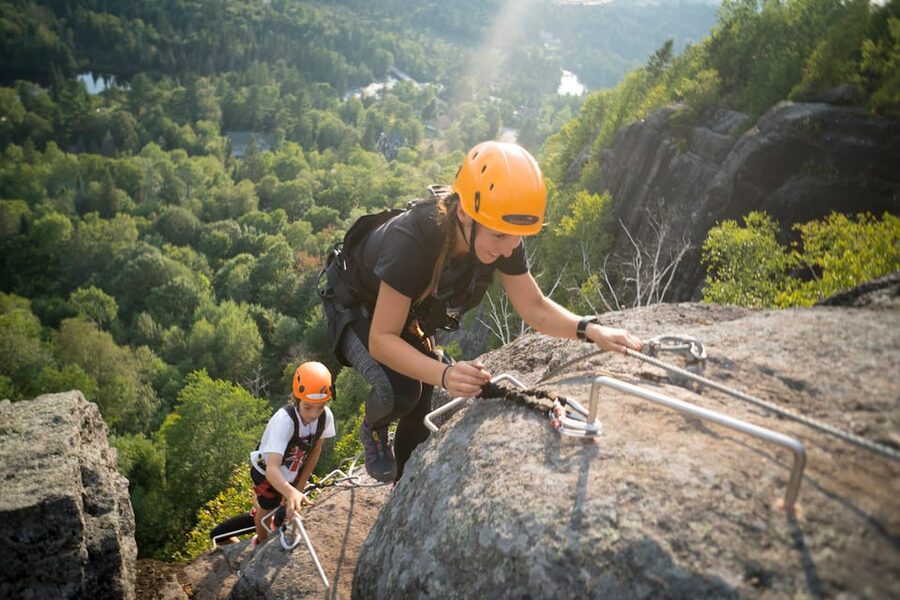
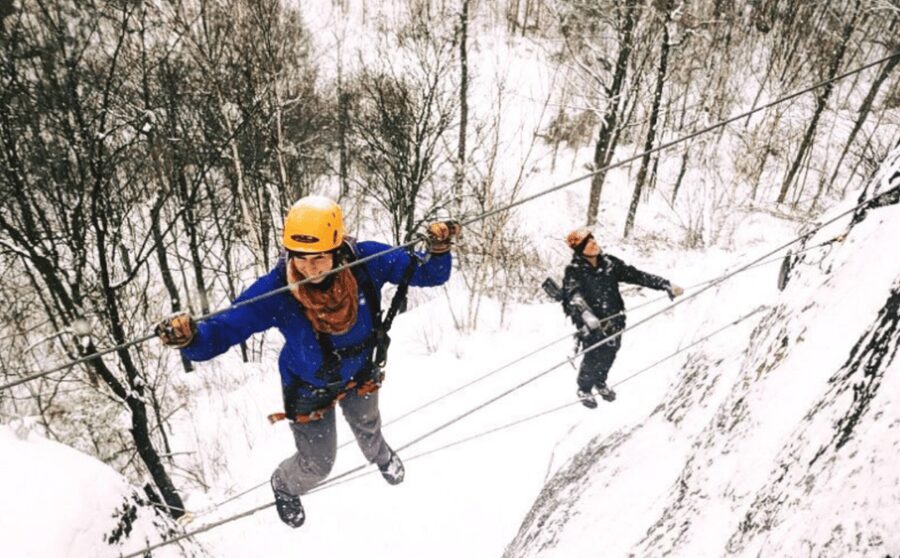
Once you reach the cliff, the activity changes from hiking to climbing. You ascend Cap Beauséjour while attached to the steel cable, using a series of steps and handles fixed to the rock.
The route includes different types of bridges and other obstacles. These sections break up the climb and test your balance in ways a straight rock ascent would not. You can expect to think about each movement instead of simply walking toward the top.
The bridges are also likely to be the moments when the height feels most obvious. A rock step keeps your attention close to the cliff. A bridge asks you to move across a gap or exposed section, with the scenery opening around you. The safety cable remains your constant connection, but the sensation is still exciting.
I like this design because it gives the three-hour activity a clear rhythm. You hike to the cliff, learn the system, climb through varied sections, enjoy the views, and hike back to base camp. There is little risk of the route feeling like a single repetitive task.
The physical demand should not be underestimated. This is not suitable for people with mobility impairments or wheelchair users, and it is not recommended for pregnant women. Children under 10 cannot participate. You also need to meet the stated height and weight rules.
If you are comfortable with active hiking and willing to work at a measured pace, the route offers a strong sense of progress. If you prefer a relaxed trail with no exposure or upper-body effort, choose a standard Laurentian hike instead.
Same province, a completely different day out:
- Vancouver Half-Day Whale Watching Adventure with Free Photos
★ 5.0 · 5,000 reviews - Quebec City Walking Tour
★ 5.0 · 4,716 reviews - Niagara Falls: Premium Tour, Boat & Journey Behind the Falls
★ 4.8 · 4,207 reviews - Banff: Banff Gondola Admission Ticket
★ 4.7 · 3,698 reviews
Reaching the top for the Sainte Agathe views
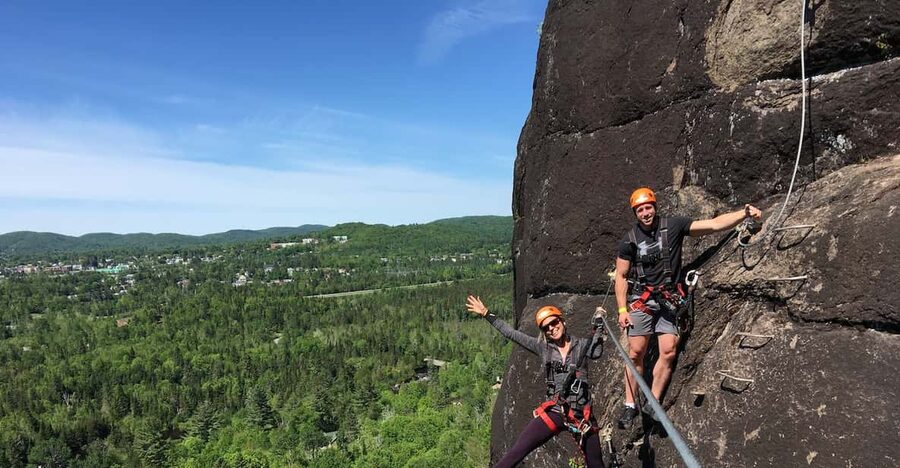
At the top of the cliff, you can look across the region of Sainte Agathe-des-Monts. The view is the payoff for the work below, and it gives the climb a purpose beyond the thrill of the equipment.
The activity description promises panoramic views of the entire region. From this high point, you can take a break and appreciate how much ground you gained from the base of the cliff. The contrast is pleasing: close contact with rock during the ascent, then a broad view once you reach the top.
This is also the best place to let the experience settle. The route asks you to focus on cables, handholds, steps, and bridges. At the summit, you can shift your attention to the surrounding area and enjoy the result of the climb.
Keep in mind that weather affects the view. Since the activity runs rain or shine, conditions may change the feel of the outing. A clear day should make the panorama more rewarding, while wet weather may make the clothing and footwear choices more important. The tour may also require a minimum number of participants to operate.
The 700-meter hike back to base camp
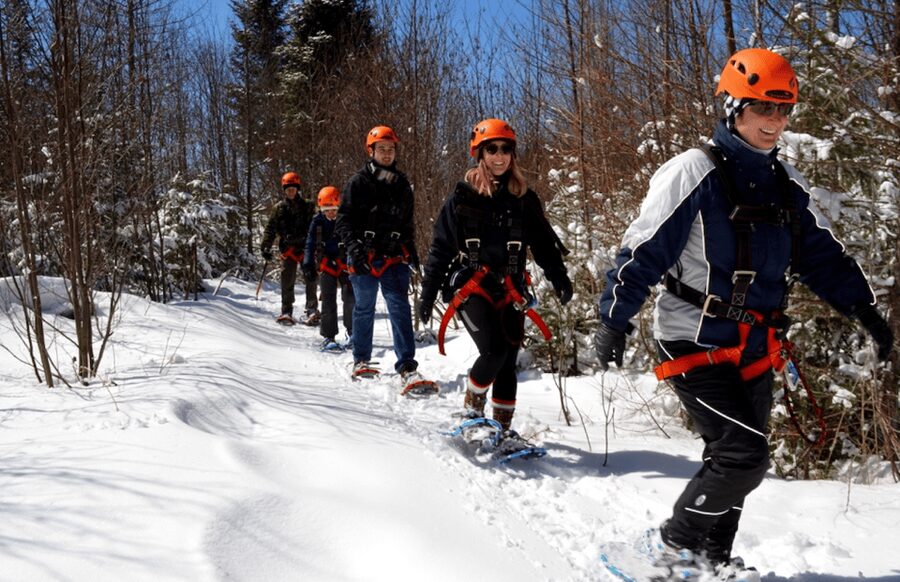
The return route is a hike of about 700 meters down the mountain to the base camp. After the cliff ascent, this walk gives your muscles a different task and provides a more gradual finish.
Do not assume the return is an afterthought. A descent after climbing can still be tiring, particularly if your arms and legs are already working hard. Wear shoes with a secure fit and soles suited to an outdoor trail.
The return also helps the activity feel like a complete outing rather than a climb followed by an immediate exit. You get the effort of the approach, the focused challenge of the cliff, the view at the top, and a final walk through the area before reaching the chalet.
The full activity lasts about three hours, usually in the afternoon. That timing works well for a day trip from Montreal, though you should allow extra time for traffic. Tyroparc is roughly one to one and a half hours from the city by car.
What the $66 price gets you
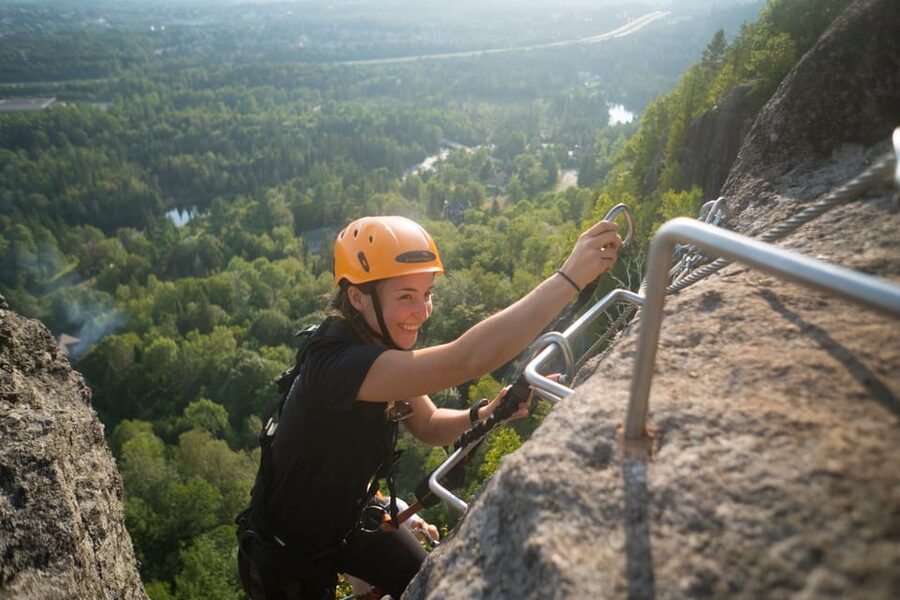
At $66 per person, the price includes the guide, equipment, safety briefing, hiking, and Via Ferrata. I consider that a fair package for someone who wants a guided climbing experience without arranging separate equipment or instruction.
The value comes from the complete setup. You are not paying only for a trail walk or a viewpoint. The fee covers the safety gear and the guidance needed to use a fixed climbing route. For a first Via Ferrata, that support is a practical reason to choose this outing instead of trying to plan an independent climb.
The small group also strengthens the value. A maximum of four participants means your time is not divided among a large crowd. That can matter when the route has bridges and obstacles, or when you need a little extra help with the equipment.
Still, price alone should not decide it. You will need to drive from Montreal, arrive 30 minutes before the start, and supply suitable clothing, footwear, gloves, sunscreen, insect repellent, and water. If you already plan to be in the Laurentians, the cost is easier to justify. If you are making a long day trip only for a short activity, factor in the driving time.
You can reserve now and pay later, and cancellation is free up to 24 hours in advance for a full refund. Those terms help if your schedule is still taking shape, though weather and minimum-participant requirements can affect operations.
Who will enjoy this Tyroparc outing
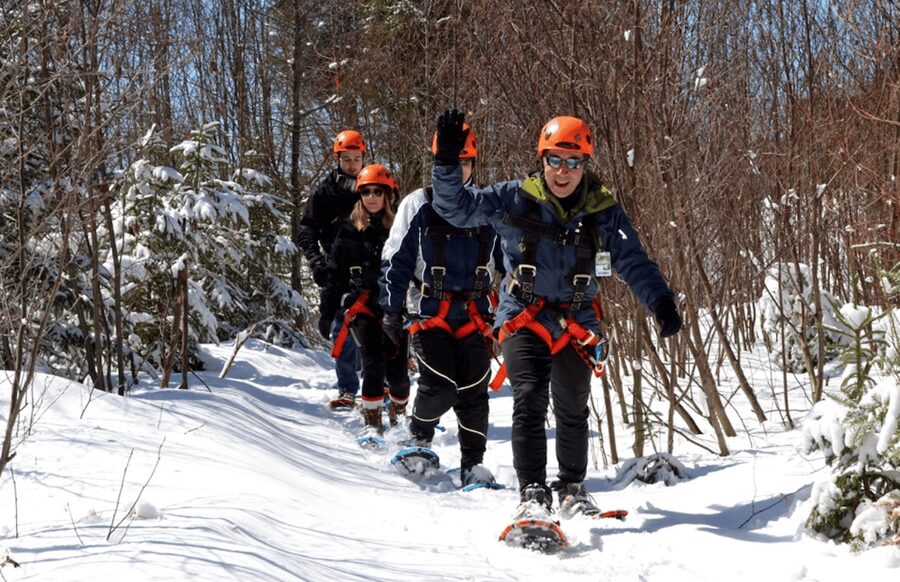
I would recommend this activity to active visitors aged 10 and up who want more than a lookout reached by car. You need enough reach to meet the 1.70-meter fingertip requirement, enough strength for a cliff ascent, and enough comfort with heights to keep moving while attached to a cable.
It suits friends, couples, and families with older children who can follow safety instructions. The four-person limit is especially useful for a small party, since the whole group can stay together with the guide.
It also suits people who want a first taste of climbing. You do not need to bring climbing gear, and the fixed route gives you a clear system to follow. The instructor handles the briefing and leads the outing, while you concentrate on movement and scenery.
I would not choose it for a visitor with a mobility limitation, a fear of exposed heights, or a preference for a quiet nature walk. The fixed safety system reduces risk, but it does not turn the cliff into an easy stroll. The restrictions are firm: no participants under 45 kilograms or over 100 kilograms, no pregnant women, and no children under 10.
Practical preparation for the three hours
Arrive at Tyroparc 30 minutes before your start time. That early check-in allows time for the participation agreement, equipment, and safety briefing. Cutting it close would add needless pressure before a physical activity.
Wear comfortable outdoor clothing that allows a full range of motion. Hiking shoes or sports shoes are required, while skirts, open-toed shoes, sandals, and bare feet are not permitted.
Bring the following:
- Weather-appropriate outdoor clothing
- Sunscreen and insect repellent
- Gloves and goggles
- A reusable water bottle
Do not bring a backpack. Alcohol and drugs are prohibited, and the activity requires you to remain able to follow safety instructions throughout the climb.
Tyroparc operates in rain or shine, so check the forecast before leaving Montreal and dress accordingly. The activity may require a minimum number of participants, so keep that operating condition in mind when building a tightly timed day trip.
Should you book the Cap Beauséjour Via Ferrata?
Book it if you want a compact, guided climbing challenge with panoramic Laurentian views and close instruction. The combination of a 450-meter approach, a 60-meter cliff, bridges, fixed cables, and a 700-meter return hike gives you a satisfying three-hour outing for $66.
The strongest reason to choose it is the small group. Four people gives the guide room to offer calm, step-by-step help, a quality that guide MJ is praised for providing. The main reasons to hesitate are the drive from Montreal, the strict participation limits, and the real physical effort involved.
For an active day in the Sainte Agathe-des-Monts region, this is a smart pick. For a gentle scenic walk, it is the wrong tool for the job. Check your height, weight, footwear, and comfort with heights first, then reserve with confidence if they all line up.
FAQ
Where is the Tyroparc Via Ferrata located?
The activity takes place at Tyroparc in Quebec, near Sainte Agathe-des-Monts in the Laurentians. Tyroparc is roughly a one-hour to 90-minute drive from Montreal, depending on traffic.
How long does the Via Ferrata activity last?
The activity lasts about three hours and is usually available in the afternoon. This includes the approach hike, safety briefing, Via Ferrata climb, and walk back to base camp.
How high is the Cap Beauséjour climb?
The cliff face is more than 60 meters high, which is described as roughly equal to a 20-floor building. The activity also includes an ascent of up to 450 meters.
What languages does the guide speak?
Instruction is available in English and French. A certified guide leads the activity and provides the safety briefing.
What is the maximum group size?
The activity is limited to four participants. This keeps the group small and allows the guide to provide close support during the climb.
What are the age, height, and weight requirements?
Participants must be at least 10 years old and must reach 1.70 meters from their feet to the tips of their fingers with their arms raised. The minimum weight is 45 kilograms, or 100 pounds, and the maximum is 100 kilograms, or 220 pounds.
What should I bring and what is not allowed?
Bring hiking shoes or sports shoes, comfortable outdoor clothing, sunscreen, gloves, insect repellent, weather-appropriate clothing, a reusable water bottle, and goggles. Sandals, flip-flops, open-toed shoes, skirts, backpacks, bare feet, alcohol, and drugs are not allowed.
Just added around Canada
- 2 Hour Banff Horseback Riding Adventure★ 4.0 · 145 reviews
- 1 Hour Spray River Ride★ 4.5 · 204 reviews
- Lake Minnewanka, Peyto Lake, Bow Lake , Icefields★ 4.5 · 63 reviews
- Along Icefields Parkway: Peyto Lake, Bow Lake & Columbia Icefield★ 4.0 · 19 reviews
- Moraine Lake Lake Louise Johnston Canyon Emerald Lake Day tour★ 5.0 · 4 reviews
- 3 Day Algonquin Park Canoe Trip – Moose & Beaver Safari★ 5.0 · 27 reviews
- 3 Hour Algonquin Park Bass & Trout Fishing (private- price is for 1 or 2 people)★ 5.0 · 5 reviews
- Discover the Lake Agnes Tea House Trail with an Audio Nature Tour★ 4.0 · 7 reviews
Hiking & Trekking, compared.
Guided Glacier Hike on The Athabasca with IceWalks
Read our review →
Wildlife and Waterfalls Tour with Lakeshore Hike
Read our review →
Jasper Wildlife and Sightseeing Tour with Maligne Lake Hike
Read our review →
Banff National Park: Guided Signature Hikes with Lunch
Read our review →Browse the lists this tour appears in