
Reviewed · WALKING TOURS
Vancouver Old Town Treasure Hunt: Self-Guided Walking Game
Vancouver’s old town becomes a giant outdoor puzzle board on this self-guided smartphone game. You follow the Questo app from the Marine Building toward Gastown, solving clues at landmarks that range from grand Art Deco architecture to a famously narrow Chinese-Canadian building.
I like the low price and the freedom to stop for shops, food, or photos without holding up a guide. I also like that the stories make you look closely at details you might otherwise walk past. The main drawback is that one tricky clue can slow the whole group, and the app may be awkward if several people try to load it on different phones.
In This Review
- Key points
- Starting with Vancouver’s Art Deco crown
- A customs warehouse and the old waterfront
- The steam clock and Gastown’s old streets
- Colourful Beaux-Arts details at the Dominion
- The Sun Tower and Vancouver’s newspaper era
- The Sam Kee Building’s remarkable narrow profile
- Meeting Gassy Jack with a fuller story
- Gaoler’s Mews and the city after the fire
- Finishing near the railyard at The Alibi
- What the $7.20 price really gives you
- Who will enjoy this old-town game
- Should you book the Vancouver Old Town Treasure Hunt?
- FAQ
- How long does the Vancouver Old Town Treasure Hunt take?
- How much does the experience cost?
- Is there a live tour guide?
- Where does the game start?
- Where does the game end?
- How many puzzles are included?
- Is the game available in more than one language?
- Can I pause the game?
- What happens if I cannot solve a clue?
- Can I cancel for a refund?
Key points
- Fourteen puzzles link major sights: The route connects the Marine Building, Waterfront Station, Gastown’s steam clock, the Sun Tower, and more.
- The walk takes about 90 minutes: You can pause, browse, eat, or resume when ready.
- The price is hard to beat: At $7.20 per person, it offers an inexpensive way to orient yourself in old Vancouver.
- Hints and skipping are built in: You do not have to solve every riddle to finish the route.
- The game works offline: Once accessed, it is useful where mobile service is limited.
- It is private and flexible: Only your own group plays, with no live guide setting the pace.
Starting with Vancouver’s Art Deco crown
Begin at the Marine Building, at 355 Burrard Street. Built in 1929 and 1930 by McCarter Nairne, this is Vancouver’s finest surviving example of Art Deco design, and it gives the game a strong opening setting.
Look up and around before touching the next clue. The building was created to house commercial shipping interests and the Vancouver Merchants’ Exchange, so its decoration reflects Vancouver’s close ties to the sea and trade. The game asks you to find an answer in the surroundings, then rewards you with a short piece of background before directing you onward.
That format is the heart of the experience. You are not simply handed a list of facts. You must inspect a doorway, sign, façade, or nearby feature to move ahead. The questions are generally playful rather than academic, making this a good fit for a group that likes to solve things together.
The opening stop also helps you get your bearings. The route begins in the central business district, then gradually carries you east toward Gastown. Wear comfortable shoes, since the game is built around walking from one stop to the next.
A few more Vancouver trips to weigh up
- Gastown Historic Walking Food Tour
★ 5.0 · 1,863 reviews - Vancouver Lost Souls of Gastown Walking Tour
★ 5.0 · 1,273 reviews - A Wok Around Chinatown: Culinary and Cultural Walking Tour Led by a Chef
★ 5.0 · 610 reviews
A customs warehouse and the old waterfront
The next stop is a federal warehouse at Howe and Cordova Streets. Construction began in 1911 and finished in 1913, under the direction of Public Works Chief Architect David Ewart.
The building handled federal requirements on imported goods and served Customs until 1958. That detail gives you a useful glimpse of Vancouver as a working port, not just a city of handsome façades and tourist shops.
This is where the game’s short history notes earn their keep. You get a reason to care about the structure before hunting for the answer. The challenge encourages you to inspect the building rather than treating it as background scenery.
From there, the route reaches Waterfront Station. Built by the Canadian Pacific Railway and opened on August 1, 1914, it was the Pacific terminus for transcontinental passenger trains heading to Montreal, Quebec, and Toronto. The present structure is the third CPR station on the site.
You can read this stop as a lesson in how Vancouver grew. Railways connected the port to the rest of Canada, and the station brought passengers, freight, and business into the center of town. The puzzle gives you a reason to pause at a place that many people use only as a transit connection.
The steam clock and Gastown’s old streets
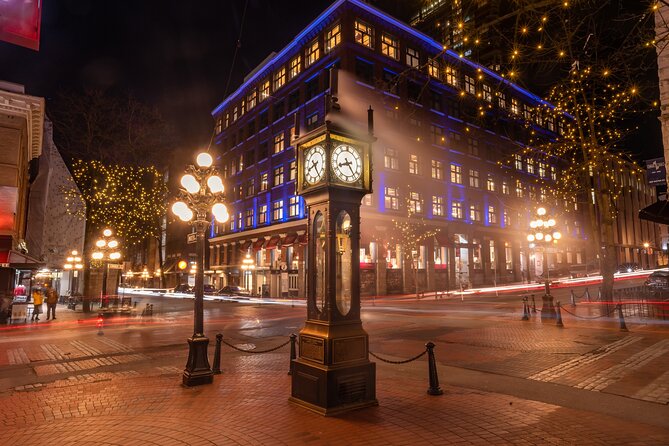
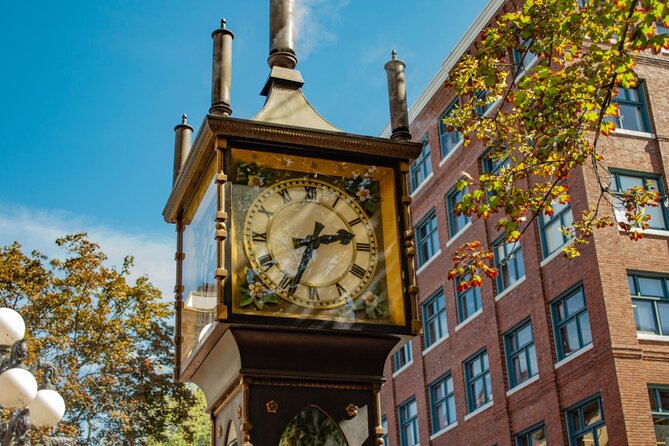
The route then reaches one of Gastown’s best-known sights, the antique-style steam clock. Built in 1977, it uses steam and whistles to tell the time.
The clock is not an untouched relic from Vancouver’s early days, and that makes the stop more interesting, not less. It shows how Gastown’s old-looking character has been shaped by both preservation and later additions. The game uses the clock as a visual challenge, so take a moment to inspect it instead of merely waiting for the next performance.
This is also the point where the walk feels most like a classic Gastown outing. You can pause for a shop, café, or photo without losing the route. One useful advantage of the app is that you can stop and resume whenever you like, rather than keeping pace with a scheduled group.
The puzzles vary in strength. Some make good use of the street around you, while others feel more like general riddles. If you get stuck, use a hint or the skip option. That keeps a single difficult question from spoiling the afternoon, although one person using the app reported getting held up by a clue before finding a way forward.
Colourful Beaux-Arts details at the Dominion
The Dominion building, constructed from 1908 to 1910 by J. S. Heyler, gives the route another change of architectural mood. Its Beaux-Arts design includes terracotta spandrels and Corinthian columns at the front entrance.
This is a fine place to slow down and look above street level. The decorative details are easy to miss when you are focused on traffic, storefronts, or your phone. The challenge turns the façade into part of the game and helps you notice why the building is considered one of Vancouver’s more colourful heritage structures.
I like this approach because it makes architecture active. You are not standing through a long lecture. You are searching, comparing, and talking with the people in your group. If you are playing with children or friends, the question gives everyone a small job.
The route does ask you to divide your attention. Keep the phone in hand, but do not stare at it while crossing streets or walking through crowded areas. The game is self-guided, so basic city awareness is your responsibility.
Same province, a completely different day out:
- Vancouver Half-Day Whale Watching Adventure with Free Photos
★ 5.0 · 5,000 reviews - Big Bus Vancouver Hop-On Hop-Off Sightseeing Tour
★ 3.5 · 3,028 reviews - Victoria & Butchart Gardens Tour with Ferry from Vancouver
★ 4.5 · 2,703 reviews - Vancouver: Covered Whale Watching Adventure with Free Photos
★ 4.8 · 2,260 reviews
The Sun Tower and Vancouver’s newspaper era
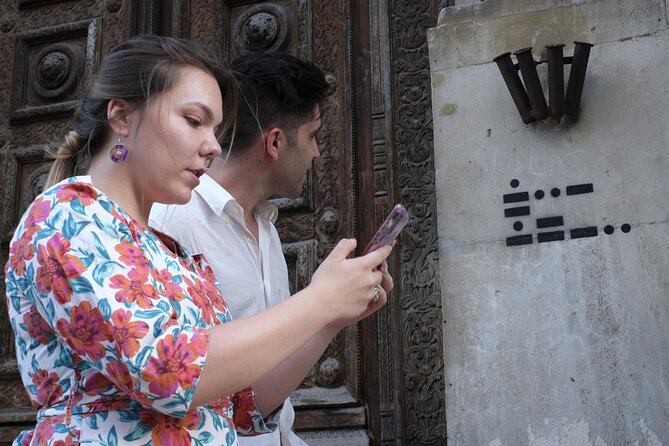
Next comes the Sun Tower, built in 1911 and 1912. Its importance comes from its landmark design and its connection to Louis D. Taylor and the Vancouver World and Sun newspapers.
The building also marks the eastward expansion of Vancouver’s business district. Its location helps explain how the city moved beyond its earliest commercial core as offices, newspapers, and trade activity grew.
This stop works especially well for people who enjoy city stories. You get architecture, politics, publishing, and urban growth in a compact package. The game does not require you to know Vancouver in advance, and the short explanations give enough context to make the next clue meaningful.
The route is not a museum tour, and the historical notes are brief. If you want detailed dates, biographies, or an extended explanation of Vancouver’s newspaper battles, you will need a book or a conventional walking tour afterward. Here, the goal is to keep you moving and curious.
The Sam Kee Building’s remarkable narrow profile
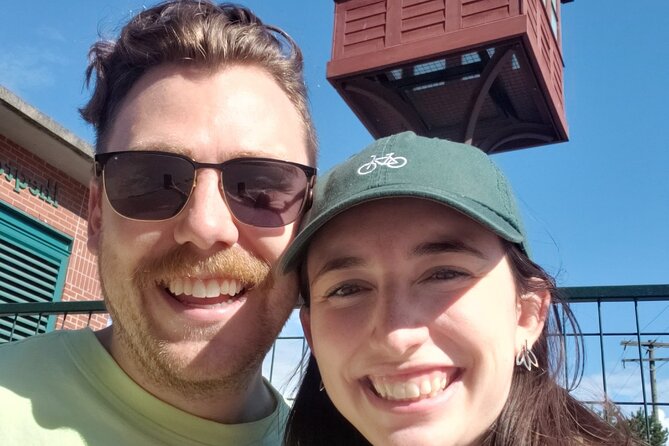
The Sam Kee Building at Pender and Carrall is one of the route’s most memorable stops. Built in 1913, it is celebrated for its clever design, its importance to Vancouver’s Chinese community, and the story of its namesake.
Its narrow shape immediately raises a question: how could anyone build a useful property on such a small lot? The answer is tied to the history of land, taxation, and the way early citizens adapted to difficult conditions. The game uses the building to connect architectural ingenuity with the experience of Vancouver’s Chinese community.
You will want to look carefully at the frontage and surrounding details before answering. This is exactly the sort of place a regular sightseeing list might reduce to a quick photograph. The puzzle gives you a reason to stop and notice the building as part of a larger civic story.
The Sam Kee Building also adds cultural weight to the route. The experience is not only about railway stations, newspaper offices, and grand commercial buildings. It points toward the people and communities who helped shape old Vancouver.
Meeting Gassy Jack with a fuller story
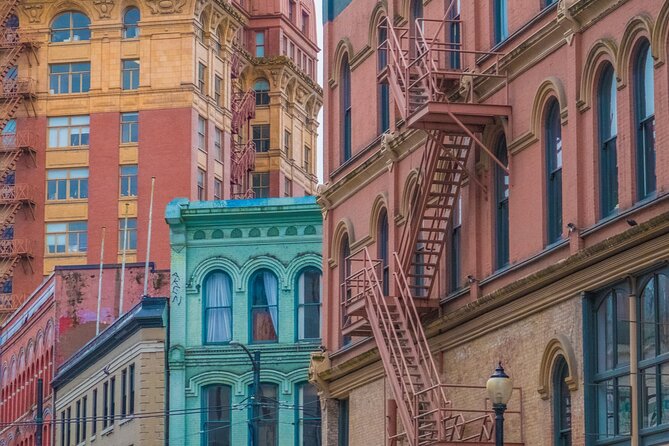
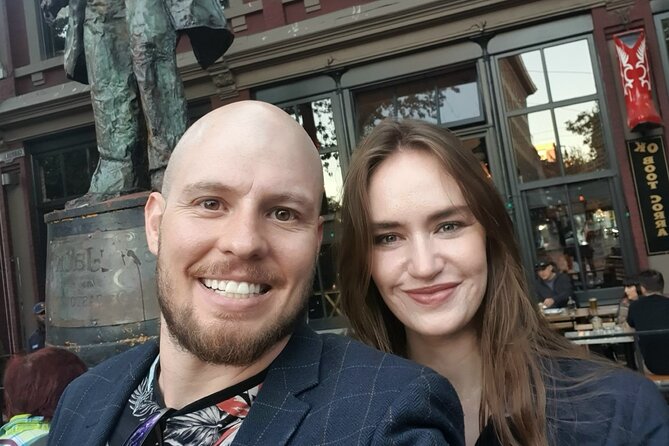
The walk then reaches the statue of John Deighton, better known as Gassy Jack. Deighton was a saloon owner in the 1860s, and Gastown took its name from him.
The statue is a familiar meeting point, but the story attached to it is not simple. Deighton’s legacy has been reconsidered, especially because he married Quahail-ya, a 12-year-old Squamish girl whose English name was Madeline Deighton.
That context matters. A city game can easily turn a historical figure into a cheerful character and leave out the harder parts. Here, you get at least a reminder that Vancouver’s founding stories include colonial power, Indigenous history, and relationships that should not be viewed through a sentimental lens.
This is one of the better moments to put your phone down and discuss what you have just learned. The game moves at a brisk pace, but you can pause the app if your group wants more time at the statue or in Maple Tree Square.
Gaoler’s Mews and the city after the fire
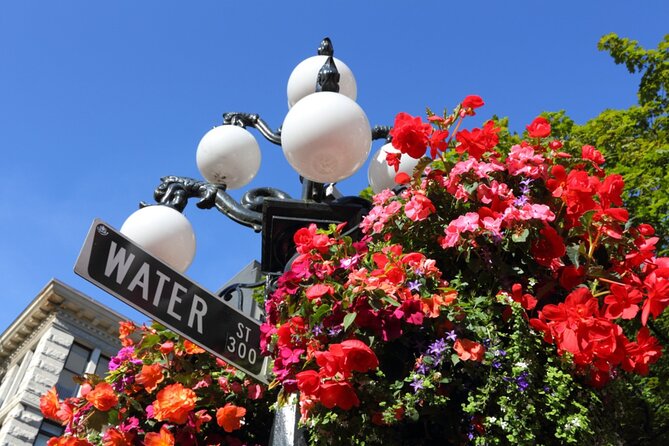
Gaoler’s Mews sits in the heart of Gastown. The first building on the site appeared in the mid-1800s and housed Vancouver’s first jail. After the city’s great fire in 1886, the jail was replaced by a brick fire hall.
The stop gives the route a useful shift from commercial architecture to public safety and disaster. Vancouver’s early buildings were part of a young, rough port city, and fire could erase whole sections in a short time.
Look for the clues in the setting and take time to picture how different the area would have been before the rebuilt brick structure. The game’s historical notes are short, but they help you connect a small courtyard or building site with the city’s wider development.
This part of the route may feel less instantly famous than the steam clock or Gassy Jack statue. That is a benefit. You get a chance to explore a quieter piece of Gastown and see how the game handles places that are not simply postcard stops.
Finishing near the railyard at The Alibi
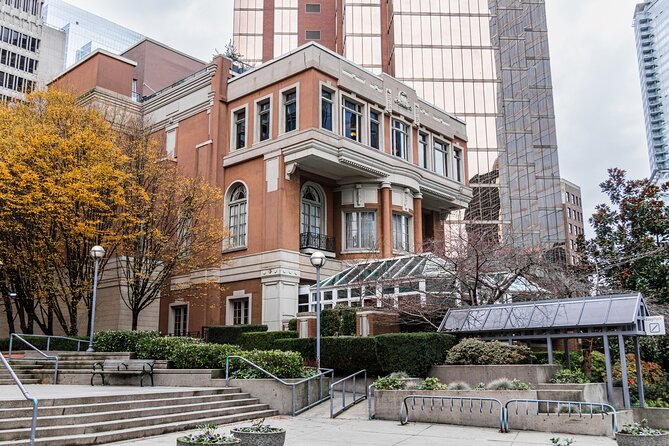
The final stop is The Alibi, in a heritage building more than 100 years old. It sits near the railyard and not far from Vancouver’s trade and shipping ports, which fits the route’s repeated focus on rail, freight, commerce, and working waterfront connections.
The Alibi is presented as a place where neighbours and the wider community meet for food, beer, and culture. You do not need to treat it as a formal part of the tour meal, since food and drinks are not included. Instead, think of it as a practical place to finish or continue your old-town outing.
The end point is listed at Maple Tree Square, at 1 Water Street, with the route guiding you toward the Gassy Jack statue. Follow the app closely near the final turns, since the game depends on reaching the correct location before presenting the next challenge.
What the $7.20 price really gives you
At $7.20 per person, this is an inexpensive activity by Vancouver standards. You are paying for access to the Questo quest, 14 puzzle-based challenges, historical story content, and the ability to pause and resume, not for a guide, attraction admission, meal, or transportation.
That distinction helps set fair expectations. If you want a person explaining every building and answering questions as you walk, this is not the right format. If you want a light structure for exploring old Vancouver with friends, the price is easy to justify.
A group discount is available, which makes the math even better for families or friends. One phone can work well for a small group, though getting the game onto several phones may take some effort. A group of three completed it on one phone, so sharing a screen is workable if everyone stays close.
The experience has a 4.6 rating from 12 reviews, with 92 percent recommending it. That is a positive signal, but the small sample means I would treat it as useful guidance rather than proof that every puzzle will suit every group.
Who will enjoy this old-town game
I would choose this for first-time visitors who want a quick introduction to Gastown without committing to a long guided walk. It also suits locals entertaining friends, families who prefer an activity to a lecture, and couples who like solving clues while exploring.
The game is available in English and uses a mobile ticket and access code. Its offline function makes it more practical than an activity that requires a strong data connection at every stop.
Most people can participate, and service animals are allowed. The route is near public transportation, but the supplied details do not specify a total walking distance or the exact accessibility of every surface, so you should check your group’s needs before booking.
The stated duration is about one hour and 30 minutes. In practice, plan on extra time if you want photos, browse shops, stop for food, or pause to discuss the history. The app is open daily from midnight to 11:30 p.m. during the listed operating period, giving you unusual freedom to choose your start time.
You receive confirmation when booking. Free cancellation is available if you cancel at least 24 hours before the local start time. Within 24 hours, the payment is not refunded and changes are not accepted.
Should you book the Vancouver Old Town Treasure Hunt?
Book it if you want a low-cost, private way to explore Vancouver’s old town and you enjoy puzzles more than formal guiding. The best parts are the architecture-based challenges, the short historical stories, and the freedom to stop whenever something catches your eye.
Skip it if you need a live expert, dislike using a phone while sightseeing, or want every clue to be tightly tied to the landmark in front of you. Some riddles are stronger than others, and a difficult question can interrupt the flow.
For most people, the price makes the choice simple. Bring a small group, use one phone if needed, keep hints and skip in mind, and allow more than 90 minutes if you want to enjoy Gastown rather than race through it.
FAQ
How long does the Vancouver Old Town Treasure Hunt take?
The experience takes approximately one hour and 30 minutes. You can allow extra time for shops, food, photos, or pauses because the game can be stopped and resumed.
How much does the experience cost?
The listed price is $7.20 per person. Group discounts are available.
Is there a live tour guide?
No. This is a self-guided activity operated through the Questo app, and no live tour guide is included.
Where does the game start?
The starting point is 1530-355 Burrard Street, Vancouver, British Columbia V6C 2G8, at the Marine Building.
Where does the game end?
The listed ending point is Maple Tree Square, 1 Water Street, Vancouver, British Columbia V6B 2H9. The app guides you step by step toward the Gassy Jack statue.
How many puzzles are included?
The quest includes 14 puzzle-based challenges.
Is the game available in more than one language?
The experience is offered in English.
Can I pause the game?
Yes. You can pause and resume the quest whenever you like.
What happens if I cannot solve a clue?
Hints are available, and you can use the skip option to reveal the answer and continue.
Can I cancel for a refund?
Yes, if you cancel at least 24 hours before the experience start time. Cancellations within 24 hours are not refunded, and changes made during that period are not accepted.
Just added around Vancouver
- Private Transfer From Vancouver Airport to Vancouver Downtown★ 5.0 · 7 reviews
- Wild Whale Watching Experience – Open Air Vessel★ 5.0 · 158 reviews
- YVR Layover – Vancouver City Sightseeing Private Tour★ 5.0 · 7 reviews
- Whistler and Sea to Sky Gondola, a Fire and Ice Discovery Tour★ 5.0 · 153 reviews
- Whistler 1-Day Tour from Vancouver (Chn&Eng)★ 4.0 · 6 reviews
- Whale Watching Adventure from Vancouver BC★ 5.0 · 59 reviews
- Western Trails – One Way Vancouver To Calgary Rockies Bus Tour★ 5.0 · 31 reviews
- Rockies Western Canada Iconic Sites Tour★ 5.0 · 54 reviews
Walking Tours, compared.

Old Quebec City: Grand Walking Tour with Private Option
Read our review →
The Original Old Montréal Walking Tour by Guidatour
Read our review →
Old Montreal Small-Group Walking Tour | Max 10 | by MTL Detours
Read our review →
Old Quebec Classique Walking Tour with Funicular
Read our review →

Browse the lists this tour appears in