

Reviewed · HISTORICAL TOURS
Admission 1 person – Visit of the Acadian Historic Village
The most interesting part of the Village Historique Acadien is its living-history approach. You walk a 2.2 km route through historic buildings, and the people inside are not just there to point out dates on a sign. Bilingual interpreters explain how Acadian families lived and worked from 1770 to 1949, often speaking with you as if the buildings were still in use.
I like the freedom to set your own pace, and I like the chance to talk with interpreters in either English or French. The low admission price also makes this a strong value for a half-day outing. The main consideration is time: four to six hours and 2.2 km of walking require a moderate level of fitness, so this is not a quick roadside stop.
In This Review
- Key points to know before you go
- A walking village, not a display behind glass
- Following the 2.2 km Acadian circuit
- Why the bilingual interpreters matter
- What your time and energy will look like
- Is $18.63 a good value?
- Practical timing for the 2026 season
- Who will enjoy this visit most
- Small details that make the reconstruction work
- Booking, cancellation, and animal rules
- Should you book the Village Historique Acadien?
- FAQ
- What does admission to the Village Historique Acadien include?
- How long should I plan to spend at the village?
- Is the experience offered in English?
- How much does admission cost?
- When is the village open in 2026?
- Is parking available?
- Are animals allowed?
- Can I cancel for a full refund?
Key points to know before you go
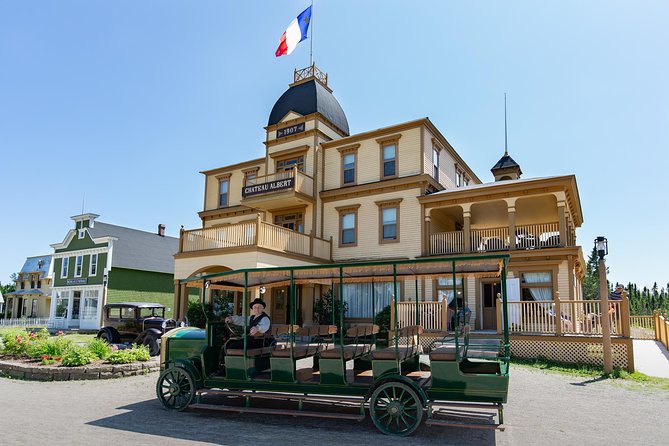
- A 2.2 km historical route: The village is arranged as a walking circuit rather than a single museum building.
- Acadian life from 1770 to 1949: You see a long span of daily life, work, and changing customs.
- Bilingual interpretation: Interpreters speak both French and English, making the experience accessible to a wider range of visitors.
- Self-guided timing: You can linger at buildings that catch your interest and move along when you are ready.
- Four to six hours required: This works best as a planned half-day visit, not a brief add-on.
- Free parking and advance admission: Parking accommodates cars and RVs, and booking ahead lets you avoid the ticket line.
A walking village, not a display behind glass

The Village Historique Acadien gives you a physical sense of Acadian life. Instead of moving through one modern exhibition hall, you follow a route lined with historic buildings. Each structure adds another piece to the story, and the route lets you see how homes, workspaces, and community places fit together.
That format matters. A written panel can tell you when a building was built, but an interpreter can explain how the space was used and answer a question in the moment. The people working in the buildings are fully bilingual, so you can ask questions and listen in English or French.
The experience covers Acadian life from 1770 through 1949. That is a sizeable time span, and it gives the visit more range than a single-period reconstruction. You are not looking only at one frozen moment. Instead, you can follow changes in daily life across nearly two centuries.
The route is self-guided, but that does not mean you are left alone with signs. You choose how long to spend at each stop, while the interpreters provide the human connection. If one home or building captures your attention, you can stay longer. If a particular section is less important to you, you can continue along the circuit.
A few more Canada trips to weigh up
- Victoria Guided Food and History Tour
★ 5.0 · 2,015 reviews - Gastown Historic Walking Food Tour
★ 5.0 · 1,863 reviews - Vancouver: Gastown Historical Walking Food Tour
★ 4.8 · 539 reviews
Following the 2.2 km Acadian circuit
Your visit begins at the Village Historique Acadien, where the route leads you through a series of historic buildings. The precise order of your stops depends on your walking pace and how much time you spend talking with the interpreters.
At each building, expect an explanation of the setting and its place in Acadian life. The most useful conversations are likely to be the ones that connect a building to ordinary routines: how people worked, how families organized their homes, and what daily life looked like during the period being shown.
The village is designed to be inhabited by interpretation staff, which gives the route a sense of activity. You are not simply looking at empty structures. The interpreters help explain what you are seeing and encourage questions about Acadian ancestors and their way of life.
I would allow the full four to six hours if you enjoy history and conversation. The route itself is 2.2 km, but the walking distance does not tell the whole story. Stops, explanations, and time spent inside the buildings are what turn this from a walk into a half-day visit.
If you have less time, you can still move through the route more quickly because the experience is self-guided. But rushing would undercut its best feature, the chance to talk with the people interpreting each setting. Build in more time than you think you need, especially if you want to hear both the broad historical story and the small details of everyday life.
Why the bilingual interpreters matter
The interpreters are central to the visit. They provide the context that makes the buildings useful rather than merely attractive. Their role is not limited to repeating a fixed paragraph. The experience is set up for conversation, so you can ask about the history of Acadia or the daily life of the people represented in the village.
French and English are both supported. That is especially valuable in an Acadian setting, where language is part of the cultural story itself. You can follow the explanations comfortably in English, while French-speaking visitors can engage directly in their own language.
The best way to use the interpreters is to ask practical questions. Ask what a room was used for, how a family might have spent its day, or what changed between the earlier and later periods represented along the route. The available information specifically emphasizes the daily lives of Acadian ancestors, so this is where the visit has its greatest value.
The staff are also part of what makes each building feel different. One home may have a different mood or purpose from the next, and the interpreters help you understand why. The result is less like walking past a row of preserved façades and more like meeting the people responsible for explaining how each place functioned.
No guide names are provided for this experience, so you should not expect a named tour leader who accompanies you from start to finish. Instead, you meet interpreters at the buildings along the route. This arrangement gives you more independence, but it also means the quality of your visit depends partly on how actively you ask questions and engage at each stop.
What your time and energy will look like
The official visit length is approximately four to six hours. That range is useful because it reflects two different ways to experience the village. A faster visit can cover the route and major buildings in about four hours. A slower visit, with longer conversations and careful attention to the historic settings, can fill six hours.
You should have a moderate level of physical fitness. The route measures 2.2 km, and the visit involves walking between buildings and spending time on your feet. The supplied information does not provide details about benches, surfaces, stairs, or accessible routes, so you should contact the Village Historique Acadien directly if you need specific mobility information.
I would treat the length as a benefit if you want a substantial cultural stop in New Brunswick. At the same time, it may feel too long if you are mainly looking for a quick introduction to Acadian history. The self-guided design gives you an escape from a fixed group schedule, but it does not remove the basic walking and time commitment.
Families and history-minded visitors can shape the day around their own interests. Someone fascinated by architecture may spend longer at the buildings. Someone more interested in social history can focus on the interpreters and ask about family routines and community life. That flexibility is one of the strongest reasons to choose this format over a short guided walk.
Same province, a completely different day out:
- Vancouver Half-Day Whale Watching Adventure with Free Photos
★ 5.0 · 5,000 reviews - Quebec City Walking Tour
★ 5.0 · 4,716 reviews - Niagara Falls: Premium Tour, Boat & Journey Behind the Falls
★ 4.8 · 4,207 reviews - Banff: Banff Gondola Admission Ticket
★ 4.7 · 3,698 reviews
Is $18.63 a good value?
At $18.63 per person, admission is modest for an attraction that can occupy four to six hours. The value is particularly good if you take time to speak with the interpreters rather than simply walking the route and leaving.
The price covers admission to the Acadian historic village. You are paying for access to the full 2.2 km circuit and the historic buildings along it, with bilingual interpretation available throughout the site. Free parking adds to the practical value, especially if you are driving a car or RV.
A low ticket price does not mean the visit is lightweight. The village offers a full half-day of historical interpretation, but the return depends on your interest. If you enjoy asking questions and comparing the different settings, the price is easy to justify. If you prefer modern museum displays, short presentations, or a tightly scripted tour, the format may feel slower than expected.
Booking admission in advance can also help you avoid the ticket line. The experience uses a mobile ticket, which is convenient if you are planning your day from the road. Confirmation is provided at booking, so you can keep the admission details on your phone.
Practical timing for the 2026 season

The published operating period runs from June 4 through September 12, 2026. The village is open every day during that period, from 10:00 a.m. to 5:30 p.m.
Those hours give you a useful window, but do not arrive late if you want the full experience. A four to six hour visit fits best with a morning arrival or an early start after lunch. Arriving near closing time would leave little room for conversations and careful exploration.
Because the experience is seasonal, check that your visit falls within the stated dates before you book. The information provided does not list special holiday hours or any schedule changes, so use the booking confirmation and current operating information when planning a specific date.
Free parking is available for cars, RVs, and similar vehicles. That makes the village easy to include in a driving itinerary through New Brunswick. The information does not describe public transportation or hotel transfers, so plan to reach the site independently unless you arrange transportation elsewhere.
Who will enjoy this visit most
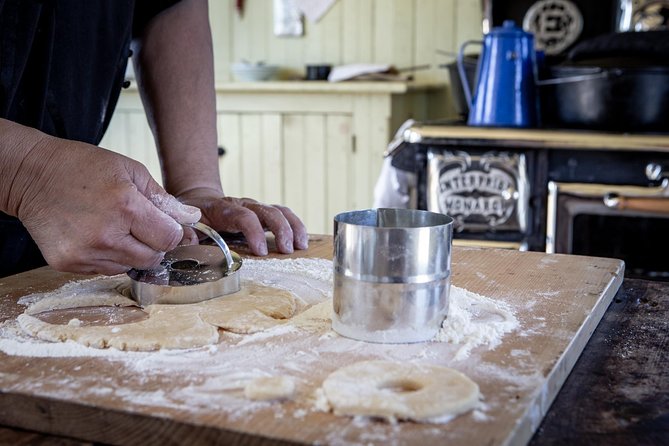
I would recommend the village to anyone who wants history explained through places and people rather than only through text. It is a good match for families, independent sightseers, cultural tourists, and anyone with an interest in Acadian heritage.
It also suits visitors who dislike being hurried. You control the route and can spend more time at the buildings that interest you. The bilingual format makes it practical for English-speaking and French-speaking visitors alike.
The experience may be less suitable if you have limited time, cannot comfortably manage a 2.2 km walking route, or want a short overview in under two hours. The village rewards attention and patience. Its strength is the slow accumulation of details, not a single dramatic presentation.
People with a family connection to Acadian history may find the visit especially meaningful. One review describes the pleasure of discovering a family connection to the story through the name Ouellet. That kind of personal link cannot be promised, but the setting gives you a useful place to think about how individual families fit into the wider Acadian past.
Small details that make the reconstruction work
The buildings are the heart of the setting, but the people inside them give the reconstruction its purpose. Each house has its own character, and the interpreters help you notice those differences instead of treating the village as one large exhibit.
The strongest praise has focused on the kindness of the staff, the historical explanations, and the way the people working in the houses perform their roles with conviction. That tells you what to look for. Do not race from building to building collecting photographs. Pause, listen, and ask the interpreter to explain the life that would have taken place there.
The village also works for people who are not already passionate about history. The format is conversational, and the route gives you a steady succession of places to explore. You do not need a detailed background in Acadian history to follow the visit.
A 4.6 rating from 40 reviews and a 90 percent recommendation rate suggest a consistently positive experience, while the sample size remains fairly small. I would read those figures as a helpful sign, not a guarantee that every visit will feel identical. Your experience will depend on your pace, your interest in the subject, and how much time you spend with the interpreters.
Booking, cancellation, and animal rules
You receive confirmation when you book, and the ticket is mobile. Advance admission can help you skip the ticket line, which is useful during the summer operating season.
Free cancellation is available if you cancel at least 24 hours before the experience start time. A cancellation made less than 24 hours ahead is not refundable, and changes inside that window are not accepted. The cut-off follows local time.
Service animals are allowed. Other animals, including dogs and cats, are not permitted. If you are traveling with a pet, plan accordingly rather than assuming the animal can accompany you along the route.
Should you book the Village Historique Acadien?
Book it if you want a substantial, human-scale look at Acadian life and can spare four to six hours. The combination of historic buildings, bilingual interpreters, flexible pacing, and a $18.63 admission price makes it one of the more practical cultural stops in New Brunswick.
I would especially choose it for a day when you want to slow down and listen. Ask questions, give each building time, and use the interpreters to connect the route from 1770 to 1949 with ordinary life. Skip it only if your schedule allows less than a few hours or if a 2.2 km walking visit is not a good fit for your physical ability.
FAQ
What does admission to the Village Historique Acadien include?
Admission includes access to the Acadian historic village and its 2.2 km route of historic buildings, with bilingual interpreters explaining Acadian history and daily life from 1770 to 1949.
How long should I plan to spend at the village?
Plan on approximately four to six hours. You can move at your own pace because the visit is self-guided.
Is the experience offered in English?
Yes. The interpreters are bilingual in English and French, and the experience is offered in English.
How much does admission cost?
The listed price is $18.63 per person.
When is the village open in 2026?
The published operating period is June 4 through September 12, 2026. It is open Monday through Sunday from 10:00 a.m. to 5:30 p.m.
Is parking available?
Yes. Parking is free for cars, RVs, and other vehicles.
Are animals allowed?
Service animals are allowed. Other animals, including dogs and cats, are not allowed.
Can I cancel for a full refund?
Yes, if you cancel at least 24 hours before the experience start time. Cancellations made less than 24 hours in advance are not refundable, and changes within that period are not accepted.
Just added around Canada
- Hot Tub Boat Ride Around Victoria★ 5.0 · 89 reviews
- 24 Hour Hop-On, Hop-Off Double Decker Victoria City Tour★ 4.0 · 198 reviews
- Historical Chinatown Walking Tour★ 5.0 · 39 reviews
- Heritage Horse-Drawn Carriage Experience in Victoria★ 5.0 · 68 reviews
- Hip & Hidden Chinatown + Old Town Food Tour Victoria★ 5.0 · 169 reviews
- The Signature Tour Victoria★ 5.0 · 21 reviews
- Private Tour of Beautiful Victoria in Luxury Van★ 5.0 · 24 reviews
- Eat Like a Canadian Food & Sightseeing Tour★ 5.0 · 38 reviews
Historical Tours, compared.




Evening Gourmet Tour 5 Course Dinner – History and Food in Old Quebec City
Read our review →



Browse the lists this tour appears in