
Reviewed · MUSEUMS
Ottawa: National Gallery of Canada Admission
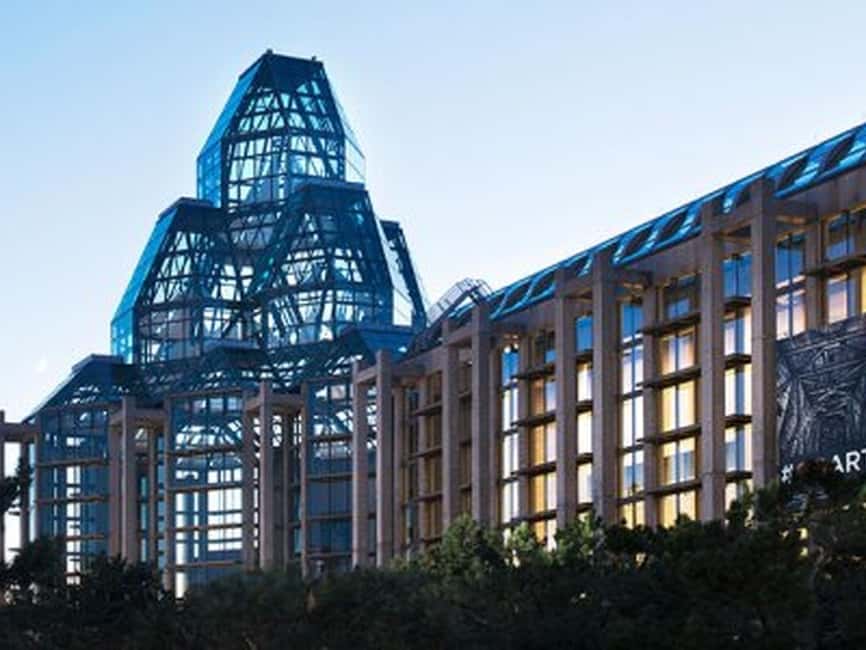
Ottawa’s National Gallery is as much an architectural visit as an art stop. Moshe Safdie’s glass-and-granite building fills its halls with daylight, frames views toward Parliament Hill, and gives the collection a calm setting. Outside, the huge Maman spider sculpture adds an unforgettable touch.
I like the strong Canadian and Indigenous collections, and I like that your ticket can include artist talks and art-making activities rather than only a walk through silent galleries. The main caution is that some displays may offer fewer explanations than you want, so this suits you best if you enjoy looking closely and forming your own response.
In This Review
- Key points to know
- First impressions at the glass entrance
- Why the Canadian and Indigenous collections matter
- Moving through painting, sculpture, and installation
- Artist talks and workshops add a human voice
- Ankosé, connection, and the rhythm of the visit
- The Great Hall, garden court, and outdoor sculpture
- What the $18 admission delivers
- Who will enjoy this National Gallery visit
- A practical one-day plan
- Booking, cancellation, and timing
- Should you book the National Gallery of Canada?
- FAQ
- Where is the National Gallery of Canada located?
- How much does admission cost?
- How long is the ticket valid?
- What does the admission ticket include?
- Are meals and drinks included?
- Is a personal guide included?
- Where do I meet for the activity?
- Is the Gallery free at any time?
- Can I cancel for a refund?
- Is the Gallery wheelchair accessible?
Key points to know
- The $18 ticket covers a full day: You receive admission to the Gallery’s exhibitions and entry to artist talks.
- The building is part of the experience: Glass walls, granite, the Great Hall, and a garden court give the visit a strong sense of place.
- Canadian and Indigenous art lead the story: The collection also reaches from antiquity to current work and includes photography, sculpture, painting, installation, and decorative arts.
- Thursday evening can save you money: Admission is free from 5 to 8 p.m. on Thursdays.
- You can add hands-on activities: Artist workshops and art-making sessions give the visit a more active feel.
- Plan for a self-guided day: No personal guide is included, so you control the pace and may need to read labels carefully.
First impressions at the glass entrance
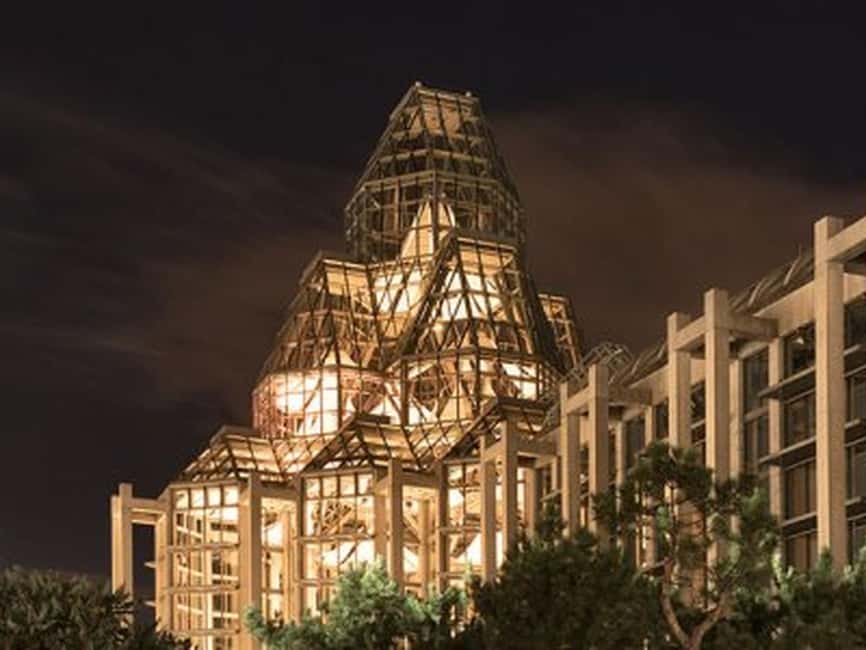
Begin at the Gallery’s main entrance and give yourself a moment before heading into the exhibitions. The building was designed by architect Moshe Safdie, and its glass and granite structure gives the first part of the visit a spacious, almost ceremonial feel.
The Great Hall is one of the best places to get your bearings and take photographs. Its scale and glass walls make it a natural pause point, especially if you are visiting Ottawa with someone who is not usually eager to spend hours in museums.
The building also helps connect the Gallery to the city outside. You can see toward Parliament Hill, and the setting gives the visit a clear Ottawa identity rather than making the museum feel like a sealed box.
Admission costs $18 per person. That is reasonable if you plan to spend several hours with the collections, attend a talk, or join an art-making activity. It is less compelling if you only want a quick look at one gallery, but the one-day validity means you do not have to rush through the building.
A few more Ottawa trips to weigh up
- Ottawa: Canadian War Museum Admission
★ 4.7 · 232 reviews - Ottawa: Canadian Museum of Nature Admission
★ 4.6 · 226 reviews - Canadian War Museum Admission
★ 4.5 · 213 reviews
Why the Canadian and Indigenous collections matter

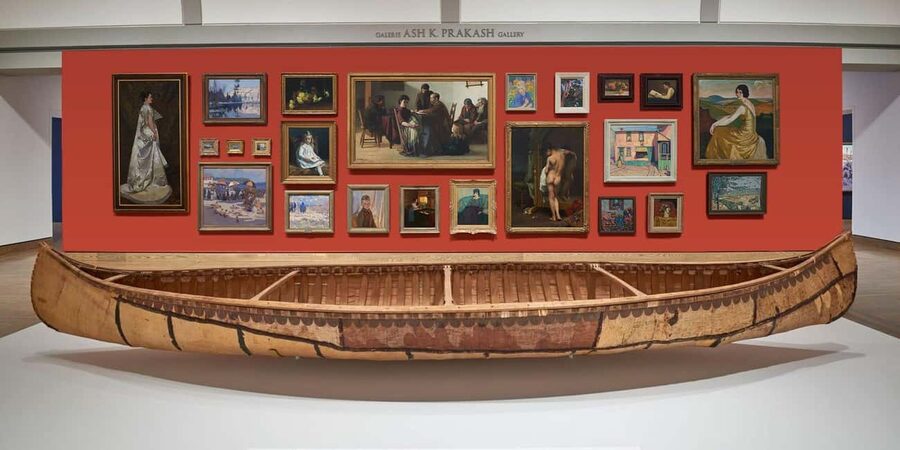
The Gallery’s collection reaches across time, from antiquity to the present. That range lets you move between older traditions and newer work without treating Canadian art as a small side room.
The Canadian collection is one of the main reasons to visit. You can expect painting, photography, sculpture, installation, and decorative arts, with works that help explain how artists have responded to place, identity, community, and change.
The Indigenous collection is another major strength. The Gallery describes it as one of the finest in the world, and it gives the national institution an important responsibility: Canadian art is not one single story, and the collection can help you see that.
Take your time with works that catch your attention, even if you do not know the artist or the period. The Gallery’s guiding idea is Ankosé, a word meaning everything is connected. That idea links artists, communities, objects, and viewers, and it encourages you to look for relationships rather than treating each room as a separate box.
Moving through painting, sculpture, and installation
The exhibitions use several forms of visual art, so the pace changes as you move through the building. Paintings reward a slower look at color, technique, and subject. Photography can ask for a different kind of attention, particularly when the image depends on a precise moment or social context.
Sculpture changes the way you move. Instead of standing in front of a frame, you walk around an object and notice how it occupies the room. Installations can go further, using space, sound, materials, or placement to shape your response.
Decorative arts add another layer. Objects made for practical or ceremonial use can show how design works in daily life, not only in a formal gallery. If you are more interested in objects than paintings, these rooms may become an unexpected highlight.
The collection is broad, but broad does not always mean fully explained. One French-language assessment described the exhibitions as thin and found the explanations lacking. I would take that as useful advice: if you want detailed background for every work, bring patience and consider asking staff for help. If you prefer to make your own connections, the lighter interpretation may not trouble you.
Artist talks and workshops add a human voice
The admission includes entry to artist talks, which can change the tone of the day. A work that seems puzzling in a quiet gallery may make more sense when you hear an artist discuss ideas, materials, or process.
Talk schedules can vary, so check the available starting times when you book. The activity is listed as valid for one day, but that does not mean every talk runs continuously. Build your museum plan around the specific session you want rather than assuming you can arrive at any hour and catch one.
Art-making activities offer another useful break. You can step away from looking and make something yourself in a setting built around visual art. That is especially helpful for families and for anyone who finds a long museum visit tiring.
No personal guide is included. You have freedom to choose your route, but you also carry the job of deciding what deserves more time. Artist talks and staff interaction can fill some of the gap, though the exact experience depends on the program offered that day.
Same province, a completely different day out:
- Ottawa: Sightseeing River Cruise
★ 4.3 · 1,585 reviews - Ottawa: Rideau Canal Cruise
★ 4.4 · 1,303 reviews - Ottawa: Hop-On Hop-Off Guided City Tour Pass
★ 4.4 · 1,194 reviews - Ottawa Boat Cruise – Rideau Canal Cruise
★ 4.5 · 1,127 reviews
Ankosé, connection, and the rhythm of the visit
Ankosé, meaning everything is connected, is more than a slogan for the building. It gives you a way to think about the Gallery’s purpose: art links personal experience with national stories, old objects with new ideas, and local artists with international conversations.
That connection is clearest when you avoid rushing from famous work to famous work. Spend time with a piece that first seems difficult. Then compare it with something in another room. You may notice a shared concern, material, shape, or question.
The Gallery’s role is also broader than displaying objects. Its stated mandate is to share visual arts with Canadians and work with artists and organizations around the world. Artist talks, workshops, exhibitions, and art awards events all support that public role.
The program can therefore feel different from a simple collection visit. On a quiet day, the building and galleries may provide a calm place to think. On a scheduled event day, the talks and activities can make it feel more social and active.
The Great Hall, garden court, and outdoor sculpture

The Great Hall deserves a stop even if you have limited interest in art. Its open scale and glass walls create one of the building’s most memorable spaces, and the views toward Parliament Hill connect your museum visit with Ottawa’s civic center.
The garden court offers a quieter pause. Use it to rest, gather your thoughts, or decide which rooms you want to revisit. A garden court inside a large museum can prevent the day from becoming a solid block of galleries.
Outside, look for Maman, the famous spider sculpture. Its size makes it easy to spot, and it gives the entrance a playful edge. You do not need to understand every work in the collection to appreciate how this sculpture changes the mood of the building.
One visitor also recommended the nearby Kiweki Point viewpoint for a superb view of Ottawa. That stop is not part of the admission, but it is a useful idea if you want to pair the Gallery with a city view. Treat it as an add-on, not as an included part of the activity.
What the $18 admission delivers
At $18, this is a fair-value museum visit for a full day. You receive access to the exhibitions and artist talks, and the building itself gives you several worthwhile stops before you even consider the collection.
The value improves if you attend a talk or take part in an art-making activity. Those programs provide something beyond simply viewing objects on walls, although availability and starting times need to be checked.
You pay separately for meals and drinks, a personal guide, and purchases from the shop. That makes the visit easy to budget, but do not expect a guided tour or refreshments to be part of the ticket.
The shop may not satisfy everyone. One French-language assessment criticized the selection of cultural objects as unrelated to the works and artists in the collections. I would treat it as optional rather than part of the reason to buy admission.
There is also a money-saving option: the museum is free on Thursdays from 5 to 8 p.m. If that window fits your schedule, it can turn the Gallery into a very good-value evening stop. The shorter period may not allow enough time for the whole building, so choose a few priorities instead of trying to see everything.
Who will enjoy this National Gallery visit
I recommend this experience most strongly if you enjoy art but do not need a guide to tell you what every object means. You can set your own pace, compare different forms of art, and spend extra time with the collection areas that speak to you.
Families may like the mix of large spaces, outdoor sculpture, and art-making activities. The Great Hall also makes a practical meeting place if people in your group want different amounts of museum time.
The Gallery works well for architecture fans, too. The glass, granite, daylight, garden court, and views toward Parliament Hill make the building worth seeing even if your main interest is Ottawa itself.
It is less suitable if you want a tightly scripted tour with extensive explanations at every stop. The lack of a personal guide means you must make your own route, and some works may come with less context than you expect.
The wheelchair accessibility is an important practical advantage. If mobility access matters to your plans, this experience is designed to accommodate wheelchair users.
A practical one-day plan
Start at the main entrance and inspect the Great Hall before choosing your first collection area. This gives you a sense of the building and helps you decide how much time you want indoors.
Next, focus on Canadian and Indigenous art while your attention is fresh. These collections are central to the Gallery’s identity, and they give you a stronger understanding of the institution than a quick search for only famous international names.
After that, move through the temporary exhibitions and other collections. Vary your pace. Look closely at a few paintings, walk around sculpture, and give installations enough room to work on you.
Fit an artist talk or workshop into the middle of the visit if the schedule allows. It creates a natural break and gives you a different way to think about what you have seen.
Finish with the garden court, then go outside to see Maman and take in the views toward Parliament Hill. If you still have energy, consider the Kiweki Point viewpoint nearby. You can also revisit one or two works that stayed with you.
Free Thursday evening admission changes the plan. Arrive with a short list of priorities, choose one or two collections, and leave time for the building and outdoor sculpture. For the full range of exhibitions and activities, the paid daytime ticket gives you more breathing room.
Booking, cancellation, and timing
The meeting point is the Gallery’s main entrance. The activity is valid for one day, and you should check availability for the available starting times before finalizing your plans.
You can cancel up to 24 hours in advance for a full refund. A reserve-now, pay-later option is also available, which helps if your Ottawa schedule is still shifting.
The ticket includes admission, exhibition access, and entry to artist talks. Meals, beverages, personal guiding, and souvenirs are not included.
Because the Gallery is open for a full day of exploration, wear something comfortable and avoid packing your schedule too tightly. Even if you only plan to see a few rooms, the Great Hall, garden court, Maman, and the city views add time in a worthwhile way.
Should you book the National Gallery of Canada?
Book it if you want a substantial Ottawa cultural stop with Canadian and Indigenous art, a striking building, and the option of talks or hands-on activities. The $18 price is sensible for several hours, and Thursday evening is an excellent way to reduce the cost.
Think twice if you need a guide, detailed explanations for every work, or a tightly organized route. In that case, the self-guided format may feel spare.
My advice is to treat the Gallery as a complete half-day or full-day outing, not a quick tick on a sightseeing list. Focus first on Canadian and Indigenous art, reserve time for the Great Hall and garden court, and check the talk schedule before you arrive. That approach gives you the best value and lets Ankosé’s idea of connection develop at your own pace.
FAQ
Where is the National Gallery of Canada located?
It is located in Ottawa, Ontario, Canada.
How much does admission cost?
Admission costs $18 per person.
How long is the ticket valid?
The ticket is valid for one day.
What does the admission ticket include?
It includes admission to the Gallery, access to exhibitions, and entry to artist talks.
Are meals and drinks included?
No. Meals and beverages are not included.
Is a personal guide included?
No. A personal tour guide is not included.
Where do I meet for the activity?
You meet at the main entrance of the Gallery.
Is the Gallery free at any time?
Yes. The museum is free on Thursdays from 5 to 8 p.m.
Can I cancel for a refund?
Yes. You can cancel up to 24 hours in advance for a full refund.
Is the Gallery wheelchair accessible?
Yes. The activity is wheelchair accessible.
Just added around Ottawa
- Ottawa: Taste of the ByWard Market Food Tour★ 4.9 · 50 reviews
- Ottawa: Ecological Reserve Kayak Tour with Turtle Sightings★ 5.0 · 54 reviews
- Ottawa: Small Group Night Tour With River Cruise★ 4.2 · 54 reviews
- Ottawa: Small-Group Walking Tour with Boat Cruise★ 3.8 · 5 reviews
- Ottawa: Private Custom Tour with a Local Guide★ 4.5 · 42 reviews
- Ottawa: Private Parc Omega Wildlife Safari – Winter Magic★ 5.0 · 64 reviews
- Ottawa: Panoramic helicopter flight (Gatineau Park + downtown)★ 5.0 · 7 reviews
- Ottawa: Ottawa Senators Ice Hockey Game Ticket★ 4.7 · 30 reviews
Museums, compared.


Art Gallery of Ontario General Admission Ticket
Read our review →



Browse the lists this tour appears in