
Reviewed · HISTORICAL TOURS
Quebec City’s History in Virtual Reality
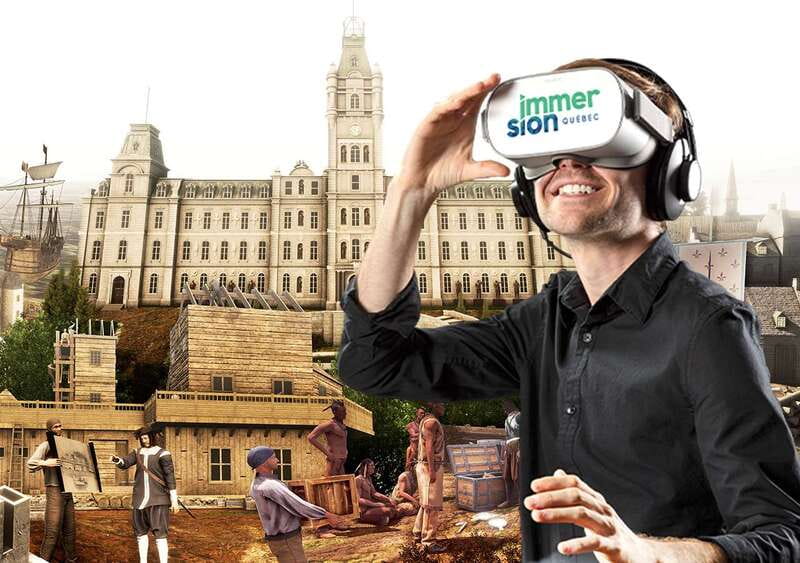
Quebec City’s past comes alive in an unusual place: the 18th-century vaults of Maison Chevalier, a building dating from 1752. For 40 minutes, you remain seated while a projection headset carries you through 10 key moments from more than 400 years of local history. I like the clear focus and the clever setting. You get history without a long walking tour, and the small-scale format should suit anyone who prefers a quiet, orderly activity.
I also like the price. At $19 per person, this is an easy add-on to a day in Old Quebec, especially if you want context before exploring the streets. The main thing to consider is the technology. Some recent visitors found the images blurry or dated, and one person found the music too loud for the narration. Expect an interesting historical presentation, but not a cutting-edge gaming experience.
In This Review
- Key points to know before you book
- Starting in the vaults of Maison Chevalier
- Ten moments that shape Quebec City
- Battle scenes and 3D history
- How the audio affects the experience
- Why the seated format matters
- What the 40-minute schedule gives you
- Is $19 a fair price?
- Who should book this experience?
- Language choices and planning tips
- Should you book Quebec City’s VR history experience?
- FAQ
- Where does the Quebec City virtual reality experience take place?
- How long does the experience last?
- How much does it cost?
- Do I have to walk during the presentation?
- How much of Quebec City’s history does it cover?
- What languages are available?
- Can I cancel my booking?
Key points to know before you book
- 400 years in 40 minutes: The program selects 10 key moments rather than trying to explain every chapter of Quebec City’s past.
- Historic setting: The presentation takes place in the vaults of Maison Chevalier, which date to 1752.
- Seated from start to finish: You do not walk through a series of rooms or stand during the show.
- Battle scenes help explain the city: The reenactments give particular attention to conflicts that shaped Quebec City.
- Several language choices: Instruction is available in English and French, with audio guides in Spanish, Chinese, English, and French.
- Good value at $19: The modest price makes this a practical choice before visiting Old Quebec’s streets and historic sites.
Starting in the vaults of Maison Chevalier
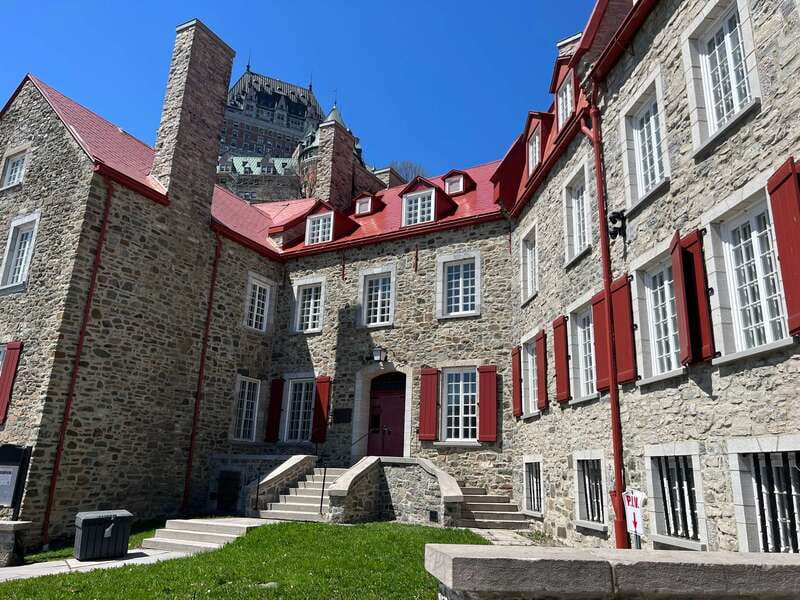
The first part of the experience is finding the right door. Immersion Quebec is in the vaults of the historic Maison Chevalier, and the entrance is the door on the left near the sidewalk. That detail matters because the building’s traditional stone exterior and several nearby doors can make the entrance easy to miss.
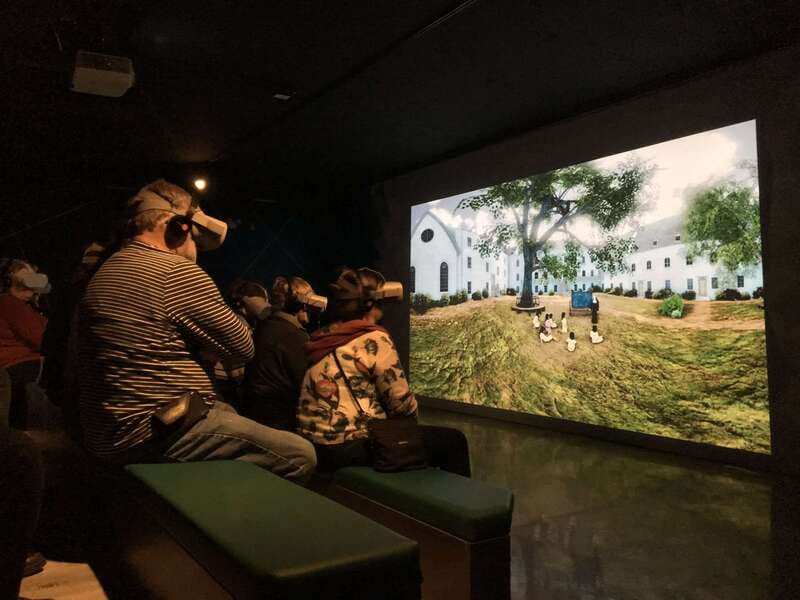
Once inside, you take a seat and receive the virtual reality projection headset. The seated arrangement keeps the activity simple. You are not asked to walk, climb, or move between scenes, so you can pay attention to the narration and images rather than worry about keeping up with a group.
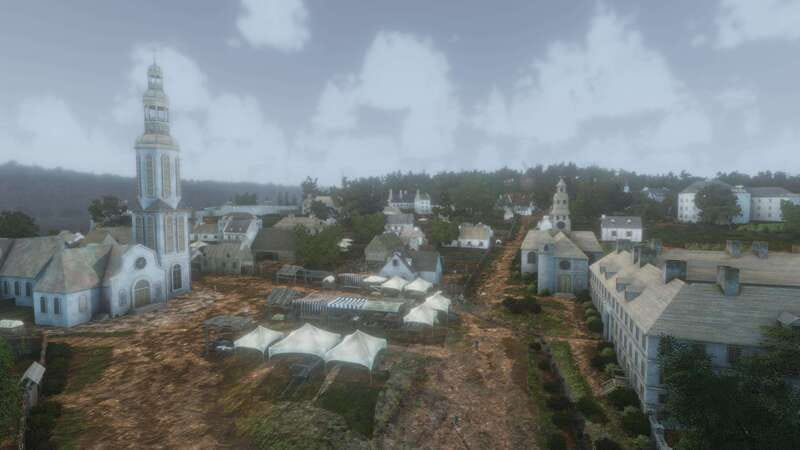
The room itself adds something that a standard theater would not. Maison Chevalier dates back to 1752, placing you inside a genuine piece of Old Quebec while you watch the city’s earlier story unfold. The contrast is effective: old stone vaults provide the physical setting, while digital images show places and events from periods you cannot see on a normal sightseeing walk.
The group is kept small, although no exact maximum is given. That should make it easier to hear the presentation and stay focused. It also means this feels more like a short cultural activity than a large attraction with a constant flow of people.
A few more Canada trips to weigh up
- Victoria Guided Food and History Tour
★ 5.0 · 2,015 reviews - Gastown Historic Walking Food Tour
★ 5.0 · 1,863 reviews - Vancouver: Gastown Historical Walking Food Tour
★ 4.8 · 539 reviews
Ten moments that shape Quebec City
The presentation covers more than 400 years through 10 selected moments. You should think of this as a compact timeline, not a full academic course. The format gives the creators room to explain why Quebec City became important without burying you in dates and names.
That selectivity is useful if you are new to the city. You get a framework for understanding why Quebec City is known today, then you can recognize the same themes as you walk through Old Quebec. The experience links history with place, which is one reason it works well near the start of a visit.
The program was developed through more than 6,200 hours of research and programming. That figure suggests considerable work went into choosing the material, building the scenes, and arranging the narrative. Still, the final experience lasts only 40 minutes, so the storytelling must move quickly.
You may want to keep your expectations in the right place. Ten moments cannot give equal attention to every era, community, or event in the city’s past. The value is in the broad outline and visual explanation. If you want a detailed account of one period, you will need a museum, book, or longer guided tour as a follow-up.
Battle scenes and 3D history
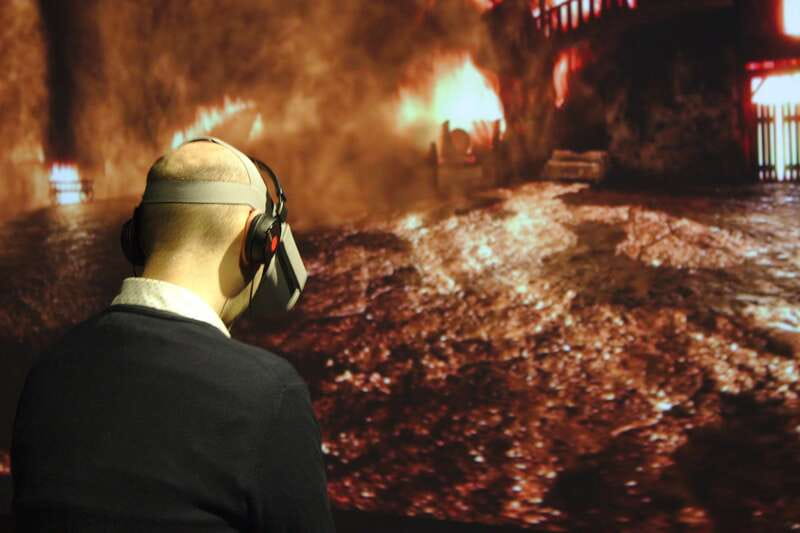
The strongest part for many visitors is the treatment of battles for the city. Reenactments help you picture historic events that are often difficult to grasp from a date on a plaque. Three-dimensional animation and historical images give the presentation a sense of movement, even though you remain seated.
This is especially useful in Quebec City, where military history is tied closely to its identity. The program helps you understand why control of the city mattered and how conflict shaped its reputation. You are not simply looking at old buildings. You are given a visual explanation of the forces that made those buildings and streets important.
The images also help with scale. A printed panel may tell you that an event affected the city, but an animated scene can show how people, buildings, and opposing forces fit together. That visual approach makes the program accessible to families, first-time visitors, and anyone who finds conventional historical lectures a little dry.
There is a limit. The digital material does not look perfect by modern standards. A few scenes may appear blurry, and some images may feel less attractive than current VR productions. The technology supports the story, but it is not the main reason to book. Come for the historical presentation first, then treat the headset as the delivery system.
How the audio affects the experience
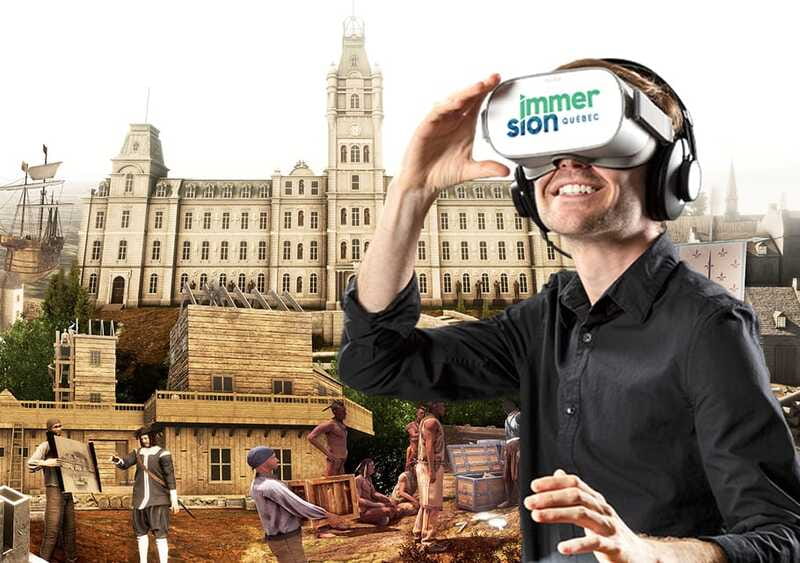
Audio is important here because you rely on narration while watching the scenes. English and French instruction are available, and audio guides are offered in Spanish, Chinese, English, and French. That gives you useful flexibility if your preferred language is not English or French.
The narration should make the program easy to follow, particularly because the visual scenes move through several centuries in a short time. You can listen for the main explanation while watching the images reconstruct moments that are no longer visible in the modern city.
Sound levels may not be perfect. One visitor found the music too loud and had trouble hearing the narration. That is a practical concern, not a minor complaint, because missing the spoken explanation can make the images harder to understand.
If you are sensitive to loud sound, pay attention at the beginning and speak up if the volume is uncomfortable or the narration is difficult to hear. The experience is short, so clear audio makes a real difference. A well-timed soundtrack can add drama to the battle scenes, but it should not compete with the history.
Same province, a completely different day out:
- Vancouver Half-Day Whale Watching Adventure with Free Photos
★ 5.0 · 5,000 reviews - Quebec City Walking Tour
★ 5.0 · 4,716 reviews - Niagara Falls: Premium Tour, Boat & Journey Behind the Falls
★ 4.8 · 4,207 reviews - Banff: Banff Gondola Admission Ticket
★ 4.7 · 3,698 reviews
Why the seated format matters
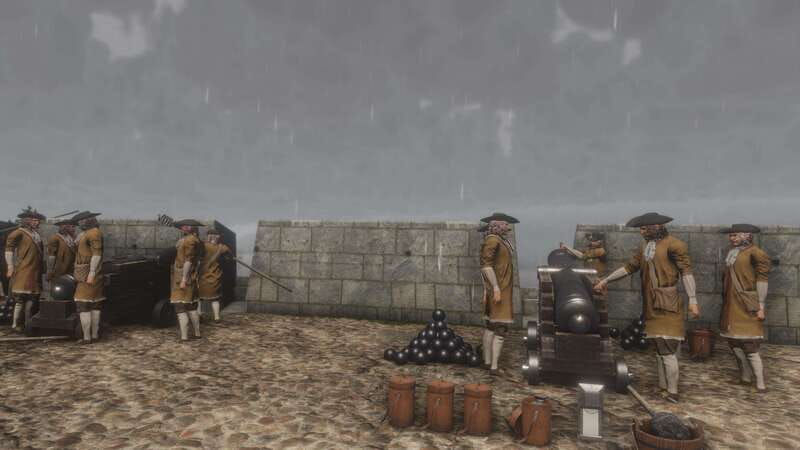
You remain seated throughout the 40-minute presentation. I see this as one of the activity’s biggest practical advantages. After a morning of walking Old Quebec’s steep streets and stone-paved lanes, a short break with something meaningful to watch can be welcome.
The format also suits visitors who do not want a physically demanding attraction. You are not moving through a maze or standing in a line for each scene. Once the presentation begins, the focus stays on the headset, narration, and images.
The seated setup may feel less active than a full walking tour. You do not physically visit the places being discussed, and the experience cannot replace seeing the city itself. Instead, it gives you a visual introduction that can make your later walks more rewarding.
I would place this activity early in a Quebec City visit if your schedule allows. Learning the broad story first can help you notice the importance of the old streets, fortifications, and historic buildings afterward. It also works late in the day when you want a cultural activity that does not require more walking.
What the 40-minute schedule gives you
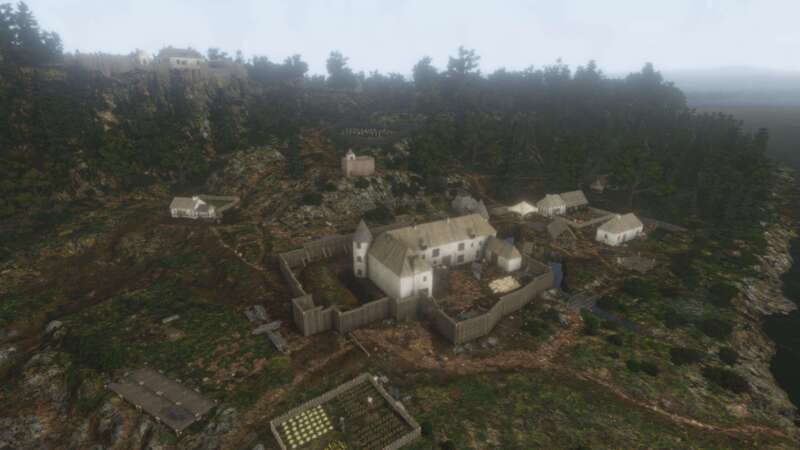
Forty minutes is a sensible length for this kind of presentation. It is long enough to cover a substantial span of history, but short enough to fit between sightseeing stops, a meal, or a museum visit.
The program does not appear to include a walking portion before or after the presentation. The time is devoted to the seated virtual reality experience. That makes the schedule predictable, which is useful if you are planning a busy day in Old Quebec.
Because the story moves through 10 moments, the pace is likely to feel brisk. You will not have much time to pause over each scene or ask questions during the presentation. The trade-off is that you get a broad overview without giving up half a day.
If you prefer slow, detailed interpretation, this may feel compressed. If you want a clear introduction with strong visual support, the pace should work well. I would not book it as your only history activity in Quebec City, but I would consider it a smart primer.
Is $19 a fair price?
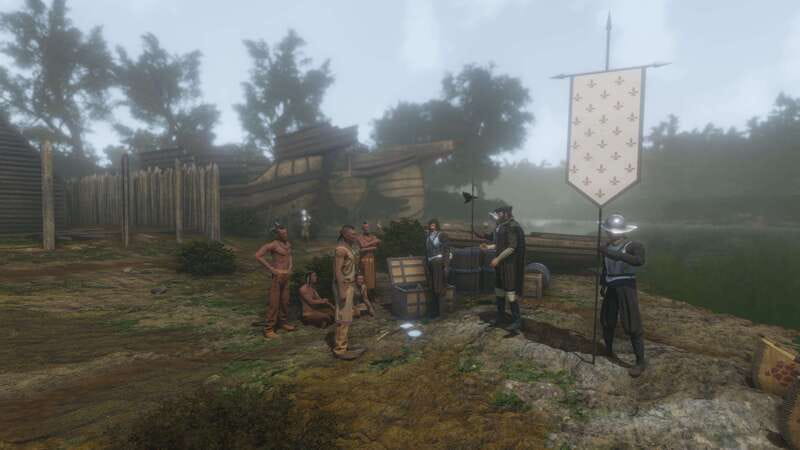
At $19, this is priced below many longer guided activities and large-ticket attractions. You receive a 40-minute presentation, a virtual reality headset, access to a small-group format, and a setting inside a historic building. The price is reasonable if you value the convenience and the chance to rest while learning.
The value depends partly on your interest in presentation style. Someone fascinated by VR may expect sharper graphics and more advanced effects, then feel disappointed by the older-looking images. Someone mainly interested in Quebec City’s story may find the historical content more important than technical polish.
I would also compare the price with your daily plan. If you already have a detailed walking tour or museum visit booked, this could repeat some broad historical material. If you have only a short time in the city, the 40-minute format offers a quick way to understand why Quebec City matters.
The experience has earned a 4.5 rating from 141 reviews, which supports the idea that it works well for many visitors. The pattern is not perfect praise, though. The most common strengths are the educational content, the engaging presentation, and the helpful battle reenactments. The main reservations involve dated technology and audio balance.
Who should book this experience?
I would recommend it to first-time visitors who want a quick orientation before exploring the old city. Families may also appreciate the blend of history and entertainment, particularly if children respond better to animated scenes than to long explanations in a museum.
It is a good choice for anyone who wants to remain seated, including people who need a break from walking. The activity’s short duration also suits couples and solo visitors fitting several sights into one day.
History fans should enjoy the selected moments and battle scenes, but they should not expect a detailed scholarly lecture. The program gives you the main story in a visual format. You may want to pair it with another history attraction if you want more depth.
This is less suitable if your main goal is state-of-the-art virtual reality. The images may look blurry in places, and the 3D animation is not always as polished as newer productions. Book it for the combination of setting, storytelling, and convenience rather than for technical spectacle alone.
Language choices and planning tips
The experience is presented with English and French instruction. Audio guides are available in Spanish, Chinese, English, and French, so check your preferred language when reserving.
You can cancel up to 24 hours in advance for a full refund, and the reserve-now, pay-later option lets you hold a place without paying immediately. Starting times vary, so check availability before building the rest of your day around it.
The activity is located in Quebec, Canada, in the historic Maison Chevalier vaults. Look for the left-hand door near the sidewalk. Since the experience is inside a historic building, allow a little time to identify the entrance rather than arriving at the last minute.
The provider is Tours Voir Quebec. No individual guide names are provided, so expect the programmed presentation and language support rather than a personal lecture led by a named historian.
Should you book Quebec City’s VR history experience?
Book it if you want a short, seated introduction to Quebec City’s past at a modest price. The historic vaults, 10 key moments, and battle reenactments give the activity a clear purpose, and the 40-minute schedule fits neatly into a sightseeing day.
Skip it if you want a cutting-edge VR production or a long question-and-answer session with a historian. The visuals may feel dated, and loud music could make the narration harder to hear.
For most visitors, I would treat it as a useful first stop or a pleasant break between walks. It will not replace seeing Quebec City in person, but it can help you understand what you are looking at when you step back onto its old streets.
FAQ
Where does the Quebec City virtual reality experience take place?
It takes place in the vaults of the historic Maison Chevalier in Quebec City. The building dates back to 1752. The entrance to Immersion Quebec is the door on the left near the sidewalk.
How long does the experience last?
The experience lasts 40 minutes.
How much does it cost?
The listed price is $19 per person.
Do I have to walk during the presentation?
No. You remain seated throughout the experience.
How much of Quebec City’s history does it cover?
The presentation covers more than 400 years of Quebec City history through 10 key moments.
What languages are available?
Instruction is available in English and French. Audio guides are available in Spanish, Chinese, English, and French.
Can I cancel my booking?
Yes. You can cancel up to 24 hours in advance for a full refund. A reserve-now, pay-later option is also available.
Just added around Canada
- 2 Hour Banff Horseback Riding Adventure★ 4.0 · 145 reviews
- 1 Hour Spray River Ride★ 4.5 · 204 reviews
- Lake Minnewanka, Peyto Lake, Bow Lake , Icefields★ 4.5 · 63 reviews
- Along Icefields Parkway: Peyto Lake, Bow Lake & Columbia Icefield★ 4.0 · 19 reviews
- Moraine Lake Lake Louise Johnston Canyon Emerald Lake Day tour★ 5.0 · 4 reviews
- 3 Day Algonquin Park Canoe Trip – Moose & Beaver Safari★ 5.0 · 27 reviews
- 3 Hour Algonquin Park Bass & Trout Fishing (private- price is for 1 or 2 people)★ 5.0 · 5 reviews
- Discover the Lake Agnes Tea House Trail with an Audio Nature Tour★ 4.0 · 7 reviews
Historical Tours, compared.



Evening Gourmet Tour 5 Course Dinner – History and Food in Old Quebec City
Read our review →

Browse the lists this tour appears in