
Reviewed · WALKING & GHOST TOURS
Talking Trees: Stanley Park Indigenous Walking Tour Led by a First Nations Guide
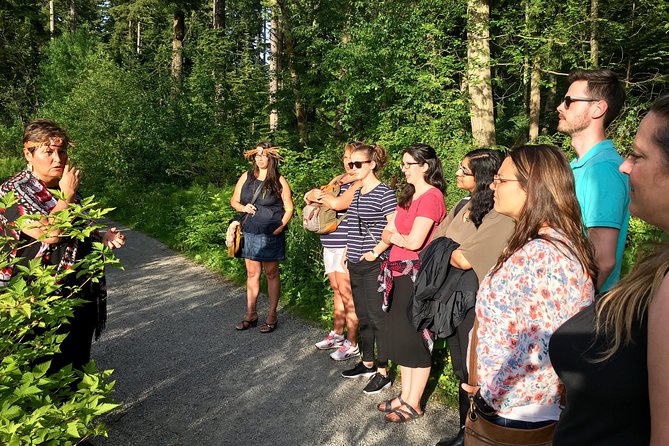
Stanley Park looks different when you learn how its trees, berries, and shoreline plants have supported Coast Salish communities for generations. On this gentle walk, a First Nations cultural ambassador connects the forest to food, medicine, shelter, art, and family stories. The focus is not sightseeing at speed. It is listening to the land.
I like the personal storytelling, especially when guides such as Gavin, Shay, Alfonso, and Wes connect the subject to their own family background. I also like the easy, flat route around Beaver Lake, which lets you pay attention without worrying about a hard hike. The warm cup of Talaysay Hush Tea is a small but welcome touch.
The main drawback is practical rather than cultural: finding the exact meeting point can be confusing, and parking inside Stanley Park costs extra. The experience also depends on your guide, since each ambassador brings different stories, interests, and ways of presenting the material.
In This Review
- Key points at a glance
- Why this walk changes the way you see Stanley Park
- Meeting at the Stanley Park Bus Loop
- Following the forest trail to Beaver Lake
- What the trees can teach you
- The value of a First Nations guide
- Beaver Lake as the quiet center of the tour
- Talaysay Hush Tea and the human pauses
- Price, group size, and what you receive
- Getting there and planning your time
- Who will get the most from Talking Trees
- Should you book this Stanley Park walk?
- FAQ
- Where does the Talking Trees tour begin?
- Where does the tour end?
- How long does the experience last?
- How far do you walk?
- Is the walk strenuous?
- Who leads the tour?
- What will I learn on the walk?
- Is tea included?
- Is parking included?
- Can I cancel for a full refund?
Key points at a glance
- A First Nations perspective: Learn directly from a trained cultural ambassador who shares personal background alongside broader Coast Salish history.
- A gentle Beaver Lake walk: The route covers a little more than 1 mile, or about 2 kilometers, at an easy pace.
- Plants with a purpose: See how local trees, berries, and other plants were used for food, medicine, shelter, diapers, tools, and art.
- A quieter side of Stanley Park: Forest trails around Beaver Lake offer a calm break from the park’s busier roads and attractions.
- Talaysay Hush Tea included: A single cup of Indigenous tea is served during the walk.
- Flexible scheduling: Several departure times make it easier to fit the tour into a day in Vancouver.
Why this walk changes the way you see Stanley Park
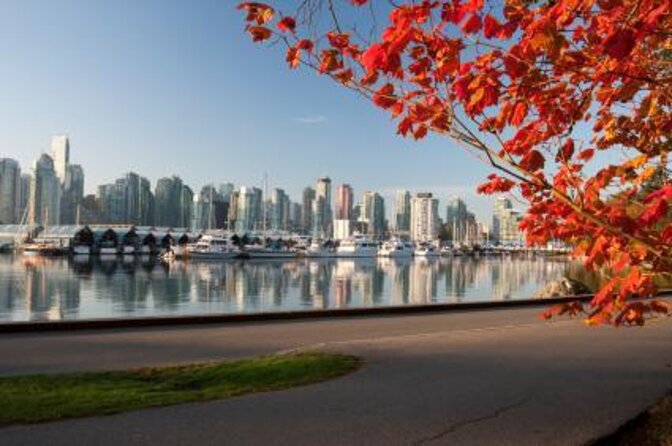
Many people come to Stanley Park for seawall views, towering trees, gardens, the Aquarium, and the Miniature Train. Those are good reasons to visit, but they can leave you seeing the park mainly as a beautiful city recreation area.
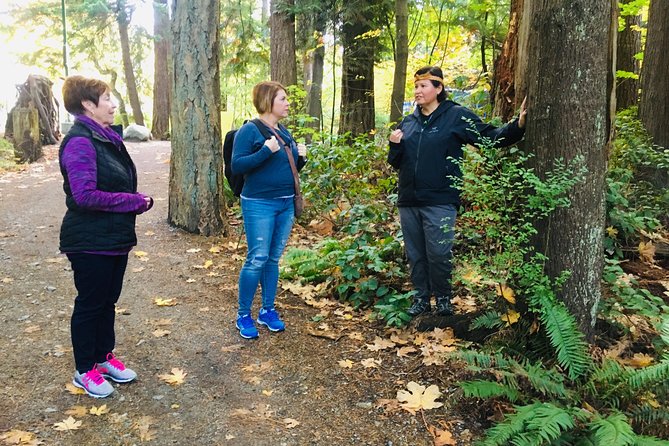
This tour adds a different frame. Your guide explains the forest as a place shaped by long-standing Indigenous knowledge and careful use. A cedar tree is not just a cedar tree. It may relate to clothing, shelter, tools, medicine, or everyday objects. A berry is not simply something colorful beside the trail. It can be part of seasonal food traditions and a lesson in how to use the forest without exhausting it.
That shift is the real value here. You are not only collecting facts about plants. You are learning to notice relationships between people, trees, water, animals, and time. I find that this makes the rest of Stanley Park more interesting after the tour ends.
The guides also bring different personal styles. Alfonso has been praised for sharing his ancestry and using an ancestral drum. Wes has welcomed visitors with song and drumming. Shay is known for warm, personal explanations and bringing tea. Other guides, including Gavin, Tyrone, Patrick, Candace, and Denise, have led visitors through the same basic route with their own emphasis.
Because of that, no two walks will feel exactly alike. The central themes remain consistent, but the personal stories and examples can change.
More Walking & Ghost Tours in Vancouver
- Vancouver Lost Souls of Gastown Walking Tour
★ 5.0 · 1,273 reviews - A Wok Around Chinatown: Culinary and Cultural Walking Tour Led by a Chef
★ 5.0 · 610 reviews - The Forbidden Downtown and Gastown Walking Tour
★ 5.0 · 476 reviews
Meeting at the Stanley Park Bus Loop
The tour begins at the Stanley Park Bus Loop, beside the Mini Train and Aquarium parking area. Look for the round, open-air wooden gazebo inside the bus loop. This is where you check in and meet your Cultural Land Ambassador.
The location is convenient once you know where it is. If you are driving, enter Stanley Park from Georgia Street, follow the Causeway, and take the Pipeline Road exit at the roundabout. Continue uphill past the Rose Garden, then turn right into the parking area serving the Mini Train, Aquarium, and bus loop.
Give yourself time to get oriented. One past visitor had difficulty locating the guide because the directions were not clear enough, and the problem was resolved only after several phone calls. I would not cut this one close, particularly if you are driving, unfamiliar with Stanley Park, or arriving during a busy part of the day.
The bus loop also gives you a useful landmark for the end of the walk. The experience returns to this same point, so you do not need to arrange a second pickup location.
The initial gathering takes about 10 minutes. Your guide introduces the group, offers a welcome, and explains what is ahead before walking toward Beaver Lake. If your guide brings a drum or opens with a song, treat it as part of the cultural welcome rather than a staged show. The emphasis is on connection and conversation.
Following the forest trail to Beaver Lake
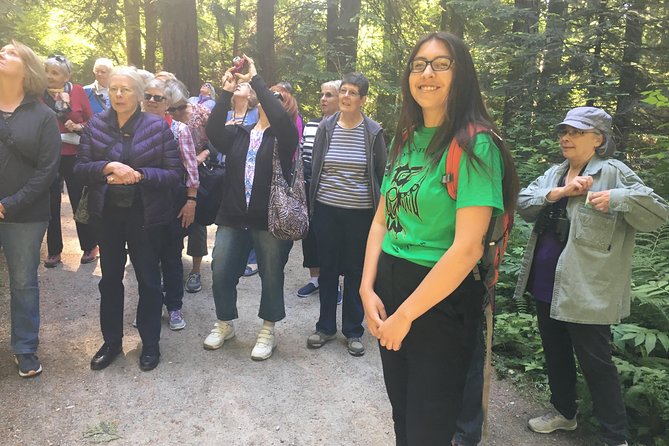
From the bus loop, you follow shaded trails toward Beaver Lake. The pace is relaxed, with regular stops for stories, questions, and plant identification. This is an interpretive walk, not a workout, and the flat route makes it suitable for most fitness levels.
A review from an 80-year-old visitor who uses a cane found the walk comfortable. That does not mean every person with mobility concerns will find every forest trail effortless, but it does give a useful sense of the pace and physical demand. Most participants can take part, and service animals are allowed.
The route covers a little more than 1 mile, or about 2 kilometers, and loops around Beaver Lake before returning to the bus loop. The full walking portion lasts about 90 minutes, including pauses. The supplied timing breaks down into roughly 10 minutes at the meeting point, 75 minutes on the Beaver Lake Trail, and 5 minutes for the return.
Do not expect a brisk march from one attraction to another. The pauses are the point. You may stop beside a tree, berry bush, or other plant while your guide explains its traditional use. You will have time to ask how materials were gathered, what they were used for, and how knowledge was passed through families.
What the trees can teach you
The strongest part of the experience is the way plants become practical rather than decorative. Your guide may explain how local vegetation supported food gathering, medicine, shelter, technology, and art. One especially memorable example from the walk concerns cedar and its use in making diapers from tree materials.
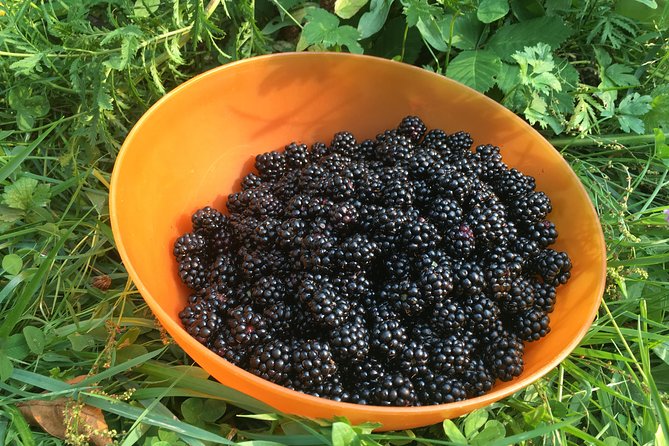
You may also learn about medicinal properties and edible berries. One guide allowed visitors to pick and eat berries, but you should not assume every plant or berry will be available or suitable on every departure. Follow your guide’s instructions and do not sample anything on your own.
This approach gives the tour a useful balance. You receive information about plants, but you also hear about the responsibilities connected to using them. The forest is presented as a source of materials and nourishment, not as a warehouse for taking whatever you want.
The cultural side is just as important. Guides discuss Coast Salish First Nations, including the Musqueam, Squamish, and Tsleil-Waututh, as well as the first settlers of the area. The tour cannot cover every part of First Nations history in 90 minutes. It offers a focused introduction through place, plants, and lived experience.
I would recommend arriving with respectful curiosity rather than expecting a formal lecture. Ask questions. The best moments often come when the guide explains how a broad cultural idea connects to one particular tree or personal memory.
Same province, a completely different day out:
- Vancouver Half-Day Whale Watching Adventure with Free Photos
★ 5.0 · 5,000 reviews - Big Bus Vancouver Hop-On Hop-Off Sightseeing Tour
★ 3.5 · 3,028 reviews - Victoria & Butchart Gardens Tour with Ferry from Vancouver
★ 4.5 · 2,703 reviews - Vancouver: Covered Whale Watching Adventure with Free Photos
★ 4.8 · 2,260 reviews
The value of a First Nations guide
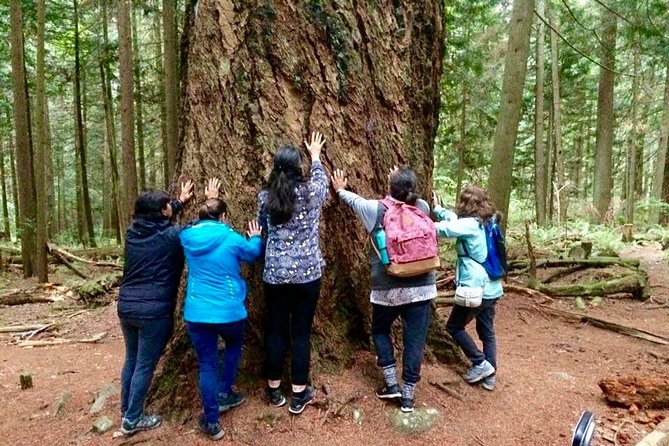
A museum panel can tell you that a plant was used for medicine. A First Nations guide can explain how that knowledge relates to family, daily life, and respect for the natural world. That human element gives the walk its weight.
The guides are cultural ambassadors, and several have shared personal family histories or ancestry as part of the experience. Alfonso, for example, has connected his own ancestry to the forest and used a drum during the welcome. Another guide, a young university student from a First Nations community in British Columbia, spoke about growing up with her people’s traditions and the ways they used and respected forest resources.
You should understand the limits of the format. This is not a complete account of every nation, community, or historical event connected to the region. It is a personal and place-based introduction. That is a strength if you want a human conversation, but a limitation if you need a detailed academic survey.
The guides’ range of backgrounds also means the tone can vary. Some walks may feel intimate and reflective. Others may include more humor, singing, drumming, or time for questions. I see that variety as a benefit, though you should not book expecting one particular guide unless the departure specifically confirms that person.
Beaver Lake as the quiet center of the tour
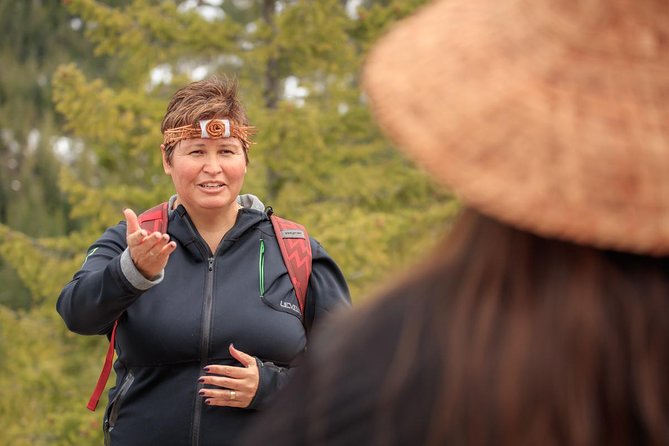
Beaver Lake provides a calm setting for the main part of the walk. Its forest trails give you a break from the traffic, bike routes, and large attractions elsewhere in Stanley Park. The lake itself is not presented as a grand viewpoint. Its value is the quiet setting and the chance to observe smaller details.
That makes this a good choice for a slow afternoon in Vancouver. You might arrive after visiting the Aquarium or exploring the seawall and suddenly find yourself listening for birds, looking at bark, or noticing how much plant life surrounds the path.
The route is familiar enough to follow but still offers a new purpose. One visitor had already walked the trail earlier that day, yet found the guide’s cultural explanations gave it a different meaning. That is an honest description of what to expect. The walk will not take you to a secret corner of the park, but it can change what you see on a trail you might otherwise pass without a thought.
The forest setting also affects comfort. Wear shoes suitable for an easy outdoor walk, and bring clothing for Vancouver’s changing weather. A cool or rainy day does not cancel the cultural value of the experience, but it can make the route less comfortable. The included tea is especially welcome in colder weather.
Talaysay Hush Tea and the human pauses
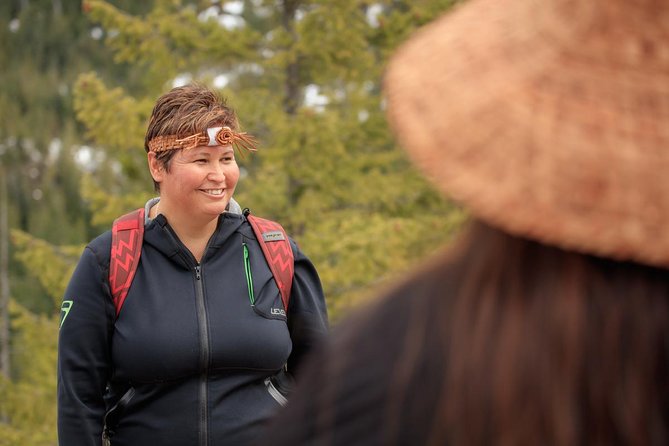
A single cup of Talaysay Hush Tea, an Indigenous tea blend, is included. Guides have served it midway through the walk, sometimes as a pleasant pause in cool or wet conditions.
The tea is not the reason to book the tour, but it helps the experience feel less like a string of facts. You stop, warm your hands, and continue the conversation. That pause can be a good time to ask about a plant, a family tradition, or something your guide mentioned earlier.
Coffee or tea is listed as included, but the specific Indigenous blend is the notable part. If you have dietary or ingredient concerns, ask the operator directly before booking, since the available information does not list the blend’s ingredients.
Price, group size, and what you receive
The cost is $60.08 per person. That is more than you would pay to walk Beaver Lake independently, of course, because the trail itself is free. You are paying for the guide’s time, cultural knowledge, personal interpretation, and the chance to ask questions in a small-group setting when numbers are low.
The maximum group size is listed as 200, which sounds large for a forest conversation. In practice, the walks described in the supplied material have sometimes been very small, even just one guide and one participant. Another group found that a small number of people made the experience feel personal and left plenty of room for questions.
You should not assume every departure will be tiny. Group size can change, and the published maximum is high. Still, the format is designed around storytelling and pauses, not a distant guide speaking to a crowd.
The price makes the most sense for you if you want cultural context rather than a general nature walk. If your goal is simply exercise or a fast tour of Stanley Park’s famous sights, you can explore the paths on your own for less. If you want a First Nations perspective and a guide who can explain the meaning behind what you are seeing, the fee is easier to justify.
Getting there and planning your time
Public transportation to the meeting point is not included, and Stanley Park has paid parking throughout the park. The bus loop is near public transportation, but you are responsible for reaching it.
I would plan the tour as one part of a Stanley Park day rather than trying to squeeze it between tightly timed reservations. The loop ends where it begins, so you can continue to your vehicle, catch a bus or taxi, or explore more of the park afterward.
Several departure times are available. That helps if you are arranging the walk around the Aquarium, gardens, seawall, or other Vancouver plans. The tour is short enough to fit into a half-day itinerary, but allow extra time for parking and finding the gazebo.
The activity is offered in English. Confirmation arrives at booking, and free cancellation is available if you cancel at least 24 hours before the start time. Changes or cancellations inside that window are not refunded.
Who will get the most from Talking Trees
I would choose this tour for:
- Families with older children who can listen and walk for about 90 minutes
- Solo visitors who want a thoughtful activity and an easy way to meet a local guide
- Couples looking for something quieter than the main Stanley Park attractions
- Garden, ecology, and horticulture enthusiasts
- Anyone who wants to learn about First Nations culture from a personal, place-based viewpoint
- Visitors who have already seen Stanley Park and want to experience it differently
The tour is also suitable for many older adults. The route is flat and easy, and the pace includes stops. If you use a cane or have a specific mobility concern, contact the operator before booking because forest paths can still vary in surface and condition.
I would choose something else if you want dramatic viewpoints, wildlife guarantees, a detailed survey of Vancouver’s entire Indigenous history, or a strenuous hike. This is a gentle interpretive walk centered on plants, stories, and conversation.
Should you book this Stanley Park walk?
Yes, if you want to understand more than the scenery. The strongest reasons to book are the First Nations guides, the personal stories, the practical plant knowledge, and the calm Beaver Lake setting. The tour has earned a 5 rating from 86 reviews, with 100 percent recommending it, and the praise consistently centers on the guides’ warmth, clarity, and ability to connect culture with the forest.
Book it early if your schedule is fixed, since it is commonly reserved about 29 days ahead. Choose a departure that leaves you time to find the bus loop, and remember to budget for parking or public transportation.
I would especially recommend it to someone visiting Vancouver for the first time who wants a more meaningful connection to Stanley Park. I would also recommend it to locals who think they already know the park. You may recognize the trail, but after 90 minutes with a guide such as Gavin, Shay, Alfonso, Wes, or another Talaysay ambassador, you will likely notice the trees in a more thoughtful way.
FAQ
Where does the Talking Trees tour begin?
It begins at the Stanley Park Bus Loop in Vancouver, beside the Mini Train and Aquarium parking area. The meeting point is inside the bus loop at the round, open-air wooden gazebo.
Where does the tour end?
The tour ends back at the Stanley Park Bus Loop, the same place where it begins.
How long does the experience last?
The experience lasts approximately 1 hour and 30 minutes.
How far do you walk?
The route covers a little more than 1 mile, or about 2 kilometers, around Beaver Lake.
Is the walk strenuous?
No. The walk is described as easy and generally flat, with a relaxed pace and regular stops.
Who leads the tour?
A trained First Nations Cultural Land Ambassador leads the walk. Guides have included Gavin, Shay, Alfonso, Wes, Tyrone, Patrick, Candace, and Denise, though the guide can vary by departure.
What will I learn on the walk?
You will learn about Coast Salish First Nations, the first settlers of the area, Indigenous connections to the forest, and traditional uses of local plants for food, medicine, shelter, art, and technology.
Is tea included?
Yes. The experience includes a single cup of coffee or tea, specifically identified as Talaysay Hush Tea, an Indigenous tea blend.
Is parking included?
No. Stanley Park has paid parking, and parking fees are not included in the tour price.
Can I cancel for a full refund?
Yes, if you cancel at least 24 hours before the experience begins. Cancellations or changes made less than 24 hours before the start time are not refunded.
More Walking Tours in Vancouver
- Gastown Historic Walking Food Tour
★ 5.0 · 1,863 reviews - Vancouver: Gastown Historical Walking Food Tour
★ 4.8 · 539 reviews - Gratuity-Based Vancouver City Highlights 3 Hour Walking Tour
★ 4.5 · 320 reviews - Ancient Trees of Vancouver Walking Tour
★ 5.0 · 225 reviews
Just added around Vancouver
- Private Transfer From Vancouver Airport to Vancouver Downtown★ 5.0 · 7 reviews
- YVR Layover – Vancouver City Sightseeing Private Tour★ 5.0 · 7 reviews
- Wild Whale Watching Experience – Open Air Vessel★ 5.0 · 158 reviews
- Whistler and Sea to Sky Gondola, a Fire and Ice Discovery Tour★ 5.0 · 153 reviews
- Whistler 1-Day Tour from Vancouver (Chn&Eng)★ 4.0 · 6 reviews
- Whale Watching Adventure from Vancouver BC★ 5.0 · 59 reviews
- Western Trails – One Way Vancouver To Calgary Rockies Bus Tour★ 5.0 · 31 reviews
- Rockies Western Canada Iconic Sites Tour★ 5.0 · 54 reviews
Walking & Ghost Tours, compared.
Old Quebec City: Grand Walking Tour with Private Option
Read our review →
The Original Old Montréal Walking Tour by Guidatour
Read our review →
Old Montreal Small-Group Walking Tour | Max 10 | by MTL Detours
Read our review →
Old Quebec Classique Walking Tour with Funicular
Read our review →
Old Quebec City Food Tour with 10+ Autentic Local Tastings
Read our review →

Browse the lists this tour appears in