
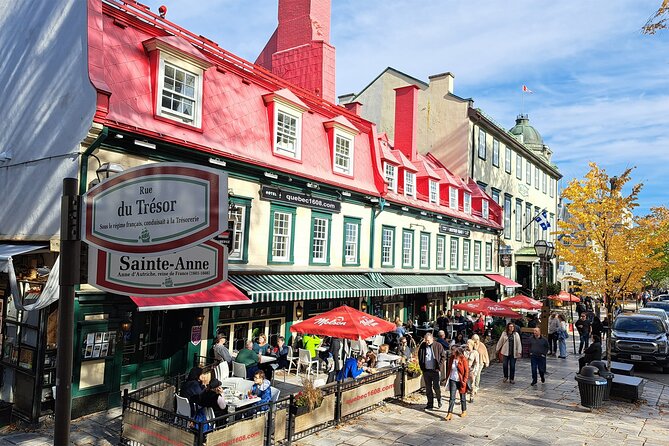
Reviewed · WALKING & GHOST TOURS
Old Québec & French America Private History Walking Tour
Old Québec’s story comes alive through a long, steady walk linking French America and British Canada. Over about three hours, you move from Place Royale and the city’s founding era to Parliament, with grand viewpoints, old defenses, churches, gardens, and monuments along the way. Guide Michel adds maps and genealogy charts to give the story a clear shape.
I like the private format, since your group of up to 10 gets the guide’s full attention. I also like the route’s mix of views and history: you are not just looking at handsome stone buildings, you are tracing the struggles between French and British powers, along with Québec’s wider links to Acadia, Louisiana, New England, and western Canada.
The main consideration is pace. Thirteen named stops fit into three hours, and many receive only about five minutes. You will get a well-planned overview rather than long visits inside each site, and the walking requires a moderate level of fitness.
In This Review
- Key points to know before you book
- A three-hour walk through French America
- La Fresque des Québécois sets the scene
- Place Royale and the beginnings of the city
- Montmorency Park and the city’s colonial crossroads
- Dufferin Terrace brings the big views
- Fortifications and Samuel de Champlain
- Pierre-Dugua-De-Mons Terrace and the Governors’ Garden
- The Ursulines and Québec’s religious story
- Québec City Hall and the Seminary
- Notre-Dame Basilica Cathedral and the final approach
- What Michel adds to the walk
- Is $213.26 a fair price?
- Who should book this experience?
- Practical timing and cancellation advice
- Should you book the Old Québec private history walk?
- FAQ
- How long is the Old Québec and French America tour?
- Where does the tour start?
- What time does the tour begin?
- How many people can join the private tour?
- Is the tour offered in English?
- What is included in the price?
- What level of fitness is needed?
- Are service animals allowed?
- Can I cancel for a full refund?
Key points to know before you book
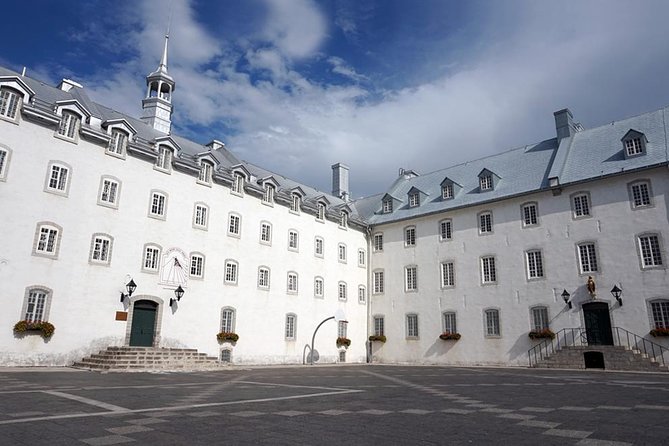
- Michel brings maps and genealogy charts: These visual aids help turn names, dates, and colonial connections into a story you can follow.
- The route covers 13 named stops: You see Place Royale, Dufferin Terrace, the fortifications, Notre-Dame Basilica Cathedral, Parliament, and more.
- It is a private tour for up to 10 people: Your guide can focus on your group instead of managing a large crowd.
- The best views come along the upper terraces: Dufferin Terrace, Pierre-Dugua-De-Mons Terrace, and the Governors’ Garden add strong photo stops.
- The tour connects Québec to wider North American history: Expect links to Acadia, Louisiana, Boston, Nova Scotia, New England, and the French and Indian alliances.
- The price is $213.26 per group: For a full group of 10, that works out to about $21.33 per person, before any separate costs.
A three-hour walk through French America

This experience works best if you want the city explained as a connected story. The route does not simply point out attractive corners of Old Québec. It moves through the places where French settlement, colonial rivalry, religious life, military defense, and modern Québec politics meet.
You begin at 1:30 pm, unless another available departure time is arranged. If you stay in Old Québec, the guide meets you in your hotel lobby five minutes before the start. If you are staying elsewhere, the operator contacts you with an easy meeting point.
The route is mostly a walking survey of the historic center. Since the stops are close enough to fit into one afternoon, you can expect regular movement between short explanations and photo pauses. I would wear comfortable shoes and bring water, especially if the weather is warm or the pavement is uneven.
More Walking & Ghost Tours in Quebec City
- Quebec City Walking Tour
★ 5.0 · 4,716 reviews - Old Quebec City: Grand Walking Tour with Private Option
★ 4.8 · 2,609 reviews - Old Quebec Classique Walking Tour with Funicular
★ 5.0 · 1,317 reviews
La Fresque des Québécois sets the scene
The first named stop is La Fresque des Québécois, a large mural that introduces people and episodes tied to Québec’s past. You have about five minutes here, so this is more of a visual opening than a long art stop.
That short pause makes sense. A mural can quickly put faces and major themes in front of you before the guide moves into the older streets. Michel’s background materials are especially useful here, since maps and genealogy charts can help connect individuals and families to the places you are about to see.
The mural also points beyond Québec. The tour draws links to Biloxi and Mobile, showing how French colonial activity reached far beyond the St. Lawrence Valley. You should not expect an extended discussion of every American connection, but these links help place Québec within a much larger French North American story.
Place Royale and the beginnings of the city
At Place Royale, the focus shifts to the roots of the settlement and Québec’s connection to French Louisiana and Salem. This is one of the most important stops for understanding the city’s early identity.
The five-minute timing means you will hear the key points while standing in the square rather than taking a full architectural tour. Still, the location gives the history a useful anchor. Here, the idea of French America feels less abstract because you are standing in one of the places used to explain how French colonial communities developed and interacted.
I like this part of the walk because it gives you a strong starting point for the rest of the afternoon. As you continue, the city’s military, religious, and political layers make more sense because you have already placed them within the first French settlement.
Montmorency Park and the city’s colonial crossroads
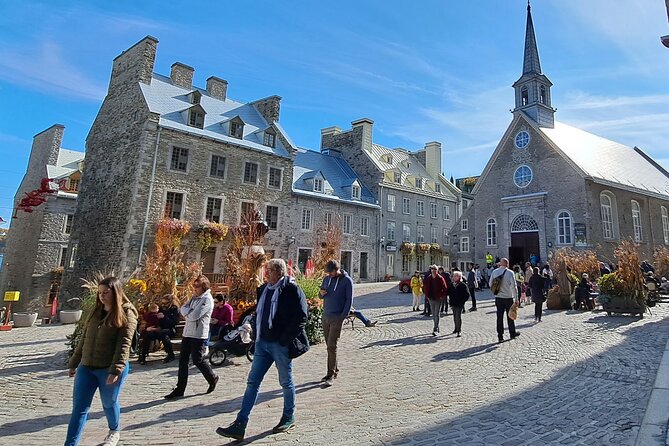
The Canada National Historic Site at Parc-Montmorency comes next. The stop links Québec with Natchitoches in Louisiana, Port Royal in Nova Scotia, and Charlottetown on Prince Edward Island.
These connections are valuable for anyone who thinks of Québec as an isolated European outpost. The route instead presents a network of French settlements and later British-controlled centers spread around northeastern North America.
Again, the planned time is about five minutes. That is enough for an explanation and a look around, but not enough for a slow inspection of every feature. If you want to explore the park in detail, you may wish to return later on your own.
Same province, a completely different day out:
- Quebec City: Guided Tour of Fairmont Le Château Frontenac
★ 4.7 · 3,027 reviews - Québec City: Guided Sightseeing River Cruise
★ 4.4 · 3,000 reviews - Half-Day Trip to Montmorency Falls and Ste-Anne-de-Beaupré from Quebec city
★ 4.0 · 2,718 reviews - Quebec City: Montmorency Falls with Cable Car Ride
★ 4.6 · 2,392 reviews
Dufferin Terrace brings the big views
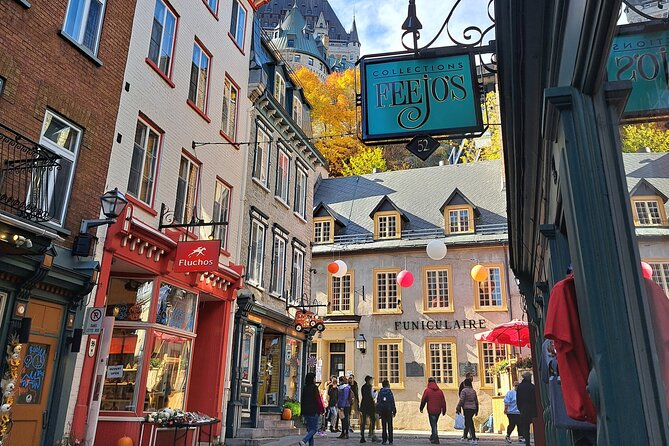
Terrasse Dufferin is one of the walk’s best stops for photographs. The tour highlights Québec’s relationship with British Columbia, Saskatchewan, and Nova Scotia, while the terrace provides the kind of broad view that helps you understand why this city mattered as a strategic and political center.
You will want to pause here for the scenery, but keep in mind that the formal stop is still about five minutes. The guide’s job is to explain the historical links, not to turn this into a long scenic break.
This is a good point to ask questions. Because the tour is private, your group can spend a little more time on a topic that catches your interest, within the limits of the three-hour schedule. That flexibility is harder to get on a large group walk.
Fortifications and Samuel de Champlain
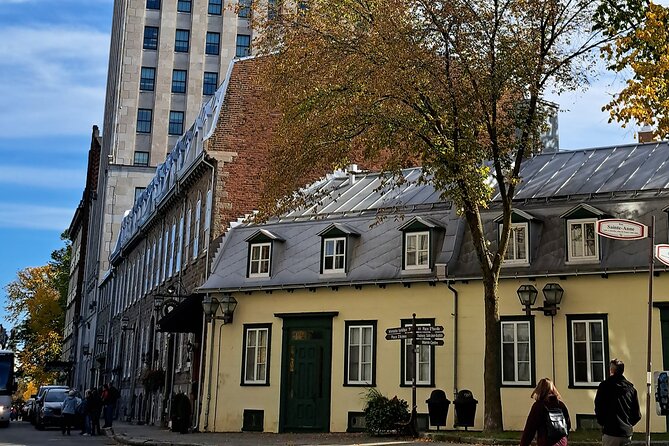
The Fortifications of Québec National Historic Site brings the military story into view. The route connects the city’s defenses with Pittsburgh and Fort Necessity in Pennsylvania, which helps show how struggles in North America were linked across distant colonial borders.
You then reach the Monument Samuel De Champlain, where the discussion turns toward Cape Cod and New Brunswick. Champlain’s name is central to any account of French activity in the region, and this stop gives the guide a natural place to explain how exploration, settlement, and regional connections fit together.
Both stops are scheduled for about five minutes. You get the broad meaning of the sites, not a detailed military lecture or an extended monument visit. That tradeoff keeps the walk moving and lets you cover more of Old Québec.
Pierre-Dugua-De-Mons Terrace and the Governors’ Garden
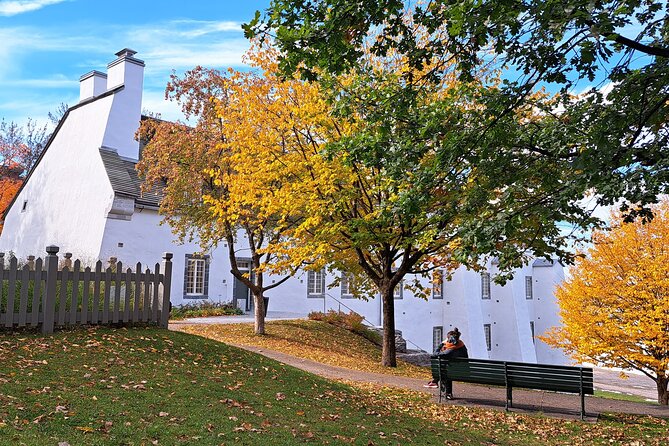
Terrasse Pierre-Dugua-De-Mons adds another strong viewpoint. The guide connects it with Louisiana and Acadia, reinforcing the theme that French colonial history extended across a wide part of North America.
The setting matters here. A viewpoint can make the geography easier to grasp than a spoken explanation alone. You can look out over the city and surrounding area while hearing about the people and settlements tied to French America.
The Governors’ Garden follows, with links to Alaska and Napoleon III. That combination suggests the tour will range across different eras and political relationships rather than stopping only in the seventeenth century.
You have about five minutes at each site. These are useful pauses for photos and orientation, but they are not garden visits in the usual leisurely sense. If taking pictures is a priority, you may need to be ready to move when the group moves.
The Ursulines and Québec’s religious story
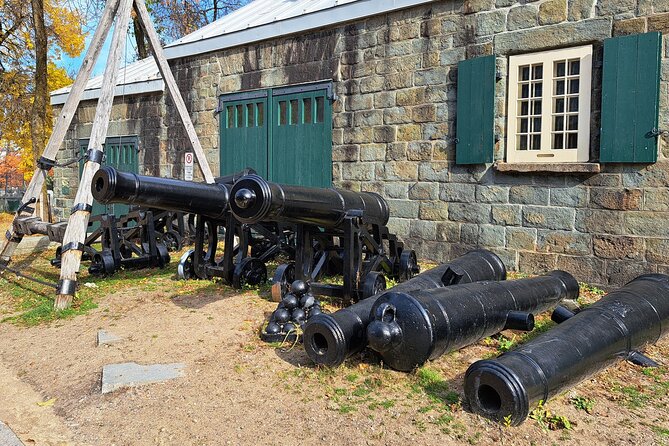
The Pole Culturel du Monastere des Ursulines introduces another side of the city. The guide connects the site with Charlestown in Massachusetts, San Antonio, New Orleans, and Lafayette, Louisiana.
This is where the tour’s use of family and genealogy material can be especially helpful. Religious communities, migration, and colonial settlement often involve names that blur together after a while. A chart can give those relationships a visual order.
The stop is free and lasts about five minutes. You should not expect an extended interior visit as part of this walking route. Instead, the guide uses the location as a point for explaining how Québec’s religious institutions fit into a larger North American network.
The route also references Napoleon I, Lowell, Massachusetts, and Woonsocket, Rhode Island. Those links broaden the discussion beyond the city’s earliest period and show how French identity and migration continued to matter across generations.
Québec City Hall and the Seminary
Hotel de Ville de Québec brings the tour into a more modern civic setting. The guide connects the city hall with French Canada, Austin, Texas, and the Potato Famine. That unusual mix is a reminder that the walk follows people, political ideas, migration, and cultural ties, not just buildings.
The stop lasts about five minutes. You will hear an explanation of why the site matters, then continue through the old city rather than spending time inside.
At the Seminary of Québec, the connections turn to Lewis and Clark and Cahokia, Illinois. This is another useful reminder that Québec’s story belongs to the wider history of North American exploration and settlement.
I appreciate this kind of context because it prevents the tour from becoming a string of isolated dates. You can see how a church institution, a civic building, and distant American places all enter the same historical conversation.
Notre-Dame Basilica Cathedral and the final approach
Notre-Dame de Québec Basilica Cathedral is one of the route’s key religious landmarks. The guide connects it with Detroit and the French and Indian alliances, bringing military and diplomatic history back into the story.
The cathedral stop is listed at about five minutes, so plan for a concise exterior or orientation stop rather than a long period of quiet sightseeing. If you want more time inside, ask the guide about returning after the tour, since the supplied schedule does not promise an extended interior visit.
The route then makes connections with Mexico City and the San Juan Islands in Washington State. These references add another layer to the story of French influence, North American trade, exploration, and political change.
The final named stop is the Parliament of Québec, where you have about 10 minutes. The longer pause gives the tour a fitting endpoint. Here, the story moves toward Québec’s present political identity, with links to Texas, South Dakota, Illinois, New Orleans, and Cuba.
Ending at Parliament also helps you see that Old Québec is not only a preserved historic district. It remains tied to the province’s government and public life. You finish with a better sense of how the old city functions as both a historic place and a living center of Québec.
What Michel adds to the walk
Michel is the guide named in the available information, and his approach appears to lean heavily on preparation and visual explanation. He uses maps and genealogy charts, timed to match the route, which is useful when the subject stretches across many places and centuries.
I would choose this experience for the guide’s storytelling method as much as for the sites. A standard walk can leave you with a pile of names. Maps can show where those names belong, while genealogy charts can explain how people and communities connect.
The strongest praise centers on Michel’s enthusiasm for Québec and his ability to make the city feel personal. That matters on a history tour. You want facts, but you also want a guide who can show why the city still matters.
Since this is a private activity, you can ask for more detail on French settlement, British rule, genealogy, military history, or the North American connections that interest you most. The schedule remains fixed enough that the guide cannot spend an hour on one stop, but the format should allow a more focused conversation than a large public tour.
Is $213.26 a fair price?
The listed price is $213.26 per group of up to 10 people. For a full group, that is roughly $21.33 per person for three hours of private guiding. That is a strong value if you are traveling with family or friends and would otherwise pay separate per-person fees for a group walk.
For two people, the cost is about $106.63 each, so the value is less obvious. You are paying for privacy, flexible conversation, and a guide dedicated to your group, not for admission to attractions. Every stop is listed as free, and guiding services are included.
The price makes the most sense for people who care about historical context and want help organizing the city’s many layers. If you mainly want a casual stroll with plenty of free time for cafés and shopping, a shorter public walk may suit you better.
The fact that the experience is often reserved well ahead of the date suggests you should plan early if the timing matters to you. Confirmation arrives within 48 hours, subject to availability.
Who should book this experience?
I would recommend it to:
- Families or friends who can share the group price
- First-time visitors who want Old Québec explained in one focused walk
- People interested in French colonial history and British-French rivalry
- Anyone who enjoys maps, family connections, and place-based storytelling
- Visitors who want several major viewpoints without arranging the route themselves
You should think twice if you want long museum visits, extended church interiors, or a relaxed photography walk. The schedule covers a lot of ground, and most stops last only five minutes.
The route also suits people with moderate physical fitness. Pickup is offered for hotels in Old Québec, and the tour is near public transportation. Service animals are allowed. The information provided does not promise full wheelchair access or describe the exact walking surface, so ask the provider before booking if you have mobility concerns.
Practical timing and cancellation advice
The scheduled start is 1:30 pm, with other departure times available during the day. If your hotel is in Old Québec, meet the guide in the lobby five minutes before the start. If it is outside the old city, you will receive a suggested meeting point.
The tour is offered in English and includes a mobile ticket. Admission tickets are free at the listed stops, so you are mainly paying for the guide and the private arrangement.
You can cancel for a full refund up to 24 hours before the local start time. Cancellations or changes made less than 24 hours before the start are not refunded or accepted.
Should you book the Old Québec private history walk?
Book it if you want a clear historical framework for Old Québec, especially if French America, British colonial history, and family connections interest you. The private setting, Michel’s maps and genealogy charts, and the long list of viewpoints make this more useful than a simple sightseeing stroll.
I would be most inclined to book it with a group of four to 10 people, when the price spreads well across the party. Give yourself realistic expectations: this is a brisk overview with short stops, not a series of full museum visits.
If you want to understand why Québec connects to Acadia, Louisiana, New England, the Maritimes, and other parts of North America, this tour gives you a strong starting point. You may still want to return to a favorite church, terrace, or historic site afterward, but you will know what you are looking at and why it matters.
FAQ
How long is the Old Québec and French America tour?
The tour lasts approximately three hours.
Where does the tour start?
If your hotel is in Old Québec, the guide meets you in the hotel lobby five minutes before the tour. If your hotel is outside Old Québec, the provider suggests an easy-to-find meeting point.
What time does the tour begin?
The listed start time is 1:30 pm. A choice of departure times is available throughout the day.
How many people can join the private tour?
The price covers one private group of up to 10 people.
Is the tour offered in English?
Yes. The tour is offered in English.
What is included in the price?
Guiding services are included. The listed stops have free admission, and a mobile ticket is provided.
What level of fitness is needed?
A moderate level of physical fitness is recommended because the experience is a walking tour lasting about three hours.
Are service animals allowed?
Yes, service animals are allowed.
Can I cancel for a full refund?
Yes. You can cancel at least 24 hours before the local start time for a full refund. Cancellations or changes made less than 24 hours before the start are not accepted or refunded.
More Walking Tours in Quebec City
- Quebec: Crimes of New France Animated Walking Tour
★ 4.6 · 926 reviews - Quebec City: Old Quebec Classic Walking Tour with Funicular
★ 4.9 · 695 reviews - Uncover Old Quebec: Fun Walking Tour of the City with Local Guide
★ 5.0 · 667 reviews - Private Tour: Quebec City Walking Tour
★ 5.0 · 596 reviews
More Historical Tours in Quebec City
- Evening Gourmet Tour 5 Course Dinner – History and Food in Old Quebec City
★ 5.0 · 496 reviews - Quebec City: Old Quebec Historical Walking Tour
★ 4.8 · 409 reviews - Combo Historical and Food Tour of Old Quebec
★ 5.0 · 360 reviews - Walking Tour Through Quebec City’s History
★ 4.5 · 263 reviews
Just added around Quebec City
- Walking tour of Old Lévis, Quebec with tasting★ 4.5 · 7 reviews
- 1.5-Hour Guided Snowmobiling Adventure★ 5.0 · 68 reviews
- ATV Side by Side Guided 4×4 Tour★ 5.0 · 13 reviews
- Ultimate Dog Sledding Tour – Day trip from Ottawa & Gatineau★ 5.0 · 26 reviews
- Petite Nation Wine & Cider Tour – Day Trip From Ottawa & Gatineau★ 5.0 · 15 reviews
- Half-Day Orleans Island Small-Group Sea Kayaking Tour★ 4.0 · 24 reviews
- Quebec City – Tandem Bike Rental on Ile d’Orléans★ 5.0 · 10 reviews
- Haunted Walk Experience at the Mackenzie King Estate★ 4.5 · 12 reviews
Walking & Ghost Tours, compared.

Old Quebec City: Grand Walking Tour with Private Option
Read our review →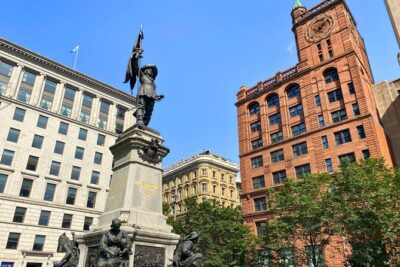
The Original Old Montréal Walking Tour by Guidatour
Read our review →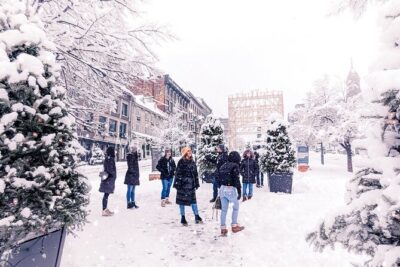
Old Montreal Small-Group Walking Tour | Max 10 | by MTL Detours
Read our review →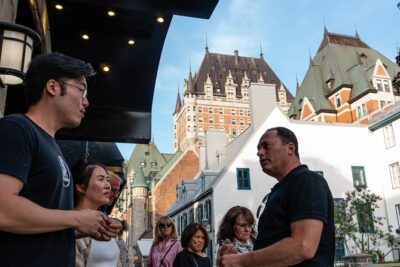
Old Quebec Classique Walking Tour with Funicular
Read our review →
Old Quebec City Food Tour with 10+ Autentic Local Tastings
Read our review →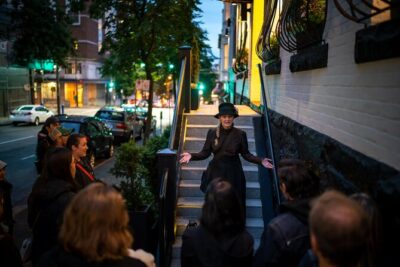

Browse the lists this tour appears in