
Reviewed · WALKING & GHOST TOURS
Old Québec & French Canada Private History Walking Tour
Quebec City’s story is packed into a compact walk: French settlement, British conquest, failed American invasion, Catholic institutions, railway ambition, and modern Canadian identity. This private tour links those pieces instead of treating each landmark as a separate photo stop. Guides such as Michel Perron use maps, timelines, and historic images to make the past easier to follow. I especially like the personal angle and the way the tour connects Quebec with American history. I also like that a private group of up to 10 can ask questions and shape the conversation.
The main catch is pace. Two and a half hours is enough for a strong first look, but not enough to explore the museums or historic buildings in depth. You will walk about a mile through hilly streets and stairways, so sturdy shoes and moderate fitness matter.
In This Review
- Key points at a glance
- Why this walk gives Quebec City a clear beginning
- The military story begins at Quebec’s defensive edge
- Walking the ramparts and the Upper Town
- Fairmont, royalty, and the making of modern Canada
- The Plains of Abraham and the American connection
- French Catholic institutions and Quebec identity
- Lower Town, Place Royale, and the city’s commercial roots
- Museums, shopping, and what you will not have time to do
- Private format, price, and practical value
- Who will enjoy this Quebec City walk most
- Should you book the Old Québec private history tour?
- FAQ
- How long is the Old Québec private history walking tour?
- How much does the tour cost?
- Is this a private tour?
- What language is the tour offered in?
- Where does the tour meet?
- Does the tour include hotel pickup?
- How much walking is involved?
- Can I cancel for a full refund?
Key points at a glance
- French and British Quebec in one walk: Follow the city from Champlain’s 1608 settlement through the 1763 British takeover and later Canadian growth.
- A private group of up to 10: Ask questions freely and let the guide adjust the emphasis to your family or interests.
- Upper and Lower Town included: See the walled UNESCO area, Place Royale, Petit-Champlain, and the Old Port in one route.
- Useful visual aids: Maps, timelines, historic photographs, and other material help clarify complicated events.
- Good American history connections: The tour covers the 1775 invasion attempt, Benedict Arnold, Richard Montgomery, and the British victory at Quebec.
- Hotel pickup in Old Québec: If you stay inside Old Québec, meet the guide in your hotel lobby five minutes before the start.
Why this walk gives Quebec City a clear beginning
I like tours that give you a framework before you start wandering on your own. This one is built around that idea. Rather than showing you a pretty street and leaving you with a name, the guide explains why Quebec City was founded here, why the walls mattered, and how control of the St. Lawrence River shaped the fate of much of North America.
Samuel de Champlain founded Quebec City in 1608 at the site now associated with the birthplace of Canada. The location has remained occupied ever since. That long continuity gives the opening part of the tour real weight: you are not simply looking at old buildings, but at the place where a French foothold became a major colonial center and later a Canadian capital.
The guide also places Quebec in a wider timeline. French settlement, the French and Indian War, the Treaty of Paris in 1763, the American Revolution, the War of 1812, and the creation of modern Canada all appear as connected chapters. I find this especially helpful if your understanding of Canadian and American history has been taught in separate boxes.
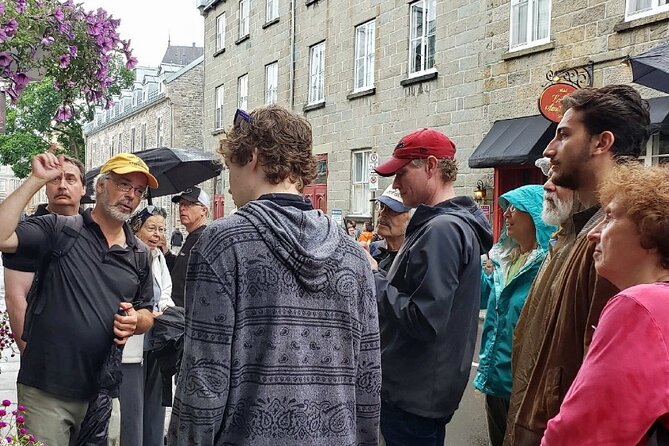
Michel Perron is repeatedly praised for making this material understandable to mixed-age groups. He has handled tours with a seven-year-old, a teenager, and adults together, which tells you something useful about his style. The tour is serious about history, but it is not designed as a lecture for specialists.
More Walking & Ghost Tours in Quebec City
- Quebec City Walking Tour
★ 5.0 · 4,716 reviews - Old Quebec City: Grand Walking Tour with Private Option
★ 4.8 · 2,609 reviews - Old Quebec Classique Walking Tour with Funicular
★ 5.0 · 1,317 reviews
The military story begins at Quebec’s defensive edge
One early stop focuses on Canada’s military history and the major battles fought around Quebec City, from the first French settlers through 1776. This sets up the city’s central problem: Quebec controlled the St. Lawrence route, so every power that wanted influence in the region had to think about its defenses.
You will also encounter a war monument connected with the French and Indian War. That conflict can be confusing because the name is used mainly in American history, while Quebec’s story often places it within the larger struggle between France and Britain for control of North America. A good guide can show you how the same war looked from both sides of the border.
The tour then reaches the iconic battlefield where the British defeated the French. The result was not a minor local change. The 1763 Treaty of Paris transferred Canada to Britain, shaping the language, politics, and culture of Quebec for centuries afterward.
Later, the route includes the stronghold added to the city’s defenses after the War of 1812, when American military pressure remained a concern. You will also see a cannon platform linked to King William’s War, when Frontenac defeated an attacking force from Boston led by William Phips.
These stops are valuable because the city’s fortifications can otherwise look like handsome stone scenery. Here, you learn why the ramparts were built and what threats they were meant to answer.
Walking the ramparts and the Upper Town
The French and British ramparts are among the most important physical features of Old Québec. They protected a strategic outpost above the St. Lawrence and helped make Quebec City difficult to capture.
One of the city gates on the French wall is included. The present structure reflects later rebuilding as much as original military use. Its narrow openings and medieval appearance connect to Lord Dufferin’s 1875 improvement plan, which reshaped parts of Quebec City according to the historic style of the period.
That is a useful reminder that old-looking does not always mean untouched. Quebec City’s preservation story includes restoration, rebuilding, and deliberate design choices. I appreciate this kind of explanation because it keeps the tour from turning the city into a simple museum set.
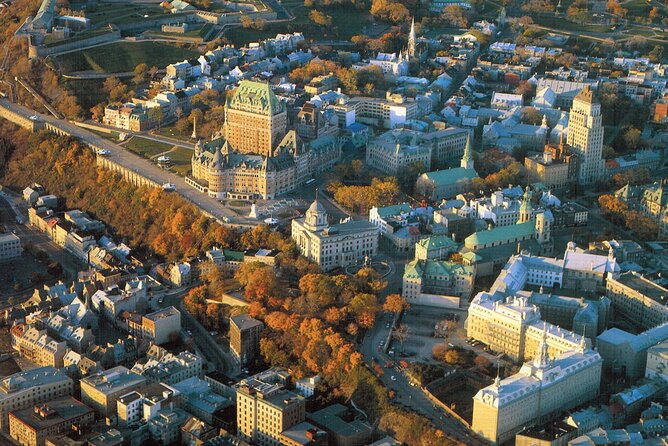
The Upper Town mainly refers to the area within the walls, including the UNESCO World Heritage zone. Historical sites are packed closely here, covering roughly four centuries. You can see why a guide helps: the distance between major sites is short, but the time between their stories is enormous.
The route also includes the stairs connecting Petit-Champlain and Upper Town. They are a practical link between the two districts, but they also show the city’s steep layout. If stairs are difficult for you, ask about the route before booking. The tour requires moderate physical fitness, and the walk includes elevation changes.
Fairmont, royalty, and the making of modern Canada
The 1893 Canadian Pacific Railway hotel, now the Fairmont, represents a later chapter in Quebec City’s story. It was part of the railway age, when grand hotels helped connect distant parts of Canada and encouraged long-distance travel.
The building is more than a luxury hotel. It reflects the effort to link Canada from coast to coast and to give the young country impressive national symbols. From the outside, its dramatic profile may look purely European, but the guide ties it to Canadian expansion and transportation.
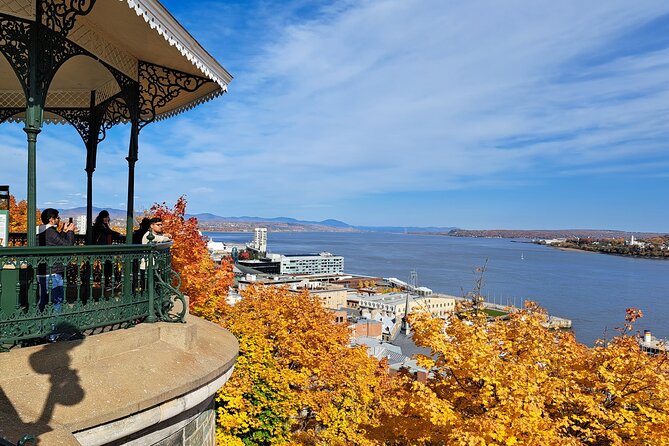
Nearby, the boardwalk recalls the royal family and its representatives. It was built after the creation of modern Canada and runs above the Forts and Chateaux St-Louis National Park. Under the boardwalk are the remains of the castle used by French governors before the French and Indian War.
That combination is typical of this tour. You see a public space used today, then learn about layers underneath it: French administration, British rule, royal connections, and Canadian nation-building. The guide’s maps and historic images are particularly useful at points like this, where the modern view does not reveal what once occupied the site.
Another memorable stop is the monument built in 1929 as the headquarters of a pulp and paper company. Its story connects business, the Great Depression, and the resilience of a Welsh family now involved in high-end tourism in Quebec City. It is an unusual detail, and I like that the tour includes the people and industries behind the grand façades.
Same province, a completely different day out:
- Quebec City: Guided Tour of Fairmont Le Château Frontenac
★ 4.7 · 3,027 reviews - Québec City: Guided Sightseeing River Cruise
★ 4.4 · 3,000 reviews - Half-Day Trip to Montmorency Falls and Ste-Anne-de-Beaupré from Quebec city
★ 4.0 · 2,718 reviews - Quebec City: Montmorency Falls with Cable Car Ride
★ 4.6 · 2,392 reviews
The Plains of Abraham and the American connection
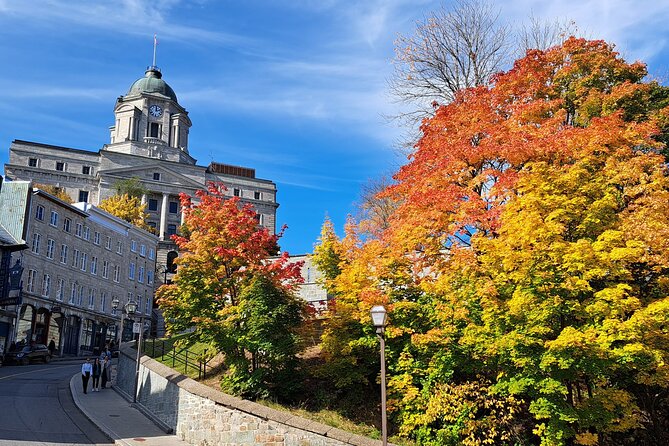
The battlefield is one of the key reasons history-minded visitors choose this experience. The Plains of Abraham marked the decisive 1759 battle in which the British defeated the French near Quebec City. Unlike Yorktown or Chalmette, where the outcome favored the American side, Quebec became British after the wider war ended.
The guide also covers the failed 1775 invasion of Canada. Benedict Arnold and Richard Montgomery both took part in the attempt, and both were defeated. For Americans, this offers a fresh view of the Revolutionary era. Canada was not simply an outside audience to the American Revolution. Quebec was an active military target, and the campaign failed before the colonies could bring the province into their cause.
This part should suit you if you want to understand the relationship between the United States and Quebec beyond the usual border-tour story. One solo visitor described gaining a clearer sense of the connection from the American Revolution through the Treaty of Paris. That is the kind of context the tour handles well.
The timing also helps. The battlefield is not treated as an isolated stop, but as one moment in a longer sequence: French settlement, British victory, American invasion, later defense against the United States, and Canadian political development.
French Catholic institutions and Quebec identity
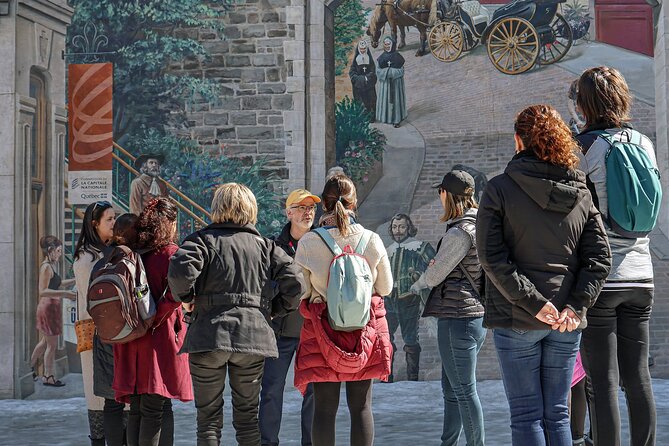
The tour includes several major French Catholic institutions. The founding cathedral of Catholicism in French America was the head of a diocese that reached across a huge area, extending from Quebec City toward what is now New Orleans. That scale helps explain why Quebec became such an important center for French Catholic life on the continent.
The first school for girls in North America is another stop. It is connected with a museum devoted to French art and Catholic education, regarded among the leading French heritage institutions in Old Quebec and Canada.
You also visit the first hospital in North America, now used as a wellness center and museum. These places show that Quebec’s story is not only about soldiers and governors. Education, religion, health care, and women’s institutions played a major role in maintaining French culture under British rule.
A separate school trained French Catholic missionaries who were sent across French territories in North America. The site is now associated with Laval University’s School of Architecture and a high school. That change of use captures Quebec’s long transition from mission center to modern educational city.
These stops are especially useful if you want to understand why French language and Catholic traditions remained so central in Quebec. The guide connects buildings to institutions, and institutions to the survival of a distinct culture.
Lower Town, Place Royale, and the city’s commercial roots
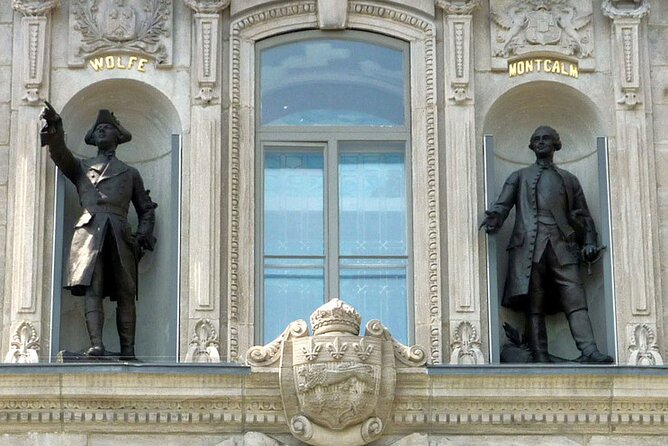
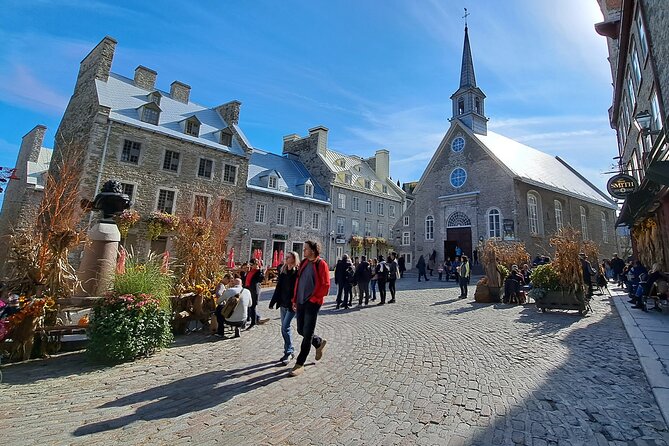
Lower Town includes Place Royale, Petit-Champlain, and the Old Port. It has its own character and its own history, even though many visitors treat it as simply the picturesque part of town.
Place Royale is tied to the earliest settlement and to the growth of trade. It helps you picture Quebec as a working port rather than only a fortified capital. The Old Port also includes the former financial district of Canada and an area now associated with art and antique shops.
The route covers ground reclaimed from the water during French, British, and Canadian periods. That detail is easy to miss while walking among shops, but it explains how the city expanded and adapted its waterfront.
Petit-Champlain is one of the main shopping areas in Old Quebec. Its current character grew from a 1980s project led by two local architects who wanted to bring high-end artisan shops into a weakened part of the Old Port. That history gives the district more meaning than a quick shopping stop. It shows how preservation and commerce can work together, though you should also expect this section to feel more polished and retail-oriented than the military sites.
The stairs linking Lower Town and Upper Town complete the physical story. You move not only between districts, but between the riverfront trading city and the fortified city above.
Museums, shopping, and what you will not have time to do
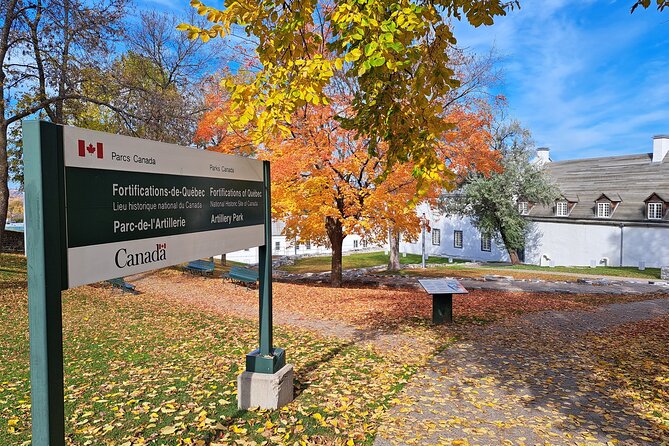
The tour passes within the city’s top museums, including a museum with exhibitions on Canada and Native Americans. It also includes the museum connected with French art and Catholic education, plus the former hospital museum.
Keep your expectations clear. The guide can explain why these institutions matter, but a two-and-a-half-hour walking tour cannot give you full museum visits. If one catches your interest, make a note and return later with more time.
That limitation is not a flaw, but it affects how you should plan your day. I would use this tour early in your stay, then revisit the places that deserve a slower look. You will leave with a map of priorities instead of spending your first day guessing which buildings matter.
The same applies to shopping in Petit-Champlain and the Old Port. You can see the districts and learn how they developed, but browsing artisan stores and antique shops will need separate time.
Private format, price, and practical value
The price is $213.92 for the whole group, up to 10 people. For one or two people, that is a sizable outlay compared with a shared group walk. For a family or small group, the math improves quickly, especially if you value a private guide and the ability to ask questions without waiting for a large group to move on.
I see the strongest value for groups with different interests. A family can ask for explanations that work for children, while adults can pursue the military or political details. Couples and friends can focus on architecture, French culture, or the long relationship between Quebec and the United States.
The tour lasts about two hours and 30 minutes. That is a good length for an orientation walk, but it is not a complete day of sightseeing. You get guiding services, and hotel pickup is offered for hotels in Old Québec. If your hotel is outside the historic area, the provider will suggest an easy meeting point.
The tour is offered in English and uses a mobile ticket. Confirmation is sent within 48 hours of booking, subject to availability. Service animals are allowed, and the route is near public transportation.
Free cancellation is available until 24 hours before the start time for a full refund. Changes or cancellations inside that window are not accepted, so keep the local cut-off time in mind.
Who will enjoy this Quebec City walk most
I would choose this tour if you want historical structure more than a casual stroll. It suits first-time visitors, history fans, families, and anyone who wants to understand how French and British Canada fit into the same story.
It is also a strong choice for Americans who know the Revolution but have never studied the failed invasion of Canada in 1775. The tour gives that episode a real setting and places it beside the French and British battles that shaped Quebec.
Families can benefit from the private format. Michel Perron has made the material work for a seven-year-old, a thirteen-year-old, and adults in the same group. That does not mean every moment will hold every child’s attention, but the guide can adjust the pace and answer questions as they come.
I would be more cautious if you want extensive indoor visits, a relaxed pace, or a route without hills and stairs. The experience is a walking introduction, not a museum tour or a gentle sightseeing ride.
Should you book the Old Québec private history tour?
Book it if you want Quebec City explained as a connected story, from Champlain’s 1608 settlement to French Catholic institutions, British conquest, American attacks, railway expansion, and modern preservation.
I especially recommend it for a private group of four to 10 people. The fixed group price becomes easier to justify, and the ability to tailor the conversation adds real value. If you are visiting alone or as a couple, book it because history is your main reason for coming and you prefer a focused guide over a lower-cost shared tour.
Skip it if you mainly want free time for shops and museums. You can still use the route as a useful first look, but plan to return to the sites that catch your attention. For most first visits, I would schedule it near the start of your stay so the rest of Old Québec makes more sense.
FAQ
How long is the Old Québec private history walking tour?
The tour lasts approximately two hours and 30 minutes.
How much does the tour cost?
The price is $213.92 per group, with up to 10 people included.
Is this a private tour?
Yes. Only your group participates in the activity.
What language is the tour offered in?
The tour is offered in English.
Where does the tour meet?
If your hotel is in Old Québec, the guide meets you in the hotel lobby five minutes before the tour. If your hotel is outside Old Québec, the provider will suggest an easy-to-find meeting point.
Does the tour include hotel pickup?
Pickup is offered for hotels situated in Old Québec. Meeting arrangements are suggested for hotels outside the area.
How much walking is involved?
The tour covers about one mile according to the supplied tour information and requires a moderate level of physical fitness. The route includes the stairs linking Petit-Champlain and Upper Town.
Can I cancel for a full refund?
Yes. You can cancel at least 24 hours before the experience start time for a full refund. Cancellations or changes made less than 24 hours before the start are not accepted for a refund.
More Walking Tours in Quebec City
- Quebec: Crimes of New France Animated Walking Tour
★ 4.6 · 926 reviews - Quebec City: Old Quebec Classic Walking Tour with Funicular
★ 4.9 · 695 reviews - Uncover Old Quebec: Fun Walking Tour of the City with Local Guide
★ 5.0 · 667 reviews - Private Tour: Quebec City Walking Tour
★ 5.0 · 596 reviews
More Historical Tours in Quebec City
- Evening Gourmet Tour 5 Course Dinner – History and Food in Old Quebec City
★ 5.0 · 496 reviews - Quebec City: Old Quebec Historical Walking Tour
★ 4.8 · 409 reviews - Combo Historical and Food Tour of Old Quebec
★ 5.0 · 360 reviews - Walking Tour Through Quebec City’s History
★ 4.5 · 263 reviews
Just added around Quebec City
- Walking tour of Old Lévis, Quebec with tasting★ 4.5 · 7 reviews
- 1.5-Hour Guided Snowmobiling Adventure★ 5.0 · 68 reviews
- ATV Side by Side Guided 4×4 Tour★ 5.0 · 13 reviews
- Ultimate Dog Sledding Tour – Day trip from Ottawa & Gatineau★ 5.0 · 26 reviews
- Petite Nation Wine & Cider Tour – Day Trip From Ottawa & Gatineau★ 5.0 · 15 reviews
- Quebec City – Tandem Bike Rental on Ile d’Orléans★ 5.0 · 10 reviews
- Half-Day Orleans Island Small-Group Sea Kayaking Tour★ 4.0 · 24 reviews
- Haunted Walk Experience at the Mackenzie King Estate★ 4.5 · 12 reviews
Walking & Ghost Tours, compared.
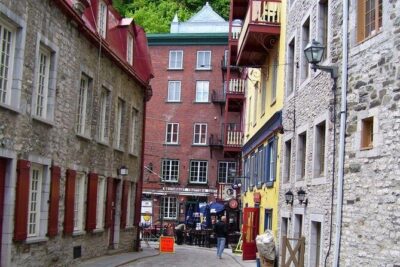

Old Quebec City: Grand Walking Tour with Private Option
Read our review →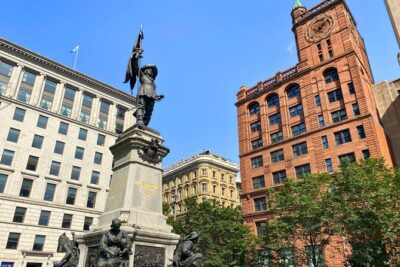
The Original Old Montréal Walking Tour by Guidatour
Read our review →
Old Montreal Small-Group Walking Tour | Max 10 | by MTL Detours
Read our review →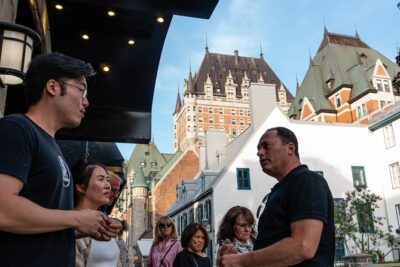
Old Quebec Classique Walking Tour with Funicular
Read our review →
Old Quebec City Food Tour with 10+ Autentic Local Tastings
Read our review →

Browse the lists this tour appears in